


Air Dams and Splitters....Open DISCUSSION not bickering ;)


Thread Starter
Moderator

Joined: May 2001
Posts: 12,232
Likes: 5
From: Browns Summit, NC, USA
 Air Dams and Splitters....Open DISCUSSION not bickering ;)
So.....What exactly is it you are trying to do with a frontal splitter or air dam?
what are the aerodymanic benefits to a vehicle? at what speed does this help? at what speed will this cause a problem?
Both cortez and i have experimented with canards....both of us notice a decrease in top speed but loved them in the turns. At beaver car had a hard time pulling above 120 with the canards on but once we took them off car pulled hard to 130 plus. i noticed no diminished returns in the TURNS with them off....i believe that the canards would be more benificial at a high speed turn...ie kink at summit, uphill esses at vir. but other than that i have no aerodynamic knowledge and would like the hear from those that do!
what are the aerodymanic benefits to a vehicle? at what speed does this help? at what speed will this cause a problem?
Both cortez and i have experimented with canards....both of us notice a decrease in top speed but loved them in the turns. At beaver car had a hard time pulling above 120 with the canards on but once we took them off car pulled hard to 130 plus. i noticed no diminished returns in the TURNS with them off....i believe that the canards would be more benificial at a high speed turn...ie kink at summit, uphill esses at vir. but other than that i have no aerodynamic knowledge and would like the hear from those that do!

New User
Joined: Mar 2001
Posts: 2,339
Likes: 0
From: everywhere
Re: Air Dams and Splitters....Open DISCUSSION not bickering ;) (chad)
We're just hoping that what we got on our car reduces the amount of air going underneath the car and causing lift. The more lift you have in the high speed turns, the less weight you have on the wheels and as a result, less grip. That's as far as I want to complicate things. But I am interested in reading some more theory. 
Oh and a splitter does make the car look more cool!
Oh and a splitter does make the car look more cool!

Wrong-Way Wang
Joined: Jun 2000
Posts: 3,168
Likes: 0
Re: Air Dams and Splitters....Open DISCUSSION not bickering ;) (chad)
It needs to be relatively strong material for the undertray/splitter. If you're going at a good clip, you will see a signficant amount of downforce on the splitter.
Gustave Stroes has an excellent article about splitters and airdams.
http://www.e30m3performance.co...r.htm
Warren
Gustave Stroes has an excellent article about splitters and airdams.
http://www.e30m3performance.co...r.htm
Warren

Trial User
Joined: Mar 2000
Posts: 4,097
Likes: 1
From: Get Firefox, CA, USA
Re: Air Dams and Splitters....Open DISCUSSION not bickering ;) (Warren)
I just started researching canards.
My question to chad is, how did they install the canards?
The rate of attack on the canard can play a big difference to its effectivness. just as mounting a wing witha high rate of attack while have a lot of drag.
From looking at different splitter designs. you can also incoporate a canard type design on the front air dam/splitter.
we cant deny the validaty of canards, with most production car based race teams using canards on part of their aero package.
some datalogging probably needs to be done with entry/apex/exit of speed/time in corners and g-force achieved in the corners.
My question to chad is, how did they install the canards?
The rate of attack on the canard can play a big difference to its effectivness. just as mounting a wing witha high rate of attack while have a lot of drag.
From looking at different splitter designs. you can also incoporate a canard type design on the front air dam/splitter.
we cant deny the validaty of canards, with most production car based race teams using canards on part of their aero package.
some datalogging probably needs to be done with entry/apex/exit of speed/time in corners and g-force achieved in the corners.

Joined: Apr 2002
Posts: 1,048
Likes: 0
From: feel the hate
Re: Air Dams and Splitters....Open DISCUSSION not bickering ;) (chad)
Cool link, Warren.
My $0.025...
obviously the no 1 thing you're trying to do with an air dam is to reduce the amount of air that goes under the nose of the car, forcing it up and over the nose of the car instead. Like the link above explains, the splitter separates the air, creates a venturi below the splitter, and creates a pocket of high pressure above the splitter in front of the nose. Bang! downforce on the nose (or downward force).
How much is drag increased in the process? I wouldn't know how to quantify it, but I would venture that aerodynamic drag probably stays close to the same (as with no splitter) with the splitter approach to increasing front downforce.
Added bonus? the front splitter will dramatically increase airflow up and into the radiator opening, increasing cooling capacity (just ask Blake Meredith about his temps before and after a RRG.com splitter at CMP last year!) or allowing the benefit of a smaller radiator opening while not losing cooling ability, thus reducing drag.
Down side? easily damaged in an off course excursion or a trip up onto high curbing.
Winglets / canards on the outer corners of the nose (ala ALMS prototypes) create downforce by deflection instead of through the Bernoulli pressure differential approach. The amount of downward force produced is directly affected by the size and angle of attack of the winglets.
Unfortunately, so is the amount of aerodynamic drag added by the winglets. I would imagine that this approach would be best utilized on a car with the ***** (hp) to overcome the added drag in a straight line (ala ALMS prototypes).
Winglets are not as easily damaged by an "off" but they can be broken off by m-t-m contact (ala ALMS prototypes the freakin' Panoz LMP-01's always seem to finish the race without some or all of their winglets.)
The canards/winglets also do not do anything to affect airflow in a manner that would aid in cooling.
Which is better / more effective? I'm no genius but I would venture that a look at the pro sports cars around the globe would tip ya off as to what the most tried and true approach is. Be it Aussie Touring Cars, Brittish TC's, SWCT and GT, USTCC, etc., a deep air dam with a splitter is almost always the trusted method. These aren't 900 hp monsters, they're mostly sedans with sedan bodies and the large frontal area to match, so the most downward force with the least drag is the key. The only time I remember seeing winglets/canards is on ALMS prototypes, and a "sort of" winglet moulded into the front bodywork of some DTM cars. And even in these cars, the winglets supplement the already present splitter.
What's best for me? I run neither - my air dam has held up well enough, my temps are normal, and I don't have enough freakin' horsepower to push the car through the air fast enough to justify increased aerodynamic drag of a downforce-producing device.
Why not run both on our cars? Do we need it? Obviously with a tremendously increased front downforce component, you have to increase rear downforce or you'll wind up "unbalanced" for lack of a better word.
Someday when I build my monster stroked ITR powered 1800 lb 1g CRX H1 car, I may find that I have the power to push a mega downforce car through the air just as fast as the rest of you H1 ladies. If I do, I guess I'll have a splitter AND canards, and a big pimpy-assed rear wing, and it'll stick in the corners like glue.
Better yet, is it legal for me to recreate the old Chaparral "sucker" car with a honda? Vacuum pumps and rubber skirts here I come!!
Modified by 1gTeg90 at 12:36 AM 5/26/2003
My $0.025...
obviously the no 1 thing you're trying to do with an air dam is to reduce the amount of air that goes under the nose of the car, forcing it up and over the nose of the car instead. Like the link above explains, the splitter separates the air, creates a venturi below the splitter, and creates a pocket of high pressure above the splitter in front of the nose. Bang! downforce on the nose (or downward force).
How much is drag increased in the process? I wouldn't know how to quantify it, but I would venture that aerodynamic drag probably stays close to the same (as with no splitter) with the splitter approach to increasing front downforce.
Added bonus? the front splitter will dramatically increase airflow up and into the radiator opening, increasing cooling capacity (just ask Blake Meredith about his temps before and after a RRG.com splitter at CMP last year!) or allowing the benefit of a smaller radiator opening while not losing cooling ability, thus reducing drag.
Down side? easily damaged in an off course excursion or a trip up onto high curbing.
Winglets / canards on the outer corners of the nose (ala ALMS prototypes) create downforce by deflection instead of through the Bernoulli pressure differential approach. The amount of downward force produced is directly affected by the size and angle of attack of the winglets.
Unfortunately, so is the amount of aerodynamic drag added by the winglets. I would imagine that this approach would be best utilized on a car with the ***** (hp) to overcome the added drag in a straight line (ala ALMS prototypes).
Winglets are not as easily damaged by an "off" but they can be broken off by m-t-m contact (ala ALMS prototypes
the freakin' Panoz LMP-01's always seem to finish the race without some or all of their winglets.) The canards/winglets also do not do anything to affect airflow in a manner that would aid in cooling.
Which is better / more effective? I'm no genius but I would venture that a look at the pro sports cars around the globe would tip ya off as to what the most tried and true approach is. Be it Aussie Touring Cars, Brittish TC's, SWCT and GT, USTCC, etc., a deep air dam with a splitter is almost always the trusted method. These aren't 900 hp monsters, they're mostly sedans with sedan bodies and the large frontal area to match, so the most downward force with the least drag is the key. The only time I remember seeing winglets/canards is on ALMS prototypes, and a "sort of" winglet moulded into the front bodywork of some DTM cars. And even in these cars, the winglets supplement the already present splitter.
What's best for me? I run neither - my air dam has held up well enough, my temps are normal, and I don't have enough freakin' horsepower to push the car through the air fast enough to justify increased aerodynamic drag of a downforce-producing device.
Why not run both on our cars? Do we need it? Obviously with a tremendously increased front downforce component, you have to increase rear downforce or you'll wind up "unbalanced" for lack of a better word.
Someday when I build my monster stroked ITR powered 1800 lb 1g CRX H1 car, I may find that I have the power to push a mega downforce car through the air just as fast as the rest of you H1 ladies. If I do, I guess I'll have a splitter AND canards, and a big pimpy-assed rear wing, and it'll stick in the corners like glue.
Better yet, is it legal for me to recreate the old Chaparral "sucker" car with a honda?
Vacuum pumps and rubber skirts here I come!!Modified by 1gTeg90 at 12:36 AM 5/26/2003

Member
Joined: Sep 2001
Posts: 1,381
Likes: 0
From: Springfield, Va, USA
Re: Air Dams and Splitters....Open DISCUSSION not bickering ;) (chad)
Not trying to act all rules-nerdish, but canards are not mentioned as acceptable in either the ECHC or National HC rules, hence are not allowed. I'd hate for anyone to spend a bunch of time on development just to get protested.
Trending Topics

Honda-Tech Member
Joined: Feb 2000
Posts: 3,402
Likes: 0
From: Pacific Northwest, USA
Re: Air Dams and Splitters....Open DISCUSSION not bickering ;) (1gTeg90)
The more air you can "trap, change direction of, and maneuver" the better. Most of the canards I've seen on Civics aren't big enough (not enough surface area) to do much at all. The link Warren posted is a oldie, but a goodie, and pretty much right on.
$.02
$.02
Thread Starter
Moderator
Joined: May 2001
Posts: 12,232
Likes: 5
From: Browns Summit, NC, USA
Re: Air Dams and Splitters....Open DISCUSSION not bickering ;) (Geezer)
<TABLE WIDTH="90%" CELLSPACING=0 CELLPADDING=0 ALIGN=CENTER><TR><TD>Quote, originally posted by Geezer »</TD></TR><TR><TD CLASS="quote">Not trying to act all rules-nerdish, but canards are not mentioned as acceptable in either the ECHC or National HC rules, hence are not allowed. I'd hate for anyone to spend a bunch of time on development just to get protested. </TD></TR></TABLE>
yes i understand that but if someone protested me over canards....hmmmm...well all i'd have to say is.....well i would have a hard time respecting someone for a protest over a set of canards or anything other than engine mods. UNLESS it is stated in the rules and the rules are vary vary vary vary (yes i know it's vEry) vague!!!!!!!!!! period....the rules leave alot to interpetation! There is no weight limit in H1 so why would stripping the car be illegal? It's not.
as to the canards issue
we had about 3x6 or 18 square inches times 2 sides of canards....my speeds above 120 were slow.....once i took canards off times dropped 1.5 seconds at beaver run....so i do not think they were able to help me enough in the turns to justify the sacrifice in top speed.
yes i understand that but if someone protested me over canards....hmmmm...well all i'd have to say is.....well i would have a hard time respecting someone for a protest over a set of canards or anything other than engine mods. UNLESS it is stated in the rules and the rules are vary vary vary vary (yes i know it's vEry) vague!!!!!!!!!! period....the rules leave alot to interpetation! There is no weight limit in H1 so why would stripping the car be illegal? It's not.
as to the canards issue
we had about 3x6 or 18 square inches times 2 sides of canards....my speeds above 120 were slow.....once i took canards off times dropped 1.5 seconds at beaver run....so i do not think they were able to help me enough in the turns to justify the sacrifice in top speed.

Honda-Tech Member
Joined: Jan 2000
Posts: 1,288
Likes: 0
From: Fort Worth, TX
Re: Air Dams and Splitters....Open DISCUSSION not bickering ;) (chad)
MMMMMmmmmm... aero talk. Not that I really know all that much about it, but I've seen a few things here and there(and got to jump around in a spring suspension floor anechoic chamber with a 31 inch wind tunnel in it going at 150ft/s - so that must have caused some deeper knowledge of aerodynamics to rub off right???  ).
).
So with respect to Hondas, and most other cars that can use all the help they can get in going faster in the straights - I don't think a 'deflection' type device is the best thing to look towards. You are only going to create a relatively minor amount of downforce, but as you saw on the straights - you created a HUGE amount of drag with respect to your power.
Splitters are a very good thing in my mind, as you are going to have to push that air out of the way, thus creating a bit more drag in that respect. Yet there is less air underneath the car producing drag on our rough street-car underbodies. So this is "good drag" in my eyes, as you are increasing downforce all over the car and reducing some meaningless drag on the underbody. So build the biggest splitter you can stomach that is wider than your front tires by a decent amount, low to the ground, and has some flat "splitter lip" to produce downforce on the front(where street cars need it most IMO, especially FWD cars).
Now... as for more complicated concepts you can start looking at ACCELERATING the air in different directions to make downforce. This is exactly how a plane flies(not that the air on top moves faster so it is at a lower pressure BS...), it accelerates some given mass of air downward such that the reaction force keeps the plane up. You can use this in your car to do the reverse and keep your car planted to the ground by accelerating air UP.
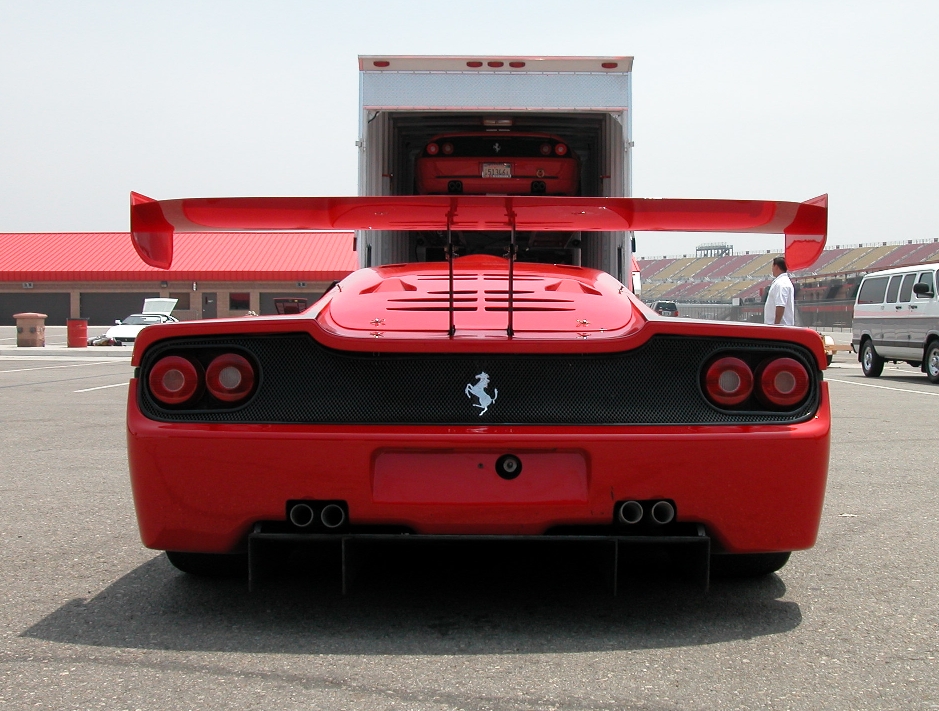
The easiest way to implement this is to create a rear diffuser. You want it to have an increasing slope upwards as you go towards the rear of the car. Not too much, as you don't want the air to separate from the diffuser, but not enough and you don't get enough downforce. I don't know if you can in ECHC, but maybe modifying the plastic rear bumper to allow the diffuser to come up a few inches higher would really allow this downforce to be useable. This will create some drag(as it takes forward force to produce downforce) - but I can't imagine it being as bad as a set of canards which are basically flat obstructions in your airflow. You can also add some pimpy horizontal stabilizers to make guys behind you know that you're fast, and you definitely mean busiiness...
You could get more downforce in the rear and reduce drag somewhat by putting angled inwards panels(mini-vertical canards) in front of your rear wheels. The objective is to divert air that would otherwise cause drag on your rear wheels(which are proverbial aero bricks) and give you a larger mass of air to accelerate upward with the diffuser. My M3 is suppose to have these stock in front of the rear wheels, but a few downward sloped parking deck entrances later and you could never tell.
As for more aero things - big items that hurt are mirrors and tires. So try to do anything you can to minimize their impact on airflow.
This is just some general rambling, not sure how applicable it is to any certain car body, and aerodynamics is definitely not my strong suit(I ain't no Aerospace engineer and proud of it!).
Isn't maxQ an AE? He might be able to chime in and tell us how horribly wrong and misinformed we are...
).So with respect to Hondas, and most other cars that can use all the help they can get in going faster in the straights - I don't think a 'deflection' type device is the best thing to look towards. You are only going to create a relatively minor amount of downforce, but as you saw on the straights - you created a HUGE amount of drag with respect to your power.
Splitters are a very good thing in my mind, as you are going to have to push that air out of the way, thus creating a bit more drag in that respect. Yet there is less air underneath the car producing drag on our rough street-car underbodies. So this is "good drag" in my eyes, as you are increasing downforce all over the car and reducing some meaningless drag on the underbody. So build the biggest splitter you can stomach that is wider than your front tires by a decent amount, low to the ground, and has some flat "splitter lip" to produce downforce on the front(where street cars need it most IMO, especially FWD cars).
Now... as for more complicated concepts you can start looking at ACCELERATING the air in different directions to make downforce. This is exactly how a plane flies(not that the air on top moves faster so it is at a lower pressure BS...), it accelerates some given mass of air downward such that the reaction force keeps the plane up. You can use this in your car to do the reverse and keep your car planted to the ground by accelerating air UP.
The easiest way to implement this is to create a rear diffuser. You want it to have an increasing slope upwards as you go towards the rear of the car. Not too much, as you don't want the air to separate from the diffuser, but not enough and you don't get enough downforce. I don't know if you can in ECHC, but maybe modifying the plastic rear bumper to allow the diffuser to come up a few inches higher would really allow this downforce to be useable. This will create some drag(as it takes forward force to produce downforce) - but I can't imagine it being as bad as a set of canards which are basically flat obstructions in your airflow. You can also add some pimpy horizontal stabilizers to make guys behind you know that you're fast, and you definitely mean busiiness...
You could get more downforce in the rear and reduce drag somewhat by putting angled inwards panels(mini-vertical canards) in front of your rear wheels. The objective is to divert air that would otherwise cause drag on your rear wheels(which are proverbial aero bricks) and give you a larger mass of air to accelerate upward with the diffuser. My M3 is suppose to have these stock in front of the rear wheels, but a few downward sloped parking deck entrances later and you could never tell.
As for more aero things - big items that hurt are mirrors and tires. So try to do anything you can to minimize their impact on airflow.
This is just some general rambling, not sure how applicable it is to any certain car body, and aerodynamics is definitely not my strong suit(I ain't no Aerospace engineer and proud of it!).
Isn't maxQ an AE? He might be able to chime in and tell us how horribly wrong and misinformed we are...
Honda-Tech Member
Joined: Jan 2000
Posts: 1,288
Likes: 0
From: Fort Worth, TX
Re: Air Dams and Splitters....Open DISCUSSION not bickering ;) (Def)
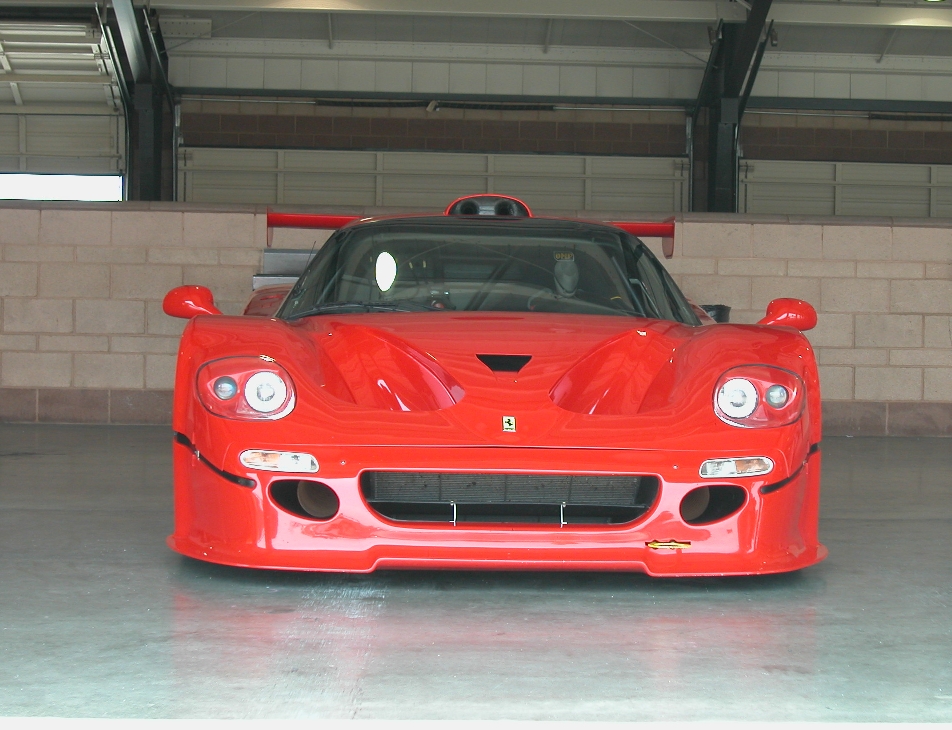
Not a bad design for a front splitter...
Bling Bling rear diffuser
More bling-bling rear diffuser
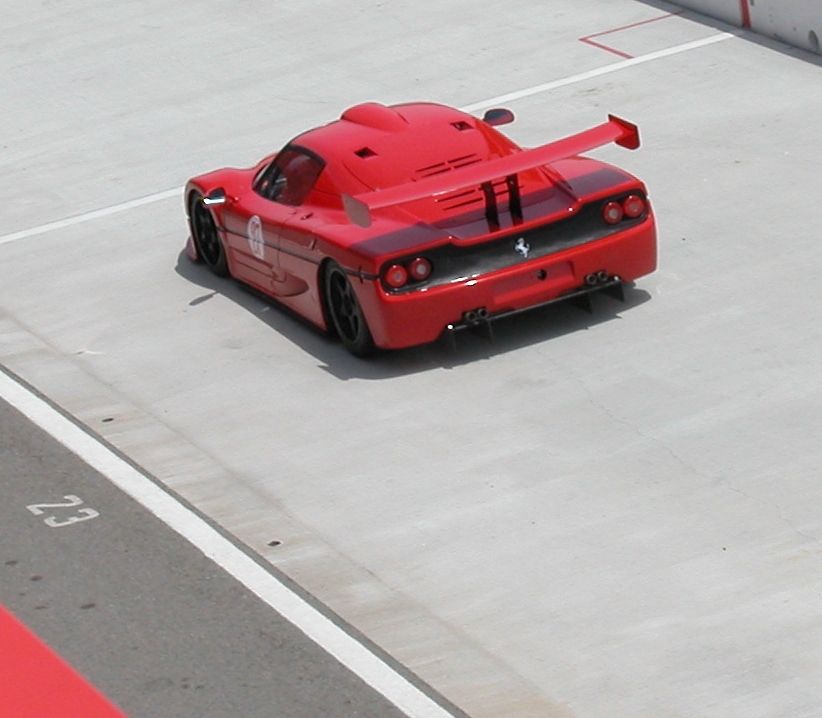
Something to strive for...
Bling Bling rear diffuser
More bling-bling rear diffuser
Something to strive for...

Joined: Oct 2002
Posts: 514
Likes: 0
From: Palo Alto, CA, USA
Maybe someone can help me understand just how those rear wings work. For example, the wing on that Ferrari appears to be held on by little more than some aluminum twigs. Does the wing actually push the car down via the direct connection of the wing to the body of the car, or is it there to alter the airflow which then pushes against the body of the car under the wing?
I always assumed that the downforce was applied via the legs of the wing that attach it to the body. Now that I look more closely I'm beginning to think it's just manipulating airflow that would otherwise be diffused all over the car's body. With the wing in place, an area of high pressure could be focused under the wing to press against the body. Am I just way off or what?
-Adam
I always assumed that the downforce was applied via the legs of the wing that attach it to the body. Now that I look more closely I'm beginning to think it's just manipulating airflow that would otherwise be diffused all over the car's body. With the wing in place, an area of high pressure could be focused under the wing to press against the body. Am I just way off or what?
-Adam

Member
Joined: Nov 2001
Posts: 2,840
Likes: 0
From: SE, PA
Re: Air Dams and Splitters....Open DISCUSSION not bickering ;) (Def)
<TABLE WIDTH="90%" CELLSPACING=0 CELLPADDING=0 ALIGN=CENTER><TR><TD>Quote, originally posted by Def »</TD></TR><TR><TD CLASS="quote">Not a bad design for a front splitter...
</TD></TR></TABLE>
This seems to incorporate the splitter/venturi idea, would this be an effective design on a FWD car? And would this require some sort of under body panels along with rear diffuser to be effective?
</TD></TR></TABLE>
This seems to incorporate the splitter/venturi idea, would this be an effective design on a FWD car? And would this require some sort of under body panels along with rear diffuser to be effective?

Honda-Tech Member
Joined: Dec 2001
Posts: 4,035
Likes: 0
From: Greensboro, NC, USA
Re: Air Dams and Splitters....Open DISCUSSION not bickering ;) (Def)
<TABLE WIDTH="90%" CELLSPACING=0 CELLPADDING=0 ALIGN=CENTER><TR><TD>Quote, originally posted by Def »</TD></TR><TR><TD CLASS="quote">...not that the air on top moves faster so it is at a lower pressure BS...</TD></TR></TABLE>
Too funny. I've been fighting this battle since I taught junior high school science. All of the books give Dan Bernoulli all the credit, and demonstrate how it must be true by blowing over the top of a piece of paper. I had a long discussion with an aero guy from Boeing who made the point that you can make lift with a flat plate - as long as you maintain a positive angle of attack. The primary function of the "airfoil" section is to maintain laminar airflow at greater angles of attack, for improved efficiency. He PO'd a lot of the poeple he worked with, with his radical thinking...
Kirk
(who also likes the "lemon battery" experiment)
Too funny. I've been fighting this battle since I taught junior high school science. All of the books give Dan Bernoulli all the credit, and demonstrate how it must be true by blowing over the top of a piece of paper. I had a long discussion with an aero guy from Boeing who made the point that you can make lift with a flat plate - as long as you maintain a positive angle of attack. The primary function of the "airfoil" section is to maintain laminar airflow at greater angles of attack, for improved efficiency. He PO'd a lot of the poeple he worked with, with his radical thinking...
Kirk
(who also likes the "lemon battery" experiment)

Junior Member
Joined: Aug 2002
Posts: 477
Likes: 0
From: Chiba city, Japan / Vancouver, BC
Re: Air Dams and Splitters....Open DISCUSSION not bickering ;) (6ghatch)
<TABLE WIDTH="90%" CELLSPACING=0 CELLPADDING=0 ALIGN=CENTER><TR><TD>Quote, originally posted by 6ghatch »</TD></TR><TR><TD CLASS="quote">
This seems to incorporate the splitter/venturi idea, would this be an effective design on a FWD car? And would this require some sort of under body panels along with rear diffuser to be effective?</TD></TR></TABLE>
Yes to ur first Q and No to the second Q.
This seems to incorporate the splitter/venturi idea, would this be an effective design on a FWD car? And would this require some sort of under body panels along with rear diffuser to be effective?</TD></TR></TABLE>
Yes to ur first Q and No to the second Q.
Junior Member
Joined: Aug 2002
Posts: 477
Likes: 0
From: Chiba city, Japan / Vancouver, BC
Re: (mityVR6)
<TABLE WIDTH="90%" CELLSPACING=0 CELLPADDING=0 ALIGN=CENTER><TR><TD>Quote, originally posted by mityVR6 »</TD></TR><TR><TD CLASS="quote">Maybe someone can help me understand just how those rear wings work. For example, the wing on that Ferrari appears to be held on by little more than some aluminum twigs. Does the wing actually push the car down via the direct connection of the wing to the body of the car, or is it there to alter the airflow which then pushes against the body of the car under the wing?
I always assumed that the downforce was applied via the legs of the wing that attach it to the body. Now that I look more closely I'm beginning to think it's just manipulating airflow that would otherwise be diffused all over the car's body. With the wing in place, an area of high pressure could be focused under the wing to press against the body. Am I just way off or what?
-Adam</TD></TR></TABLE>
I share the same view as u do. Im sure the actual physical force against the surface of the wing equates to some percentage of the downward force but it must be the pressure differential that produces the majority of the downward force on a properly designed wing (not an APC wing )
)
I always assumed that the downforce was applied via the legs of the wing that attach it to the body. Now that I look more closely I'm beginning to think it's just manipulating airflow that would otherwise be diffused all over the car's body. With the wing in place, an area of high pressure could be focused under the wing to press against the body. Am I just way off or what?
-Adam</TD></TR></TABLE>
I share the same view as u do. Im sure the actual physical force against the surface of the wing equates to some percentage of the downward force but it must be the pressure differential that produces the majority of the downward force on a properly designed wing (not an APC wing
)
Joined: Apr 2002
Posts: 1,048
Likes: 0
From: feel the hate
Re: Air Dams and Splitters....Open DISCUSSION not bickering ;) (Knestis)
<TABLE WIDTH="90%" CELLSPACING=0 CELLPADDING=0 ALIGN=CENTER><TR><TD>Quote, originally posted by Knestis »</TD></TR><TR><TD CLASS="quote">
Too funny. I've been fighting this battle since I taught junior high school science. All of the books give Dan Bernoulli all the credit, and demonstrate how it must be true by blowing over the top of a piece of paper. I had a long discussion with an aero guy from Boeing who made the point that you can make lift with a flat plate - as long as you maintain a positive angle of attack. The primary function of the "airfoil" section is to maintain laminar airflow at greater angles of attack, for improved efficiency. He PO'd a lot of the poeple he worked with, with his radical thinking...
Kirk
(who also likes the "lemon battery" experiment)
</TD></TR></TABLE>
The fact is the Bernoulli principle really only applies to the old "flat bottom" or "concave" airfoils like found on low-speed aircraft, a la WWI vintage biplanes. These airfoils do produce a significant level of lift at little or no angle of attack, working just on the pressure differential. This really only works on low speed airfoils because of the tremendous drag produced, due to the relatively thick airfoil sections required to produce this lift with no positive angle of attack.
Deflection is how most all aircraft achieve lift - at the root of the wing, where it joins the fuselage, some small aircraft have 2-3 degrees of angle of attack built in.
Supersonic fighters, like the F-16, have nearly perfectly symmetrical airfoils and rely purely on deflection to achieve lift. These airfoils are very near to what you would decribe as a "flat plate."
Too funny. I've been fighting this battle since I taught junior high school science. All of the books give Dan Bernoulli all the credit, and demonstrate how it must be true by blowing over the top of a piece of paper. I had a long discussion with an aero guy from Boeing who made the point that you can make lift with a flat plate - as long as you maintain a positive angle of attack. The primary function of the "airfoil" section is to maintain laminar airflow at greater angles of attack, for improved efficiency. He PO'd a lot of the poeple he worked with, with his radical thinking...
Kirk
(who also likes the "lemon battery" experiment)
</TD></TR></TABLE>
The fact is the Bernoulli principle really only applies to the old "flat bottom" or "concave" airfoils like found on low-speed aircraft, a la WWI vintage biplanes. These airfoils do produce a significant level of lift at little or no angle of attack, working just on the pressure differential. This really only works on low speed airfoils because of the tremendous drag produced, due to the relatively thick airfoil sections required to produce this lift with no positive angle of attack.
Deflection is how most all aircraft achieve lift - at the root of the wing, where it joins the fuselage, some small aircraft have 2-3 degrees of angle of attack built in.
Supersonic fighters, like the F-16, have nearly perfectly symmetrical airfoils and rely purely on deflection to achieve lift. These airfoils are very near to what you would decribe as a "flat plate."

Honda-Tech Member
Joined: Jan 2002
Posts: 1,043
Likes: 0
From: Bethlehem, PA
Sorry I'm late too the party.
You guys have dealt with the theorys and physics. IMO, "real world racing" applications are far more important issues for the weekend club racer, like us.
The Ferrari above is impressive... the nose I'm sure costs more than my race car. I would guess the whole car probably costs 2x the entire ECHC field. Cool yes, practical for most/ all of us, No.
The same trend is my thought on defussers, canards and massive undertrays. They work and kick *** for the prototype Lemans cars... but for a $3,500 ITC Civic. Unrealilistic.
A basic, simple, strong and lite Air-dam will gain MPH and RPMs. Fact. How many? Each car is different. With the H5 Civic it was 4-5 MPH at Pocono and 2-300 RPMs. This was a huge improvement in that car.
Kirk- Have you read any of Geoffrey Howards books on Areo? He has changed my thoughts on the subject. Check out "Automotive Aerodynamics, theory and practice for Road and Track".
John
You guys have dealt with the theorys and physics. IMO, "real world racing" applications are far more important issues for the weekend club racer, like us.
The Ferrari above is impressive... the nose I'm sure costs more than my race car. I would guess the whole car probably costs 2x the entire ECHC field. Cool yes, practical for most/ all of us, No.
The same trend is my thought on defussers, canards and massive undertrays. They work and kick *** for the prototype Lemans cars... but for a $3,500 ITC Civic. Unrealilistic.
A basic, simple, strong and lite Air-dam will gain MPH and RPMs. Fact. How many? Each car is different. With the H5 Civic it was 4-5 MPH at Pocono and 2-300 RPMs. This was a huge improvement in that car.
Kirk- Have you read any of Geoffrey Howards books on Areo? He has changed my thoughts on the subject. Check out "Automotive Aerodynamics, theory and practice for Road and Track".
John

Trial User
Joined: Jan 2000
Posts: 7,722
Likes: 0
From: Plotting My Revenge
Re: Air Dams and Splitters....Open DISCUSSION not bickering ;) (1gTeg90)
Using my integra as an example, I can give you 3 progessive examples.
Stock Front Bumper Cover - The car pushed horribly in high speed sections like the climbing esses at VIR and the Kink at CMP. Further, a video shot from trackside at the back straight at Road Atlanta easily showed the car was lifting at speeds over 100(ish) mph.
"Garden Splitter" - Wrapped a 4" wide piece of ABS plastic around the lower front of the car and went rivet crazy. The first attempt made issues worse as the plastic folded under at speed and added MORE lift. The car seriously wouldn't turn like this. After bracing the bottom of the "splitter" the improvement was instantly noticable. I no longer had to lift to get traction when turning in to corners like the aforementioned kink and esses. The car generally felt more stable as well, even on the straights.
The downside... lost nearly 4mph on long straights. But lap times improved anyway.
RRG.com Splitter - Similar to the "Garden Splitter," but more rigid with the added lip and short undertray. Stability improved further without any further loss in straight line speed. Car also began to run a few degrees cooler (Blake M. also noticed this on his GP car). The cooler theory is that the lip is causing more air pressure into the radiator and oil cooler. Not sure if this is valid, but its all we could come up with.
For what its worth...
Stock Front Bumper Cover - The car pushed horribly in high speed sections like the climbing esses at VIR and the Kink at CMP. Further, a video shot from trackside at the back straight at Road Atlanta easily showed the car was lifting at speeds over 100(ish) mph.
"Garden Splitter" - Wrapped a 4" wide piece of ABS plastic around the lower front of the car and went rivet crazy. The first attempt made issues worse as the plastic folded under at speed and added MORE lift. The car seriously wouldn't turn like this. After bracing the bottom of the "splitter" the improvement was instantly noticable. I no longer had to lift to get traction when turning in to corners like the aforementioned kink and esses. The car generally felt more stable as well, even on the straights.
The downside... lost nearly 4mph on long straights. But lap times improved anyway.
RRG.com Splitter - Similar to the "Garden Splitter," but more rigid with the added lip and short undertray. Stability improved further without any further loss in straight line speed. Car also began to run a few degrees cooler (Blake M. also noticed this on his GP car). The cooler theory is that the lip is causing more air pressure into the radiator and oil cooler. Not sure if this is valid, but its all we could come up with.
For what its worth...
Joined: Apr 2002
Posts: 1,048
Likes: 0
From: feel the hate
Re: (JohnW)
<TABLE WIDTH="90%" CELLSPACING=0 CELLPADDING=0 ALIGN=CENTER><TR><TD>Quote, originally posted by JohnW »</TD></TR><TR><TD CLASS="quote">You guys have dealt with the theorys and physics. IMO, "real world racing" applications are far more important issues for the weekend club racer, like us.</TD></TR></TABLE>
Ahhh, so true. But the same theories still apply, be it F-16's, LMP900 cars, or ITC Civics. It's just a matter of degree.
<TABLE WIDTH="90%" CELLSPACING=0 CELLPADDING=0 ALIGN=CENTER><TR><TD>Quote, originally posted by JohnW »</TD></TR><TR><TD CLASS="quote">The same trend is my thought on defussers, canards and massive undertrays. They work and kick *** for the prototype Lemans cars... but for a $3,500 ITC Civic. Unrealilistic.</TD></TR></TABLE>
Not to mention not legal in IT or ECHC.
<TABLE WIDTH="90%" CELLSPACING=0 CELLPADDING=0 ALIGN=CENTER><TR><TD>Quote, originally posted by JohnW »</TD></TR><TR><TD CLASS="quote">A basic, simple, strong and lite Air-dam will gain MPH and RPMs. Fact. How many? Each car is different. With the H5 Civic it was 4-5 MPH at Pocono and 2-300 RPMs. This was a huge improvement in that car. </TD></TR></TABLE>
Mmmm... gained mph's on the straight. That would indicate to me that the splitter/air dam combo actually reduced overall drag. Different from other methods for increasing downward force, the canard specifically mentioned by Chad, which he stated reduced top speed by 10 mph.
Good thread....
Ahhh, so true. But the same theories still apply, be it F-16's, LMP900 cars, or ITC Civics. It's just a matter of degree.
<TABLE WIDTH="90%" CELLSPACING=0 CELLPADDING=0 ALIGN=CENTER><TR><TD>Quote, originally posted by JohnW »</TD></TR><TR><TD CLASS="quote">The same trend is my thought on defussers, canards and massive undertrays. They work and kick *** for the prototype Lemans cars... but for a $3,500 ITC Civic. Unrealilistic.</TD></TR></TABLE>
Not to mention not legal in IT or ECHC.
<TABLE WIDTH="90%" CELLSPACING=0 CELLPADDING=0 ALIGN=CENTER><TR><TD>Quote, originally posted by JohnW »</TD></TR><TR><TD CLASS="quote">A basic, simple, strong and lite Air-dam will gain MPH and RPMs. Fact. How many? Each car is different. With the H5 Civic it was 4-5 MPH at Pocono and 2-300 RPMs. This was a huge improvement in that car. </TD></TR></TABLE>
Mmmm... gained mph's on the straight. That would indicate to me that the splitter/air dam combo actually reduced overall drag. Different from other methods for increasing downward force, the canard specifically mentioned by Chad, which he stated reduced top speed by 10 mph.
Good thread....
Honda-Tech Member
Joined: Dec 2001
Posts: 4,035
Likes: 0
From: Greensboro, NC, USA
Re: (JohnW)
<TABLE WIDTH="90%" CELLSPACING=0 CELLPADDING=0 ALIGN=CENTER><TR><TD>Quote, originally posted by JohnW »</TD></TR><TR><TD CLASS="quote">... Have you read...?</TD></TR></TABLE>
I have a pile of books on aerodynamics in the basement storage but haven't looked at them for years. I don't recognized the author and if they are less than 15 years old, I haven't read them. They're on my list though...
K
EDIT - on further reflection here, maybe the conversation kind of needs to be split into wing/no wing categories. IT rules won't let you use a rear 'foil to pin the rear end down at higher speeds but i have thought that there might be room to dial in low-speed oversteer and mitigate with downforce from a rear wing, at speeds where it would be too much of a handful (within HC rules, anyway)...
I have a pile of books on aerodynamics in the basement storage but haven't looked at them for years. I don't recognized the author and if they are less than 15 years old, I haven't read them. They're on my list though...
K
EDIT - on further reflection here, maybe the conversation kind of needs to be split into wing/no wing categories. IT rules won't let you use a rear 'foil to pin the rear end down at higher speeds but i have thought that there might be room to dial in low-speed oversteer and mitigate with downforce from a rear wing, at speeds where it would be too much of a handful (within HC rules, anyway)...
Honda-Tech Member
Joined: Jan 2002
Posts: 1,043
Likes: 0
From: Bethlehem, PA
Re: (1gTeg90)
<TABLE WIDTH="90%" CELLSPACING=0 CELLPADDING=0 ALIGN=CENTER><TR><TD>Quote, originally posted by 1gTeg90 »</TD></TR><TR><TD CLASS="quote">
Mmmm... gained mph's on the straight. That would indicate to me that the splitter/air dam combo actually reduced overall drag. Different from other methods for increasing downward force, the canard specifically mentioned by Chad, which he stated reduced top speed by 10 mph.
Good thread.... </TD></TR></TABLE>
No splitter during above test.
This was 'pre-splitter'- only a 3 inch A-D. Later that fall, I used the splitter combo at the same track with no reduction in MPH and dropped .4 off the lap times. It may have been slightly cooler or knowing the track better..... both could have helped in the lap time improvement.
You going to be at Summit Richard??
Mmmm... gained mph's on the straight. That would indicate to me that the splitter/air dam combo actually reduced overall drag. Different from other methods for increasing downward force, the canard specifically mentioned by Chad, which he stated reduced top speed by 10 mph.
Good thread....
</TD></TR></TABLE>No splitter during above test.
This was 'pre-splitter'- only a 3 inch A-D. Later that fall, I used the splitter combo at the same track with no reduction in MPH and dropped .4 off the lap times. It may have been slightly cooler or knowing the track better..... both could have helped in the lap time improvement.
You going to be at Summit Richard??

Honda-Tech Member
Joined: Apr 2000
Posts: 3,846
Likes: 1
From: I started it
Re: Air Dams and Splitters....Open DISCUSSION not bickering ;) (chad)
<TABLE WIDTH="90%" CELLSPACING=0 CELLPADDING=0 ALIGN=CENTER><TR><TD>Quote, originally posted by chad »</TD></TR><TR><TD CLASS="quote">So.....What exactly is it you are trying to do with a frontal splitter or air dam?</TD></TR></TABLE>
Honestly? I was convinced by multiple people that I should keep air under the car to a minimum at LMS. And so began the Garden Splitter. When I went to the rrg.com splitter I was looking for not only a more easily-maintained solution, but a more downforce-providing solution than a piece of garden edging.
I haven't raced with it yet and honestly don't know how this will go. Based on feedback from my competitors and fellow racers, it's a good thing, so why not try it? All I'm trying to do is make the car faster, and as a result, have less excuses.
If I end up with the perfect H3 car, and still lose...then I suck. It's all about learning and (hopefully) going faster as a result.
--Karl, anticipating a wicked-loose car at Summit...
Honestly? I was convinced by multiple people that I should keep air under the car to a minimum at LMS. And so began the Garden Splitter. When I went to the rrg.com splitter I was looking for not only a more easily-maintained solution, but a more downforce-providing solution than a piece of garden edging.
I haven't raced with it yet and honestly don't know how this will go. Based on feedback from my competitors and fellow racers, it's a good thing, so why not try it? All I'm trying to do is make the car faster, and as a result, have less excuses.
If I end up with the perfect H3 car, and still lose...then I suck. It's all about learning and (hopefully) going faster as a result.
--Karl, anticipating a wicked-loose car at Summit...
Honda-Tech Member
Joined: Jan 2000
Posts: 1,288
Likes: 0
From: Fort Worth, TX
Re: (JohnW)
<TABLE WIDTH="90%" CELLSPACING=0 CELLPADDING=0 ALIGN=CENTER><TR><TD>Quote, originally posted by JohnW »</TD></TR><TR><TD CLASS="quote">You guys have dealt with the theorys and physics. IMO, "real world racing" applications are far more important issues for the weekend club racer, like us.
The Ferrari above is impressive... the nose I'm sure costs more than my race car. I would guess the whole car probably costs 2x the entire ECHC field. Cool yes, practical for most/ all of us, No.
</TD></TR></TABLE>
Yes, that F50 is quite a piece of engineering work, but who says you have to make your aero-tweaks beautiful as well as functional? Functional and ugly seems to work just fine for most you ECHC guys in other areas.
It's not all that hard to make a diffuser, splitter or undertray. Just get a reasonablly large piece of foam and start carving out a form you want to make on the car. Test fit the piece. Then lay fiberglass on it, drill holes, reinforce and bolt that puppy up. Voila! Ghetto, bare fiberglass aero device. They wouldn't need to be the length of the car, as I'm sure just a small panel underneath the engine, and one going from the rear bumper to just ahead of the rear suspension would be MORE than enough area to work with at creating downforce and reducing drag.
Now you will probably give some corner worker a nice fiberglass souvenier the first time you go agricultural, but you've already got the mold - so it can't be too hard to fab up another one.
If that all sounds like too much work for the benefit, just putting a piece of ABS plastic in front of your rear tires, angled towards the center of the car will probably allow you to pick up a few MPH on a long straight and would probably give you increased downforce if your stock rear bumper has any sort of decent upward curve to it.
Not sure on the legality of any of these modifications for ECHC though, I'm just talking general theory and application here.
Just some time, ingenuity and fiberglass could yield some impressive results. 20hp more would be way more of a boon on most ECHC cars, but when the rest of the car is giving you all its got, aerodynamics is a good place to turn to in getting going and turning faster.
The Ferrari above is impressive... the nose I'm sure costs more than my race car. I would guess the whole car probably costs 2x the entire ECHC field. Cool yes, practical for most/ all of us, No.
</TD></TR></TABLE>
Yes, that F50 is quite a piece of engineering work, but who says you have to make your aero-tweaks beautiful as well as functional? Functional and ugly seems to work just fine for most you ECHC guys in other areas.
It's not all that hard to make a diffuser, splitter or undertray. Just get a reasonablly large piece of foam and start carving out a form you want to make on the car. Test fit the piece. Then lay fiberglass on it, drill holes, reinforce and bolt that puppy up. Voila! Ghetto, bare fiberglass aero device. They wouldn't need to be the length of the car, as I'm sure just a small panel underneath the engine, and one going from the rear bumper to just ahead of the rear suspension would be MORE than enough area to work with at creating downforce and reducing drag.
Now you will probably give some corner worker a nice fiberglass souvenier the first time you go agricultural, but you've already got the mold - so it can't be too hard to fab up another one.
If that all sounds like too much work for the benefit, just putting a piece of ABS plastic in front of your rear tires, angled towards the center of the car will probably allow you to pick up a few MPH on a long straight and would probably give you increased downforce if your stock rear bumper has any sort of decent upward curve to it.
Not sure on the legality of any of these modifications for ECHC though, I'm just talking general theory and application here.
Just some time, ingenuity and fiberglass could yield some impressive results. 20hp more would be way more of a boon on most ECHC cars, but when the rest of the car is giving you all its got, aerodynamics is a good place to turn to in getting going and turning faster.
Honda-Tech Member
Joined: Jan 2000
Posts: 1,288
Likes: 0
From: Fort Worth, TX
Re: (mityVR6)
<TABLE WIDTH="90%" CELLSPACING=0 CELLPADDING=0 ALIGN=CENTER><TR><TD>Quote, originally posted by mityVR6 »</TD></TR><TR><TD CLASS="quote">Maybe someone can help me understand just how those rear wings work. For example, the wing on that Ferrari appears to be held on by little more than some aluminum twigs. Does the wing actually push the car down via the direct connection of the wing to the body of the car, or is it there to alter the airflow which then pushes against the body of the car under the wing?
I always assumed that the downforce was applied via the legs of the wing that attach it to the body. Now that I look more closely I'm beginning to think it's just manipulating airflow that would otherwise be diffused all over the car's body. With the wing in place, an area of high pressure could be focused under the wing to press against the body. Am I just way off or what?
-Adam</TD></TR></TABLE>
While this is a little bit of hand waving since I haven't exactly had the chance to plot velocity vectors of the flow around that F50(but boy would I!), so bear with me.
I think that by the looks of that rear wing, its purpose wasn't so much to provide an amazing amount of downforce due to deflection, since its surface area and angle of attack are relatively small for something needed to give the amount of downforce that car is capable of producing. Yet if you looked at the flow going over the roofline, the addition of the wing will most likely cause some of it to not be accelerated downwards by the downsloping rear of the car, producing lift.
So, it makes most its downforce by affecting the shape of the airflow UPSTREAM of its location. Which of course, is one reason why aerodynamic tweaks are seen as almost "black magic" by most people - the affects of elements in flow are not always localized, or even downstream - so you've got to look at the big picture of the system to really find out what's going on(which makes it way more complicated than say, analyzing the shear stress of two plates joined by a few bolts).
I always assumed that the downforce was applied via the legs of the wing that attach it to the body. Now that I look more closely I'm beginning to think it's just manipulating airflow that would otherwise be diffused all over the car's body. With the wing in place, an area of high pressure could be focused under the wing to press against the body. Am I just way off or what?
-Adam</TD></TR></TABLE>
While this is a little bit of hand waving since I haven't exactly had the chance to plot velocity vectors of the flow around that F50(but boy would I!), so bear with me.
I think that by the looks of that rear wing, its purpose wasn't so much to provide an amazing amount of downforce due to deflection, since its surface area and angle of attack are relatively small for something needed to give the amount of downforce that car is capable of producing. Yet if you looked at the flow going over the roofline, the addition of the wing will most likely cause some of it to not be accelerated downwards by the downsloping rear of the car, producing lift.
So, it makes most its downforce by affecting the shape of the airflow UPSTREAM of its location. Which of course, is one reason why aerodynamic tweaks are seen as almost "black magic" by most people - the affects of elements in flow are not always localized, or even downstream - so you've got to look at the big picture of the system to really find out what's going on(which makes it way more complicated than say, analyzing the shear stress of two plates joined by a few bolts).