


Weapon*R Intake Header & Header Back System + DYNOS! NO 56K!


Thread Starter
Honda-Tech Member
Joined: Aug 2004
Posts: 1,601
Likes: 0
From: THE BAY, Ca, USA
 Weapon*R Intake Header & Header Back System + DYNOS! NO 56K!
Today at Weapon*R we have had the chance to test fit our SW Intake system and Full Length Header and Header Back system. We have a stock dyno and then with our intake system, then we added the exhaust system. Here are the pics of the parts and the dyno results and some vids as well. Please thank your fellow HT member "norcalcrx" for letting us use hit new Fit 
PARTS:
Secret Weapon Intake System
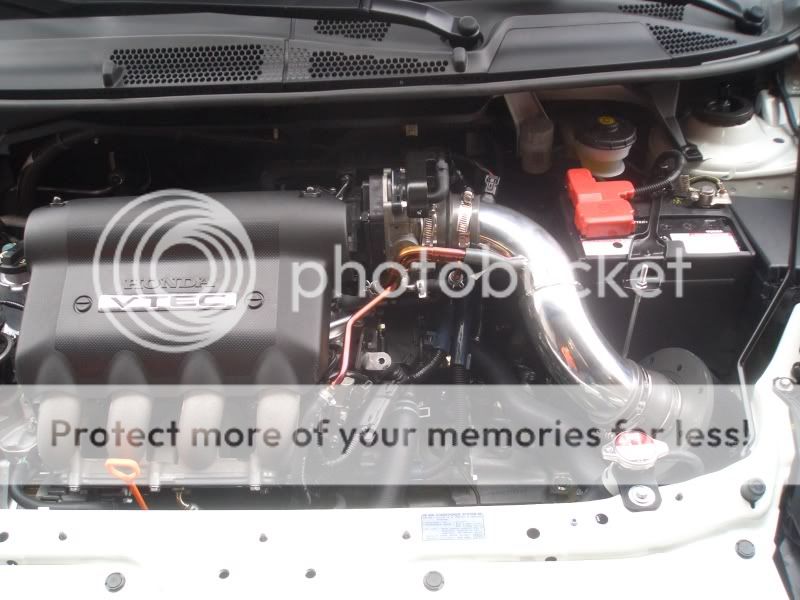
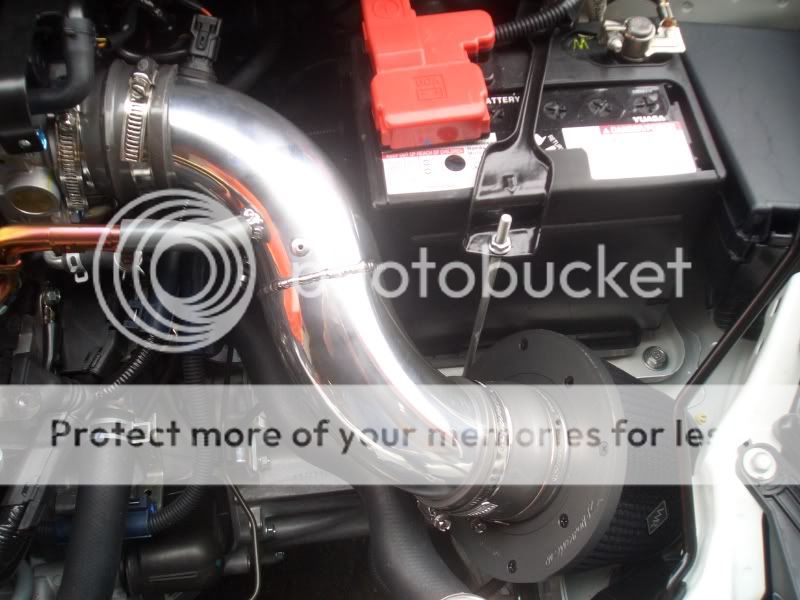
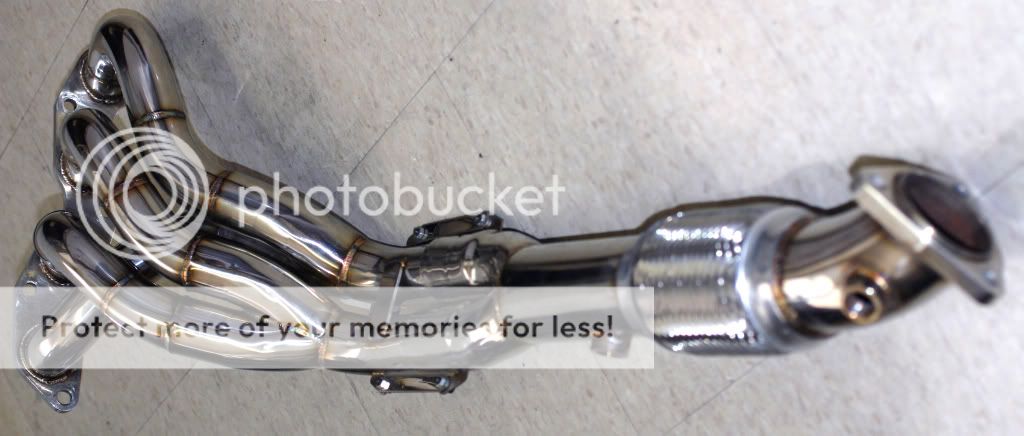
Full Length Header
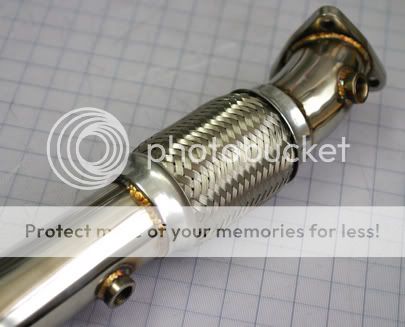
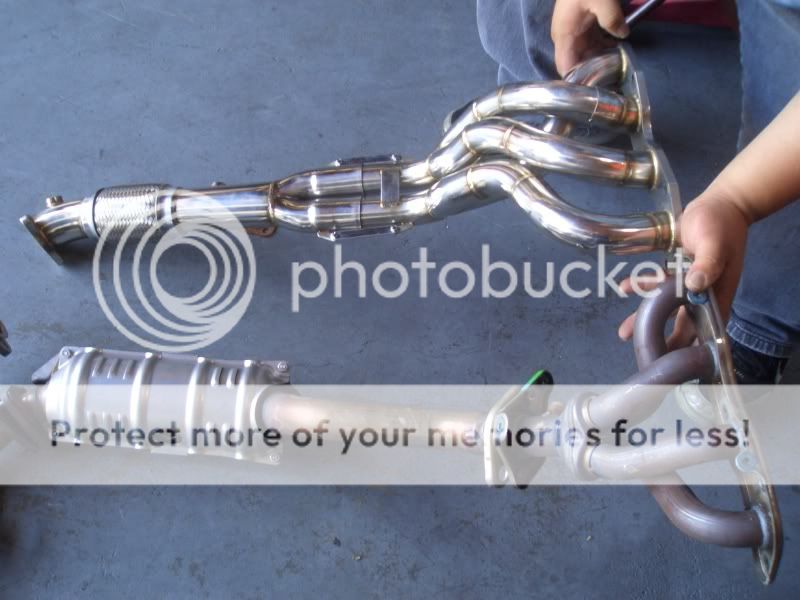
Header Back System
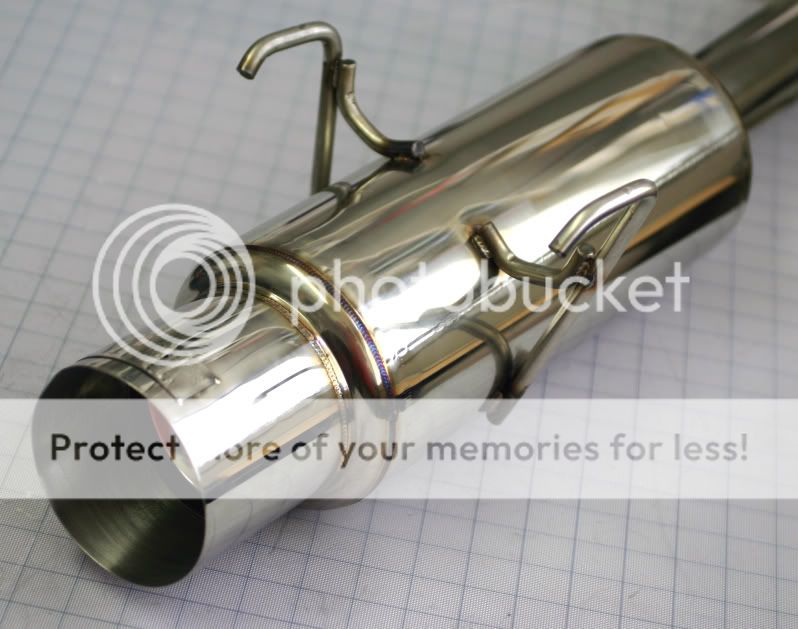
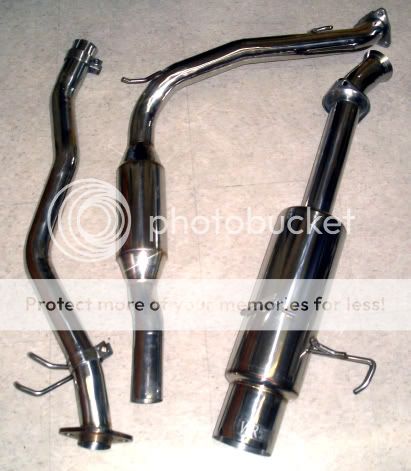

VIDEO CLIPS:
Intake on the dyno
Exhaust on the Dyno
DYNO RESULTS:
OEM VS SW INTAKE

OEM VS I/H/E

Modified by BiG Chris at 11:50 AM 6/5/2006
PARTS:
Secret Weapon Intake System
Full Length Header
Header Back System
VIDEO CLIPS:
Intake on the dyno
Exhaust on the Dyno
DYNO RESULTS:
OEM VS SW INTAKE
OEM VS I/H/E
Modified by BiG Chris at 11:50 AM 6/5/2006


Member
Joined: Nov 2001
Posts: 1,024
Likes: 0
From: Albion, Ca, usa
Re: Weapon*R Intake Header & Header Back System + DYNOS! NO 56K! (BiG Chris)
I just want to give props to the people at Weapon*R. They spent the day test fitting and dyno'ing parts on my Fit. I was really surprised that it responded so well to the i/h/e combo. Throttle response is much better and i no longer have to downshift to 4th gear on the freeway for the steeper grades. I had a fun drive home. If anyone is looking for parts for their new Fit, check out Weapon*R.
Thanks again Chris, Ray and Chris for everything today.
Toby
Thanks again Chris, Ray and Chris for everything today.
Toby
Thread Starter
Honda-Tech Member
Joined: Aug 2004
Posts: 1,601
Likes: 0
From: THE BAY, Ca, USA

Trending Topics


Honda-Tech Member
Joined: Mar 2004
Posts: 5,967
Likes: 3
From: San Diego, CA
Re: (BiG Chris)
<TABLE WIDTH="90%" CELLSPACING=0 CELLPADDING=0 ALIGN=CENTER><TR><TD>Quote, originally posted by BiG Chris »</TD></TR><TR><TD CLASS="quote">Please take into cosideration these dynos are peak power for each we will post another one showing the big power gains.</TD></TR></TABLE>
sounds like a supercharger owner to me.
"but look how much tq i make at 3200 rpms!"
sounds like a supercharger owner to me.
"but look how much tq i make at 3200 rpms!"


Honda-Tech Member
Joined: Jul 2002
Posts: 157
Likes: 0
From: Nags Head, NC,USA
Re: (Dougie Pants)
Alrighty then:
* when will these parts be available?
* how much?
* where order from?
* What did you have to remove to get manifold off / header on? It looks like if you come up through the top the coil packs gotta move?
Thanks,
Wildman
* when will these parts be available?
* how much?
* where order from?
* What did you have to remove to get manifold off / header on? It looks like if you come up through the top the coil packs gotta move?
Thanks,
Wildman

Joined: May 2006
Posts: 184
Likes: 0
From: San Jose, CA
Re: Weapon*R Intake Header & Header Back System + DYNOS! NO 56K! (BiG Chris)
So what are your conclusions???? I hate write-ups/test that don't have anything conclusive to say. So allow me to comment:
CONCLUSION: It appears you get a median hp increase of about 5 with the intake alone and 9-10 with the intake/header combo between 3000 and 6000 rpm. That's my conlcusion with caveats below. Oh, and, I wouldn't consider peak power as an indicator of what these add-ons can attain. It takes a long time to reach 6k rpm.
1. The stock torque curve is very lumpy - especially at 3500 rpm. I think something went wrong with some parameter at that moment. I've never felt a loss of power in my stock Fit at 3500 rpm.
2. Honda specs peak torque at 4800 rpm. I would expect to see a smoother torque curve to reflect that.
3. A lot of driving is done below 3000 rpm - especially between 2000 and 3000rpm. The hp/torque gains appear insignificant at those points.
CONCLUSION: It appears you get a median hp increase of about 5 with the intake alone and 9-10 with the intake/header combo between 3000 and 6000 rpm. That's my conlcusion with caveats below. Oh, and, I wouldn't consider peak power as an indicator of what these add-ons can attain. It takes a long time to reach 6k rpm.
1. The stock torque curve is very lumpy - especially at 3500 rpm. I think something went wrong with some parameter at that moment. I've never felt a loss of power in my stock Fit at 3500 rpm.
2. Honda specs peak torque at 4800 rpm. I would expect to see a smoother torque curve to reflect that.
3. A lot of driving is done below 3000 rpm - especially between 2000 and 3000rpm. The hp/torque gains appear insignificant at those points.


Thread Starter
Honda-Tech Member
Joined: Aug 2004
Posts: 1,601
Likes: 0
From: THE BAY, Ca, USA
Re: Weapon*R Intake Header & Header Back System + DYNOS! NO 56K! (Fitfokker)
<TABLE WIDTH="90%" CELLSPACING=0 CELLPADDING=0 ALIGN=CENTER><TR><TD>Quote, originally posted by Fitfokker »</TD></TR><TR><TD CLASS="quote">So what are your conclusions???? I hate write-ups/test that don't have anything conclusive to say. So allow me to comment:
CONCLUSION: It appears you get a median hp increase of about 5 with the intake alone and 9-10 with the intake/header combo between 3000 and 6000 rpm. That's my conlcusion with caveats below. Oh, and, I wouldn't consider peak power as an indicator of what these add-ons can attain. It takes a long time to reach 6k rpm.
1. The stock torque curve is very lumpy - especially at 3500 rpm. I think something went wrong with some parameter at that moment. I've never felt a loss of power in my stock Fit at 3500 rpm.
2. Honda specs peak torque at 4800 rpm. I would expect to see a smoother torque curve to reflect that.
3. A lot of driving is done below 3000 rpm - especially between 2000 and 3000rpm. The hp/torque gains appear insignificant at those points.
</TD></TR></TABLE>
We will post up another version of the dynos showing max gains, rather than peak gains. It should be noted though, that peak horsepower dynos and claims are the standard of this industry. We ran at least 3 back to back OEM runs, and each one showed the same dip. We did not change any constants while making these runs, and every dyno run through the day was run in the same manner.
This is the first Fit that has been dynoed and has the results posted to our knowledge, so we honestly don't have another Fit dyno to compare it to. We will however comment on the OEM intake and header design, and just how restrictive it is.
If you look at the OEM intake assembly, you can see inside the throttle body end, the complexity of the baffles used. Not only does the intake make a sharp 90 degree turn, it exit of the inner hose opens up to a chamber-like area that induces a large amount of turbulence. This alone could cause torque loss. Now lets look at the exhaust side. You can see in our photos, that the OEM exhaust system is pretty restrictive, with an emphasis on the cat convertor. A close look shows how the exhaust enters the cat at a near 90 degree angle, another major restriction of flow.
The dyno charts show a 4ftlb gain at 3000rpm for just the intake, and a 5ftlb gain at 3000 for IHE. Those gains alone are on par with most intakes alone available. Let's be realistic, we are dealing with a 1.5L engine, it's not going to be a torque monster at 2000rpm, especially not with just an IHE upgrade. We design our products for good midrange, where most people drive at for highway and street driving. Honda engines are largely high revving in nature, and the transmission gearing supports that.
CONCLUSION: It appears you get a median hp increase of about 5 with the intake alone and 9-10 with the intake/header combo between 3000 and 6000 rpm. That's my conlcusion with caveats below. Oh, and, I wouldn't consider peak power as an indicator of what these add-ons can attain. It takes a long time to reach 6k rpm.
1. The stock torque curve is very lumpy - especially at 3500 rpm. I think something went wrong with some parameter at that moment. I've never felt a loss of power in my stock Fit at 3500 rpm.
2. Honda specs peak torque at 4800 rpm. I would expect to see a smoother torque curve to reflect that.
3. A lot of driving is done below 3000 rpm - especially between 2000 and 3000rpm. The hp/torque gains appear insignificant at those points.
</TD></TR></TABLE>
We will post up another version of the dynos showing max gains, rather than peak gains. It should be noted though, that peak horsepower dynos and claims are the standard of this industry. We ran at least 3 back to back OEM runs, and each one showed the same dip. We did not change any constants while making these runs, and every dyno run through the day was run in the same manner.
This is the first Fit that has been dynoed and has the results posted to our knowledge, so we honestly don't have another Fit dyno to compare it to. We will however comment on the OEM intake and header design, and just how restrictive it is.
If you look at the OEM intake assembly, you can see inside the throttle body end, the complexity of the baffles used. Not only does the intake make a sharp 90 degree turn, it exit of the inner hose opens up to a chamber-like area that induces a large amount of turbulence. This alone could cause torque loss. Now lets look at the exhaust side. You can see in our photos, that the OEM exhaust system is pretty restrictive, with an emphasis on the cat convertor. A close look shows how the exhaust enters the cat at a near 90 degree angle, another major restriction of flow.
The dyno charts show a 4ftlb gain at 3000rpm for just the intake, and a 5ftlb gain at 3000 for IHE. Those gains alone are on par with most intakes alone available. Let's be realistic, we are dealing with a 1.5L engine, it's not going to be a torque monster at 2000rpm, especially not with just an IHE upgrade. We design our products for good midrange, where most people drive at for highway and street driving. Honda engines are largely high revving in nature, and the transmission gearing supports that.
Joined: May 2006
Posts: 184
Likes: 0
From: San Jose, CA
Re: Weapon*R Intake Header & Header Back System + DYNOS! NO 56K! (BiG Chris)
<TABLE WIDTH="90%" CELLSPACING=0 CELLPADDING=0 ALIGN=CENTER><TR><TD>Quote, originally posted by BiG Chris »</TD></TR><TR><TD CLASS="quote">We will post up another version of the dynos showing max gains, rather than peak gains. It should be noted though, that peak horsepower dynos and claims are the standard of this industry. We ran at least 3 back to back OEM runs, and each one showed the same dip. We did not change any constants while making these runs, and every dyno run through the day was run in the same manner.
This is the first Fit that has been dynoed and has the results posted to our knowledge, so we honestly don't have another Fit dyno to compare it to. We will however comment on the OEM intake and header design, and just how restrictive it is.
If you look at the OEM intake assembly, you can see inside the throttle body end, the complexity of the baffles used. Not only does the intake make a sharp 90 degree turn, it exit of the inner hose opens up to a chamber-like area that induces a large amount of turbulence. This alone could cause torque loss. Now lets look at the exhaust side. You can see in our photos, that the OEM exhaust system is pretty restrictive, with an emphasis on the cat convertor. A close look shows how the exhaust enters the cat at a near 90 degree angle, another major restriction of flow.
... Let's be realistic, we are dealing with a 1.5L engine, it's not going to be a torque monster at 2000rpm, especially not with just an IHE upgrade. that.</TD></TR></TABLE>
Thanks for the details on the odd stock torque curve. Although you got consistent trial results it still doesn't make sense that there would be a torque dip like that. I think one could feel that. No? What sense do you make of it?
From what I understand turbulance is highly desireable in an intake system and most manufacturers try to create it. The baffles you see are most likely to create turbulence for better power. A smooth bore intake can create a high air density gradient in the combustion chamber which is innefficient (worse mpg, less power). Generally speaking, you want a "rough" intake and a "smooth" exhaust.
Though the intake and exahaust mods have their benefits I'm hoping for a belt driven supercharger for the 1.5. I think something like that should give it a nice, broad torque curve rise of around 20 - 30 percent.
This is the first Fit that has been dynoed and has the results posted to our knowledge, so we honestly don't have another Fit dyno to compare it to. We will however comment on the OEM intake and header design, and just how restrictive it is.
If you look at the OEM intake assembly, you can see inside the throttle body end, the complexity of the baffles used. Not only does the intake make a sharp 90 degree turn, it exit of the inner hose opens up to a chamber-like area that induces a large amount of turbulence. This alone could cause torque loss. Now lets look at the exhaust side. You can see in our photos, that the OEM exhaust system is pretty restrictive, with an emphasis on the cat convertor. A close look shows how the exhaust enters the cat at a near 90 degree angle, another major restriction of flow.
... Let's be realistic, we are dealing with a 1.5L engine, it's not going to be a torque monster at 2000rpm, especially not with just an IHE upgrade. that.</TD></TR></TABLE>
Thanks for the details on the odd stock torque curve. Although you got consistent trial results it still doesn't make sense that there would be a torque dip like that. I think one could feel that. No? What sense do you make of it?
From what I understand turbulance is highly desireable in an intake system and most manufacturers try to create it. The baffles you see are most likely to create turbulence for better power. A smooth bore intake can create a high air density gradient in the combustion chamber which is innefficient (worse mpg, less power). Generally speaking, you want a "rough" intake and a "smooth" exhaust.
Though the intake and exahaust mods have their benefits I'm hoping for a belt driven supercharger for the 1.5. I think something like that should give it a nice, broad torque curve rise of around 20 - 30 percent.


New User
Joined: Mar 2001
Posts: 30
Likes: 0
From: alameda, ca, usa
Re: Weapon*R Intake Header & Header Back System + DYNOS! NO 56K! (Fitfokker)
<TABLE WIDTH="90%" CELLSPACING=0 CELLPADDING=0 ALIGN=CENTER><TR><TD>Quote, originally posted by Fitfokker »</TD></TR><TR><TD CLASS="quote">Thanks for the details on the odd stock torque curve. Although you got consistent trial results it still doesn't make sense that there would be a torque dip like that. I think one could feel that. No? What sense do you make of it?
From what I understand turbulance is highly desireable in an intake system and most manufacturers try to create it. The baffles you see are most likely to create turbulence for better power. A smooth bore intake can create a high air density gradient in the combustion chamber which is innefficient (worse mpg, less power). Generally speaking, you want a "rough" intake and a "smooth" exhaust.
Though the intake and exahaust mods have their benefits I'm hoping for a belt driven supercharger for the 1.5. I think something like that should give it a nice, broad torque curve rise of around 20 - 30 percent.</TD></TR></TABLE>
I have seen many vehicles with dips in the torque curve such as this one, and many are not noticable. The butt dyno doesn't always tell all. The total loss on that dip is about 5ft/lbs. In general you won't feel that big of a difference with that.
Turbulence is not a good thing when it comes to the intake tract pre-injectors. While it is true that you don't want a super smooth intake port, the opposite is true for for the rest of the intake system. In order to get as much air into the intake manifold as possible while the throttle is open, you want a smooth, laminar flow. You want the highest velocity, and lowest restriction flow to push air into the intake manifold. You actually want a high density air to enter the engine. High density air contains more oxygen molecules. This is why you make more power on a cold day than a hot day, high air density. Inside the intake manifold, you want to have a slightly rough surface on the runners after the injectors to facilitate the atomization of the fuel. The OEM baffles are NOT to create more power, but to rather quiet down the intake system.
From what I understand turbulance is highly desireable in an intake system and most manufacturers try to create it. The baffles you see are most likely to create turbulence for better power. A smooth bore intake can create a high air density gradient in the combustion chamber which is innefficient (worse mpg, less power). Generally speaking, you want a "rough" intake and a "smooth" exhaust.
Though the intake and exahaust mods have their benefits I'm hoping for a belt driven supercharger for the 1.5. I think something like that should give it a nice, broad torque curve rise of around 20 - 30 percent.</TD></TR></TABLE>
I have seen many vehicles with dips in the torque curve such as this one, and many are not noticable. The butt dyno doesn't always tell all. The total loss on that dip is about 5ft/lbs. In general you won't feel that big of a difference with that.
Turbulence is not a good thing when it comes to the intake tract pre-injectors. While it is true that you don't want a super smooth intake port, the opposite is true for for the rest of the intake system. In order to get as much air into the intake manifold as possible while the throttle is open, you want a smooth, laminar flow. You want the highest velocity, and lowest restriction flow to push air into the intake manifold. You actually want a high density air to enter the engine. High density air contains more oxygen molecules. This is why you make more power on a cold day than a hot day, high air density. Inside the intake manifold, you want to have a slightly rough surface on the runners after the injectors to facilitate the atomization of the fuel. The OEM baffles are NOT to create more power, but to rather quiet down the intake system.
