


oil catch can?


Honda-Tech Member
Joined: Aug 2005
Posts: 96
Likes: 0
From: Berwyn, IL, USA
 Re: oil catch can? (BDRphaSe2)
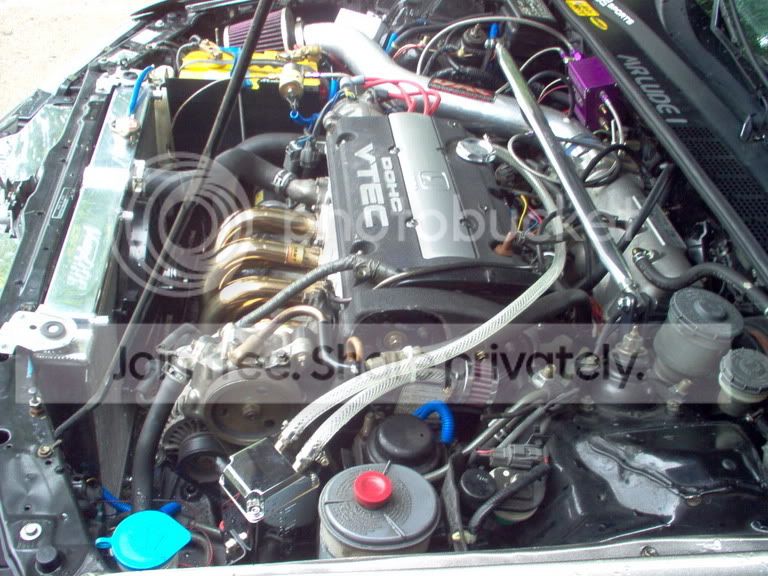
Not SOOO necessary, just a piece of mind. At higher RPM's, you may get oil-blow-off/by that the factory re-routes back to the intake. This actually lowers your octane by mixing oil into the fuel/air mixture, especially @ VTEC. The catch-can will catch it 1st, but may never fill up w/oil on a properly tuned motor. On my 1st motor, I did the breather thing. After the swap, I noticed how oily the lil breather was, so...I'm using one because I did alot of head work, & was just added piece of mind for my new JDM motor. So, you're not stupid, because now you know. 

Thread Starter
Joined: Jul 2005
Posts: 265
Likes: 0
From: 123 fake street, NY, USA
well thanks for not bein a complete *** about and now it think it can be a good thing, but if you hook the tubs from your valve cover the collecter, the normal tube that would come from intake to valve cover wouldent go to valve cover anymore? just open or what  err new to this container thing hahaa
err new to this container thing hahaa

Honda-Tech Member
Joined: Mar 2004
Posts: 15,050
Likes: 3
Re: oil catch can? (MrLude1)
<TABLE WIDTH="90%" CELLSPACING=0 CELLPADDING=0 ALIGN=CENTER><TR><TD>Quote, originally posted by MrLude1 »</TD></TR><TR><TD CLASS="quote">Not SOOO necessary, just a piece of mind. At higher RPM's, you may get oil-blow-off/by that the factory re-routes back to the intake. This actually lowers your octane by mixing oil into the fuel/air mixture, especially @ VTEC. The catch-can will catch it 1st, but may never fill up w/oil on a properly tuned motor. On my 1st motor, I did the breather thing. After the swap, I noticed how oily the lil breather was, so...I'm using one because I did alot of head work, & was just added piece of mind for my new JDM motor. So, you're not stupid, because now you know.
</TD></TR></TABLE>
is that a euro-r im that i spy??
usually people also run the pcv lines to the catch can, in addition to the breather.....
</TD></TR></TABLE>
is that a euro-r im that i spy??
usually people also run the pcv lines to the catch can, in addition to the breather.....

Junior Member
Joined: May 2005
Posts: 980
Likes: 0
From: WA, USA
Re: oil catch can? (IHateJDM)
<TABLE WIDTH="90%" CELLSPACING=0 CELLPADDING=0 ALIGN=CENTER><TR><TD>Quote, originally posted by IHateJDM »</TD></TR><TR><TD CLASS="quote">on mine, i just ran pcv valve to catch can to intake manifold.</TD></TR></TABLE>
me too! there are two different ways that i've heard of: the catch can goes in between the valvecover and intake, or valve cover and the intake manifold. inlinefour.com recomended placing it between the vlave cover and intake manifold, i guess it creates a better vacuum that way, i think...
me too! there are two different ways that i've heard of: the catch can goes in between the valvecover and intake, or valve cover and the intake manifold. inlinefour.com recomended placing it between the vlave cover and intake manifold, i guess it creates a better vacuum that way, i think...
Trending Topics

Member
Joined: Dec 2003
Posts: 4,326
Likes: 3
From: Respek my Fresh
Re: oil catch can? (BB6racer)
<TABLE WIDTH="90%" CELLSPACING=0 CELLPADDING=0 ALIGN=CENTER><TR><TD>Quote, originally posted by BB6racer »</TD></TR><TR><TD CLASS="quote">
me too! there are two different ways that i've heard of: </TD></TR></TABLE>
i've always figured that connecting it to the intake would benefit turbo cars more than NA cars.
me too! there are two different ways that i've heard of: </TD></TR></TABLE>i've always figured that connecting it to the intake would benefit turbo cars more than NA cars.

Honda-Tech Member
iTrader: (1)
Joined: Oct 2004
Posts: 888
Likes: 1
From: Tucson...Cactus Town, Az, usa
Re: oil catch can? (IHateJDM)
is it worth the money for what it does?
you know how when you WOT on your car and hit vtec, sometimes a puff of smoke comes out the back of your exhaust...(due to fuel mixture). Does this prevent that?
and jhpusa is selling the cusco one for $140 and the description says: Keep your engine bay clean with this catch can by Cusco.
I thought this can is supposed to prevent your fuel/air mixture from lowering your octane...
you know how when you WOT on your car and hit vtec, sometimes a puff of smoke comes out the back of your exhaust...(due to fuel mixture). Does this prevent that?
and jhpusa is selling the cusco one for $140 and the description says: Keep your engine bay clean with this catch can by Cusco.
I thought this can is supposed to prevent your fuel/air mixture from lowering your octane...


Honda-Tech Member
Joined: Mar 2005
Posts: 525
Likes: 0
From: Phoenix, az, us
Re: oil catch can? (khalal538)
<TABLE WIDTH="90%" CELLSPACING=0 CELLPADDING=0 ALIGN=CENTER><TR><TD>Quote, originally posted by khalal538 »</TD></TR><TR><TD CLASS="quote">is it worth the money for what it does?
you know how when you WOT on your car and hit vtec, sometimes a puff of smoke comes out the back of your exhaust...(due to fuel mixture). Does this prevent that?
and jhpusa is selling the cusco one for $140 and the description says: Keep your engine bay clean with this catch can by Cusco.
I thought this can is supposed to prevent your fuel/air mixture from lowering your octane...</TD></TR></TABLE>
yeah im curious now too.
you know how when you WOT on your car and hit vtec, sometimes a puff of smoke comes out the back of your exhaust...(due to fuel mixture). Does this prevent that?
and jhpusa is selling the cusco one for $140 and the description says: Keep your engine bay clean with this catch can by Cusco.
I thought this can is supposed to prevent your fuel/air mixture from lowering your octane...</TD></TR></TABLE>
yeah im curious now too.
Member
Joined: Dec 2003
Posts: 4,326
Likes: 3
From: Respek my Fresh
Re: oil catch can? (khalal538)
<TABLE WIDTH="90%" CELLSPACING=0 CELLPADDING=0 ALIGN=CENTER><TR><TD>Quote, originally posted by khalal538 »</TD></TR><TR><TD CLASS="quote">you know how when you WOT on your car and hit vtec, sometimes a puff of smoke comes out the back of your exhaust...(due to fuel mixture). Does this prevent that?
</TD></TR></TABLE>
nope, that's fuel.
it decreases the amount of blow by gasses that are reintroduced to the intake manifold. re-burning these gasses are good for emissions, bad for your A/F ratio and power.
</TD></TR></TABLE>
nope, that's fuel.
it decreases the amount of blow by gasses that are reintroduced to the intake manifold. re-burning these gasses are good for emissions, bad for your A/F ratio and power.


Honda-Tech Member
Joined: Jul 2005
Posts: 474
Likes: 0
Re: oil catch can? (MrLude1)
Originally Posted by
[img
[img
https://i6.photobucket.com/albums/y201/MrLude1/IM000978.jpg[/img]
But, back on topic, I three use my catch can between the intake manifold and the valve cover, while retaining the factory Honda PCV valve.
This brings me to another question: on http://www.g2ic.com, this guy was saying that the hose between the valve cover and the air intake needs to be left in tact. He said that, because of the positioning of the nipple that is on the air intake tube, that pressure is actually pushed into the crankcase, not sucked into the air intake. Is this true?

Joined: Oct 2002
Posts: 307
Likes: 0
From: Puyallup, Wa, USA
its not hooked up right
the breather valve needs to be connected to a vacuum source, or tie it into your exhaust via a slash cut (search for it) to draw the fumes out of the vc....right now there's no vacuum to draw out the fumes from the vc. anyhting comming out of there is doing so on its own, not cause of your catch can
the breather valve needs to be connected to a vacuum source, or tie it into your exhaust via a slash cut (search for it) to draw the fumes out of the vc....right now there's no vacuum to draw out the fumes from the vc. anyhting comming out of there is doing so on its own, not cause of your catch can
Honda-Tech Member
Joined: Jul 2005
Posts: 474
Likes: 0
Re: (khalal538)
<TABLE WIDTH="90%" CELLSPACING=0 CELLPADDING=0 ALIGN=CENTER><TR><TD>Quote, originally posted by khalal538 »</TD></TR><TR><TD CLASS="quote">ok i'm lost, does anyone have a diagram of how this works or can they further explain to me exactly what is what?</TD></TR></TABLE>
Basically it all stems from this:
In every internal-combustion engine, there is " blowby " through the piston rings. Blowby pressure builds up little by little in the motor's crankcase. This pressure has to go somewhere. If there were no source of vaccuum draw or escape, then the pressure would eventually build-up to the point that it would start causing gaskets to leak, as this would be the only place for the built-up pressure to escape from. The vehicle's PCV valve works with a source of vaccuum ( usually the intake manifold or air intake, or both ) to help draw pressure out of the crankcase via vaccuum. But remember, this pressure that is being sucked into the intake manifold and/or air intake contains oil fumes, which have three harmful side effects:
1. they lower the octane of the fuel being burned ( by lowering the octane ofthe fuel being burned, the motor is much more likely to see detonation, especially when boosted )
2. it makes the intake manifold dirty over time, as well as the intake valves
3. I had a third one in my mind but I forgot it... oh well
An oil catch can, when baffled, will trap oil from entering the intake manifold and/or air intake to be re-burned, while still allowing vaccuum to pass through it. Therefore, the necessary source of vaccuum to relieve crankcase pressure is left in tact, but the passage of oil is blocked.
Basically it all stems from this:
In every internal-combustion engine, there is " blowby " through the piston rings. Blowby pressure builds up little by little in the motor's crankcase. This pressure has to go somewhere. If there were no source of vaccuum draw or escape, then the pressure would eventually build-up to the point that it would start causing gaskets to leak, as this would be the only place for the built-up pressure to escape from. The vehicle's PCV valve works with a source of vaccuum ( usually the intake manifold or air intake, or both ) to help draw pressure out of the crankcase via vaccuum. But remember, this pressure that is being sucked into the intake manifold and/or air intake contains oil fumes, which have three harmful side effects:
1. they lower the octane of the fuel being burned ( by lowering the octane ofthe fuel being burned, the motor is much more likely to see detonation, especially when boosted )
2. it makes the intake manifold dirty over time, as well as the intake valves
3. I had a third one in my mind but I forgot it... oh well
An oil catch can, when baffled, will trap oil from entering the intake manifold and/or air intake to be re-burned, while still allowing vaccuum to pass through it. Therefore, the necessary source of vaccuum to relieve crankcase pressure is left in tact, but the passage of oil is blocked.

Honda-Tech Member
iTrader: (1)
Joined: Oct 2004
Posts: 888
Likes: 1
From: Tucson...Cactus Town, Az, usa
Re: (DIRTYsouthBB6)
<TABLE WIDTH="90%" CELLSPACING=0 CELLPADDING=0 ALIGN=CENTER><TR><TD>Quote, originally posted by DIRTYsouthBB6 »</TD></TR><TR><TD CLASS="quote">
If there were no source of vaccuum draw or escape, then the pressure would eventually build-up to the point that it would start causing gaskets to leak, as this would be the only place for the built-up pressure to escape from. </TD></TR></TABLE>
is that where and why your oil burns when you go into vtec? because of all the pressure?
If there were no source of vaccuum draw or escape, then the pressure would eventually build-up to the point that it would start causing gaskets to leak, as this would be the only place for the built-up pressure to escape from. </TD></TR></TABLE>
is that where and why your oil burns when you go into vtec? because of all the pressure?
Honda-Tech Member
Joined: Jul 2005
Posts: 474
Likes: 0
Re: (khalal538)
<TABLE WIDTH="90%" CELLSPACING=0 CELLPADDING=0 ALIGN=CENTER><TR><TD>Quote, originally posted by khalal538 »</TD></TR><TR><TD CLASS="quote">
is that where and why your oil burns when you go into vtec? because of all the pressure?</TD></TR></TABLE>
No, the oil is burned in the combustion chamber with the fuel. Some oil, especially at higher RPMs, passes through the piston rings and ends-up being burned.
is that where and why your oil burns when you go into vtec? because of all the pressure?</TD></TR></TABLE>
No, the oil is burned in the combustion chamber with the fuel. Some oil, especially at higher RPMs, passes through the piston rings and ends-up being burned.
Honda-Tech Member
iTrader: (1)
Joined: Oct 2004
Posts: 888
Likes: 1
From: Tucson...Cactus Town, Az, usa
Re: (DIRTYsouthBB6)
thanks for the explanation, so for my setup do you recommend one?
my setup: cai/h/e w/high flow cat, pulley set, stock internals. had an ignition system, but it is currently removed.
my setup: cai/h/e w/high flow cat, pulley set, stock internals. had an ignition system, but it is currently removed.


Honda-Tech Member
Joined: Apr 2005
Posts: 1,506
Likes: 0
From: NoR CaL, United States
Re: (boostlude)
correct me if im wrong, but i think the breather goes on the valve cover where the hose usually leads back into the air intake.. not from the valve cover to the IM... thats where the PCV valve is, and thats where the catch can should be connected to...
Joined: Oct 2002
Posts: 307
Likes: 0
From: Puyallup, Wa, USA
Re: (bigz187)
<TABLE WIDTH="90%" CELLSPACING=0 CELLPADDING=0 ALIGN=CENTER><TR><TD>Quote, originally posted by bigz187 »</TD></TR><TR><TD CLASS="quote">i've always heard that it is your engine needs the fresh air that is supplied from the hose that runs from your intake to your valve cover </TD></TR></TABLE>
air isn't supplied to you valve cover via the hose from the intake to the vc (i.e. the valve cover breather) Gasses are drawn OUT of the VC and back into the intake as stated before. You need a vacuum to draw out those fumes i.e. the pcv valve wich allows engine vacuum to draw those fumes out and into the intake manifold.
</TD></TR></TABLE>air isn't supplied to you valve cover via the hose from the intake to the vc (i.e. the valve cover breather) Gasses are drawn OUT of the VC and back into the intake as stated before. You need a vacuum to draw out those fumes i.e. the pcv valve wich allows engine vacuum to draw those fumes out and into the intake manifold.