


Syncrowave 200 Installation


Thread Starter
Honda-Tech Member
Joined: Dec 2000
Posts: 20,006
Likes: 3
From: Tampa, FL
 Syncrowave 200 Installation
I just received my new Miller Syncrowave 200 last week and have been looking at different connectors and receptacles to install this thing. I have been wondering if there are any of you guys that did not hard wire it directly your panel and instead made a power cable and receptacle on the wall to plug into. It requires a 60AMP, single phase setup and all the local electrical stores think I am installing an Electric chair in my garage at those settings.

OG Fabricator
Joined: Dec 2006
Posts: 1,342
Likes: 0
From: Calgary, Alberta, Canada
Re: Syncrowave 200 Installation (Blown90hatcH)
What? Yeah, mine is a cord and plug set-up...
They are hesitant to help or what?
Is your panel set-up to deliver that kind of power to a single circuit?(ie:is the wire large enough for that curent?)
Congrats, you are going to like that machine.
They are hesitant to help or what?
Is your panel set-up to deliver that kind of power to a single circuit?(ie:is the wire large enough for that curent?)
Congrats, you are going to like that machine.

B*a*n*n*e*d
Joined: Jan 2002
Posts: 7,177
Likes: 0
From: retired 2/13/10
Re: Syncrowave 200 Installation (Blown90hatcH)
1. i got some 6/3 wire
2. cut a hole in the drywall in my garage
3. drilled the top plates with my flex bit
4. used my hole saw to drill the top plate above my panel
5. fished wire down to the panel
6. fished wire down to my future plug in
7. wired receptacle
8. wired factory miller SO cord
9. hook wire to breaker
10. plug in, turn on vwalla a working synchrowave 200
what is it exactly that your asking?
BTW, dont i sould like an electrician.
2. cut a hole in the drywall in my garage
3. drilled the top plates with my flex bit
4. used my hole saw to drill the top plate above my panel
5. fished wire down to the panel
6. fished wire down to my future plug in
7. wired receptacle
8. wired factory miller SO cord
9. hook wire to breaker
10. plug in, turn on vwalla a working synchrowave 200
what is it exactly that your asking?
BTW, dont i sould like an electrician.

Honda-Tech Member
Joined: Sep 2003
Posts: 3,039
Likes: 2
From: insanity
Re: Syncrowave 200 Installation (1 2 NV)
<TABLE WIDTH="90%" CELLSPACING=0 CELLPADDING=0 ALIGN=CENTER><TR><TD>Quote, originally posted by 1 2 NV »</TD></TR><TR><TD CLASS="quote">
BTW, dont i sould like an electrician. </TD></TR></TABLE>
yea till your house burns down. Jk good info
BTW, dont i sould like an electrician.
</TD></TR></TABLE>yea till your house burns down. Jk good info
B*a*n*n*e*d
Joined: Jan 2002
Posts: 7,177
Likes: 0
From: retired 2/13/10
Re: Syncrowave 200 Installation (dr.NAPIER)
no, that would be from me welding on a wood bench. 
i do have a couple layers of metal underneath to try and take up some of the heat from my attempts at welding.
i do have a couple layers of metal underneath to try and take up some of the heat from my attempts at welding.
Thread Starter
Honda-Tech Member
Joined: Dec 2000
Posts: 20,006
Likes: 3
From: Tampa, FL
Re: Syncrowave 200 Installation (1 2 NV)
<TABLE WIDTH="90%" CELLSPACING=0 CELLPADDING=0 ALIGN=CENTER><TR><TD>Quote, originally posted by 1 2 NV »</TD></TR><TR><TD CLASS="quote">1. i got some 6/3 wire
2. cut a hole in the drywall in my garage
3. drilled the top plates with my flex bit
4. used my hole saw to drill the top plate above my panel
5. fished wire down to the panel
6. fished wire down to my future plug in
7. wired receptacle
8. wired factory miller SO cord
9. hook wire to breaker
10. plug in, turn on vwalla a working synchrowave 200
what is it exactly that your asking?
BTW, dont i sould like an electrician. </TD></TR></TABLE>
Haha. Yeah...panel, breaker, 6/3 SOOW cable and 6/3 wire... all no problem. The issue I am having is finding a 60 AMP female receptacle to mount on the wall.
Breaker/Panel--->6/3 wire----->female receptacle mounted in wall--->Male connector on SOOW cable from welder---->SOOW cable goes into welder = done.
Problem I am having is the female 60AMP receptacle that will mount into the wall.
Did your welder's come with the 60AMP male plug on the SOOW cable?
2. cut a hole in the drywall in my garage
3. drilled the top plates with my flex bit
4. used my hole saw to drill the top plate above my panel
5. fished wire down to the panel
6. fished wire down to my future plug in
7. wired receptacle
8. wired factory miller SO cord
9. hook wire to breaker
10. plug in, turn on vwalla a working synchrowave 200
what is it exactly that your asking?
BTW, dont i sould like an electrician.
</TD></TR></TABLE>Haha. Yeah...panel, breaker, 6/3 SOOW cable and 6/3 wire... all no problem. The issue I am having is finding a 60 AMP female receptacle to mount on the wall.
Breaker/Panel--->6/3 wire----->female receptacle mounted in wall--->Male connector on SOOW cable from welder---->SOOW cable goes into welder = done.
Problem I am having is the female 60AMP receptacle that will mount into the wall.
Did your welder's come with the 60AMP male plug on the SOOW cable?

Honda-Tech Member
Joined: Dec 2002
Posts: 1,559
Likes: 0
From: Boston City of Champions!
when i wired mine up i got a plug that matched my dryer plug. be careful, i cant rember but something about the wire colors was off and i had the ground to the machine off. i got a lil buzz from the machine the first time i turned it on. now that i am moving my "shop" out my basement and into my sisters garage i want to wire a fuse box in the garage.
Trending Topics
B*a*n*n*e*d
Joined: Jan 2002
Posts: 7,177
Likes: 0
From: retired 2/13/10
Re: Syncrowave 200 Installation (Blown90hatcH)
i see what your saying. i dont think they make a 60A receptacle, i used a 50 amp. ill see what i can find.
this is what i used. i used a range receptacle. the 60A receptacle is offered in a 3 pole with ground otherwise known as a 4 wire. since we only need 3 wires (2 powers, 1 ground) for our welders we need what they call a 3 pole 3 wire. anyways enough jibbor jabboring. here:
http://www.passandseymour.com/pdf/B42.pdf
i used the 3890
this is what i used. i used a range receptacle. the 60A receptacle is offered in a 3 pole with ground otherwise known as a 4 wire. since we only need 3 wires (2 powers, 1 ground) for our welders we need what they call a 3 pole 3 wire. anyways enough jibbor jabboring. here:
http://www.passandseymour.com/pdf/B42.pdf
i used the 3890
Thread Starter
Honda-Tech Member
Joined: Dec 2000
Posts: 20,006
Likes: 3
From: Tampa, FL
Re: Syncrowave 200 Installation (1 2 NV)
<TABLE WIDTH="90%" CELLSPACING=0 CELLPADDING=0 ALIGN=CENTER><TR><TD>Quote, originally posted by 1 2 NV »</TD></TR><TR><TD CLASS="quote">i see what your saying. i dont think they make a 60A receptacle, i used a 50 amp. ill see what i can find.
this is what i used. i used a range receptacle. the 60A receptacle is offered in a 3 pole with ground otherwise known as a 4 wire. since we only need 3 wires (2 powers, 1 ground) for our welders we need what they call a 3 pole 3 wire. anyways enough jibbor jabboring. here:
http://www.passandseymour.com/pdf/B42.pdf
i used the 3890</TD></TR></TABLE>
Thanks man. I take it you have no issues with the 50 amp connectors? Also, did you still go with a 60AMP breaker? The rated input amperage at max output was 54 amps so that is why I was shooting for a 60 amp connector.
this is what i used. i used a range receptacle. the 60A receptacle is offered in a 3 pole with ground otherwise known as a 4 wire. since we only need 3 wires (2 powers, 1 ground) for our welders we need what they call a 3 pole 3 wire. anyways enough jibbor jabboring. here:
http://www.passandseymour.com/pdf/B42.pdf
i used the 3890</TD></TR></TABLE>
Thanks man. I take it you have no issues with the 50 amp connectors? Also, did you still go with a 60AMP breaker? The rated input amperage at max output was 54 amps so that is why I was shooting for a 60 amp connector.
B*a*n*n*e*d
Joined: Jan 2002
Posts: 7,177
Likes: 0
From: retired 2/13/10
Re: Syncrowave 200 Installation (Blown90hatcH)
none at all but i havent used the welder to its capacity yet. even though i shouldnt say this as long as the wire can fit in the terminals supplied on the connectors they will handle alot more than what they say. not that i install **** like that. its just you cant find a 60A 3 wire receptacle.
i did use a 2 pole 60A breaker though.
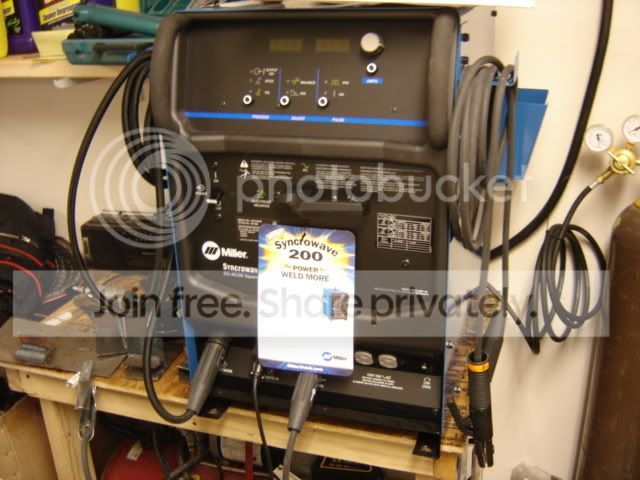
i did use a 2 pole 60A breaker though.

Honda-Tech Member
Joined: Nov 2003
Posts: 3,540
Likes: 1
From: GTA Ontario.
Re: Syncrowave 200 Installation (Blown90hatcH)
Here let me recommend something..
These specs are based on the CEC (Canadian electrical code) But it should be very similar.
You say single phase 60amp, im assuming this is just a straight 220V (like my welder) Not 120/220, so no neutral is required.
Ok, now for the receptacle on the wall, they DONT make a 60amp in a nonlocking receptacle, they do however for a Locking, 'hubbel twist lock'. If you plan to go the non locking route, the code for the female receptacle you need is '6-50R' and you will need a matching male end.
If you choose to go the locking route (which i highly recommend) you will need a 'L6-60R'.
Eaither way 'will' work, just the locking is to CEC. Now for wire, when buying the flexable cord you need i recommend a S, SO, SOO, ST, STO, STOO grade. This is flexable cord rated for extra-hard usage. For size you will need a MINIMUM OF 4AWG Whoever said #6 must be wiring their welder with something other then a black flexable cord or 'cabtire', because no #6 cabtire is rated for 60amps. Just figured i should clear that up. Most #6 flexable cord is rated for 45-50amps.
Now, that takes care of the cord you need, as well as the type of receptacles, use a standard 60amp 2pole breaker. The 50amp receptacles will handle the 60amps of current if thats what your worried about, since the wire is up to spec, but you can use twistlocks if you want.
If you go with twistlocks, you may not beable to find a wall mounted female receptacle, so you will have to use the type that goes on the end of a cord, do the following.
1. Put desired lenght cord on the welding machine.. With the male piece on this end.
2. Take a shorter piece of cord say 6ft, and put the other female receptacle on the end, then using something called a 'callum grip'.. slang name for strain relif, you can use this type of connector and tie it into the bottom of you breaker panell and just have the cord hang from the panell, and just plug and play, and since there twistlocks they wont fall apart eaither.
Well, any questions, just PM me or post up. I would recommend you buy your materials from a electrical supplier, just go in, tell them what you want to do and they will help you out. There not licensed electricans working the desks. I would stay away from homedepot and lowes and such since they may not have all the proper things and the people that work there are about as smart as the guy who told you to use #6 Still get the job done though... LOL.
EDIT: I notice you plan to use SOOW cable, just make sure its #4, #6 is only rated for 55amps. SOOW is overkill, outdoor rated for wet locations, extra hard usage. Dosent get any tougher! Remember, you say max draw is 54 amps, you can only load a circuit up to 80%, so your cable needs to be good to a minimum of 64.8amps, In which the #4 SOOW cable is good for 70amp. You will be fine on a 60amp circuit breaker, since it takes a bit more then 60 to trip it for a bit of time. But i would NEVER under-rate cable, if you under rate the cable, the cable becomes the fuse, if you under rate the breaker you get nusance trips
These specs are based on the CEC (Canadian electrical code) But it should be very similar.
You say single phase 60amp, im assuming this is just a straight 220V (like my welder) Not 120/220, so no neutral is required.
Ok, now for the receptacle on the wall, they DONT make a 60amp in a nonlocking receptacle, they do however for a Locking, 'hubbel twist lock'. If you plan to go the non locking route, the code for the female receptacle you need is '6-50R' and you will need a matching male end.
If you choose to go the locking route (which i highly recommend) you will need a 'L6-60R'.
Eaither way 'will' work, just the locking is to CEC. Now for wire, when buying the flexable cord you need i recommend a S, SO, SOO, ST, STO, STOO grade. This is flexable cord rated for extra-hard usage. For size you will need a MINIMUM OF 4AWG Whoever said #6 must be wiring their welder with something other then a black flexable cord or 'cabtire', because no #6 cabtire is rated for 60amps. Just figured i should clear that up. Most #6 flexable cord is rated for 45-50amps.
Now, that takes care of the cord you need, as well as the type of receptacles, use a standard 60amp 2pole breaker. The 50amp receptacles will handle the 60amps of current if thats what your worried about, since the wire is up to spec, but you can use twistlocks if you want.
If you go with twistlocks, you may not beable to find a wall mounted female receptacle, so you will have to use the type that goes on the end of a cord, do the following.
1. Put desired lenght cord on the welding machine.. With the male piece on this end.
2. Take a shorter piece of cord say 6ft, and put the other female receptacle on the end, then using something called a 'callum grip'.. slang name for strain relif, you can use this type of connector and tie it into the bottom of you breaker panell and just have the cord hang from the panell, and just plug and play, and since there twistlocks they wont fall apart eaither.
Well, any questions, just PM me or post up. I would recommend you buy your materials from a electrical supplier, just go in, tell them what you want to do and they will help you out. There not licensed electricans working the desks. I would stay away from homedepot and lowes and such since they may not have all the proper things and the people that work there are about as smart as the guy who told you to use #6
Still get the job done though... LOL.EDIT: I notice you plan to use SOOW cable, just make sure its #4, #6 is only rated for 55amps. SOOW is overkill, outdoor rated for wet locations, extra hard usage. Dosent get any tougher! Remember, you say max draw is 54 amps, you can only load a circuit up to 80%, so your cable needs to be good to a minimum of 64.8amps, In which the #4 SOOW cable is good for 70amp. You will be fine on a 60amp circuit breaker, since it takes a bit more then 60 to trip it for a bit of time. But i would NEVER under-rate cable, if you under rate the cable, the cable becomes the fuse, if you under rate the breaker you get nusance trips
B*a*n*n*e*d
Joined: Jan 2002
Posts: 7,177
Likes: 0
From: retired 2/13/10
Re: Syncrowave 200 Installation (HamiltonRex)
i dont think any equipment comes less than 75*c anymore. the synchrowave comes with #6 SO cord from the factory. i used NM cable from my panel to the receptacle.

Honda-Tech Member
Joined: Sep 2003
Posts: 3,039
Likes: 2
From: insanity
Re: Syncrowave 200 Installation (EGJDM)
I would just use a 50amp receptacle it should be fine I doubt your machine would be sucking 60amps all the time unless you have it set on 200. Shoulda got an inverter

Honda-Tech Member
Joined: May 2002
Posts: 15,814
Likes: 8
From: Dallas, TX, USA
Re: Syncrowave 200 Installation (dr.NAPIER)
The 50amp plug will be fine, it'll never see 60 amps for any length of time. Mine has the cord coming out of the breaker box and has a 100 amp inline connector on it so i can unplug the welder and move it. The syncro 250 needs a 100 amp breaker.

Honda-Tech Member
Joined: Apr 2001
Posts: 16,905
Likes: 3
From: Lansdale, PA
Re: Syncrowave 200 Installation (tony1)
are you guys all using common ground for your machine's ? i belive in the user manual it states the machine needs own ground. (at least in my old 180sd manual)
Honda-Tech Member
Joined: Apr 2001
Posts: 16,905
Likes: 3
From: Lansdale, PA
Re: Syncrowave 200 Installation (1 2 NV)
<TABLE WIDTH="90%" CELLSPACING=0 CELLPADDING=0 ALIGN=CENTER><TR><TD>Quote, originally posted by 1 2 NV »</TD></TR><TR><TD CLASS="quote">im using the standard ground supplied through the SO cord.</TD></TR></TABLE>
well, where does it go. did you drive another "stake" in the ground out side of your building ? or are you grounding both the machine, as well as evrything else with 1 ground ?
well, where does it go. did you drive another "stake" in the ground out side of your building ? or are you grounding both the machine, as well as evrything else with 1 ground ?
B*a*n*n*e*d
Joined: Jan 2002
Posts: 7,177
Likes: 0
From: retired 2/13/10
Re: Syncrowave 200 Installation (dturbocivic)
theres 3 wires in the SO cord supplied by miller. 2 powers 1 ground. that ground goes back to my electrical panel ground bar which has another ground that goes to a ground rod buried in the dirt outside.
Honda-Tech Member
Joined: Apr 2001
Posts: 16,905
Likes: 3
From: Lansdale, PA
Re: Syncrowave 200 Installation (1 2 NV)
<TABLE WIDTH="90%" CELLSPACING=0 CELLPADDING=0 ALIGN=CENTER><TR><TD>Quote, originally posted by 1 2 NV »</TD></TR><TR><TD CLASS="quote">theres 3 wires in the SO cord supplied by miller. 2 powers 1 ground. that ground goes back to my electrical panel ground bar which has another ground that goes to a ground rod buried in the dirt outside.</TD></TR></TABLE>
so it is all tied in with the 1 ground rod ?
so it is all tied in with the 1 ground rod ?
B*a*n*n*e*d
Joined: Jan 2002
Posts: 7,177
Likes: 0
From: retired 2/13/10
Re: Syncrowave 200 Installation (dturbocivic)
actually from that ground rod it goes to another one. NEC says there has to be 2 ground rods driven at least 8' apart. ive only seen the one at my house.
Honda-Tech Member
Joined: Apr 2001
Posts: 16,905
Likes: 3
From: Lansdale, PA
Re: Syncrowave 200 Installation (1 2 NV)
i dont know the 1st thing about electrical codes or any of that jargon. im just stating what i read in my user manual. i figured maybe you would come across something similar in your user manual ?