


mazdaspeed3 downpipe


Thread Starter
Junior Member
Joined: Jun 2007
Posts: 67
Likes: 0
From: harpers ferry, NoVA
 mazdaspeed3 downpipe
we make these bitches at work by the boatload (woring on a batch of 75 now) we just redesigned this using the cast bellmount instead of a cut and weld at the top.
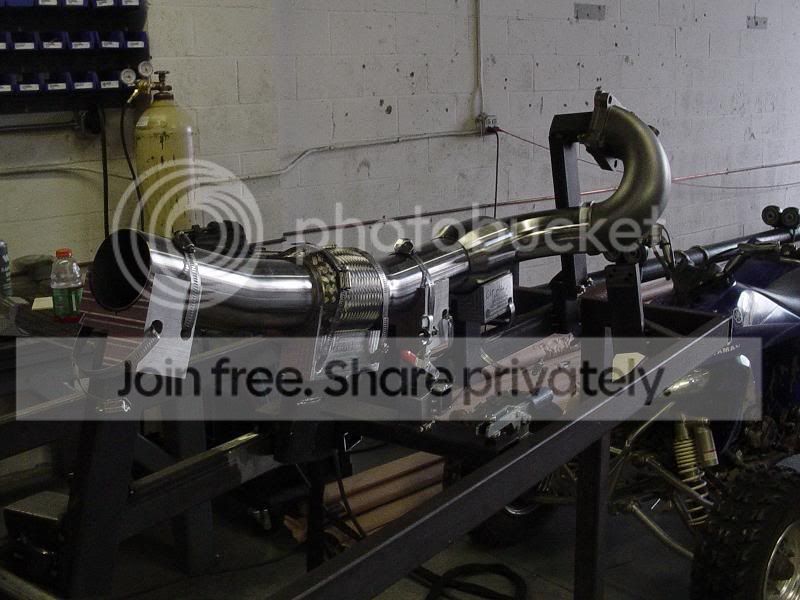
all strapped into the fixture
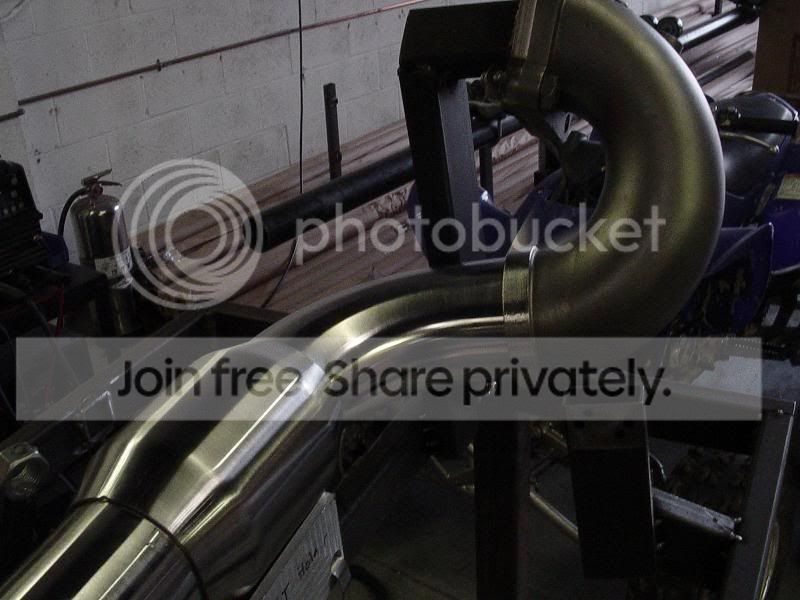
ready for tacking
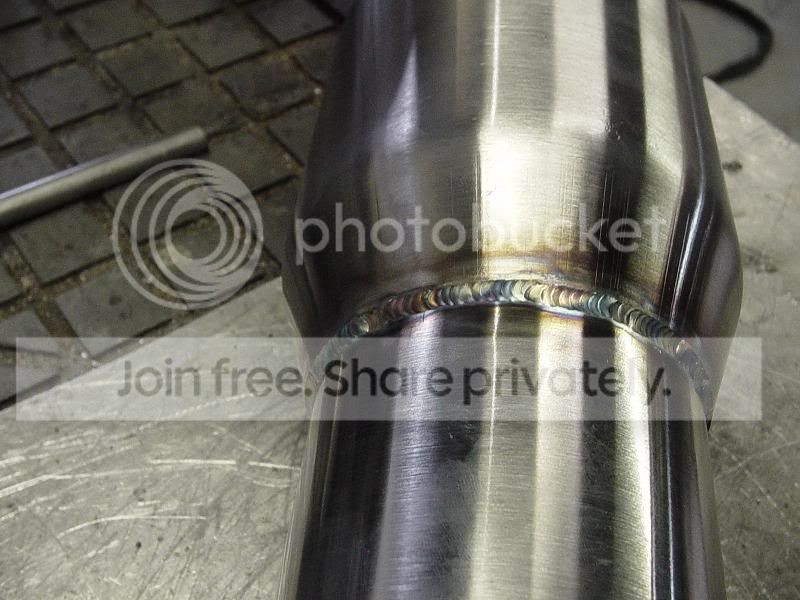
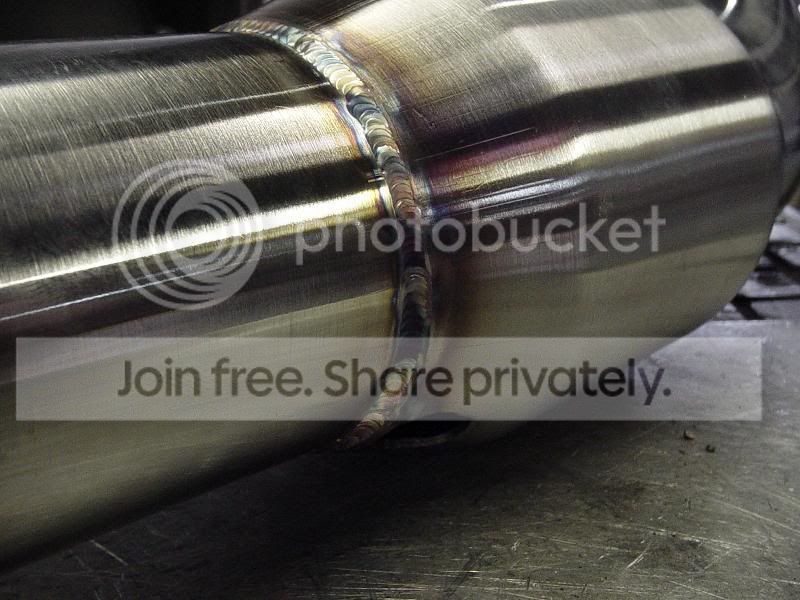
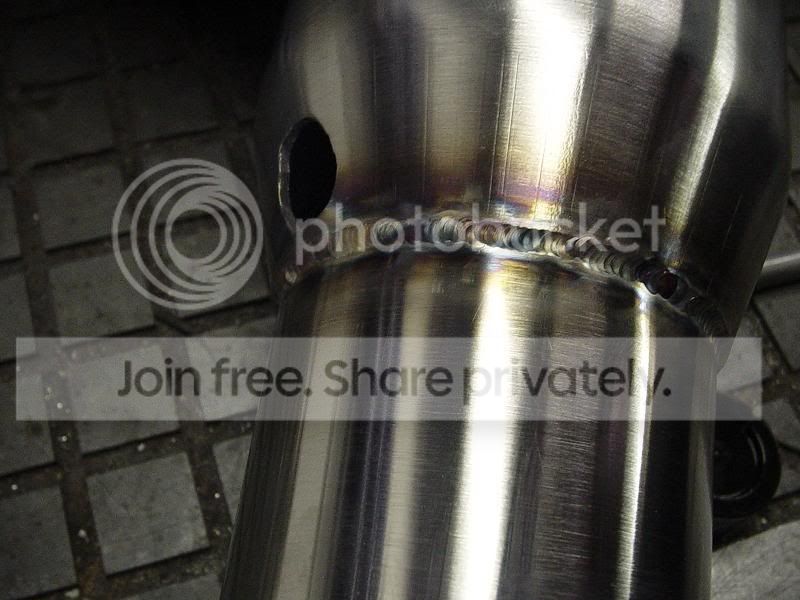
16ga 304l to 14ga 304l
settings:
80amps (never hit full pedal)
16cfh
3/32"red tung
3/32" filler
brake clean before weld

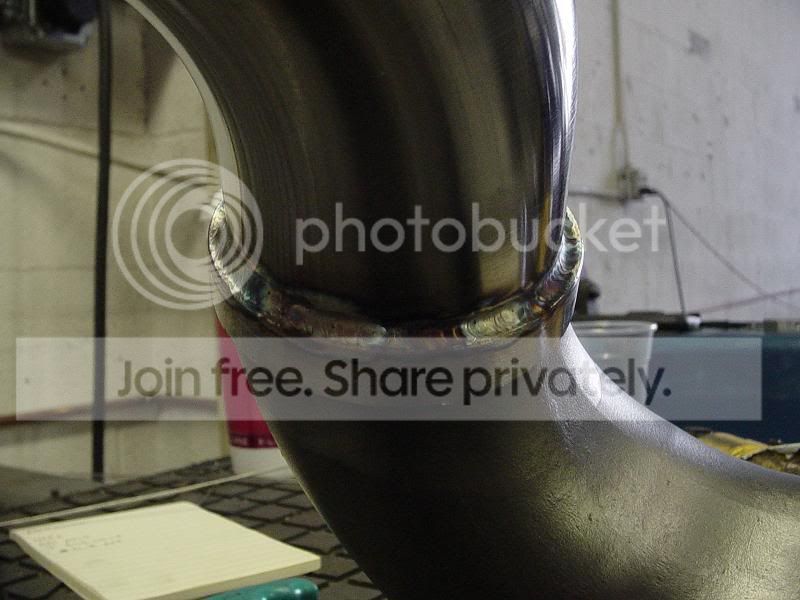
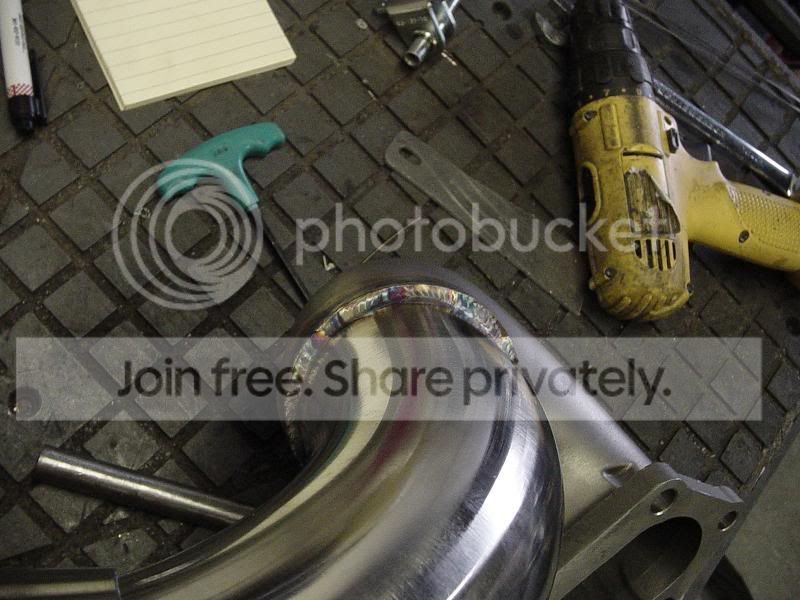
16 ga 304l to cast stainless 1/4 thick
settings
120amps
16cfh
0.8pps
60% peak time (could have gone a bit lower and got better color)
5amps background
3/32 filler
3/32 red tung
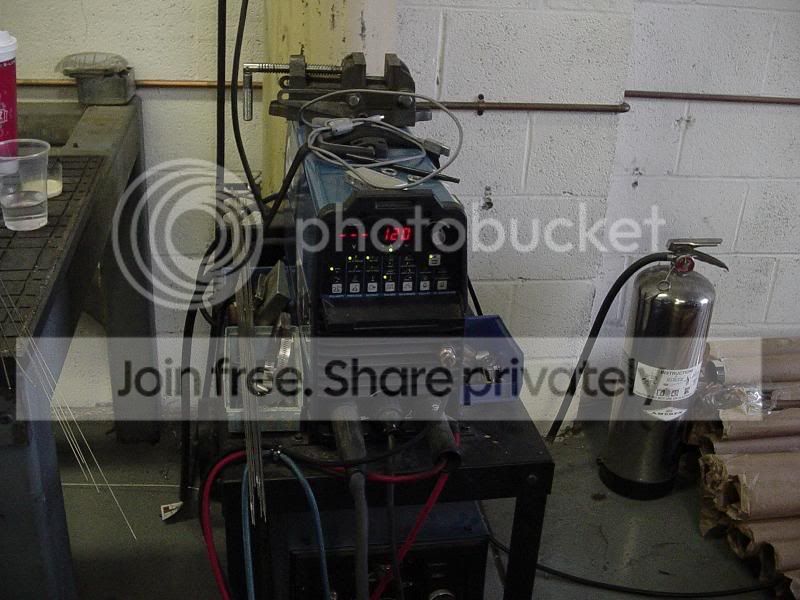
all made possible by a miller dynasty 200dx
all strapped into the fixture
ready for tacking
16ga 304l to 14ga 304l
settings:
80amps (never hit full pedal)
16cfh
3/32"red tung
3/32" filler
brake clean before weld
16 ga 304l to cast stainless 1/4 thick
settings
120amps
16cfh
0.8pps
60% peak time (could have gone a bit lower and got better color)
5amps background
3/32 filler
3/32 red tung
all made possible by a miller dynasty 200dx

OG Fabricator
Joined: Feb 2005
Posts: 1,864
Likes: 1
From: Burlington, Ont., Canada
it looks good. it must be a pain to load and unlaod the jig with all those hose clamps... why not just use some toggle clamps, or even better, some pneumatic clamps... much quicker. you could probably cut your setup, removal time down by 75% or more.

Needs More Cowbell
Joined: Jun 2006
Posts: 1,169
Likes: 0
From: ALL UP IN IT, IN INDIANA, USA
Re: mazdaspeed3 downpipe (racintweek2)
I agree that a small investment in some Destaco (sp?) clamps would speed that up a lot.
It look pretty good, though.
Is that hole for a O2 bung?
It look pretty good, though.
Is that hole for a O2 bung?

Thread Starter
Junior Member
Joined: Jun 2007
Posts: 67
Likes: 0
From: harpers ferry, NoVA
Re: (weiRtech)
<TABLE WIDTH="90%" CELLSPACING=0 CELLPADDING=0 ALIGN=CENTER><TR><TD>Quote, originally posted by newby_j »</TD></TR><TR><TD CLASS="quote">I agree that a small investment in some Destaco (sp?) clamps would speed that up a lot.
It look pretty good, though.
Is that hole for a O2 bung?</TD></TR></TABLE>
the clapming situation isnt ideal, yet.
it is for the O2, just needs to be drilled then welded
<TABLE WIDTH="90%" CELLSPACING=0 CELLPADDING=0 ALIGN=CENTER><TR><TD>Quote, originally posted by dfoxengr »</TD></TR><TR><TD CLASS="quote">looks underfilled in a lot of places. otherwise its pretty good.</TD></TR></TABLE>
those cats arent even close to round, which is why i used the 3/32 filler to fill in the gaps quicker. its plenty strong, just not perfectly uniform.
It look pretty good, though.
Is that hole for a O2 bung?</TD></TR></TABLE>
the clapming situation isnt ideal, yet.
it is for the O2, just needs to be drilled then welded
<TABLE WIDTH="90%" CELLSPACING=0 CELLPADDING=0 ALIGN=CENTER><TR><TD>Quote, originally posted by dfoxengr »</TD></TR><TR><TD CLASS="quote">looks underfilled in a lot of places. otherwise its pretty good.</TD></TR></TABLE>
those cats arent even close to round, which is why i used the 3/32 filler to fill in the gaps quicker. its plenty strong, just not perfectly uniform.

Honda-Tech Member
Joined: Apr 2006
Posts: 622
Likes: 0
From: MESA, AZ, USA
Eh I could go a whole lifetime without ever having to build stuff like that again... I used to work for GHL Motorsports, what a hack-job job!
Anyways, good stuff, just needs more practice.
Anyways, good stuff, just needs more practice.
Trending Topics
Thread Starter
Junior Member
Joined: Jun 2007
Posts: 67
Likes: 0
From: harpers ferry, NoVA
Re: (dfoxengr)
ok, i see now. thanks for the heads up. we'll see how she holds up, this is going to be sent out for testing. we have one on our shop car but it doesnt get driven much and the design has changed slightly from our original prototype
Thread Starter
Junior Member
Joined: Jun 2007
Posts: 67
Likes: 0
From: harpers ferry, NoVA
Re: (CRMB)
<TABLE WIDTH="90%" CELLSPACING=0 CELLPADDING=0 ALIGN=CENTER><TR><TD>Quote, originally posted by CRMB »</TD></TR><TR><TD CLASS="quote">That jig is on the light side for 75 pieces. You may see some warping. I'd keep a template around to recheck every ten parts or so. </TD></TR></TABLE>
we have never had a problem with any of our fixtues warping from welding in them. i have seen fixtures from "quality" part makers that are half as sturdy sa this
we have never had a problem with any of our fixtues warping from welding in them. i have seen fixtures from "quality" part makers that are half as sturdy sa this

OG Fabricator
Joined: Jan 2006
Posts: 661
Likes: 0
From: Saint Helens, OR, USA
Re: (racintweek2)
It's nothing against you. We build hundreds of tube assemblies a week, and it happens to us every once in awhile. It's the accumulation of warp in the parts which will eventually transfer during heat cycling of the fixture, (when your banging out the 75) that will lead to fixture warp. It's much more of a problem when you are building parts in series where you are rapidly heating and cooling the fixture then just the occasional use.
From our experience its more prevalent in fixtures that are constructed from small square tube (less then 1.5" x .095) without a solid base plate (channel, plate, etc). It's also more likely in parts with greater then 2 joints off plane. We run into this a lot with customer provided fixtures that in the middle of the run, sometimes the parts don't hold tolerance with the initial sample and we end up reworking the fixtures. You wouldn't think a well braced square tube fixture would bend, but they do, it's just very slightly all across the length of the jig.
<TABLE WIDTH="90%" CELLSPACING=0 CELLPADDING=0 ALIGN=CENTER><TR><TD>Quote, originally posted by racintweek2 »</TD></TR><TR><TD CLASS="quote">
we have never had a problem with any of our fixtues warping from welding in them. i have seen fixtures from "quality" part makers that are half as sturdy sa this</TD></TR></TABLE>
From our experience its more prevalent in fixtures that are constructed from small square tube (less then 1.5" x .095) without a solid base plate (channel, plate, etc). It's also more likely in parts with greater then 2 joints off plane. We run into this a lot with customer provided fixtures that in the middle of the run, sometimes the parts don't hold tolerance with the initial sample and we end up reworking the fixtures. You wouldn't think a well braced square tube fixture would bend, but they do, it's just very slightly all across the length of the jig.
<TABLE WIDTH="90%" CELLSPACING=0 CELLPADDING=0 ALIGN=CENTER><TR><TD>Quote, originally posted by racintweek2 »</TD></TR><TR><TD CLASS="quote">
we have never had a problem with any of our fixtues warping from welding in them. i have seen fixtures from "quality" part makers that are half as sturdy sa this</TD></TR></TABLE>
Thread Starter
Junior Member
Joined: Jun 2007
Posts: 67
Likes: 0
From: harpers ferry, NoVA
Re: (CRMB)
the mass off aluminum act like a heatsink when welding, it never even gets warm to the touch.
even on our other fixtures that are made of the same base material and 1.5x1.5 channel to hold the pipe the fixtures dont get warm because we try to keep areas we weld away from the fixture. no mig welding ever takes place on our fixtures either
the frame and uprights are 1x2 1/8" wall, the top of the uprights are faced then doweled to ensure a consistant placement
even on our other fixtures that are made of the same base material and 1.5x1.5 channel to hold the pipe the fixtures dont get warm because we try to keep areas we weld away from the fixture. no mig welding ever takes place on our fixtures either
the frame and uprights are 1x2 1/8" wall, the top of the uprights are faced then doweled to ensure a consistant placement

Thread Starter
Junior Member
Joined: Jun 2007
Posts: 67
Likes: 0
From: harpers ferry, NoVA
Re: mazdaspeed3 downpipe (JDMCRX)
our turbo back on an otherwise stock MS3 made 20whp peak over stock and 39ft/lbs over stock
15hp and 25ft/lbs over stock from 3k to 5.5k rpm
15hp and 25ft/lbs over stock from 3k to 5.5k rpm


Honda-Tech Member
Joined: Apr 2005
Posts: 1,895
Likes: 0
From: Lincoln, Ne, USA
Re: mazdaspeed3 downpipe (racintweek2)
Careful with the brake clean before you weld. The chlorinated brake clean can leave a residue that will put off some noxious fumes when you weld it.

Honda-Tech Member
Joined: Nov 2000
Posts: 5,135
Likes: 0
From: Fredericksburg, VA, USA
Re: mazdaspeed3 downpipe (k24em2)
<TABLE WIDTH="90%" CELLSPACING=0 CELLPADDING=0 ALIGN=CENTER><TR><TD>Quote, originally posted by k24em2 »</TD></TR><TR><TD CLASS="quote">Careful with the brake clean before you weld. The chlorinated brake clean can leave a residue that will put off some noxious fumes when you weld it.</TD></TR></TABLE>
Glad you brought this up. You end up getting chlorine gas as a byproduct....not good at all. Use acetone to wipe the parts down.
Are you back purging that?
Also, when using those cats you should expand or bell the tubing on the outlet so you have a male to female joint going down stream. It will smooth things up on the inside.
Glad you brought this up. You end up getting chlorine gas as a byproduct....not good at all. Use acetone to wipe the parts down.
Are you back purging that?
Also, when using those cats you should expand or bell the tubing on the outlet so you have a male to female joint going down stream. It will smooth things up on the inside.


 that's what we use on our jigs.
Thread Starter
Junior Member
Joined: Jun 2007
Posts: 67
Likes: 0
From: harpers ferry, NoVA
Re: (Vince@SP)
i'm not sure the name of the casting company, but i know we had to purchase 100 to get a decent price and a discount on the tooling. they arent cheap, 6-7lbs of staibnless
Honda-Tech Member
Joined: Apr 2005
Posts: 1,895
Likes: 0
From: Lincoln, Ne, USA
Re: (racintweek2)
If you have to fill gaps on a production piece you should do some redesign. If the inlet/outlet of the cat isn't round, you should engineer something to make it round. Adjust it in a hydraulic press, if you will. .065 tubing should NEVER need 3/32 filler.

OG Fabricator
Joined: Dec 2006
Posts: 1,342
Likes: 0
From: Calgary, Alberta, Canada
Re: mazdaspeed3 downpipe (SMSP)
<TABLE WIDTH="90%" CELLSPACING=0 CELLPADDING=0 ALIGN=CENTER><TR><TD>Quote, originally posted by SMSP »</TD></TR><TR><TD CLASS="quote">
Glad you brought this up. You end up getting chlorine gas as a byproduct....not good at all. Use acetone to wipe the parts down.
.</TD></TR></TABLE>
Phosgene gas is the by-product of chlorinated solvents when exposed to UV.
Very bad stuff. I just buy the non-chlorinated version.
I agree it's a good point, most don't think about the dangers involved in what we do.
Glad you brought this up. You end up getting chlorine gas as a byproduct....not good at all. Use acetone to wipe the parts down.
.</TD></TR></TABLE>
Phosgene gas is the by-product of chlorinated solvents when exposed to UV.
Very bad stuff. I just buy the non-chlorinated version.
I agree it's a good point, most don't think about the dangers involved in what we do.
Thread Starter
Junior Member
Joined: Jun 2007
Posts: 67
Likes: 0
From: harpers ferry, NoVA
Re: (k24em2)
<TABLE WIDTH="90%" CELLSPACING=0 CELLPADDING=0 ALIGN=CENTER><TR><TD>Quote, originally posted by k24em2 »</TD></TR><TR><TD CLASS="quote">If you have to fill gaps on a production piece you should do some redesign. If the inlet/outlet of the cat isn't round, you should engineer something to make it round. Adjust it in a hydraulic press, if you will. .065 tubing should NEVER need 3/32 filler.</TD></TR></TABLE>
we have thought about the fitment of these cats over and over. without any flat section its hard for any machine to grab it. and unfortunately these cats are the only ones that still pass emmisions tests (not visual of course) and dont set off CELs.
<TABLE WIDTH="90%" CELLSPACING=0 CELLPADDING=0 ALIGN=CENTER><TR><TD>Quote, originally posted by SMSP »</TD></TR><TR><TD CLASS="quote">
Are you back purging that?
Also, when using those cats you should expand or bell the tubing on the outlet so you have a male to female joint going down stream. It will smooth things up on the inside.</TD></TR></TABLE>
no back purge. the pipe on the out let of the cat gets expanded for as tight of a fit that the cats allow it and it only goes into the cat about 1/16".
it sucks not being able to take and perfect everything on the mazdaspeed parts we make, it was def not the best market to get into. we are the only manufacturuer in that market that makes everything in the US. when you are competing against chinese prices in a market where parents are the ones spending the money its hard to explain to people why are prices are higher.
we have thought about the fitment of these cats over and over. without any flat section its hard for any machine to grab it. and unfortunately these cats are the only ones that still pass emmisions tests (not visual of course) and dont set off CELs.
<TABLE WIDTH="90%" CELLSPACING=0 CELLPADDING=0 ALIGN=CENTER><TR><TD>Quote, originally posted by SMSP »</TD></TR><TR><TD CLASS="quote">
Are you back purging that?
Also, when using those cats you should expand or bell the tubing on the outlet so you have a male to female joint going down stream. It will smooth things up on the inside.</TD></TR></TABLE>
no back purge. the pipe on the out let of the cat gets expanded for as tight of a fit that the cats allow it and it only goes into the cat about 1/16".
it sucks not being able to take and perfect everything on the mazdaspeed parts we make, it was def not the best market to get into. we are the only manufacturuer in that market that makes everything in the US. when you are competing against chinese prices in a market where parents are the ones spending the money its hard to explain to people why are prices are higher.