


compound boost CTSV build.


Honda-Tech Member
Joined: Aug 2004
Posts: 4,638
Likes: 0
From: Altamonte Springs/Orlando, Florida, USA
 Re: compound boost CTSV build.

Honda-Tech Member
Joined: Nov 2008
Posts: 285
Likes: 0
From: Florida


Thread Starter
OG Fabricator
Joined: Jun 2009
Posts: 606
Likes: 0
From: DFW, TX
Re: compound boost CTSV build.
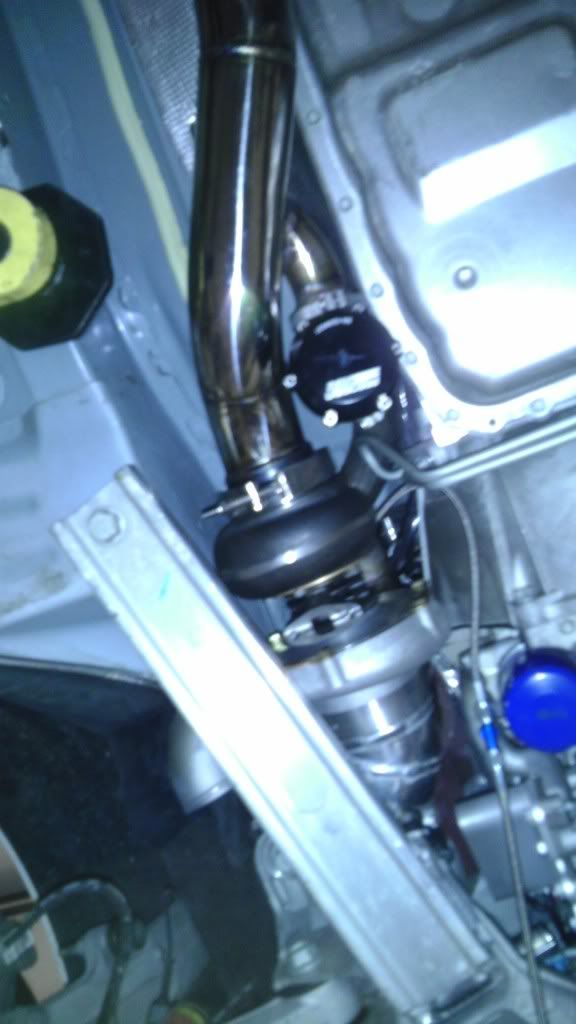
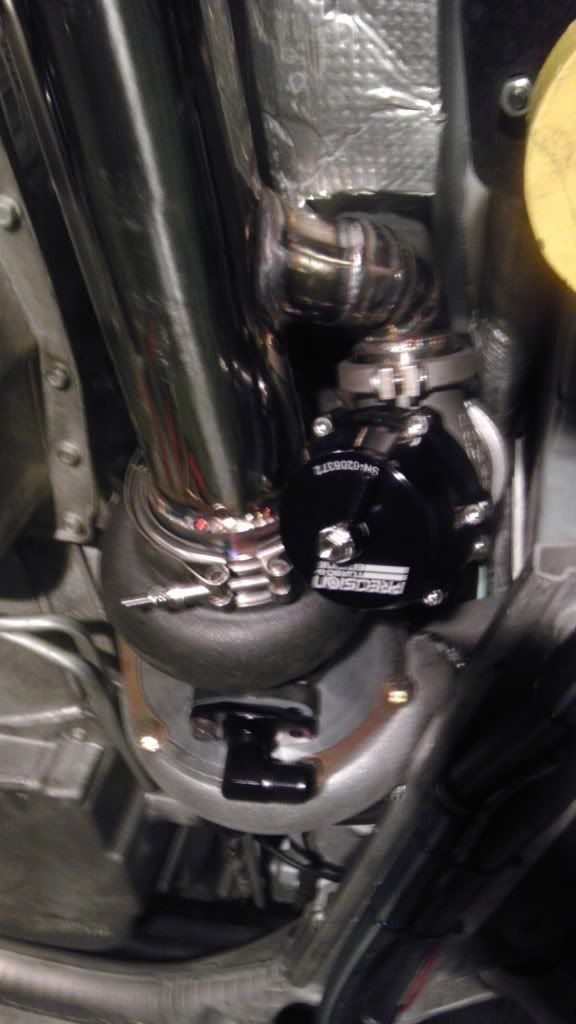
gates mounted, working on the recirc back into the exhaust.
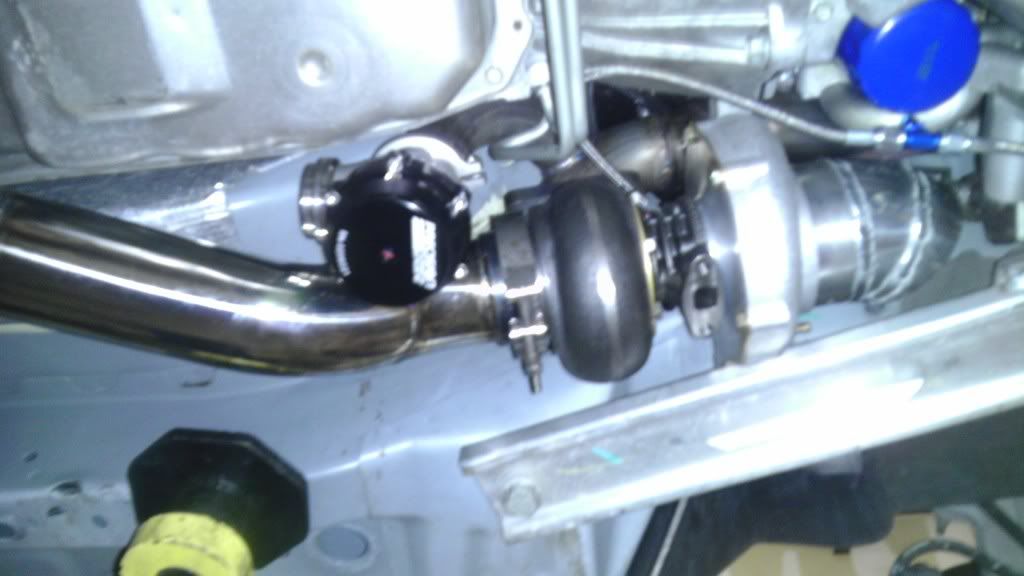
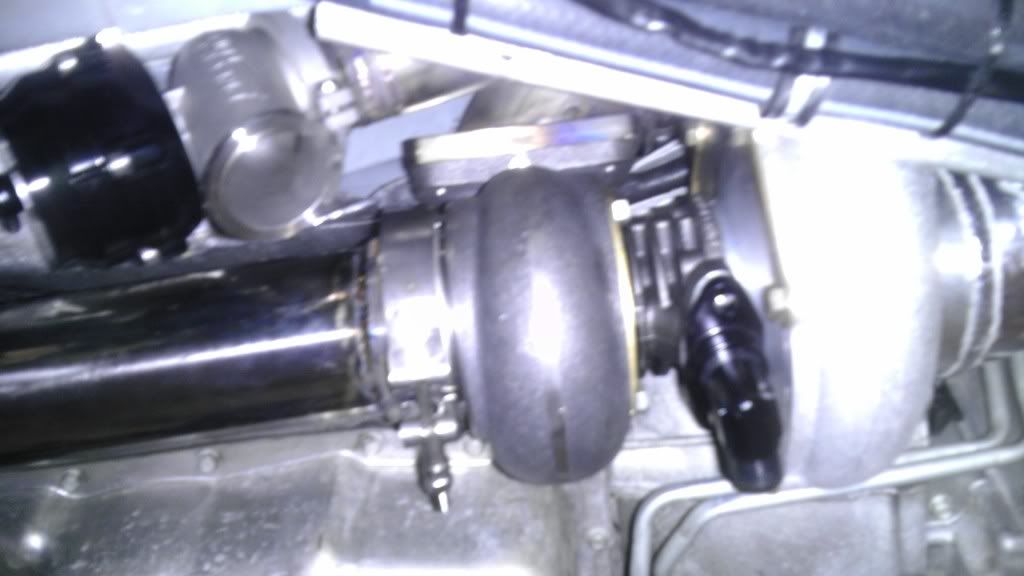
once the recirc is done, just hook up the oil lines and weld on the MAF bung, fill up the fluids and off it goes for a fuel system+tune
once the recirc is done, just hook up the oil lines and weld on the MAF bung, fill up the fluids and off it goes for a fuel system+tune



Honda-Tech Member
Joined: Jan 2005
Posts: 5,641
Likes: 0
From: Lower Right Hand Corner, PA
Re: compound boost CTSV build.
I did a lot of research into pumps and it seems like there is almost no one who has a good answer for dealing with the extremely hot oil going through the pump for long periods of time.
Also saw a few people using the Holley Red fuel pumps with good results, interestingly enough.
Also saw a few people using the Holley Red fuel pumps with good results, interestingly enough.


Honda-Tech Member
Joined: Feb 2010
Posts: 36
Likes: 0
Re: compound boost CTSV build.
Turbowerx makes a pretty nice oil scavenge pump. There is also a company on the west coast that makes a nice bronze geared one. They use them on motorcycles and have proven reliable and work great in these kinds of applications. Ive used both on the BMW's with those pesky bottom mounted turbo setups where the oil drain for the turbo almost sits lower than the pan and you have like a 3 to 5 inch drain that is almost lateral with no slope. Just Make a normal drain line to a sump box, then obviously from the sump box to the pump then recirc from the pump back into the pan. It should do exactly what you need. The sump box doesnt even have to be very big. Ill try to dig up some pics.
Honda-Tech Member
Joined: Feb 2010
Posts: 36
Likes: 0
Honda-Tech Member
Joined: Aug 2004
Posts: 4,638
Likes: 0
From: Altamonte Springs/Orlando, Florida, USA
Re: compound boost CTSV build.
Seriously, just stop.
-------------------
Hey Russianvr4, that brake line going to be okay?
(this picture)
http://i611.photobucket.com/albums/t...V/IMAG0236.jpg
-------------------
Hey Russianvr4, that brake line going to be okay?
(this picture)
http://i611.photobucket.com/albums/t...V/IMAG0236.jpg

Thread Starter
OG Fabricator
Joined: Jun 2009
Posts: 606
Likes: 0
From: DFW, TX


Honda-Tech Member
Joined: Mar 2000
Posts: 2,859
Likes: 1
From: Toronto, ON, Canada
Re: compound boost CTSV build.
Twincharging in general is when the supercharger is mechanically bypassed and the turbo feeds the motor on the top-end. This gives the low-end of a supercharger and top-end of a turbo. However, you cannot spool a much larger turbo with this setup and maintain its response, because the supercharger is offline before the turbo reaches peak RPM's. There's always going to be a lag spot if the goal was to oversize the turbo well past the original motor recommended displacement and VE, due to the difference of efficiency & power per PSI of boost between the SC vs big turbo(s). For example, putting a 80mm turbo onto a 2.0L motor will create that problem, and it will still lag if you don't allow the turbo to slowly build speed (flat stabbing the throttle at high RPM's after a long decel/coasting). Not much of problem for those with bigger motors though, unless you're trying to put a 3000HP turbo on a 6.0L motor and want to maintain streetability...LOL.
Compound twincharging is when the turbocharger feeds through the supercharger in series, thus, "compounding" two types of boost. 7 PSI pulley + 16 PSI of boost from turbos = 20 PSI of boost against the intake ports. The advantage is much faster spool (positive SC effectively increases VE to the motor, making it behave like a much larger engine), and this effect carries its way through all RPM ranges as long as the SC is functioning. So if you have a 2.0L motor + SC, you can effectively spool a much larger turbo and keep its response, like as if the motor was naturally bigger. However, the supercharger is a big bottle neck, and air temps will become uncontrollable regardless if the SC is aftercooled or not. The outlet pressures from the turbos are also much higher, so you almost have to based your turbo compressor maps differently (probably 1.2x higher on the pressure ratio). The SC's boost is also inefficient, so 20 PSI is not really the same 20 PSI directly from the turbos (e.g. 25 WHP per PSI on turbos, and roughly 10 WHP per PSI on SC), so tuning it seamlessly is a disaster on speed density. Great setup for running fuels that have good cooling (E85) that don't mind a sharp rise in air temps.
With a compound twincharged setup, you won't hear the supercharger whine unfortunately.
Compound twincharging is when the turbocharger feeds through the supercharger in series, thus, "compounding" two types of boost. 7 PSI pulley + 16 PSI of boost from turbos = 20 PSI of boost against the intake ports. The advantage is much faster spool (positive SC effectively increases VE to the motor, making it behave like a much larger engine), and this effect carries its way through all RPM ranges as long as the SC is functioning. So if you have a 2.0L motor + SC, you can effectively spool a much larger turbo and keep its response, like as if the motor was naturally bigger. However, the supercharger is a big bottle neck, and air temps will become uncontrollable regardless if the SC is aftercooled or not. The outlet pressures from the turbos are also much higher, so you almost have to based your turbo compressor maps differently (probably 1.2x higher on the pressure ratio). The SC's boost is also inefficient, so 20 PSI is not really the same 20 PSI directly from the turbos (e.g. 25 WHP per PSI on turbos, and roughly 10 WHP per PSI on SC), so tuning it seamlessly is a disaster on speed density. Great setup for running fuels that have good cooling (E85) that don't mind a sharp rise in air temps.
With a compound twincharged setup, you won't hear the supercharger whine unfortunately.


