


ksport problem


Thread Starter
Honda-Tech Member
Joined: Jul 2004
Posts: 689
Likes: 0
From: Louisville, Ky, United States
 ksport problem
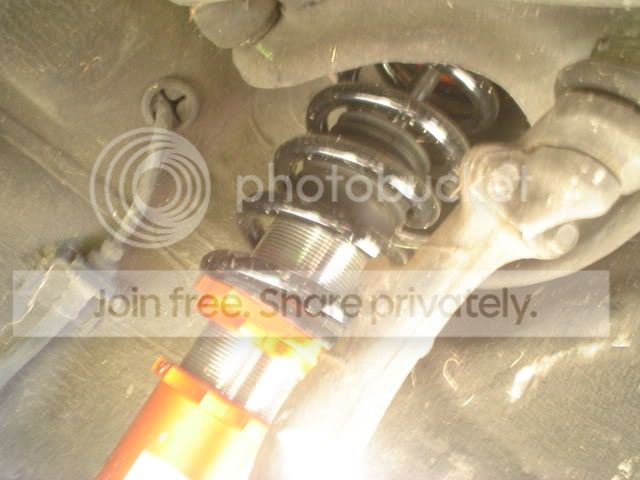
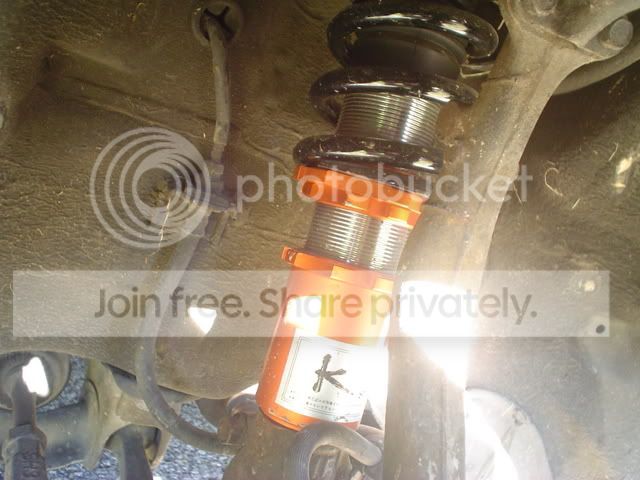
I have a problem with my ksports. I have all four all the way down with preload and the front sits higher then the rear. I have no idea on how to fix this. Anyone have any ideas?



Thread Starter
Honda-Tech Member
Joined: Jul 2004
Posts: 689
Likes: 0
From: Louisville, Ky, United States
Re: (SilentEdge)
I took the preload off and that slammed the **** out of the front, i love the way it sits now. But i believe the upper control arms are hitting now.
Modified by CRX MASE at 4:01 AM 9/5/2007
Modified by CRX MASE at 4:01 AM 9/5/2007
Trending Topics

Honda-Tech Member
Joined: Oct 2002
Posts: 5,283
Likes: 9
From: Toronto Canada
Re: (CRX MASE)
<TABLE WIDTH="90%" CELLSPACING=0 CELLPADDING=0 ALIGN=CENTER><TR><TD>Quote, originally posted by CRX MASE »</TD></TR><TR><TD CLASS="quote">I took the preload off and that slammed the **** out of the front, i love the way it sits now. But i believe the upper control arms are hitting now.
</TD></TR></TABLE>
Not only that, you're also probably bottoming out the coilover now !
</TD></TR></TABLE>
Not only that, you're also probably bottoming out the coilover now !


Honda-Tech Member
Joined: Sep 2006
Posts: 81
Likes: 0
From: Miami, FL
Re: (CRX MASE)
<TABLE WIDTH="90%" CELLSPACING=0 CELLPADDING=0 ALIGN=CENTER><TR><TD>Quote, originally posted by CRX MASE »</TD></TR><TR><TD CLASS="quote"> </TD></TR></TABLE>
Hows it ride like that , without preload in the front?
</TD></TR></TABLE>Hows it ride like that , without preload in the front?

Honda-Tech Member
Joined: Jan 2003
Posts: 1,424
Likes: 2
From: KS, United States
mine is about that low with si's and the upper arms barely hit the shock tower, only when i hit a bump really really hard. i'm on omni sleeves though.
how does it ride that low w/ the ksports?
how does it ride that low w/ the ksports?


Joined: Jan 2002
Posts: 30,164
Likes: 59
From: Nowhere and Everywhere
Re: (Ludey849)
<TABLE WIDTH="90%" CELLSPACING=0 CELLPADDING=0 ALIGN=CENTER><TR><TD>Quote, originally posted by Ludey849 »</TD></TR><TR><TD CLASS="quote">
Hows it ride like that , without preload in the front?</TD></TR></TABLE>
Preload should not make any difference in ride quality or handling. When the spring is loaded with the car on the ground, the spring is going to compress the same amount no matter if there is preload or not.
The only thing preload does is keep the spring in place when the suspension is fully extended.
Hows it ride like that , without preload in the front?</TD></TR></TABLE>
Preload should not make any difference in ride quality or handling. When the spring is loaded with the car on the ground, the spring is going to compress the same amount no matter if there is preload or not.
The only thing preload does is keep the spring in place when the suspension is fully extended.

Honda-Tech Member
Joined: Sep 2003
Posts: 9,235
Likes: 0
From: SC
Ksport doesnt say to preload them. They say to tighten the lower perch only to the point that it puts very slight pressure on the spring. Thats what I did and mine are fine. Have about 1/4" gap in the front.

Junior Member
Joined: Dec 2004
Posts: 279
Likes: 0
From: Oceanside, CA, USA
Re: (PatrickGSR94)
<TABLE WIDTH="90%" CELLSPACING=0 CELLPADDING=0 ALIGN=CENTER><TR><TD>Quote, originally posted by PatrickGSR94 »</TD></TR><TR><TD CLASS="quote">
Preload should not make any difference in ride quality or handling. When the spring is loaded with the car on the ground, the spring is going to compress the same amount no matter if there is preload or not.
The only thing preload does is keep the spring in place when the suspension is fully extended.</TD></TR></TABLE>
Preload actually affects the way the car will react on a track.. it effectively changes the spring rate since as you compress a spring the tension goes up, thats why you can tune your suspension if you adjust the preload. i do it all the time on my motorcycle. its fine tuning, and you have to have track experience and a good feel of the vehicle to know what it helps or doesn't help.
Ksport should have an initial setting for preload that you should do when you recieve them or should've been done before you recieved them at the factory
Preload should not make any difference in ride quality or handling. When the spring is loaded with the car on the ground, the spring is going to compress the same amount no matter if there is preload or not.
The only thing preload does is keep the spring in place when the suspension is fully extended.</TD></TR></TABLE>
Preload actually affects the way the car will react on a track.. it effectively changes the spring rate since as you compress a spring the tension goes up, thats why you can tune your suspension if you adjust the preload. i do it all the time on my motorcycle. its fine tuning, and you have to have track experience and a good feel of the vehicle to know what it helps or doesn't help.
Ksport should have an initial setting for preload that you should do when you recieve them or should've been done before you recieved them at the factory
Joined: Jan 2002
Posts: 30,164
Likes: 59
From: Nowhere and Everywhere
Re: (DOHCter)
<TABLE WIDTH="90%" CELLSPACING=0 CELLPADDING=0 ALIGN=CENTER><TR><TD>Quote, originally posted by DOHCter »</TD></TR><TR><TD CLASS="quote">
Preload actually affects the way the car will react on a track.. it effectively changes the spring rate since as you compress a spring the tension goes up, thats why you can tune your suspension if you adjust the preload. i do it all the time on my motorcycle. its fine tuning, and you have to have track experience and a good feel of the vehicle to know what it helps or doesn't help.
</TD></TR></TABLE>
I'd like to see something that explains how preload can affect spring rate, because I don't see how it can. If you put a certain amount of weight on a spring, it's going to compress the same amount, no matter how much "initial" compression is on the spring.
If you have an 8" long 400 lb/in spring and you put a load of 600 lbs. on it, it's going to compress about 1.5" to become only 6.5" long. Even if you put 200 lbs. of preload on it so that it's 7.5" long, when you apply the 600 lb. weight it's still only going to compress another inch to become 6.5" long.
Preload actually affects the way the car will react on a track.. it effectively changes the spring rate since as you compress a spring the tension goes up, thats why you can tune your suspension if you adjust the preload. i do it all the time on my motorcycle. its fine tuning, and you have to have track experience and a good feel of the vehicle to know what it helps or doesn't help.
</TD></TR></TABLE>
I'd like to see something that explains how preload can affect spring rate, because I don't see how it can. If you put a certain amount of weight on a spring, it's going to compress the same amount, no matter how much "initial" compression is on the spring.
If you have an 8" long 400 lb/in spring and you put a load of 600 lbs. on it, it's going to compress about 1.5" to become only 6.5" long. Even if you put 200 lbs. of preload on it so that it's 7.5" long, when you apply the 600 lb. weight it's still only going to compress another inch to become 6.5" long.

Honda-Tech Member
Joined: Dec 2005
Posts: 607
Likes: 0
From: Philly suburb, PA, USA
Re: (PatrickGSR94)
Adjusting preload on KSports will have no direct effect on ride height...that's the whole point of them being designed the way they are.
You adjust the bottom mount up or down to raise or lower the car. As was mentioned earlier, you're only supposed to put enough preload on the springs so that they're seated enough not to have any play when there isn't suspension compression.
I'm not sure how you got the front lower just by adjusting the preload...
You adjust the bottom mount up or down to raise or lower the car. As was mentioned earlier, you're only supposed to put enough preload on the springs so that they're seated enough not to have any play when there isn't suspension compression.
I'm not sure how you got the front lower just by adjusting the preload...
Joined: Jan 2002
Posts: 30,164
Likes: 59
From: Nowhere and Everywhere
Well yes, you're supposed to adjust the ride height with the bottom ring, so that the internal damper travel won't be affected. But if you adjust the upper spring perch, that's still going to affect ride height (and will also affect damper travel).
You can adjust the upper perch down a little to get a little more drop, but you will also have a little less damper travel.
You can adjust the upper perch down a little to get a little more drop, but you will also have a little less damper travel.
Honda-Tech Member
Joined: Dec 2005
Posts: 607
Likes: 0
From: Philly suburb, PA, USA
Re: (PatrickGSR94)
<TABLE WIDTH="90%" CELLSPACING=0 CELLPADDING=0 ALIGN=CENTER><TR><TD>Quote, originally posted by PatrickGSR94 »</TD></TR><TR><TD CLASS="quote">Well yes, you're supposed to adjust the ride height with the bottom ring, so that the internal damper travel won't be affected. But if you adjust the upper spring perch, that's still going to affect ride height (and will also affect damper travel).
You can adjust the upper perch down a little to get a little more drop, but you will also have a little less damper travel.</TD></TR></TABLE>
KSports are meant to have their height adjusted using the bottom mount. To lower the car using the upper ring (lower spring perch), you'd have to have the ring low enough that the spring is no longer under any compression, allowing it to move free when the suspension de-compresses...which is very very very very bad.
Also, KSport dampers aren't quite made to ride around with less suspension travel than what they're designed for. In other words, lowering the lower spring perch to lower the car will be bad not only for the reason I just mentioned but also because the damper will be more likely to bottom out more frequently (yeah, bump stops, but it's still not good to hit them all the time in the long run).
In other words, why not just use it as it's meant to be used. Yeah, you can lower the top perch, but you're really not supposed to.
You can adjust the upper perch down a little to get a little more drop, but you will also have a little less damper travel.</TD></TR></TABLE>
KSports are meant to have their height adjusted using the bottom mount. To lower the car using the upper ring (lower spring perch), you'd have to have the ring low enough that the spring is no longer under any compression, allowing it to move free when the suspension de-compresses...which is very very very very bad.
Also, KSport dampers aren't quite made to ride around with less suspension travel than what they're designed for. In other words, lowering the lower spring perch to lower the car will be bad not only for the reason I just mentioned but also because the damper will be more likely to bottom out more frequently (yeah, bump stops, but it's still not good to hit them all the time in the long run).
In other words, why not just use it as it's meant to be used. Yeah, you can lower the top perch, but you're really not supposed to.
Honda-Tech Member
Joined: Sep 2003
Posts: 9,235
Likes: 0
From: SC
Re: (KaBlookie)
My crx is plenty low. The front tire is tucking a little bit(I adjusted the bottom mounts the other day), and the rear has about 1/4" gap. I havent tried to lower the rear more yet, but I know it can go lower...More than enough for my daily driver/project.

Honda-Tech Member
Joined: Apr 2001
Posts: 389
Likes: 0
From: CA
Re: (PatrickGSR94)
<TABLE WIDTH="90%" CELLSPACING=0 CELLPADDING=0 ALIGN=CENTER><TR><TD>Quote, originally posted by PatrickGSR94 »</TD></TR><TR><TD CLASS="quote">
Preload should not make any difference in ride quality or handling. When the spring is loaded with the car on the ground, the spring is going to compress the same amount no matter if there is preload or not.
The only thing preload does is keep the spring in place when the suspension is fully extended.
</TD></TR></TABLE>
Please do not post misleading information. The relationship you are describing above(spring compression vs force) is Spring Rate which has nothing to do with preload. Preload is the inital amount of force set in the spring. For example, let's say you have a 10lb/in spring(takes 10 lbs to compress spring 1 inch). In a zero preload configuration, if you plot Force vs Distance you would get a nice linear line starting at (0,0) meaning you put 0 Force and get 0 compression. Put 10lbs force and you get 1 inch compression; 20 lbs force and get 2 inches compression. Now let's preload the spring 10 lbs. What this does is shift this linear line to the left. So you get 10 lbs force at 0 inch compression right from the start. To compress the spring 1 inch you would need to put 20 lbs force; put 30 lbs compresses spring 2 inches. You can say that increasing preload will set the inital "stiffness" of the spring.
You can thank Hooke's law for this: F=kx which is Force=Spring Constant * Distance. If you feel you have made a new discovery, all physics books should be re-written.
I feel better now...
And to the original poster. You set ride height by adjusting shock length NOT preload.
Modified by 99_SH at 3:38 PM 9/9/2007
Preload should not make any difference in ride quality or handling. When the spring is loaded with the car on the ground, the spring is going to compress the same amount no matter if there is preload or not.
The only thing preload does is keep the spring in place when the suspension is fully extended.
</TD></TR></TABLE>
Please do not post misleading information. The relationship you are describing above(spring compression vs force) is Spring Rate which has nothing to do with preload. Preload is the inital amount of force set in the spring. For example, let's say you have a 10lb/in spring(takes 10 lbs to compress spring 1 inch). In a zero preload configuration, if you plot Force vs Distance you would get a nice linear line starting at (0,0) meaning you put 0 Force and get 0 compression. Put 10lbs force and you get 1 inch compression; 20 lbs force and get 2 inches compression. Now let's preload the spring 10 lbs. What this does is shift this linear line to the left. So you get 10 lbs force at 0 inch compression right from the start. To compress the spring 1 inch you would need to put 20 lbs force; put 30 lbs compresses spring 2 inches. You can say that increasing preload will set the inital "stiffness" of the spring.
You can thank Hooke's law for this: F=kx which is Force=Spring Constant * Distance. If you feel you have made a new discovery, all physics books should be re-written.
I feel better now...
And to the original poster. You set ride height by adjusting shock length NOT preload.
Modified by 99_SH at 3:38 PM 9/9/2007

Joined: Feb 2005
Posts: 154
Likes: 0
Re: (99_SH)
<TABLE WIDTH="90%" CELLSPACING=0 CELLPADDING=0 ALIGN=CENTER><TR><TD>Quote, originally posted by 99_SH »</TD></TR><TR><TD CLASS="quote">
Please do not post misleading information. The relationship you are describing above(spring compression vs force) is Spring Rate which has nothing to do with preload. Preload is the inital amount of force set in the spring. For example, let's say you have a 10lb/in spring(takes 10 lbs to compress spring 1 inch). In a zero preload configuration, if you plot Force vs Distance you would get a nice linear line starting at (0,0) meaning you put 0 Force and get 0 compression. Put 10lbs force and you get 1 inch compression; 20 lbs force and get 2 inches compression. Now let's preload the spring 10 lbs. What this does is shift this linear line to the left. So you get 10 lbs force at 0 inch compression right from the start. To compress the spring 1 inch you would need to put 20 lbs force; put 30 lbs compresses spring 2 inches. You can say that increasing preload will set the inital "stiffness" of the spring.
You can thank Hooke's law for this: F=kx which is Force=Spring Constant * Distance. If you feel you have made a new discovery, all physics books should be re-written.
I feel better now...
And to the original poster. You set ride height by adjusting shock length NOT preload.
Modified by 99_SH at 3:38 PM 9/9/2007</TD></TR></TABLE>
This is correct.
All height adjustment should be done via the lower mount, unless it is a kit with a non-adjustable lower mount in which it can be done via the spring perch. But in that instance we supply a helper spring to hold the main spring with negative preload settings to avoid spring movement.
Please do not post misleading information. The relationship you are describing above(spring compression vs force) is Spring Rate which has nothing to do with preload. Preload is the inital amount of force set in the spring. For example, let's say you have a 10lb/in spring(takes 10 lbs to compress spring 1 inch). In a zero preload configuration, if you plot Force vs Distance you would get a nice linear line starting at (0,0) meaning you put 0 Force and get 0 compression. Put 10lbs force and you get 1 inch compression; 20 lbs force and get 2 inches compression. Now let's preload the spring 10 lbs. What this does is shift this linear line to the left. So you get 10 lbs force at 0 inch compression right from the start. To compress the spring 1 inch you would need to put 20 lbs force; put 30 lbs compresses spring 2 inches. You can say that increasing preload will set the inital "stiffness" of the spring.
You can thank Hooke's law for this: F=kx which is Force=Spring Constant * Distance. If you feel you have made a new discovery, all physics books should be re-written.
I feel better now...
And to the original poster. You set ride height by adjusting shock length NOT preload.
Modified by 99_SH at 3:38 PM 9/9/2007</TD></TR></TABLE>
This is correct.
All height adjustment should be done via the lower mount, unless it is a kit with a non-adjustable lower mount in which it can be done via the spring perch. But in that instance we supply a helper spring to hold the main spring with negative preload settings to avoid spring movement.

Member
Joined: Sep 2003
Posts: 1,569
Likes: 0
From: Texas Damnit
Re: (DOHCter)
<TABLE WIDTH="90%" CELLSPACING=0 CELLPADDING=0 ALIGN=CENTER><TR><TD>Quote, originally posted by DOHCter »</TD></TR><TR><TD CLASS="quote">
Preload actually affects the way the car will react on a track.. it effectively changes the spring rate since as you compress a spring the tension goes up, thats why you can tune your suspension if you adjust the preload. i do it all the time on my motorcycle. its fine tuning, and you have to have track experience and a good feel of the vehicle to know what it helps or doesn't help.</TD></TR></TABLE>
This is only true with Progressive Rate springs, which none of the "coil over" manufactures use. They ALL use linear rate, which means inch for inch, the rate is the same.
Preload actually affects the way the car will react on a track.. it effectively changes the spring rate since as you compress a spring the tension goes up, thats why you can tune your suspension if you adjust the preload. i do it all the time on my motorcycle. its fine tuning, and you have to have track experience and a good feel of the vehicle to know what it helps or doesn't help.</TD></TR></TABLE>
This is only true with Progressive Rate springs, which none of the "coil over" manufactures use. They ALL use linear rate, which means inch for inch, the rate is the same.

Honda-Tech Member
Joined: Apr 2005
Posts: 2,679
Likes: 2
From: Where the wild things are in, NY, United States of America
Re: (DavidR)
<TABLE WIDTH="90%" CELLSPACING=0 CELLPADDING=0 ALIGN=CENTER><TR><TD>Quote, originally posted by DavidR »</TD></TR><TR><TD CLASS="quote">
This is only true with Progressive Rate springs, which none of the "coil over" manufactures use. They ALL use linear rate, which means inch for inch, the rate is the same.</TD></TR></TABLE>
X seventy million.
This is only true with Progressive Rate springs, which none of the "coil over" manufactures use. They ALL use linear rate, which means inch for inch, the rate is the same.</TD></TR></TABLE>
X seventy million.
Joined: Jan 2002
Posts: 30,164
Likes: 59
From: Nowhere and Everywhere
Re: (99_SH)
<TABLE WIDTH="90%" CELLSPACING=0 CELLPADDING=0 ALIGN=CENTER><TR><TD>Quote, originally posted by 99_SH »</TD></TR><TR><TD CLASS="quote">
Please do not post misleading information. The relationship you are describing above(spring compression vs force) is Spring Rate which has nothing to do with preload. Preload is the inital amount of force set in the spring. For example, let's say you have a 10lb/in spring(takes 10 lbs to compress spring 1 inch). In a zero preload configuration, if you plot Force vs Distance you would get a nice linear line starting at (0,0) meaning you put 0 Force and get 0 compression. Put 10lbs force and you get 1 inch compression; 20 lbs force and get 2 inches compression. Now let's preload the spring 10 lbs. What this does is shift this linear line to the left. So you get 10 lbs force at 0 inch compression right from the start. To compress the spring 1 inch you would need to put 20 lbs force; put 30 lbs compresses spring 2 inches. You can say that increasing preload will set the inital "stiffness" of the spring.
You can thank Hooke's law for this: F=kx which is Force=Spring Constant * Distance. If you feel you have made a new discovery, all physics books should be re-written.
I feel better now...
And to the original poster. You set ride height by adjusting shock length NOT preload.
</TD></TR></TABLE>
Yes but when you put preload on a spring, are you not compressing it by some amount? If you put 10 lbs. of preload on the spring in your example, are you not compressing it by 1 inch?
Yes, I can see that a preloaded spring is going to compress less under a given weight than an unloaded spring would. But the final loaded spring length would still be the same, would it not?
Take an 8" 100 lb/in spring, and put 200 lbs. on it. The spring compresses 2" and is now 6" long right?
Now take that same spring, and put 100 lbs. of preload on it. It is now 7" long, and the spring force plot moves to the left so that you have to put at least 100 lbs. on it to make it move at all. So now put that same 200 lbs. on it as before. The spring now only compresses one inch, but it is still the same 6" long with 200 lbs. of force on it, right? That has to be right, because preload does NOT change spring rate. That would be impossible, since spring rate is an inherent property of the coil wire. The coil wire resists the twisting associated with compressing the spring, and you can't change the physical properties of the coil wire simply by putting some initial load on the spring.
Am I wrong in my thinking here?
I'm not posting mindless information here. Perhaps I wasn't clear in what I posted, but I did indeed pay close attention to the Newtonian Mechanics portion of my Physics classes.
*edit* back to a car, if you have a car with a corner weight of 500 lbs. and you have a 500 lb/in 8" spring under it, the spring will compress 1" to a final length of 7". If you then put 125 lbs. of preload on the spring to compress it 1/4", then the spring only compresses 3/4", but the final spring length is still going to be 7". This of course assumes that you compensate with the lower shock height adjuster so that the corner weight remains at 500 lbs.
*edit again* I see where I posted incorrectly about the spring compressing the same amount. A preloaded spring would not compress the same amount when loaded, but the final loaded spring length will always be the same with the same load on it, no matter what the preload amount is.
And yes I know you're supposed to adjust the ride height via the lower adjusting collar. That's why I said you CAN adjust it with the upper collars, but at the expense of internal damper travel.
Modified by PatrickGSR94 at 9:17 AM 9/12/2007
Please do not post misleading information. The relationship you are describing above(spring compression vs force) is Spring Rate which has nothing to do with preload. Preload is the inital amount of force set in the spring. For example, let's say you have a 10lb/in spring(takes 10 lbs to compress spring 1 inch). In a zero preload configuration, if you plot Force vs Distance you would get a nice linear line starting at (0,0) meaning you put 0 Force and get 0 compression. Put 10lbs force and you get 1 inch compression; 20 lbs force and get 2 inches compression. Now let's preload the spring 10 lbs. What this does is shift this linear line to the left. So you get 10 lbs force at 0 inch compression right from the start. To compress the spring 1 inch you would need to put 20 lbs force; put 30 lbs compresses spring 2 inches. You can say that increasing preload will set the inital "stiffness" of the spring.
You can thank Hooke's law for this: F=kx which is Force=Spring Constant * Distance. If you feel you have made a new discovery, all physics books should be re-written.
I feel better now...
And to the original poster. You set ride height by adjusting shock length NOT preload.
</TD></TR></TABLE>
Yes but when you put preload on a spring, are you not compressing it by some amount? If you put 10 lbs. of preload on the spring in your example, are you not compressing it by 1 inch?
Yes, I can see that a preloaded spring is going to compress less under a given weight than an unloaded spring would. But the final loaded spring length would still be the same, would it not?
Take an 8" 100 lb/in spring, and put 200 lbs. on it. The spring compresses 2" and is now 6" long right?
Now take that same spring, and put 100 lbs. of preload on it. It is now 7" long, and the spring force plot moves to the left so that you have to put at least 100 lbs. on it to make it move at all. So now put that same 200 lbs. on it as before. The spring now only compresses one inch, but it is still the same 6" long with 200 lbs. of force on it, right? That has to be right, because preload does NOT change spring rate. That would be impossible, since spring rate is an inherent property of the coil wire. The coil wire resists the twisting associated with compressing the spring, and you can't change the physical properties of the coil wire simply by putting some initial load on the spring.
Am I wrong in my thinking here?
I'm not posting mindless information here. Perhaps I wasn't clear in what I posted, but I did indeed pay close attention to the Newtonian Mechanics portion of my Physics classes.
*edit* back to a car, if you have a car with a corner weight of 500 lbs. and you have a 500 lb/in 8" spring under it, the spring will compress 1" to a final length of 7". If you then put 125 lbs. of preload on the spring to compress it 1/4", then the spring only compresses 3/4", but the final spring length is still going to be 7". This of course assumes that you compensate with the lower shock height adjuster so that the corner weight remains at 500 lbs.
*edit again* I see where I posted incorrectly about the spring compressing the same amount. A preloaded spring would not compress the same amount when loaded, but the final loaded spring length will always be the same with the same load on it, no matter what the preload amount is.
And yes I know you're supposed to adjust the ride height via the lower adjusting collar. That's why I said you CAN adjust it with the upper collars, but at the expense of internal damper travel.
Modified by PatrickGSR94 at 9:17 AM 9/12/2007