


catch can brand???? (i promise i searched)


Thread Starter
Honda-Tech Member
Joined: Nov 2003
Posts: 566
Likes: 0
From: FL, US
 catch can brand???? (i promise i searched)
after searching through endless threads (most old and without pics) what is the best catch can to use for autox/roadracing for your the usual Bseries engine. i hear good things about moroso and srr. baffling? from what i've read most come without baffles....anyone know about adding luffa sponge as baffler???? draining/emptying....thanks for the help in advance... 


Member
Joined: Nov 2000
Posts: 1,337
Likes: 1
From: Bay Area, CA, USA
Re: catch can brand???? (95dc2)
Moroso is the only one that I know of that comes w/ some internal baffling. The GReddy, nor the Cusco come with baffling, they just look much nicer than the Moroso. Do not use anything that can possibly disintegrate as your baffling as it will end up in your engine scouring your cylinder walls or end up melting onto the pistons. I personally run the Moroso can w/ a lamp pull chain inside to add more baffling onto the one already built into the unit.

Honda-Tech Member
Joined: Jul 2002
Posts: 5,695
Likes: 0
From: Chicagoland, usa
Re: catch can brand???? (95dc2)
I am kinda a fan of the Endyne modified Moroso can. Its specifically designed to help with crank case pressures in high rpm engines though.
Then again, from what I've found... ideally a car will have 2 catchcan systems... PCV and crank case(i think... been awhile since I've looked at this stuff)
Then again, from what I've found... ideally a car will have 2 catchcan systems... PCV and crank case(i think... been awhile since I've looked at this stuff)

Honda-Tech Member
Joined: Jan 2003
Posts: 3,144
Likes: 3
From: Union, KY, USA
Re: catch can brand???? (95dc2)
Mine is usually Tupperware or some similar cheap plastic sealed vessel that I can find at Big Lots or the dollar store for a buck or less. My street CRX has a nice cheap but colorful red catsup dispenser bottle that fits very nicely and is sealer well. When you drop your hose into the bottle, make sure that it can't hit the bottom and seal itself off or just cut an exit notch in the of the tune an inch or so from the bottom to make sure that it has an open exit.
Aftermarket cans with filters are pretty but you can get a lifetime lifetime supply of plastic bottles that do just fine for less money then you pay for an aftermarket unit.
Aftermarket cans with filters are pretty but you can get a lifetime lifetime supply of plastic bottles that do just fine for less money then you pay for an aftermarket unit.

Trending Topics
Honda-Tech Member
Joined: Jul 2002
Posts: 5,695
Likes: 0
From: Chicagoland, usa
Re: catch can brand???? (MightyMouseTech)
<TABLE WIDTH="90%" CELLSPACING=0 CELLPADDING=0 ALIGN=CENTER><TR><TD>Quote, originally posted by MightyMouseTech »</TD></TR><TR><TD CLASS="quote">I actually use a empty Honda brake fluid container....gotta keep it OEM  LOL</TD></TR></TABLE>
Oh! good idea... time to recycle the ATE superblu containers.
LOL</TD></TR></TABLE>Oh! good idea... time to recycle the ATE superblu containers.
Thread Starter
Honda-Tech Member
Joined: Nov 2003
Posts: 566
Likes: 0
From: FL, US
Re: catch can brand???? (CRX Lee)
do you run a rreturn line to your IM or do you just seal off the nipple on the IM? could you post a pic? so basically run a longer line from the top of your PCV valve to any container that won't melt and your done? just trying to make sure i've got this right.....obviously anything that prevents the blow through from returning to your IM will work...
Honda-Tech Member
Joined: Jan 2003
Posts: 3,144
Likes: 3
From: Union, KY, USA
Re: catch can brand???? (95dc2)
<TABLE WIDTH="90%" CELLSPACING=0 CELLPADDING=0 ALIGN=CENTER><TR><TD>Quote, originally posted by 95dc2 »</TD></TR><TR><TD CLASS="quote">do you run a rreturn line to your IM or do you just seal off the nipple on the IM? could you post a pic? so basically run a longer line from the top of your PCV valve to any container that won't melt and your done? just trying to make sure i've got this right.....obviously anything that prevents the blow through from returning to your IM will work...</TD></TR></TABLE>
You can either remove the PCV and plug the IM and plug the line down to the block breather on the back side or just plug the line between the PCV and block breather. Then run a long line from the vent at the valve cover over to your bottle tucked nicely out of the way and plug the corresponding intake hole that is usually upstream of the throttle body
You can either remove the PCV and plug the IM and plug the line down to the block breather on the back side or just plug the line between the PCV and block breather. Then run a long line from the vent at the valve cover over to your bottle tucked nicely out of the way and plug the corresponding intake hole that is usually upstream of the throttle body
Thread Starter
Honda-Tech Member
Joined: Nov 2003
Posts: 566
Likes: 0
From: FL, US
Re: catch can brand???? (CRX Lee)
i thought the catch can was............pcv--->catch can--->IM......going from valve cover to catch can to intake hose is a little overkill from what i've read.

Senior Member
Joined: Oct 2001
Posts: 30,826
Likes: 0
From: RIP Craig Jones
Re: catch can brand???? (CRX Lee)
<TABLE WIDTH="90%" CELLSPACING=0 CELLPADDING=0 ALIGN=CENTER><TR><TD>Quote, originally posted by CRX Lee »</TD></TR><TR><TD CLASS="quote">Then run a long line from the vent at the valve cover over to your bottle tucked nicely out of the way and plug the corresponding intake hole that is usually upstream of the throttle body</TD></TR></TABLE>
Why would you do this?
Why would you do this?


Honda-Tech Member
Joined: Feb 2000
Posts: 3,402
Likes: 0
From: Pacific Northwest, USA
Re: catch can brand???? (95dc2)
<TABLE WIDTH="90%" CELLSPACING=0 CELLPADDING=0 ALIGN=CENTER><TR><TD>Quote, originally posted by 95dc2 »</TD></TR><TR><TD CLASS="quote">i thought the catch can was............pcv--->catch can--->IM...... </TD></TR></TABLE>
That's how I understand it too. You can also run the valve cover hose to the can. Make sure the catch can isn't placed too far "below" the PCV to prevent siphoning (sp?).
Personally, I use a empty water bottle.
That's how I understand it too. You can also run the valve cover hose to the can. Make sure the catch can isn't placed too far "below" the PCV to prevent siphoning (sp?).
Personally, I use a empty water bottle.
Senior Member
Joined: Oct 2001
Posts: 30,826
Likes: 0
From: RIP Craig Jones
Re: catch can brand???? (johng)
<TABLE WIDTH="90%" CELLSPACING=0 CELLPADDING=0 ALIGN=CENTER><TR><TD>Quote, originally posted by johng »</TD></TR><TR><TD CLASS="quote">You can also run the valve cover hose to the can</TD></TR></TABLE>
Air is drawn *into* the valve cover.
I wouldnt do that.
Air is drawn *into* the valve cover.
I wouldnt do that.
Re: catch can brand???? (95dc2)
<TABLE WIDTH="90%" CELLSPACING=0 CELLPADDING=0 ALIGN=CENTER><TR><TD>Quote, originally posted by 95dc2 »</TD></TR><TR><TD CLASS="quote">anyone have a pic of this coke/mountain/coors/pepsi setup.....</TD></TR></TABLE>
I'll try to grab one w/ my camera phone tonight when I head out to the hinterlands to do a little work on the car tonight.
I'll try to grab one w/ my camera phone tonight when I head out to the hinterlands to do a little work on the car tonight.

Honda-Tech Member

Joined: Apr 2002
Posts: 18,961
Likes: 76
From: I am Tyson
Re: catch can brand???? (Balled S2K)
alright, i'd like to change the topic just a bit for clarity sakes. how many of you who actually have a "catch can" installed, have designed a vacuum back to the IM?
personally, i see no reason to. you can read my explanations and arguements in the link. theres also how i made my ghetto intake.
http://crx.honda-perf.org/foru...=4730
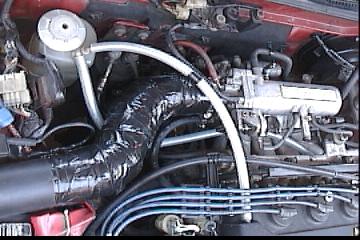

personally, i see no reason to. you can read my explanations and arguements in the link. theres also how i made my ghetto intake.
http://crx.honda-perf.org/foru...=4730

Honda-Tech Member
Joined: Jan 2003
Posts: 3,144
Likes: 3
From: Union, KY, USA
Re: catch can brand???? (95dc2)
<TABLE WIDTH="90%" CELLSPACING=0 CELLPADDING=0 ALIGN=CENTER><TR><TD>Quote, originally posted by 95dc2 »</TD></TR><TR><TD CLASS="quote">i thought the catch can was............pcv--->catch can--->IM......going from valve cover to catch can to intake hose is a little overkill from what i've read. </TD></TR></TABLE>
The idea on the catch can for the running of the engine is to totally isolate the intake from getting a chance to breathe oily internal engine air. The way I run it you are blocking the block to the PCV path and putting the valve cover vent to the tank. You do not connect the tank to the intake pre-throttle body as you mentioned, you are just plugging the existing hole in the intake vacated by the previous line that went to the valve cover vent.
The idea of the catch can for the sanctioning body that requires one in the rules is to catch a volume of oil that could be puked out of the engine if the engine fails to the point that it is going to push oil out or if you roll the car over and the oil goes up into the valve cover and tries to dump itself on their racetrack through your valve cover vent.
If your valve guides are nice and free moving or worn, you can get some blow bye past them to pressurize the valve cover area and try to push some oil out the vent. If your piston rings are nice and free moving or worn, you can get some blow bye past them to pressurize the lower end of the block and would generally go up the PCV track until you had it blocked off like I do. If you have a large amount of block pressure, it is going to come up to the valve cover area via head passages anyway and be relieved out the vent to the catch tank. You could certainly run the block vent that normally goes to the PCV out to your catch tank which would allow any block pressure from blow bye to possibly assist with the running of the car but it will not fulfill with the sanctioing body's want to catch potentially spilled oil puking if the car turns over as the oil is going somewhere else instead of the block.
The risk of venting your block pressure to the atmosphere in a catch tank is that when you turn your hot engine off after driving, it is going to cool down and with access to free atmosphere, the cooling process will draw outside air moisture into the crankcase and condense water into you engine block mixing water in your oil and risking moisture to bearings, crank, etc. Granted the catch tank to the valve cover vent also allows potential cooling condensation air to the top of the engine but the rules say you must have a catch tank somewhere and given the choice of condensation somewhere I would prebably rather have it going to the head first instead of the block.
I hope this makes some sense as the catch tank can do a few functions and you need to cover all or the important ones. I have previously mentioned my old '62 Corvair that had so much blow bye that I had to always run a catch tank vented from the block as at high RPM it would push sump oil out to the tank and even push oil up the dipstick tune onto the engine top. In the days before the EPA and emission, the '62 car actually had new from the factory a PCV steel tube from the crankcase with no valve just dump out on the roadway under the car. My car was so bad that this system would just be dumping a steady amount onto the road so I routed it back to a catch tank.
The idea on the catch can for the running of the engine is to totally isolate the intake from getting a chance to breathe oily internal engine air. The way I run it you are blocking the block to the PCV path and putting the valve cover vent to the tank. You do not connect the tank to the intake pre-throttle body as you mentioned, you are just plugging the existing hole in the intake vacated by the previous line that went to the valve cover vent.
The idea of the catch can for the sanctioning body that requires one in the rules is to catch a volume of oil that could be puked out of the engine if the engine fails to the point that it is going to push oil out or if you roll the car over and the oil goes up into the valve cover and tries to dump itself on their racetrack through your valve cover vent.
If your valve guides are nice and free moving or worn, you can get some blow bye past them to pressurize the valve cover area and try to push some oil out the vent. If your piston rings are nice and free moving or worn, you can get some blow bye past them to pressurize the lower end of the block and would generally go up the PCV track until you had it blocked off like I do. If you have a large amount of block pressure, it is going to come up to the valve cover area via head passages anyway and be relieved out the vent to the catch tank. You could certainly run the block vent that normally goes to the PCV out to your catch tank which would allow any block pressure from blow bye to possibly assist with the running of the car but it will not fulfill with the sanctioing body's want to catch potentially spilled oil puking if the car turns over as the oil is going somewhere else instead of the block.
The risk of venting your block pressure to the atmosphere in a catch tank is that when you turn your hot engine off after driving, it is going to cool down and with access to free atmosphere, the cooling process will draw outside air moisture into the crankcase and condense water into you engine block mixing water in your oil and risking moisture to bearings, crank, etc. Granted the catch tank to the valve cover vent also allows potential cooling condensation air to the top of the engine but the rules say you must have a catch tank somewhere and given the choice of condensation somewhere I would prebably rather have it going to the head first instead of the block.
I hope this makes some sense as the catch tank can do a few functions and you need to cover all or the important ones. I have previously mentioned my old '62 Corvair that had so much blow bye that I had to always run a catch tank vented from the block as at high RPM it would push sump oil out to the tank and even push oil up the dipstick tune onto the engine top. In the days before the EPA and emission, the '62 car actually had new from the factory a PCV steel tube from the crankcase with no valve just dump out on the roadway under the car. My car was so bad that this system would just be dumping a steady amount onto the road so I routed it back to a catch tank.
Honda-Tech Member
Joined: Jan 2003
Posts: 3,144
Likes: 3
From: Union, KY, USA
Re: catch can brand???? (Tyson)
Maybe it is just me and maybe I am just too old school, isn't the idea of the catch tank based on the idea that oil or oily air might come out of the engine and you want to get them away from the engine in a safe and controlled/contained a manner as possible for a racing or performance situation and not suck it back into th intake?
It seems to me that having a tank hooked to your vents and back to your PCV is defeating the opportuntiy to keep the oily air and oil out of the intake tract. Yes it keeps the system sealed to meet emissions and EPA "green" rules for street cars but it seems like it defeats the goal of getting it out of the intake system. It would catch oil exiting the valve cover vent in a rollover situation but still lets the intake suck oily air and gunk up the back side of your intake valves and throw off your mixture a bit.
It seems to me that having a tank hooked to your vents and back to your PCV is defeating the opportuntiy to keep the oily air and oil out of the intake tract. Yes it keeps the system sealed to meet emissions and EPA "green" rules for street cars but it seems like it defeats the goal of getting it out of the intake system. It would catch oil exiting the valve cover vent in a rollover situation but still lets the intake suck oily air and gunk up the back side of your intake valves and throw off your mixture a bit.
Senior Member
Joined: Oct 2001
Posts: 30,826
Likes: 0
From: RIP Craig Jones
Re: catch can brand???? (CRX Lee)
<TABLE WIDTH="90%" CELLSPACING=0 CELLPADDING=0 ALIGN=CENTER><TR><TD>Quote, originally posted by CRX Lee »</TD></TR><TR><TD CLASS="quote">but still lets the intake suck oily air and gunk up the back side of your intake valves and through off your mixture a bit.</TD></TR></TABLE>
Not if its baffled
Not if its baffled


Honda-Tech Member
Joined: Apr 2002
Posts: 18,961
Likes: 76
From: I am Tyson
Re: catch can brand???? (.RJ)
<TABLE WIDTH="90%" CELLSPACING=0 CELLPADDING=0 ALIGN=CENTER><TR><TD>Quote, originally posted by .RJ »</TD></TR><TR><TD CLASS="quote">
Not if its baffled</TD></TR></TABLE>
baffled smaffled, where is the air coming from that is being sucked back into the intake? from an oily source. why would you want this???
Not if its baffled</TD></TR></TABLE>
baffled smaffled, where is the air coming from that is being sucked back into the intake? from an oily source. why would you want this???