


Tell me why THIS looks so different?...RE: oil catch can


 Tell me why THIS looks so different?...RE: oil catch can
I was doing some searching agian in the ARCIVES and found this pix

from endyn's website
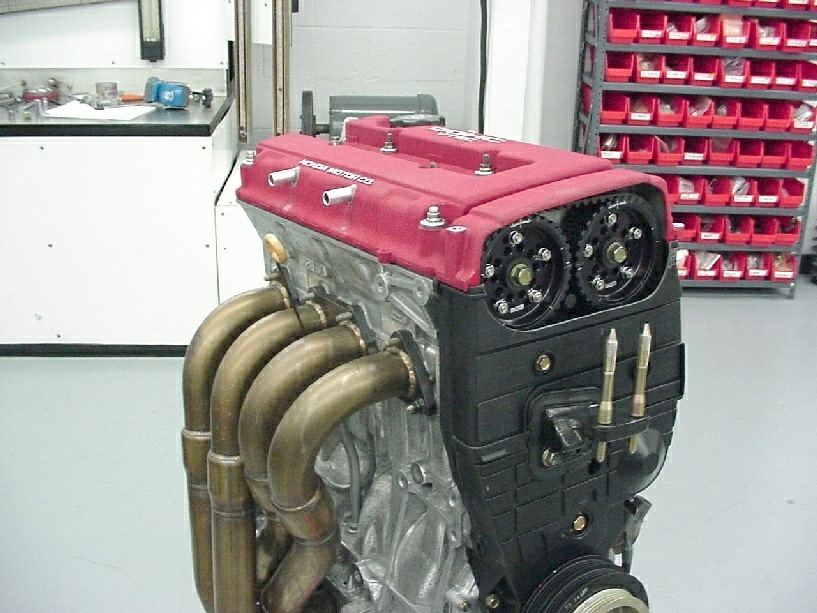
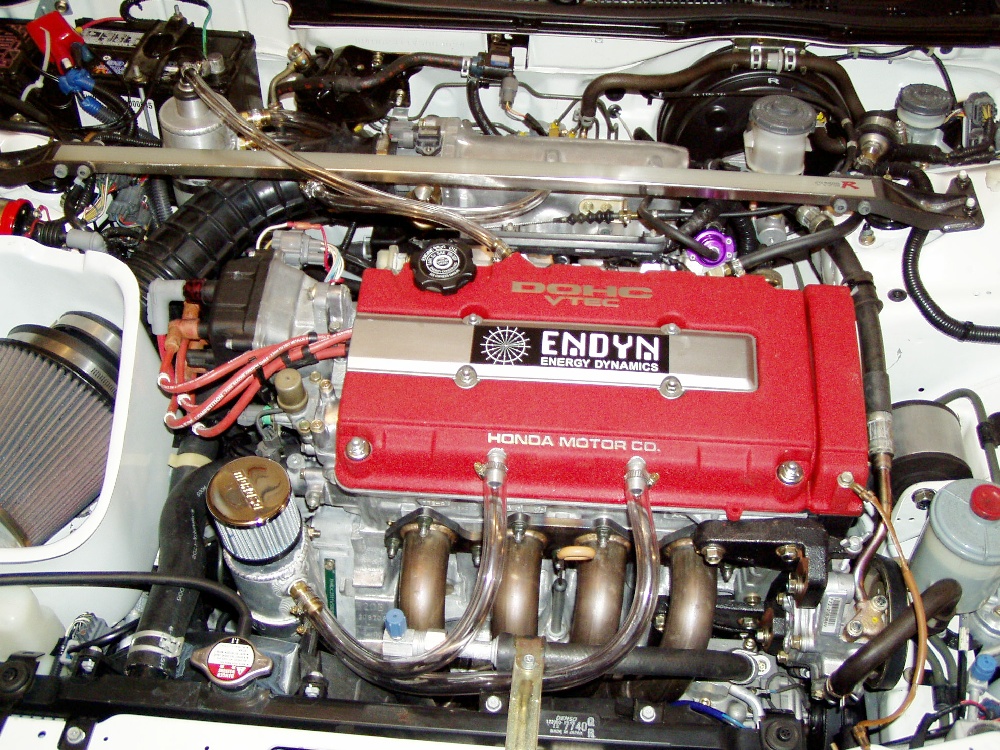
can some please tell me why they did this? somthing about if you have a 2.0vtec motor it creats more crank case ventalation pressure? WTF... I'm baffeled

from endyn's website
can some please tell me why they did this? somthing about if you have a 2.0vtec motor it creats more crank case ventalation pressure? WTF... I'm baffeled


Member
Joined: Dec 2000
Posts: 4,848
Likes: 0
From: Islip, CA, USA
Re: Tell me why THIS looks so different?...RE: oil catch can (luckypon7)
the realtime acuras have those as do some local guys i know. they say they gained 5whp from the better functioning pcv system.

Joined: Mar 2002
Posts: 499
Likes: 0
From: wa, united states
Re: Tell me why THIS looks so different?...RE: oil catch can (High Noon)
ive seen this on many of the evos... so is that two catch cans that he is using? do you just weld on two posts to the valve cover? i think i wanna do this too. any info would be appreciate it.

at the jetties fishin'


Joined: Aug 2002
Posts: 3,760
Likes: 5
From: james island, sc
Re: Tell me why THIS looks so different?...RE: oil catch can (DXturbo)
high pressure from nitrous and/or turbo causes excess crankcase pressure which forces the oil upwards and out of the pvc breather (like if you unhooked yours on your valve cover to run one of those goofy mini filters on it) that's why people lose oil mysteriously yet have an oily *** pvc breather filter.
the setup they are running uses a return style oil catch can. The one hose basically accepts the excess oil when it is pushed up into the engine and out the first tube into the catch can. a valve in the catch can release the excess pressure once the oil is there, prevents the oil from back tracking, and allows the OTHER hose to act as a vacuum source to pull the oil back INTO the engine. Mainly on street engines it's for show.....as you can see by the nice shiney clean tubes they have lol. They don't run their engines hard enough and long enough to produce THAT much, if any, flow through the catch can.
You will NOT make extra power by doing this...you will only have piece of mind that you are not losing all your oil out onto the road (which if you do in certain race classes can get you disqualified anyway).
The BETTER way for a street setup is to drill ONE of those bosses for the head down to the front and route a hard line from the stock pvc outlet to it and in the middle have a "T" where you attach your filter...mainly because the pressure will be taken up by the hardline and yet the filter on the "T" at the midway point will still be able to vent the pressure and since the hardline is going from the upper back stock port to the front lower drilled port, you'll have a downward oil flow so the oil will flow naturally back to the engine.
on a street engine you risk bottle-necking coked oil in the catch can lines which will cause the line to crack over time from pressure building up...race engines are normally torn down and thoroughly cleaned after each race (even the oil lines)....
anyway, fyi
the setup they are running uses a return style oil catch can. The one hose basically accepts the excess oil when it is pushed up into the engine and out the first tube into the catch can. a valve in the catch can release the excess pressure once the oil is there, prevents the oil from back tracking, and allows the OTHER hose to act as a vacuum source to pull the oil back INTO the engine. Mainly on street engines it's for show.....as you can see by the nice shiney clean tubes they have lol. They don't run their engines hard enough and long enough to produce THAT much, if any, flow through the catch can.
You will NOT make extra power by doing this...you will only have piece of mind that you are not losing all your oil out onto the road (which if you do in certain race classes can get you disqualified anyway).
The BETTER way for a street setup is to drill ONE of those bosses for the head down to the front and route a hard line from the stock pvc outlet to it and in the middle have a "T" where you attach your filter...mainly because the pressure will be taken up by the hardline and yet the filter on the "T" at the midway point will still be able to vent the pressure and since the hardline is going from the upper back stock port to the front lower drilled port, you'll have a downward oil flow so the oil will flow naturally back to the engine.
on a street engine you risk bottle-necking coked oil in the catch can lines which will cause the line to crack over time from pressure building up...race engines are normally torn down and thoroughly cleaned after each race (even the oil lines)....
anyway, fyi
Joined: Mar 2002
Posts: 499
Likes: 0
From: wa, united states
Re: Tell me why THIS looks so different?...RE: oil catch can (stackz)
so would this even help me if i decided to do this if the most boost im ever gonna run is 7psi? d16z6 with apexi kit....
o you could u possibly make a diagram of what youre talking bout?
o you could u possibly make a diagram of what youre talking bout?
Trending Topics
at the jetties fishin'
Joined: Aug 2002
Posts: 3,760
Likes: 5
From: james island, sc
Re: Tell me why THIS looks so different?...RE: oil catch can (DXturbo)
<TABLE WIDTH="90%" CELLSPACING=0 CELLPADDING=0 ALIGN=CENTER><TR><TD>Quote, originally posted by DXturbo »</TD></TR><TR><TD CLASS="quote">so would this even help me if i decided to do this if the most boost im ever gonna run is 7psi? d16z6 with apexi kit....
o you could u possibly make a diagram of what youre talking bout?</TD></TR></TABLE>
ok, in this picture right here:
the top hose on the valve cover is where the stock pvc vent is located and is usually routed to the intake hosing...like and the first pic has going on.
most people rid themselves of that hose and run one of those ghetto small *** breathers...stupid.
the bottom left hose on the catch can setup is the one that in effect feeds the catchcan and fights the gravity of the valve in the can....as you can see it feeds the top line...oil flows DOWN in the can past the valve into the reservoir...can't flow back up and instead vacuum in the second line (bottom line at catch can and going to the right on the valve cover) sucks it back into the engine.
Like I said though. you will see NO "hidden" horsepower from doing this and it's actually quite useless but much bling bling points unless you do heavy auto-x'ing or other racing where the engine will be at full boost for long periods of time.
either run your stock pvc line from the valve cover to the compressor inlet pipe right after the air filter like this:

yes, I know it's an sohc but it's the exact same principle. basically if you wanted to do like I said in the last option of my post...you'd go to a hardware store and get a "T" fitting, cut the line, stick it in there with the T facing up and attach the filter to it.
o you could u possibly make a diagram of what youre talking bout?</TD></TR></TABLE>
ok, in this picture right here:
the top hose on the valve cover is where the stock pvc vent is located and is usually routed to the intake hosing...like and the first pic has going on.
most people rid themselves of that hose and run one of those ghetto small *** breathers...stupid.
the bottom left hose on the catch can setup is the one that in effect feeds the catchcan and fights the gravity of the valve in the can....as you can see it feeds the top line...oil flows DOWN in the can past the valve into the reservoir...can't flow back up and instead vacuum in the second line (bottom line at catch can and going to the right on the valve cover) sucks it back into the engine.
Like I said though. you will see NO "hidden" horsepower from doing this and it's actually quite useless but much bling bling points unless you do heavy auto-x'ing or other racing where the engine will be at full boost for long periods of time.
either run your stock pvc line from the valve cover to the compressor inlet pipe right after the air filter like this:
yes, I know it's an sohc but it's the exact same principle. basically if you wanted to do like I said in the last option of my post...you'd go to a hardware store and get a "T" fitting, cut the line, stick it in there with the T facing up and attach the filter to it.
Joined: Mar 2002
Posts: 499
Likes: 0
From: wa, united states
Re: Tell me why THIS looks so different?...RE: oil catch can (stackz)
thanks man much appreciated! ok so lets say i wanted to bling how and what materials are need to do the posts coming out of the valvecover? thanks!
at the jetties fishin'
Joined: Aug 2002
Posts: 3,760
Likes: 5
From: james island, sc
Re: Tell me why THIS looks so different?...RE: oil catch can (DXturbo)
hmmm, materials needed OTHER than the catch can??
go to ace hardware and get:
1. some clear hose...about 5ft @ $1.00 a foot
2. hose clamps...0.25-0.85 cent a piece
3. I'd go with 2 5/8" threaded-to-stepped nozzle fittings...hard to explain. here's a picture of what I mean:
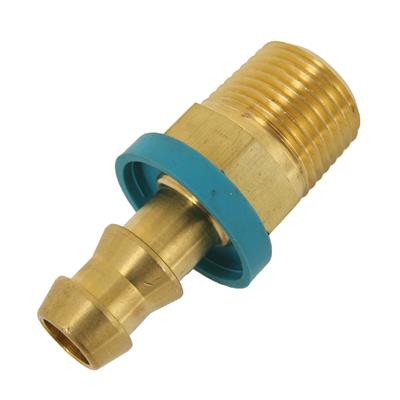
about 50 cent max each
4. roll of teflon tape for about 80 cent (for the threaded side into the valve cover of course).
5. appropriate drill bit, I'd personally use a 1/2" bit ($9.00 @ ace...eesh).
6. thread tap for 5/8" thread ($9.00 @ ace)
basically take $30 with you for all the hardware...and that doesn't include whatever you pay for the catch can.
other than that it's only labor and steady hands...
go to ace hardware and get:
1. some clear hose...about 5ft @ $1.00 a foot
2. hose clamps...0.25-0.85 cent a piece
3. I'd go with 2 5/8" threaded-to-stepped nozzle fittings...hard to explain. here's a picture of what I mean:
about 50 cent max each
4. roll of teflon tape for about 80 cent (for the threaded side into the valve cover of course).
5. appropriate drill bit, I'd personally use a 1/2" bit ($9.00 @ ace...eesh).
6. thread tap for 5/8" thread ($9.00 @ ace)
basically take $30 with you for all the hardware...and that doesn't include whatever you pay for the catch can.
other than that it's only labor and steady hands...

New User
Joined: Feb 2001
Posts: 1,909
Likes: 1
From: US
Re: Tell me why THIS looks so different?...RE: oil catch can (stackz)
<TABLE WIDTH="90%" CELLSPACING=0 CELLPADDING=0 ALIGN=CENTER><TR><TD>Quote, originally posted by stackz »</TD></TR><TR><TD CLASS="quote">
either run your stock pvc line from the valve cover to the compressor inlet pipe right after the air filter like this:
It's not a big deal to have vaporized oil going into the compressor inlet?
yes, I know it's an sohc but it's the exact same principle. basically if you wanted to do like I said in the last option of my post...you'd go to a hardware store and get a "T" fitting, cut the line, stick it in there with the T facing up and attach the filter to it.
</TD></TR></TABLE>
either run your stock pvc line from the valve cover to the compressor inlet pipe right after the air filter like this:
It's not a big deal to have vaporized oil going into the compressor inlet?
yes, I know it's an sohc but it's the exact same principle. basically if you wanted to do like I said in the last option of my post...you'd go to a hardware store and get a "T" fitting, cut the line, stick it in there with the T facing up and attach the filter to it.
</TD></TR></TABLE>

New User
Joined: Mar 2001
Posts: 12,296
Likes: 0
Re: Tell me why THIS looks so different?...RE: oil catch can (stackz)
<TABLE WIDTH="90%" CELLSPACING=0 CELLPADDING=0 ALIGN=CENTER><TR><TD>Quote, originally posted by stackz »</TD></TR><TR><TD CLASS="quote">
yes, I know it's an sohc but it's the exact same principle. basically if you wanted to do like I said in the last option of my post...you'd go to a hardware store and get a "T" fitting, cut the line, stick it in there with the T facing up and attach the filter to it.
</TD></TR></TABLE>
OK I don't know if I agree with this at all running the line from the valve cover is fine but to the inlet pipe for the turbo I don't think so. Now I sadi THINK so smart comments at all. By doing this the excess oil would go to the compressor which in turn would then be boosted back into the motor. I have set mine up so the hose comes from the valve cover to my Greddy catch can with the other hose going to the compressor inlet tube, this way the Greddy catch can is "Catching" the oil and not allowing it back into the motor. I had this set up when my compressor faced the passenger side with my old DRAG 3 kit right onto the inlet pipe, now with my compressor facing the drivers side and barely enogh room to fit a filter even on it, I want to make a short pipe to filter and on the pipe put a bung for the hose so when the compressor spools it will suck and the oil will be "caught" in the catch can. Any GURUS or other insites? tony1, FFgeoff, Mike/Earl Laskey? I have also thought about doing mine like Endyn off the back of the block to the stock black box. Anyone anyone anyone? Bueller? Bueller?
yes, I know it's an sohc but it's the exact same principle. basically if you wanted to do like I said in the last option of my post...you'd go to a hardware store and get a "T" fitting, cut the line, stick it in there with the T facing up and attach the filter to it.
</TD></TR></TABLE>
OK I don't know if I agree with this at all running the line from the valve cover is fine but to the inlet pipe for the turbo I don't think so. Now I sadi THINK so smart comments at all. By doing this the excess oil would go to the compressor which in turn would then be boosted back into the motor. I have set mine up so the hose comes from the valve cover to my Greddy catch can with the other hose going to the compressor inlet tube, this way the Greddy catch can is "Catching" the oil and not allowing it back into the motor. I had this set up when my compressor faced the passenger side with my old DRAG 3 kit right onto the inlet pipe, now with my compressor facing the drivers side and barely enogh room to fit a filter even on it, I want to make a short pipe to filter and on the pipe put a bung for the hose so when the compressor spools it will suck and the oil will be "caught" in the catch can. Any GURUS or other insites? tony1, FFgeoff, Mike/Earl Laskey? I have also thought about doing mine like Endyn off the back of the block to the stock black box. Anyone anyone anyone? Bueller? Bueller?
at the jetties fishin'
Joined: Aug 2002
Posts: 3,760
Likes: 5
From: james island, sc
Re: Tell me why THIS looks so different?...RE: oil catch can (Boostfed)
ok, I need to be more specific with this I can see, my bad...
from the factory the car's intake piping is under "vacuum" when the gas pedal is pressed due to the rotating assembly creating this force (combustion chamber suction) under that is the crank case which creates the opposite pressurized effect...pushing oil UP..however, the factory compensates this by hooking the valve cover to the intake pipe which equalized the pressure...the crank case pressure is bled off by the suction created in the intake pipe.
make sense?
ok, now for forced induction cars, the compressor side of the engine, even under boost, will be creating MORE of a suction than the crank case can compensate for thus completely negating the need for the air filter...as you can see my car is turbocharged...I get absolutely no oil in the piping as I have no crank case pressure to worry about. this does NOT affect oiling passages as they are pressurized by a completely different system (oil pump). This just makes sure that I don't get extremely high crank case pressures.
Of course as you can see the engines pictured are naturally aspirated. the only time these types of engines get crank case pressures this high are race conditions where vtec is engaged for minutes on end continuously such as in auto-x'ing when going through the "S's" in 3rd gear and then launching into the straight...thus the needed catch can, as the pressure will force up to a quart of oil out of the engine at about 28 atmospheres.
however, I could explain this until I can't go any longer. I'm just telling you that you don't need it but I'm NOT against it. I wouldn't have given a parts list on how to do it if I was against it. It's just mainly bling bling on the street and your money could honestly go to better things than this is all....
from the factory the car's intake piping is under "vacuum" when the gas pedal is pressed due to the rotating assembly creating this force (combustion chamber suction) under that is the crank case which creates the opposite pressurized effect...pushing oil UP..however, the factory compensates this by hooking the valve cover to the intake pipe which equalized the pressure...the crank case pressure is bled off by the suction created in the intake pipe.
make sense?
ok, now for forced induction cars, the compressor side of the engine, even under boost, will be creating MORE of a suction than the crank case can compensate for thus completely negating the need for the air filter...as you can see my car is turbocharged...I get absolutely no oil in the piping as I have no crank case pressure to worry about. this does NOT affect oiling passages as they are pressurized by a completely different system (oil pump). This just makes sure that I don't get extremely high crank case pressures.
Of course as you can see the engines pictured are naturally aspirated. the only time these types of engines get crank case pressures this high are race conditions where vtec is engaged for minutes on end continuously such as in auto-x'ing when going through the "S's" in 3rd gear and then launching into the straight...thus the needed catch can, as the pressure will force up to a quart of oil out of the engine at about 28 atmospheres.
however, I could explain this until I can't go any longer. I'm just telling you that you don't need it but I'm NOT against it. I wouldn't have given a parts list on how to do it if I was against it. It's just mainly bling bling on the street and your money could honestly go to better things than this is all....
Guest
Posts: n/a
Re: Tell me why THIS looks so different?...RE: oil catch can (Charlie Moua)
Turbo car: PCV valve is closed under boost, this just seperates oil vapor from valve cover to intake while still employing the vacuum draw of the PCV system under non boost load.


Honda-Tech Member
Joined: Jul 2002
Posts: 775
Likes: 0
Re: Tell me why THIS looks so different?...RE: oil catch can (Charlie Moua)
this is what i'm planning to do(image courtesy of haberdasher):
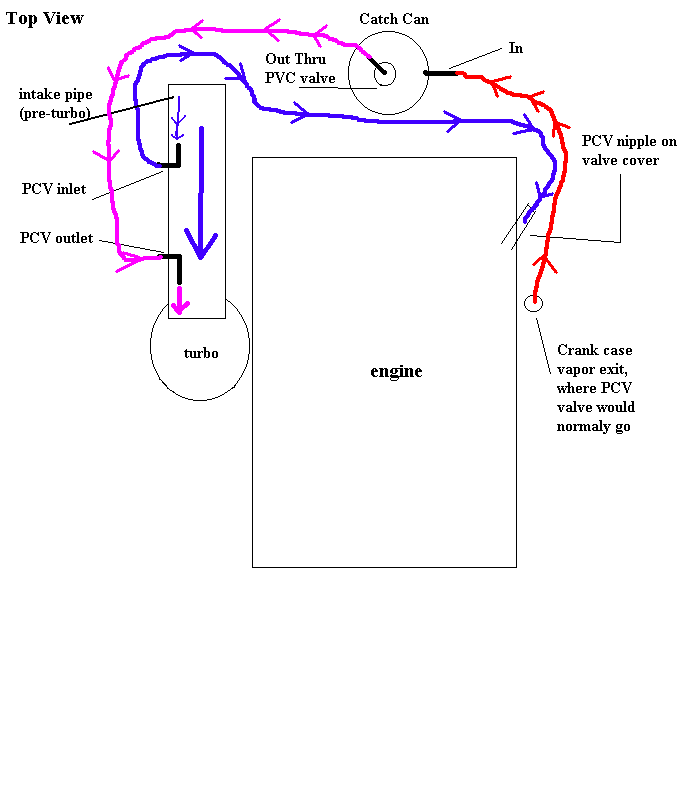
on the helms manual (see the diagram below and follow the arrows), the pcv system works by sucking fresh air in from the valve cover through a tube that is attach to the stock intake pipe. then the pcv is connected to the intake manifold and sucks in the oil vapor to the intake manifold to be burn with the incoming a/f. so fresh air in, then pushes the vapor to the oil separator then vacuum sucks out the vapors into the intake manifold.

so what i'm planning to do is simulate the same cycle as stock honda pcv system by doing the setup on the first picture. two hose are connected on the intake pipe before the turbo, one hose(blue) is connected to the valve cover for the supply of fresh air then the purple hose acts as vacuum. so even when the car is boosting the oil vapors get suck out into the catch can then the oil and vapor seperates. the vapor then get suck into the compressor and burn together with the incoming a/f. in short pretty much like stock honda system.
will this setup work? anybody see any negative effect of this?
on the helms manual (see the diagram below and follow the arrows), the pcv system works by sucking fresh air in from the valve cover through a tube that is attach to the stock intake pipe. then the pcv is connected to the intake manifold and sucks in the oil vapor to the intake manifold to be burn with the incoming a/f. so fresh air in, then pushes the vapor to the oil separator then vacuum sucks out the vapors into the intake manifold.
so what i'm planning to do is simulate the same cycle as stock honda pcv system by doing the setup on the first picture. two hose are connected on the intake pipe before the turbo, one hose(blue) is connected to the valve cover for the supply of fresh air then the purple hose acts as vacuum. so even when the car is boosting the oil vapors get suck out into the catch can then the oil and vapor seperates. the vapor then get suck into the compressor and burn together with the incoming a/f. in short pretty much like stock honda system.
will this setup work? anybody see any negative effect of this?

Honda-Tech Member
Joined: Aug 2002
Posts: 2,826
Likes: 1
From: Columbus, Ohio
Re: Tell me why THIS looks so different?...RE: oil catch can (_Endless_)
im confused on how that is going to work. i mean the blue and the pink line are both going to be in vacume all the time. that pre-turbo pipe is always "sucking" air. right??
i think it needs to be a line from the intake tube going to manifold > to valve cover (pressure = fresh air) , then from the pvc valve > to a catch tank > to pre turbo inlet pipe ( always vacume ).
platinum.
i think it needs to be a line from the intake tube going to manifold > to valve cover (pressure = fresh air) , then from the pvc valve > to a catch tank > to pre turbo inlet pipe ( always vacume ).
platinum.
Re: Tell me why THIS looks so different?...RE: oil catch can (platinum00)
damn bump for some more info and also BUMP for you guys that took that extra step with the images..LOL

Honda-Tech Member
Joined: May 2001
Posts: 5,089
Likes: 1
From: Trinidad, W.I.
Re: Tell me why THIS looks so different?...RE: oil catch can (Charlie Moua)
Well, as far as the catch can system not picking up any Hp... Why would you say that ?
It does relieve crankcase pressure (if no PCV valve is used) and that would allow a bit more freedom in the crankcase for the reciprocating assembly to move (less pressure=less resistance=less power used to turn said assembly) So I don't see why you would say no Hp would be gained.
But to my main point... The PCV system, althought designed to be used with the stock ECU's fueling patterns, would not be good to recycle into a boosted car's intake tract. Even with the use of a catch can system. These vapors still contain oil residue that will be reintroduced to the intake. These vapors are very hot and tend to increase the chances of detonation. So IMO, I would not vent the can to the intake mani... but that's getting into the whole Open vs Closed loop catch can debate...
BTW... 7psi... lol... you definitely won't need a catch can... just get a new PCV valve every 30K or so... They tend to wear quickly under boosted conditions.
It does relieve crankcase pressure (if no PCV valve is used) and that would allow a bit more freedom in the crankcase for the reciprocating assembly to move (less pressure=less resistance=less power used to turn said assembly) So I don't see why you would say no Hp would be gained.
But to my main point... The PCV system, althought designed to be used with the stock ECU's fueling patterns, would not be good to recycle into a boosted car's intake tract. Even with the use of a catch can system. These vapors still contain oil residue that will be reintroduced to the intake. These vapors are very hot and tend to increase the chances of detonation. So IMO, I would not vent the can to the intake mani... but that's getting into the whole Open vs Closed loop catch can debate...
BTW... 7psi... lol... you definitely won't need a catch can... just get a new PCV valve every 30K or so... They tend to wear quickly under boosted conditions.

at the jetties fishin'
Joined: Aug 2002
Posts: 3,760
Likes: 5
From: james island, sc
Re: Tell me why THIS looks so different?...RE: oil catch can (X2BOARD)
<TABLE WIDTH="90%" CELLSPACING=0 CELLPADDING=0 ALIGN=CENTER><TR><TD>Quote, originally posted by X2BOARD »</TD></TR><TR><TD CLASS="quote">Well, as far as the catch can system not picking up any Hp... Why would you say that ?
It does relieve crankcase pressure (if no PCV valve is used) and that would allow a bit more freedom in the crankcase for the reciprocating assembly to move (less pressure=less resistance=less power used to turn said assembly) So I don't see why you would say no Hp would be gained.</TD></TR></TABLE>
because, it doesn't matter basically. the resistance is still being created against the rotating assembly from the oil in the pan hitting the journal weights as it spins. not only that but it only relieves enough pressure to keep the oil from being pushed BACK up the oiling passages at the pcv opening...
<TABLE WIDTH="90%" CELLSPACING=0 CELLPADDING=0 ALIGN=CENTER><TR><TD>Quote, originally posted by X2BOARD »</TD></TR><TR><TD CLASS="quote">
But to my main point... The PCV system, althought designed to be used with the stock ECU's fueling patterns, would not be good to recycle into a boosted car's intake tract. Even with the use of a catch can system. These vapors still contain oil residue that will be reintroduced to the intake. These vapors are very hot and tend to increase the chances of detonation. So IMO, I would not vent the can to the intake mani... but that's getting into the whole Open vs Closed loop catch can debate...
BTW... 7psi... lol... you definitely won't need a catch can... just get a new PCV valve every 30K or so... They tend to wear quickly under boosted conditions.</TD></TR></TABLE>
that only comes into play when you are boosting above 15psi or so as...like I said...the suction from the compressor wheel overcomes the crankcase pressure enough to keep oil residue from getting into the hose much less the intake pipe. After about 15psi or so the engine will rev up SOOO fast due to the increase spool pressure that the rotating assembly will cavitate the oil in the pan and basically shoot it up...
think of it like this, you see the helicopters hovering over the water in the movies and the water flows up and out...same thing only MUCH more violent...which is why you have the catch can to catch it and since it completes to the return...between shifts the engine winds down and the pressure reverses creating the suction to pull the oil back out of the catch can.
simple as that.
it's basically like a closed coolant system with the oil catch acting like the coolant reservoir for the oil system.
It does relieve crankcase pressure (if no PCV valve is used) and that would allow a bit more freedom in the crankcase for the reciprocating assembly to move (less pressure=less resistance=less power used to turn said assembly) So I don't see why you would say no Hp would be gained.</TD></TR></TABLE>
because, it doesn't matter basically. the resistance is still being created against the rotating assembly from the oil in the pan hitting the journal weights as it spins. not only that but it only relieves enough pressure to keep the oil from being pushed BACK up the oiling passages at the pcv opening...
<TABLE WIDTH="90%" CELLSPACING=0 CELLPADDING=0 ALIGN=CENTER><TR><TD>Quote, originally posted by X2BOARD »</TD></TR><TR><TD CLASS="quote">
But to my main point... The PCV system, althought designed to be used with the stock ECU's fueling patterns, would not be good to recycle into a boosted car's intake tract. Even with the use of a catch can system. These vapors still contain oil residue that will be reintroduced to the intake. These vapors are very hot and tend to increase the chances of detonation. So IMO, I would not vent the can to the intake mani... but that's getting into the whole Open vs Closed loop catch can debate...
BTW... 7psi... lol... you definitely won't need a catch can... just get a new PCV valve every 30K or so... They tend to wear quickly under boosted conditions.</TD></TR></TABLE>
that only comes into play when you are boosting above 15psi or so as...like I said...the suction from the compressor wheel overcomes the crankcase pressure enough to keep oil residue from getting into the hose much less the intake pipe. After about 15psi or so the engine will rev up SOOO fast due to the increase spool pressure that the rotating assembly will cavitate the oil in the pan and basically shoot it up...
think of it like this, you see the helicopters hovering over the water in the movies and the water flows up and out...same thing only MUCH more violent...which is why you have the catch can to catch it and since it completes to the return...between shifts the engine winds down and the pressure reverses creating the suction to pull the oil back out of the catch can.
simple as that.
it's basically like a closed coolant system with the oil catch acting like the coolant reservoir for the oil system.


Honda-Tech Member
Joined: Aug 2002
Posts: 2,826
Likes: 1
From: Columbus, Ohio
Re: Tell me why THIS looks so different?...RE: oil catch can (Maxime)
basicly what it comes down to is everyone has different ways of hooking them up. some work better for certain applications, some dont.
any of these way is better then stock.
platinum.
any of these way is better then stock.
platinum.
