


1988 Civic DX Hatchback Starting Problem


Thread Starter
Honda-Tech Member
Joined: Nov 2020
Posts: 3
Likes: 0
 1988 Civic DX Hatchback Starting Problem
1988 Civic DX Hatchback, 1.6L fuel injection engine, 5 speed, 187k miles, nice shape. I am the original owner and intend to fully restore it during my retirement.
1. An intermittent problem just began. Engine cranked strongly but did not fire up. Battery was fully charged. None of the warning lights tested or illuminated when turning the ignition switch on. They all remained off, including the oil pressure, battery and check engine lights. This has happened twice in the last dozen or so starts. The other ten or so starts were normal.
2. Here is another problem, possibly related? About a month ago when turning the ignition off, the fuel pump continued to cycle on and off. I restarted the engine and it idled roughly for about a minute, then was fine. This fuel pump cycling problem only happened once and has not recurred again.
1. An intermittent problem just began. Engine cranked strongly but did not fire up. Battery was fully charged. None of the warning lights tested or illuminated when turning the ignition switch on. They all remained off, including the oil pressure, battery and check engine lights. This has happened twice in the last dozen or so starts. The other ten or so starts were normal.
2. Here is another problem, possibly related? About a month ago when turning the ignition off, the fuel pump continued to cycle on and off. I restarted the engine and it idled roughly for about a minute, then was fine. This fuel pump cycling problem only happened once and has not recurred again.
Last edited by cwhill; Nov 15, 2020 at 02:22 PM. Reason: added more info.

Honda-Tech Member


Joined: Apr 2017
Posts: 98
Likes: 18
Re: 1988 Civic DX Hatchback Starting Problem
An engine runs off of fuel, spark and air. Generally air isn't a problem unless your is cam out of time or the timing belt is broken. Spark is easy to test as you can pull a spark plug, ground it and look at it while cranking to see if there is spark. If so, then you are likely looking at a fuel issue.
As Tyson stated, the main relay is a very common problem. It controls both the fuel pump and provides power to the ECU and injectors. If the ECU isn't getting power, it will not be very apparent looking at the dash lights other than the check engine light will not illuminate when you first turn your key. If you don't see this, your car will not start.
As for the main relay, often it will start to flake out before it fully dies. The solder joints can crack which leads to poor connections and intermittent issues. This can be fixed by reflowing the solder on the relay board. However, other things can occur such as develop pitting on the contactors, mechanical friction in the relay pivot, spring failure and flyback diode failure. While the diodes can be fixed, if they fail it can result in damage to the relays.
I would recommend sourcing a replacement main relay and testing. While the OEM ones are still available, they are about $100 and you can get them from a junk yard for much less. I don't recommend using aftermarket main relays as my experience with them has not been positive. You could also replace it with two Bosch style relays but you must use at least a 40 amp on the normally open side (i.e. a 60/40 relay) and it must have a flyback diode.
If the main relay isn't the problem, it could also be a wiring issue, a failing fuel pump or an ignition issue. A fuel pressure gauge would help diagnosing the issue.
As Tyson stated, the main relay is a very common problem. It controls both the fuel pump and provides power to the ECU and injectors. If the ECU isn't getting power, it will not be very apparent looking at the dash lights other than the check engine light will not illuminate when you first turn your key. If you don't see this, your car will not start.
As for the main relay, often it will start to flake out before it fully dies. The solder joints can crack which leads to poor connections and intermittent issues. This can be fixed by reflowing the solder on the relay board. However, other things can occur such as develop pitting on the contactors, mechanical friction in the relay pivot, spring failure and flyback diode failure. While the diodes can be fixed, if they fail it can result in damage to the relays.
I would recommend sourcing a replacement main relay and testing. While the OEM ones are still available, they are about $100 and you can get them from a junk yard for much less. I don't recommend using aftermarket main relays as my experience with them has not been positive. You could also replace it with two Bosch style relays but you must use at least a 40 amp on the normally open side (i.e. a 60/40 relay) and it must have a flyback diode.
If the main relay isn't the problem, it could also be a wiring issue, a failing fuel pump or an ignition issue. A fuel pressure gauge would help diagnosing the issue.

Honda-Tech Member
Joined: Jul 2015
Posts: 138
Likes: 6
Re: 1988 Civic DX Hatchback Starting Problem
Based on your symptoms, I second the main relay. Remove it and take the cover off and look for small cracks (probably need a magnifier) in the solder joints. You can resolder or buy a new one. I just bought a new one as they are fairly cheap.

Honda-Tech Member

Joined: Apr 2002
Posts: 18,961
Likes: 75
From: I am Tyson
Re: 1988 Civic DX Hatchback Starting Problem
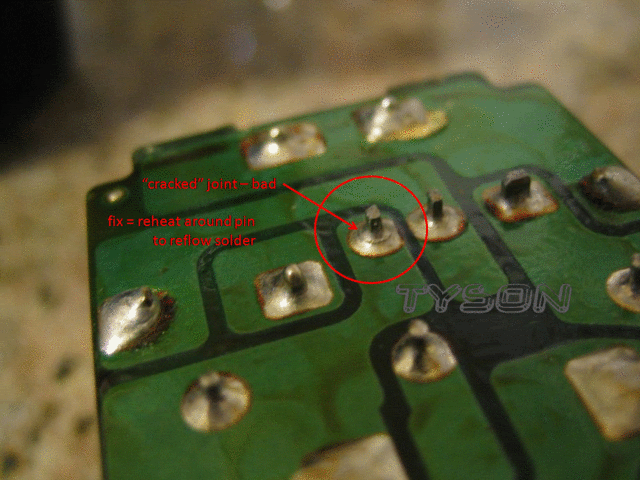
btw, this is what a cracked solder joint looks like.
https://honda-tech.com/forums/honda-.../#post43614302