


White Smoke!!! Help!!!


Thread Starter
Honda-Tech Member
Joined: Jun 2014
Posts: 12
Likes: 0
 White Smoke!!! Help!!!
Ive read a lot of post about white smoke
just want to post up my situation to see if its the same conclusion
I was adding oil to my 94 honda civic ex since it was low
but without thinking i added an entire 5 qt and i had a lot of white smoke coming out.
Went to jiffy lube so they could drain out some oil but issue still there
Car was also burning threw oil pretty quick
Just did and oil change today and white smoke still coming out
Any one know what it might be?
Need to fix ASAP!
I use my car for work and i already got a letter from the DMV about my car being reported.
just want to post up my situation to see if its the same conclusion
I was adding oil to my 94 honda civic ex since it was low
but without thinking i added an entire 5 qt and i had a lot of white smoke coming out.
Went to jiffy lube so they could drain out some oil but issue still there
Car was also burning threw oil pretty quick
Just did and oil change today and white smoke still coming out
Any one know what it might be?
Need to fix ASAP!
I use my car for work and i already got a letter from the DMV about my car being reported.

Hysterically Calm


Joined: Jan 2013
Posts: 10,439
Likes: 597
 Re: White Smoke!!! Help!!!
There isn't enough information here to be able to advise you of anything.
First off, does your smoke disappear quickly of very slowly?
Also on a sunny day when it thins out does it have a bluish hue to it?
Are you loosing coolant at all?
Pull your spark plugs out, I am willing to bet they are pretty fouled. New plugs may reduce the amount of smoke being produced but is a short term fix.
You aren't reporting a power loss. Does your car seem kind of weak?
A compression test will tell you how your piston rings are doing but not the oil control rings.
High oil consumption is usually contributed to worn out valve seals.
There are so many directions this could go and the information you've provided so far doesn't really lean towards any particular direction.
First off, does your smoke disappear quickly of very slowly?
Also on a sunny day when it thins out does it have a bluish hue to it?
Are you loosing coolant at all?
Pull your spark plugs out, I am willing to bet they are pretty fouled. New plugs may reduce the amount of smoke being produced but is a short term fix.
You aren't reporting a power loss. Does your car seem kind of weak?
A compression test will tell you how your piston rings are doing but not the oil control rings.
High oil consumption is usually contributed to worn out valve seals.
There are so many directions this could go and the information you've provided so far doesn't really lean towards any particular direction.
Thread Starter
Honda-Tech Member
Joined: Jun 2014
Posts: 12
Likes: 0
Re: White Smoke!!! Help!!!
There isn't enough information here to be able to advise you of anything.
First off, does your smoke disappear quickly of very slowly?
Also on a sunny day when it thins out does it have a bluish hue to it?
Are you loosing coolant at all?
Pull your spark plugs out, I am willing to bet they are pretty fouled. New plugs may reduce the amount of smoke being produced but is a short term fix.
You aren't reporting a power loss. Does your car seem kind of weak?
A compression test will tell you how your piston rings are doing but not the oil control rings.
High oil consumption is usually contributed to worn out valve seals.
There are so many directions this could go and the information you've provided so far doesn't really lean towards any particular direction.
First off, does your smoke disappear quickly of very slowly?
Also on a sunny day when it thins out does it have a bluish hue to it?
Are you loosing coolant at all?
Pull your spark plugs out, I am willing to bet they are pretty fouled. New plugs may reduce the amount of smoke being produced but is a short term fix.
You aren't reporting a power loss. Does your car seem kind of weak?
A compression test will tell you how your piston rings are doing but not the oil control rings.
High oil consumption is usually contributed to worn out valve seals.
There are so many directions this could go and the information you've provided so far doesn't really lean towards any particular direction.
No power loss car runs normal
I had just put new plugs in
Do you think I screwed them up by putting too much oil
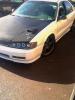
Honda-Tech Member
Joined: Apr 2014
Posts: 343
Likes: 2
From: Syracuse, NY
Re: White Smoke!!! Help!!!
White smoke is coolant, black is fuel, and blue is oil. As tomcat suggested I would check coolant level, spark plugs and compression. Be sure to do the compression test on the engine when warm at wot with all plugs removed to avoid skewed results
Hysterically Calm
Joined: Jan 2013
Posts: 10,439
Likes: 597
Re: White Smoke!!! Help!!!
Don't believe me? Try putting 3 tablespoons of oil into each cylinder, torque your spark plugs down, start her up and watch the white smoke show for about 3 minutes or so.
It's why every time someone hollers "white smoke" I try and get clarifying questions because everyone instantly assumes blown head gasket at the mere mention of "white".
In the case of significant oil burning you pretty much need a bright sunny day and wait for the smoke to thin out enough to see the blue hue to it. On an overcast day it's pretty difficult to catch the blue hue.
The other key aspect is the rate of dissipation. Steam (blown head gasket) dissipates very quickly, oil hangs in the air a long time.
Were you doing a wet compression test or something?
Or do you mean you oiled the threads?
You should use a true anti-seize compound (grey not copper based). It's an oil and aluminum material mix. The oil dries up over time and it's the metal flakes that prevent seizure.
Were you smoking before the new plugs?
Honda-Tech Member
Joined: Apr 2014
Posts: 343
Likes: 2
From: Syracuse, NY
Re: White Smoke!!! Help!!!
There is one problem with this general rule of thumb. White smoke that doesn't dissipate, without any loss of coolant is usually a lot of oil being burnt.
Don't believe me? Try putting 3 tablespoons of oil into each cylinder, torque your spark plugs down, start her up and watch the white smoke show for about 3 minutes or so.
It's why every time someone hollers "white smoke" I try and get clarifying questions because everyone instantly assumes blown head gasket at the mere mention of "white".
In the case of significant oil burning you pretty much need a bright sunny day and wait for the smoke to thin out enough to see the blue hue to it. On an overcast day it's pretty difficult to catch the blue hue.
The other key aspect is the rate of dissipation. Steam (blown head gasket) dissipates very quickly, oil hangs in the air a long time.
What do you mean by putting to much oil?
Were you doing a wet compression test or something?
Or do you mean you oiled the threads?
You should use a true anti-seize compound (grey not copper based). It's an oil and aluminum material mix. The oil dries up over time and it's the metal flakes that prevent seizure.
Were you smoking before the new plugs?
Don't believe me? Try putting 3 tablespoons of oil into each cylinder, torque your spark plugs down, start her up and watch the white smoke show for about 3 minutes or so.
It's why every time someone hollers "white smoke" I try and get clarifying questions because everyone instantly assumes blown head gasket at the mere mention of "white".
In the case of significant oil burning you pretty much need a bright sunny day and wait for the smoke to thin out enough to see the blue hue to it. On an overcast day it's pretty difficult to catch the blue hue.
The other key aspect is the rate of dissipation. Steam (blown head gasket) dissipates very quickly, oil hangs in the air a long time.
What do you mean by putting to much oil?
Were you doing a wet compression test or something?
Or do you mean you oiled the threads?
You should use a true anti-seize compound (grey not copper based). It's an oil and aluminum material mix. The oil dries up over time and it's the metal flakes that prevent seizure.
Were you smoking before the new plugs?

Trending Topics
Hysterically Calm
Joined: Jan 2013
Posts: 10,439
Likes: 597
Re: White Smoke!!! Help!!!
I was wanting to be clear for the OP so that they didn't jump to a possible false conclusion. Seen the direction head towards bad head gasket several times due to a lack of clarifying questions being posed. Sometimes it is just that but other times it is not and I have adopted the policy of getting clarity on these issues first before any prognosis is provided.
One thing that tends to be pretty consistent here at H-T is minimal to not enough information is usually provided, and from my observances, it usually frustrates the experienced regulars here and tends to go sideways more often than not. Even if I may not be able to provide a solid prognosis, the one thing I can do is provide clarifying questions so that others can offer solid advise.
Thread Starter
Honda-Tech Member
Joined: Jun 2014
Posts: 12
Likes: 0
Re: White Smoke!!! Help!!!
What do you mean by putting to much oil?
Were you doing a wet compression test or something?
Or do you mean you oiled the threads?
You should use a true anti-seize compound (grey not copper based). It's an oil and aluminum material mix. The oil dries up over time and it's the metal flakes that prevent seizure.
Were you smoking before the new plugs?
Were you doing a wet compression test or something?
Or do you mean you oiled the threads?
You should use a true anti-seize compound (grey not copper based). It's an oil and aluminum material mix. The oil dries up over time and it's the metal flakes that prevent seizure.
Were you smoking before the new plugs?
I added oil to my car since i was running low, but i over did it
and no the spark plugs were added before i had added the oil, it was not smoking before that
Thread Starter
Honda-Tech Member
Joined: Jun 2014
Posts: 12
Likes: 0
Thread Starter
Honda-Tech Member
Joined: Jun 2014
Posts: 12
Likes: 0
Re: White Smoke!!! Help!!!

B*a*n*n*e*d
Joined: May 2014
Posts: 1,035
Likes: 0
Re: White Smoke!!! Help!!!
I meant the gaskets and seals and such, you're right theyre pieces of rubber or some sort of artificial rubber-like product. The piece of rubber crap that is most commonly associated with burning oil is valve stem seals, its the closest connection between where the fire is and where the oil is. This is a pretty major service, requiring significant engine disassembly.
the other "common problem" barrier between the fire and oil is the pistons and their rings, which is equally hard to diagnose properly. The rings that seal the fire in are easily, they can be checked with a compression test. But the 'oil control rings' which also help seal the fire in and more importantly the oil out, are pretty much impossible to check without disassembling the engine. Again, this is a major service.
the other "common problem" barrier between the fire and oil is the pistons and their rings, which is equally hard to diagnose properly. The rings that seal the fire in are easily, they can be checked with a compression test. But the 'oil control rings' which also help seal the fire in and more importantly the oil out, are pretty much impossible to check without disassembling the engine. Again, this is a major service.
B*a*n*n*e*d
Joined: May 2014
Posts: 1,035
Likes: 0
Re: White Smoke!!! Help!!!
My 93 ex burns some oil too, about 1qt a month. If you check the oil when you put gas in the car, maybe once a week, its pretty easy to make sure your engine isn't damaged any further.
besides that, some things you can do to try and make it smoke less are using automotive treatments like Marvel Mystery Oil, and SeaFoam. They both have directions on the bottle, and despite your admitted ignorance you could figure out how to use them.
besides that, some things you can do to try and make it smoke less are using automotive treatments like Marvel Mystery Oil, and SeaFoam. They both have directions on the bottle, and despite your admitted ignorance you could figure out how to use them.
Hysterically Calm
Joined: Jan 2013
Posts: 10,439
Likes: 597
Re: White Smoke!!! Help!!!
Even though shoutout accord makes some valid points on service costs, I'm not as agreeable on the reactive parts of over oiling the motor. And I will say I could be just as mistaken or even more so.
From what I understand, putting too much oil will stress the main seals the most in my opinion. I haven't seen any discussion on which seals take the brunt of the abuse from too much oil.
What I have seen is mention of foaming of the oil which can contribute to oil starvation of the crank/rod bearings and of course possibly the cam shaft journals.
I've only heard generic statements that too much oil can blow seals, as for which ones is anyone's guess.
Personally when thinking about it, I would suspect main seals get the worst of it and it goes down in severity from there.
Nothing personal shoutoutaccord..... I just don't fully agree with you.
OP it sounds like you do your own oil changes, I'd drain some of the oil out to get it within spec. Don't keep running your car with too much oil, in the long run it's quite detrimental.
From what I understand, putting too much oil will stress the main seals the most in my opinion. I haven't seen any discussion on which seals take the brunt of the abuse from too much oil.
What I have seen is mention of foaming of the oil which can contribute to oil starvation of the crank/rod bearings and of course possibly the cam shaft journals.
I've only heard generic statements that too much oil can blow seals, as for which ones is anyone's guess.
Personally when thinking about it, I would suspect main seals get the worst of it and it goes down in severity from there.
Nothing personal shoutoutaccord..... I just don't fully agree with you.
OP it sounds like you do your own oil changes, I'd drain some of the oil out to get it within spec. Don't keep running your car with too much oil, in the long run it's quite detrimental.
B*a*n*n*e*d
Joined: May 2014
Posts: 1,035
Likes: 0
Re: White Smoke!!! Help!!!
Im not entirely sure that a few extra quarts of oil will increase oil pressure and I'm not about to test it lol.
as a counter point, its possible that his cam and crank seal were replaced with a timing belt, so they would be fresh and able to withstand more pressure. The rear main seal could have been replaced along with a clutch, so again its entirely possible that the most important seals, under your reasoning, would be in much better condition than the internal, rarely replaced, valve stem seals. If his vehicle is an automatic, though, I highly doubt the block and trans were ever separated and my theory is worth dingus
it doesn't take much to push old valve stem seals over the edge of working to a significant internal oil leak.
is there really no surefire way for an amateur to diagnose oil burning?
as a counter point, its possible that his cam and crank seal were replaced with a timing belt, so they would be fresh and able to withstand more pressure. The rear main seal could have been replaced along with a clutch, so again its entirely possible that the most important seals, under your reasoning, would be in much better condition than the internal, rarely replaced, valve stem seals. If his vehicle is an automatic, though, I highly doubt the block and trans were ever separated and my theory is worth dingus
it doesn't take much to push old valve stem seals over the edge of working to a significant internal oil leak.
is there really no surefire way for an amateur to diagnose oil burning?
Hysterically Calm
Joined: Jan 2013
Posts: 10,439
Likes: 597
Re: White Smoke!!! Help!!!
Depending on how much more oil was put in will really be a key factor.
I recall a slammed honda coming to the shop one day, we had to back it into the bay. They needed oil drained out because jiffy lube put WAY too much oil in it. Owner of the car said oil was being sucked into the intake from it being way to full. It was probably a good two liters over full so the oil was probably sitting up into the breather.
OP just needs to drain his oil down to the proper level and then monitor for a few weeks. Clean up any oil leaks on the engine and carefully monitor the usual leak spots to see if any seals need replacing.
If it still smokes after oil level is correct, spark plugs are swapped and PCV valve has been changed then some observance needs to be performed to see when it specifically is smoking. And also a dry/wet compression test can be helpful information for this stage too.
I recall a slammed honda coming to the shop one day, we had to back it into the bay. They needed oil drained out because jiffy lube put WAY too much oil in it. Owner of the car said oil was being sucked into the intake from it being way to full. It was probably a good two liters over full so the oil was probably sitting up into the breather.
OP just needs to drain his oil down to the proper level and then monitor for a few weeks. Clean up any oil leaks on the engine and carefully monitor the usual leak spots to see if any seals need replacing.
If it still smokes after oil level is correct, spark plugs are swapped and PCV valve has been changed then some observance needs to be performed to see when it specifically is smoking. And also a dry/wet compression test can be helpful information for this stage too.
Thread Starter
Honda-Tech Member
Joined: Jun 2014
Posts: 12
Likes: 0
Re: White Smoke!!! Help!!!
OP just needs to drain his oil down to the proper level and then monitor for a few weeks. Clean up any oil leaks on the engine and carefully monitor the usual leak spots to see if any seals need replacing.
If it still smokes after oil level is correct, spark plugs are swapped and PCV valve has been changed then some observance needs to be performed to see when it specifically is smoking. And also a dry/wet compression test can be helpful information for this stage too.
If it still smokes after oil level is correct, spark plugs are swapped and PCV valve has been changed then some observance needs to be performed to see when it specifically is smoking. And also a dry/wet compression test can be helpful information for this stage too.
and how do you know if the spark plugs are done?
Also i had someone tell me that my spark plug wires could also cause smoke is that true?
B*a*n*n*e*d
Joined: May 2014
Posts: 1,035
Likes: 0
Re: White Smoke!!! Help!!!
https://honda-tech.com/forums/showth...450&styleid=18
this will help you figure out if your ignition system is working properly. Its pretty easy to rule it out using this method.
this will help you figure out if your ignition system is working properly. Its pretty easy to rule it out using this method.
Hysterically Calm
Joined: Jan 2013
Posts: 10,439
Likes: 597
Re: White Smoke!!! Help!!!
Can you tell when it's smoking? Is it all the time, only upon take off and it stops as you get going? Or only when you are high RPM while nearly pedal to the floor (Wide Open Throttle {WOT})?
Do you have any mechanically inclined friends that could help you pull out your spark plugs and put in new ones?
If you do I can provide you the NGK spark plug model number (you can find this on the timing belt cover too) you will need and the torque specifications for the plugs via the Factory Service Manual.
Did the smoking just start after the oil change where they put 5 quarts of oil in? Or was is smoking before that?
Now that you have the oil level at the proper level how long have you let it smoke to burn off the oil? How much have you driven it with it smoking?
Thread Starter
Honda-Tech Member
Joined: Jun 2014
Posts: 12
Likes: 0
Re: White Smoke!!! Help!!!
You don't know if the plugs have been changed unless you have changed them or your mechanic has recently.
Can you tell when it's smoking? Is it all the time, only upon take off and it stops as you get going? Or only when you are high RPM while nearly pedal to the floor (Wide Open Throttle {WOT})?
Do you have any mechanically inclined friends that could help you pull out your spark plugs and put in new ones?
If you do I can provide you the NGK spark plug model number (you can find this on the timing belt cover too) you will need and the torque specifications for the plugs via the Factory Service Manual.
Did the smoking just start after the oil change where they put 5 quarts of oil in? Or was is smoking before that?
Now that you have the oil level at the proper level how long have you let it smoke to burn off the oil? How much have you driven it with it smoking?
Can you tell when it's smoking? Is it all the time, only upon take off and it stops as you get going? Or only when you are high RPM while nearly pedal to the floor (Wide Open Throttle {WOT})?
Do you have any mechanically inclined friends that could help you pull out your spark plugs and put in new ones?
If you do I can provide you the NGK spark plug model number (you can find this on the timing belt cover too) you will need and the torque specifications for the plugs via the Factory Service Manual.
Did the smoking just start after the oil change where they put 5 quarts of oil in? Or was is smoking before that?
Now that you have the oil level at the proper level how long have you let it smoke to burn off the oil? How much have you driven it with it smoking?
the spark plugs were changed about 3 days before the oil was added
it started smoking after the oil was added and it starts to smoke at about 35000 rpm
i did an oil change about 2 days ago and it is still smoking and the car was riven roughly a week with it smoking if not less
Hysterically Calm
Joined: Jan 2013
Posts: 10,439
Likes: 597
Re: White Smoke!!! Help!!!
Okay let me see if I have a clear picture of your situation....
Somewhere right around the 21st of June (Week before your oil change 2 days ago {28th of June}) You were adding oil and dumped 5 qts in ontop of the 2.5-3.3 quarts already in the motor.
Drove it same day to Jiffy lube and had the excess drained.
Driving it for a week with correct oil level but still smokes something fierce...
Did an oil change 2 days ago, oil level is proper but is still smoking when the throttle body is open enough to support decent rpm like 3500+.
Do I have a pretty clear picture of what transpired?
If so, I think grumblemarc hit the nail on the head. Go find some industrial area park in an alley or something of the like and hold your idle up around 4K for 3-5 minutes, when it slows down on smoking take it up to about 5K rpm and see if it sucks in more of this loose oil. I think at some point of maintaining higher RPM it will stop smoking as the last of the deviant oil is pulled from the system.
Somewhere right around the 21st of June (Week before your oil change 2 days ago {28th of June}) You were adding oil and dumped 5 qts in ontop of the 2.5-3.3 quarts already in the motor.
Drove it same day to Jiffy lube and had the excess drained.
Driving it for a week with correct oil level but still smokes something fierce...
Did an oil change 2 days ago, oil level is proper but is still smoking when the throttle body is open enough to support decent rpm like 3500+.
Do I have a pretty clear picture of what transpired?
If so, I think grumblemarc hit the nail on the head. Go find some industrial area park in an alley or something of the like and hold your idle up around 4K for 3-5 minutes, when it slows down on smoking take it up to about 5K rpm and see if it sucks in more of this loose oil. I think at some point of maintaining higher RPM it will stop smoking as the last of the deviant oil is pulled from the system.
Thread Starter
Honda-Tech Member
Joined: Jun 2014
Posts: 12
Likes: 0
Re: White Smoke!!! Help!!!
Okay let me see if I have a clear picture of your situation....
Somewhere right around the 21st of June (Week before your oil change 2 days ago {28th of June}) You were adding oil and dumped 5 qts in ontop of the 2.5-3.3 quarts already in the motor.
Drove it same day to Jiffy lube and had the excess drained.
Driving it for a week with correct oil level but still smokes something fierce...
Did an oil change 2 days ago, oil level is proper but is still smoking when the throttle body is open enough to support decent rpm like 3500+.
Do I have a pretty clear picture of what transpired?
If so, I think grumblemarc hit the nail on the head. Go find some industrial area park in an alley or something of the like and hold your idle up around 4K for 3-5 minutes, when it slows down on smoking take it up to about 5K rpm and see if it sucks in more of this loose oil. I think at some point of maintaining higher RPM it will stop smoking as the last of the deviant oil is pulled from the system.
Somewhere right around the 21st of June (Week before your oil change 2 days ago {28th of June}) You were adding oil and dumped 5 qts in ontop of the 2.5-3.3 quarts already in the motor.
Drove it same day to Jiffy lube and had the excess drained.
Driving it for a week with correct oil level but still smokes something fierce...
Did an oil change 2 days ago, oil level is proper but is still smoking when the throttle body is open enough to support decent rpm like 3500+.
Do I have a pretty clear picture of what transpired?
If so, I think grumblemarc hit the nail on the head. Go find some industrial area park in an alley or something of the like and hold your idle up around 4K for 3-5 minutes, when it slows down on smoking take it up to about 5K rpm and see if it sucks in more of this loose oil. I think at some point of maintaining higher RPM it will stop smoking as the last of the deviant oil is pulled from the system.
Yes you basically have it down, i had a mechanic take a look at it a few days ago and he checked the exhaust and said there was oil in there and that I'm better off getting a new engine.
Now I'm not able to get a new engine because of financial situations, so is there something else I can do to fix the issue? he said we can repair the motor but it will take a lot of time and money on parts.