


H22 rod bearing oil clearance: .038~.051mm ok?


Thread Starter
Honda-Tech Member
Joined: Jun 2008
Posts: 705
Likes: 2
From: Texarkana, AR, USA
 H22 rod bearing oil clearance: .038~.051mm ok?
I have the giant pdf prelude Factory service manual, and I see that it is under the "service limit", but I am doing this solo and it is my first engine rebuild. I am just looking for a "nod of approval."
Using Green plastigage, I have rod bearing oil clearance result ranging from .038mm to about .045mm. Can someone give me the confirmation that I am doing well so far? I already have to order some replacement bearings because of an improperly installed piston ring causing resistance (rookie mistake)....if I have to order a whole dang set of new bearings, just to get one pair, I atleast want to see if I should order a different size....
I'll plastigage the main bearings tomorrow and post results for your approval. Thanks in advance for supervising a rookie. :D
Using Green plastigage, I have rod bearing oil clearance result ranging from .038mm to about .045mm. Can someone give me the confirmation that I am doing well so far? I already have to order some replacement bearings because of an improperly installed piston ring causing resistance (rookie mistake)....if I have to order a whole dang set of new bearings, just to get one pair, I atleast want to see if I should order a different size....
I'll plastigage the main bearings tomorrow and post results for your approval. Thanks in advance for supervising a rookie. :D
Thread Starter
Honda-Tech Member
Joined: Jun 2008
Posts: 705
Likes: 2
From: Texarkana, AR, USA
Re: H22 rod bearing oil clearance: .038~.051mm ok?
H24_eg, huh? I havent gotten that far yet..why do you ask?

moderator emeritus
Joined: Oct 2002
Posts: 16,357
Likes: 6
From: Cantonment, FL
Re: H22 rod bearing oil clearance: .038~.051mm ok?
You didnt say the rods you are using or the intentions of this engine.
If its a stock rebuild revved to stock limit then yes its fine
If its a stock rebuild revved to stock limit then yes its fine

Honda-Tech Member
Joined: Nov 2012
Posts: 63
Likes: 0
From: Sibir
Re: H22 rod bearing oil clearance: .038~.051mm ok?
I would use bearings without hole for oil! Because in block H22 already has oil jets!
Why did you change the bearings? Maybe you need to replace the oil pump or install the oil pressure sensor
Thread Starter
Honda-Tech Member
Joined: Jun 2008
Posts: 705
Likes: 2
From: Texarkana, AR, USA
Re: H22 rod bearing oil clearance: .038~.051mm ok?
I was always confused in this hybrid, the presence of holes in the rod f22 for cooling the piston.
I would use bearings without hole for oil! Because in block H22 already has oil jets!
Why did you change the bearings? Maybe you need to replace the oil pump or install the oil pressure sensor
I would use bearings without hole for oil! Because in block H22 already has oil jets!
Why did you change the bearings? Maybe you need to replace the oil pump or install the oil pressure sensor
I haven't been able to plastigage the crank yet because: double shifts at work, had to "rescue" my wife on her roadtrip Friday, and been rebuilding her broken brakes in between my shifts at work.
 I did order the complete set of new pistons rings (even though I only need 1 cylinder), so I will have extra rings..lol I am waiting to order bearings until I have more time to plastigage rods again to re-confirm my original test....this time I will also be plastigaging the crank so I will be able to check rod-plastigage with the crank torqued also. Should be no difference?
Trending Topics
Thread Starter
Honda-Tech Member
Joined: Jun 2008
Posts: 705
Likes: 2
From: Texarkana, AR, USA
Re: H22 rod bearing oil clearance: .038~.051mm ok?
H22a1 block
F22 crank
F22 rods
H22a1 pistons
H22A cams
Skunk2 Intake manifold & throttle body
generic header & exhaust
Purpose: daily driver = soft launch @ redlights, then moderate-heavy throttle driving
goal: reliable, fast, fun :D
moderator emeritus
Joined: Oct 2002
Posts: 16,357
Likes: 6
From: Cantonment, FL
Re: H22 rod bearing oil clearance: .038~.051mm ok?
If you want it to last, keep it under 8000. Any higher and you will need to open up the mains and most definitely the rods to compensate for the higher rpm clearance requirements it is going to want.
Thread Starter
Honda-Tech Member
Joined: Jun 2008
Posts: 705
Likes: 2
From: Texarkana, AR, USA
Re: H22 rod bearing oil clearance: .038~.051mm ok?
 Re: H22 rod bearing oil clearance: .038~.051mm ok?
If would be fine for that and then some, no reason to open it up anymore. The loosey goosy standard that everyone uses Ive always seen causing more harm then good. I like my clearances to be around the middle to loose end of the OEM spec. That way you dont have to run a diesel weight oil to get oil pressure, and run the risk of wiping your cam's and valvetrain out from running too thick of an oil to make up for your throwing a hot dog down a hallway main/rod bearing clearances. Piston ring and P2W clearances are another story entirely.
Thread Starter
Honda-Tech Member
Joined: Jun 2008
Posts: 705
Likes: 2
From: Texarkana, AR, USA
Re: H22 rod bearing oil clearance: .038~.051mm ok?
If would be fine for that and then some, no reason to open it up anymore. The loosey goosy standard that everyone uses Ive always seen causing more harm then good. I like my clearances to be around the middle to loose end of the OEM spec. That way you dont have to run a diesel weight oil to get oil pressure, and run the risk of wiping your cam's and valvetrain out from running too thick of an oil to make up for your throwing a hot dog down a hallway main/rod bearing clearances. Piston ring and P2W clearances are another story entirely.
You like your clearances to be "med~loose" ....so you don't have to run thicker oil ...making up for extremely loose clearances?
This makes sense, I just want to make sure I absorbed the info correctly.
 Summary: Make sure they aren't too loose....medium is best??
Re: H22 rod bearing oil clearance: .038~.051mm ok?
Summary: Make sure they aren't too loose....medium is best??
Re: H22 rod bearing oil clearance: .038~.051mm ok?
Because I am a rookie, I just want to make sure I understand correctly. This is my understanding of what you said:
You like your clearances to be "med~loose" ....so you don't have to run thicker oil ...making up for extremely loose clearances?
This makes sense, I just want to make sure I absorbed the info correctly. Summary: Make sure they aren't too loose....medium is best??
You like your clearances to be "med~loose" ....so you don't have to run thicker oil ...making up for extremely loose clearances?
This makes sense, I just want to make sure I absorbed the info correctly.
Summary: Make sure they aren't too loose....medium is best??If you want the extra oil cushion that looser bearing tolerances provide, I think the best option you can have is having the crank chamfered on the rod journals which aids in oiling under high load. No reason to have this done on the mains though, as the bearings arent designed to take advantage of this on our main journals because of their shape.
Re: H22 rod bearing oil clearance: .038~.051mm ok?
And to clarify, the reason why the looser clearances were adopted in racing situations is because it is believed that the increase in oil film between the bearing in the journal reduces the chance of wiping a bearing. However you need to make up this difference by running a thicker weight for oil pressure. (which also adds to oil durability) However your cam journal clearances have not changed....thus the weight of the oil is too thick for the cam journals clearances.
moderator emeritus
Joined: Oct 2002
Posts: 16,357
Likes: 6
From: Cantonment, FL
Re: H22 rod bearing oil clearance: .038~.051mm ok?
just know that material use and rpm (and HP in clearancing other parts) play a vital role in "building" an engine and not just assembling one to honda specs and calling it good. Honda spec isn't the key when it comes to building an engine with forged internals and revving beyond factory rev limiter. They help as a reference but i wouldnt use them as my specs in most cases.
Since you are going to be short shifting the engine, those specs on the rods will be fine and dandy. Just be sure the mains are good and "straight".
since this is a learning experience, measure everything you can with what you have available. a set of feeler gauges can do both your crank and rod end play as well as your ring gaps.
Since you are going to be short shifting the engine, those specs on the rods will be fine and dandy. Just be sure the mains are good and "straight".
since this is a learning experience, measure everything you can with what you have available. a set of feeler gauges can do both your crank and rod end play as well as your ring gaps.
Thread Starter
Honda-Tech Member
Joined: Jun 2008
Posts: 705
Likes: 2
From: Texarkana, AR, USA
Re: H22 rod bearing oil clearance: .038~.051mm ok?
just know that material use and rpm (and HP in clearancing other parts) play a vital role in "building" an engine and not just assembling one to honda specs and calling it good. Honda spec isn't the key when it comes to building an engine with forged internals and revving beyond factory rev limiter. They help as a reference but i wouldnt use them as my specs in most cases.
And yeah, I learned how to use my feeler gauges to check ring gap, etc.
Thread Starter
Honda-Tech Member
Joined: Jun 2008
Posts: 705
Likes: 2
From: Texarkana, AR, USA
Re: H22 rod bearing oil clearance: .038~.051mm ok?
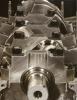
Good news!! Double checked the rod bearing clearance with plastigage and got the same acceptable results, so I feel like I did them right. I also finally plastigaged the mains and they are a tad tighter: .025mm~.038mm. I'm hoping that is also good?? I think I am finally ready to finish building this motor :D

Honda-Tech Member
Joined: Mar 2008
Posts: 927
Likes: 2
From: North Carolina
Re: H22 rod bearing oil clearance: .038~.051mm ok?
.025mm is ~ .001". That's a little too tight there. Swap the loosest main bearing pair with the tightest pair. Recheck your measurements and see if they improve.
Thread Starter
Honda-Tech Member
Joined: Jun 2008
Posts: 705
Likes: 2
From: Texarkana, AR, USA
Re: H22 rod bearing oil clearance: .038~.051mm ok?
It's a little looser than oem spec. They are between .025 and .038mm. I'd estimate about .034" average.
Honda-Tech Member
Joined: Feb 2003
Posts: 1,171
Likes: 0
From: Houston, TX
Re: H22 rod bearing oil clearance: .038~.051mm ok?
That's pretty tight for the mains. I run roughly .001" per 1" of journal diameter for most performance oriented engines, even more for the more hardcore stuff. The aluminum blocks tend to expand a lot, so in endurance racing you have to take that into consideration too. Oil pressure suffers, sure, but oil pressure doesn't really do anything.
I would like to at least see .0015" for the mains and rods if its a low rpm street car.
I would like to at least see .0015" for the mains and rods if its a low rpm street car.
Honda-Tech Member
Joined: Mar 2008
Posts: 927
Likes: 2
From: North Carolina
Re: H22 rod bearing oil clearance: .038~.051mm ok?
.034mm is like .0013" which will work its just kinda tight. Are all the mains the same measurement? If not swap the loosest pair of bearings halfs for the tightest like is said before to try and even out the measurements.

Thread
Thread Starter
Forum
Replies
Last Post