


so who as seen rings rotate after install??


Thread Starter
Honda-Tech Member

Joined: Feb 2003
Posts: 9,820
Likes: 12
From: schooling kids in ny, usa
 so who as seen rings rotate after install??
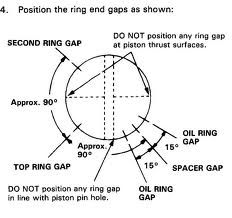
after experiencing a fair bit of oil burning i took the engine apart today. keep in mind it had 384 miles on it. i found that all the piston rings had rotated around in the bore after being installed. i use the factory specs for gap location, putting the top ring gap off one of the exhaust valves, the 2nd ring gap 90 degrees from there.
this was my first use of a fixed bore tapered wiseco ring compressor which was actually a breeze to use. they were hastings rings, 84.5mm bore with .0045 ptw.
1st cylinder
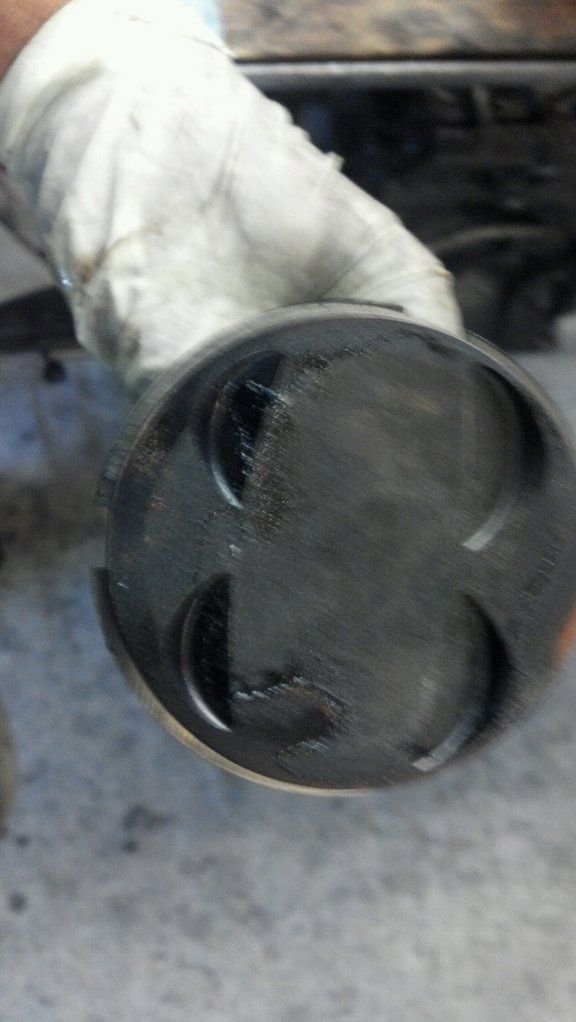
2nd
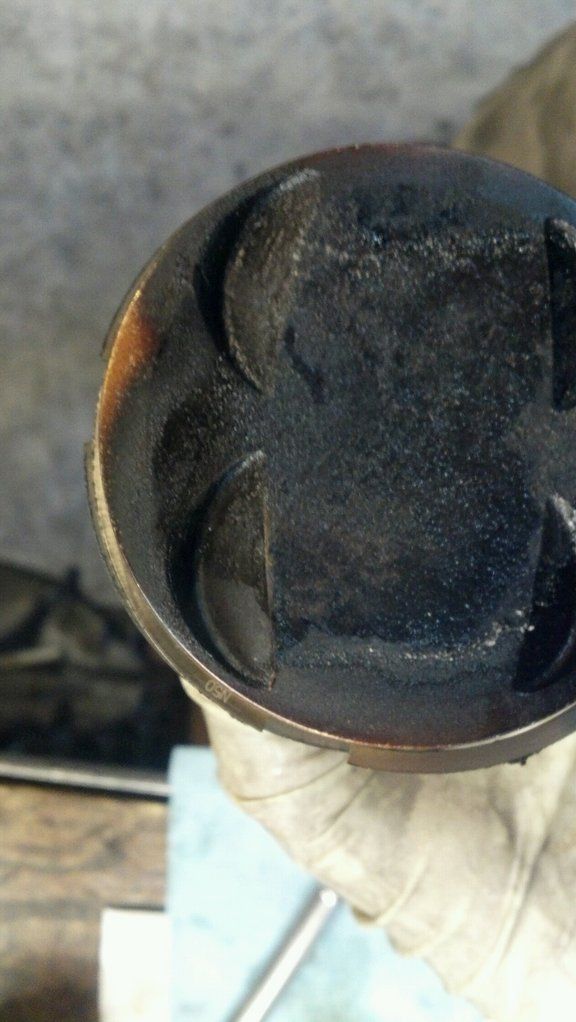
3rd

4th
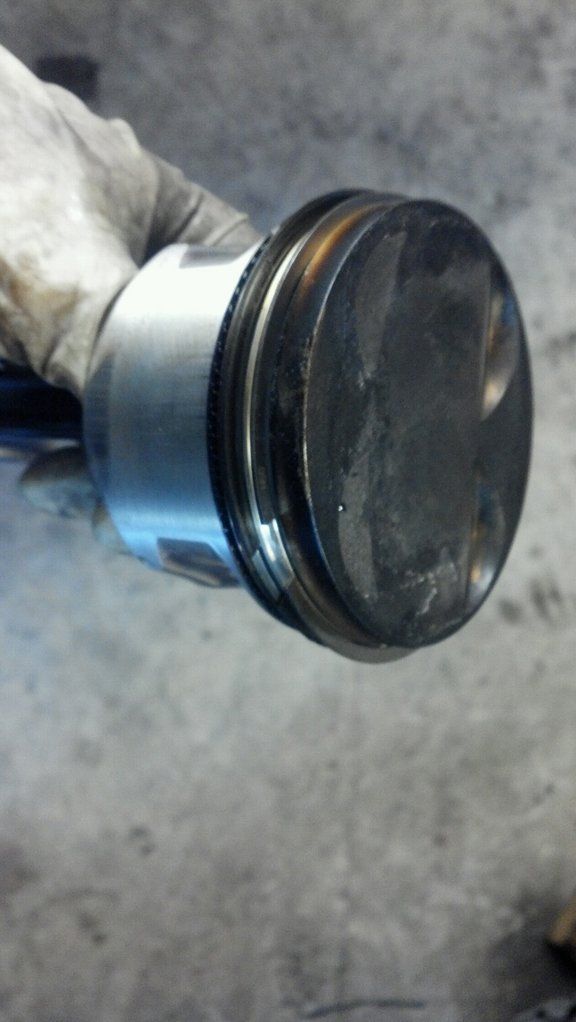
you can see that one had the gaps almost align with each other. ouch.
i also noticed that the piston between the top and top ring has spots that seem to have had the carbon washed off by oil??...
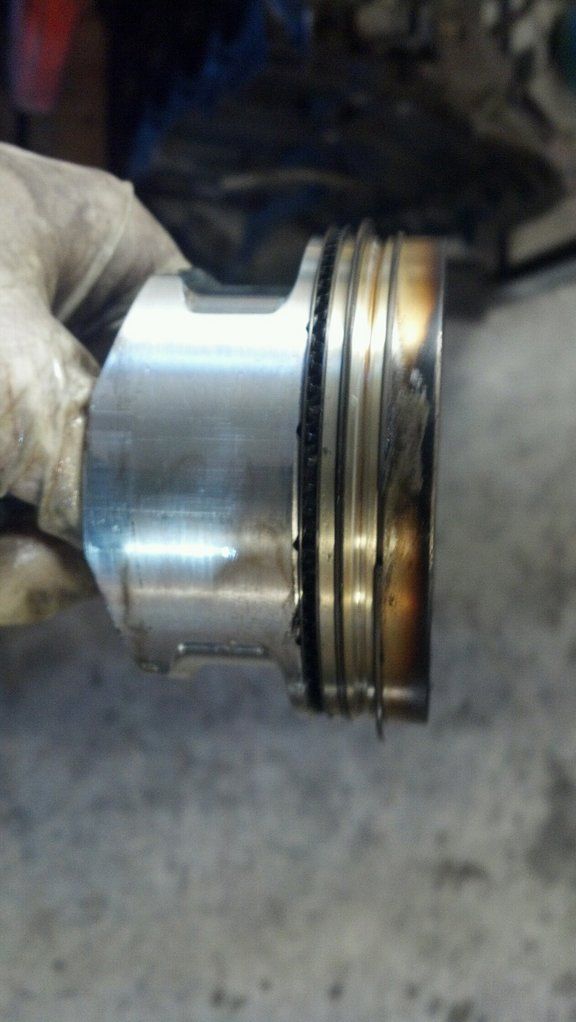
ok seriously, wtf. ive assembled all my own engines and a few for friends here and there with no issues since the mid 2000's and never had this. was it a bad set of rings or is there more to it? my current plan is to deglaze/rehone with a 600 grit ball hone and use a set of je pro seal rings that i have lying around...
this was my first use of a fixed bore tapered wiseco ring compressor which was actually a breeze to use. they were hastings rings, 84.5mm bore with .0045 ptw.
1st cylinder
2nd
3rd
4th
you can see that one had the gaps almost align with each other. ouch.
i also noticed that the piston between the top and top ring has spots that seem to have had the carbon washed off by oil??...
ok seriously, wtf. ive assembled all my own engines and a few for friends here and there with no issues since the mid 2000's and never had this. was it a bad set of rings or is there more to it? my current plan is to deglaze/rehone with a 600 grit ball hone and use a set of je pro seal rings that i have lying around...


Thread Starter
Honda-Tech Member
Joined: Feb 2003
Posts: 9,820
Likes: 12
From: schooling kids in ny, usa
Re: so who as seen rings rotate after install??
ya they look like ****. not running rich though, boost afr is high 11s, vacuum afr is high 13s to low 15's. wideband sensor is pretty new, replaced less than 1000 miles ago. i think that crap is gunk from burning oil...
but seriously. if they rotate, then its just inevitable that eventually the gaps line up and the engine blows oil. im not comfortable with that. is it caused by detonation or something? my plugs are clean but it did spark knock once for literally about 1 second when i forgot i had the gap open too much. i got off the throttle and regapped the plugs its been smooth ever since.
but seriously. if they rotate, then its just inevitable that eventually the gaps line up and the engine blows oil. im not comfortable with that. is it caused by detonation or something? my plugs are clean but it did spark knock once for literally about 1 second when i forgot i had the gap open too much. i got off the throttle and regapped the plugs its been smooth ever since.
Thread Starter
Honda-Tech Member
Joined: Feb 2003
Posts: 9,820
Likes: 12
From: schooling kids in ny, usa
Re: so who as seen rings rotate after install??
alright, bump.
block was disassembled, rehoned (came out good with a 600grit deglaze, 30-40 degree hatch)
crank is back in and im about to put the pistons and rods in today with higher tension je proseal rings compared to hastings rings.
- could using a fixed bore ring compressor have anything to do with it?
-i put a light coat of oil on the ring compressor, piston, and cylinder bore just using a damp shop towel. should i use a bit of wd - 40 instead of oil?
as earlier stated, ive done this same procedure a dozen times in the past years and never had this issue. the difference now is the fixed bore compressor....
ok, another potential difference: im using a .0045 ptw, which might be a tad more after rehone. is that increase in bore diameter enough to reduce tension that the rings can exert on the cyl walls?
block was disassembled, rehoned (came out good with a 600grit deglaze, 30-40 degree hatch)
crank is back in and im about to put the pistons and rods in today with higher tension je proseal rings compared to hastings rings.
- could using a fixed bore ring compressor have anything to do with it?
-i put a light coat of oil on the ring compressor, piston, and cylinder bore just using a damp shop towel. should i use a bit of wd - 40 instead of oil?
as earlier stated, ive done this same procedure a dozen times in the past years and never had this issue. the difference now is the fixed bore compressor....
ok, another potential difference: im using a .0045 ptw, which might be a tad more after rehone. is that increase in bore diameter enough to reduce tension that the rings can exert on the cyl walls?
Honda-Tech Member
Joined: Apr 2005
Posts: 1,220
Likes: 0
From: ruckersville, va, usa
Re: so who as seen rings rotate after install??
Did you do a compression/leak down test prior to taking the motor apart? That would of gave you some more info on the conditon of the motor and if the rings seated from the last rebuild. Rings rotate that issnt the issue and neither is the type of spring compressor.
Last edited by sleepencivic; Aug 9, 2012 at 10:02 AM.

Trending Topics

Honda-Tech Member
Joined: Dec 2003
Posts: 851
Likes: 0
From: SoCal
 Re: so who as seen rings rotate after install??
Dude I am sorry you are having so many engine issues. Ive always observed rotated rings after pulling them too. I have 84.5mm and 85mm wiseco rings if you want. I dont see how a fixed ring comrpessor could have anything to do with this. Thats ALOT of oil. How do the valve STEMs look? Oily?

DO IT ON ALL FOURS
Joined: Sep 2007
Posts: 7,632
Likes: 15
From: IN Your Mind
Re: so who as seen rings rotate after install??
ALL engines will rotate the rings after install. Nature of the beast. They can wind up having all the gaps perfectly in line unfortunately. While it may not be ideal, it won't cause the problems you are experiencing.
The ring compressor has absolutely nothing to do with your problem. The tapered installers always have been and always will be the "recommended" way of doing it.
Anyone who says the engine is "running rich" has ABSOLUTELY NO CLUE what they are looking at or talking about. Disregard them.
Do all your rings move freely in the grooves?
Did you clean all the grooves out with each disassembly?
600 grit hone? Yikes, you do realize that rings require replacement with a new home and have SPECIFIC final hone finishing and cross hatching degree specs right? Honing is not a one size fits all, and going to fine is MUCH worse than too coarse. If you have a glazing problem after 400 miles, I would suspect an improper final hone. Personally, I would stay away from Hastings rings on Imports. There are reasons different manufactures excel on specific platforms.
Be sure the rings have proper clearance and back spacing in compliance with the piston manufacture. I stopped running CP pistons a few years ago myself for various reasons, maybe it's time to try something different?
Do you know how much you would have to hone to take off let's say even 0.0005" with a 600 grit stone? Probably a few hundred strokes. I can assure you, you didn't change the piston to wall clearance enough to be a problem. I always bore the cylinder to around 0.001" under the desired spec then hone until I am within 0.0001" within desired spec if not perfect. Am I picky, **** retentive, obsessed with details? Yes.
How do the intake ports look? Post pictures of the ports and maybe take a valve out. Let's get to the bottom of this. I am tired of your problem threads, haha.
PS - Those gloves aren't meant for oil...
The ring compressor has absolutely nothing to do with your problem. The tapered installers always have been and always will be the "recommended" way of doing it.
Anyone who says the engine is "running rich" has ABSOLUTELY NO CLUE what they are looking at or talking about. Disregard them.
Do all your rings move freely in the grooves?
Did you clean all the grooves out with each disassembly?
600 grit hone? Yikes, you do realize that rings require replacement with a new home and have SPECIFIC final hone finishing and cross hatching degree specs right? Honing is not a one size fits all, and going to fine is MUCH worse than too coarse. If you have a glazing problem after 400 miles, I would suspect an improper final hone. Personally, I would stay away from Hastings rings on Imports. There are reasons different manufactures excel on specific platforms.
Be sure the rings have proper clearance and back spacing in compliance with the piston manufacture. I stopped running CP pistons a few years ago myself for various reasons, maybe it's time to try something different?
Do you know how much you would have to hone to take off let's say even 0.0005" with a 600 grit stone? Probably a few hundred strokes. I can assure you, you didn't change the piston to wall clearance enough to be a problem. I always bore the cylinder to around 0.001" under the desired spec then hone until I am within 0.0001" within desired spec if not perfect. Am I picky, **** retentive, obsessed with details? Yes.
How do the intake ports look? Post pictures of the ports and maybe take a valve out. Let's get to the bottom of this. I am tired of your problem threads, haha.
PS - Those gloves aren't meant for oil...
Honda-Tech Member
Joined: Apr 2005
Posts: 1,220
Likes: 0
From: ruckersville, va, usa
Re: so who as seen rings rotate after install??
break in fast or slow your still seating the rings during the break in period thats it.... your comments arent needed.
Thread Starter
Honda-Tech Member
Joined: Feb 2003
Posts: 9,820
Likes: 12
From: schooling kids in ny, usa
Re: so who as seen rings rotate after install??
Alright let's see here...
Yes I did a comp and leakdown. It was always great, never leaked more than 8% compression was always within 5 psi.
On of the exhaust valveseals in my 3rd cyl was leaking, the rest are dry where the stem goes into the bottom of the guide.
Engine was broken in properly as far as im concerned. Run for 10 or so min up to temp around 2000 rpm with afr mid to high 14:1 ratio. Car was then oil changed and taken out to put some load (few low boost pulls to around 7000 rpm). Afr high 11s no breaking up no detonation. Then it was driven around varying load and rpm with as much engine braking as possible. Been doing it this way for 8 years....
Yes I did a comp and leakdown. It was always great, never leaked more than 8% compression was always within 5 psi.
On of the exhaust valveseals in my 3rd cyl was leaking, the rest are dry where the stem goes into the bottom of the guide.
Engine was broken in properly as far as im concerned. Run for 10 or so min up to temp around 2000 rpm with afr mid to high 14:1 ratio. Car was then oil changed and taken out to put some load (few low boost pulls to around 7000 rpm). Afr high 11s no breaking up no detonation. Then it was driven around varying load and rpm with as much engine braking as possible. Been doing it this way for 8 years....
Honda-Tech Member
Joined: Apr 2005
Posts: 1,220
Likes: 0
From: ruckersville, va, usa
Re: so who as seen rings rotate after install??
Your break in procedure doesnt sound like the issue and with a leak down of less than 8% why did you tear it apart its not the rings! What is your oil pressure at idle and WOT and what turbo and feed line size? Any oil in charge pipe or down pipe?
Alright let's see here...
Yes I did a comp and leakdown. It was always great, never leaked more than 8% compression was always within 5 psi.
On of the exhaust valveseals in my 3rd cyl was leaking, the rest are dry where the stem goes into the bottom of the guide.
Engine was broken in properly as far as im concerned. Run for 10 or so min up to temp around 2000 rpm with afr mid to high 14:1 ratio. Car was then oil changed and taken out to put some load (few low boost pulls to around 7000 rpm). Afr high 11s no breaking up no detonation. Then it was driven around varying load and rpm with as much engine braking as possible. Been doing it this way for 8 years....
Yes I did a comp and leakdown. It was always great, never leaked more than 8% compression was always within 5 psi.
On of the exhaust valveseals in my 3rd cyl was leaking, the rest are dry where the stem goes into the bottom of the guide.
Engine was broken in properly as far as im concerned. Run for 10 or so min up to temp around 2000 rpm with afr mid to high 14:1 ratio. Car was then oil changed and taken out to put some load (few low boost pulls to around 7000 rpm). Afr high 11s no breaking up no detonation. Then it was driven around varying load and rpm with as much engine braking as possible. Been doing it this way for 8 years....
Re: so who as seen rings rotate after install??
Theres so much oil on the piston tops. It would be very clear if the oil was coming from the turbo. Hes ruled that out in previous threads. Theres no oil below the top compression ring. I still think its coming from the head.
Thread Starter
Honda-Tech Member
Joined: Feb 2003
Posts: 9,820
Likes: 12
From: schooling kids in ny, usa
Re: so who as seen rings rotate after install??
oil pressure at 210*F is about 25psi at idle and 80+ at wot above 3500 rpm or so. using a mechanical gauge i was tired of the autometer electrical sending units crapping out. feed line is -3 using a restrictor. charge piping is dry. might as well put it all out there.
i just got back in from the garage enjoying some taco bell lunch (mmm meximelt lol)
block is all back together.
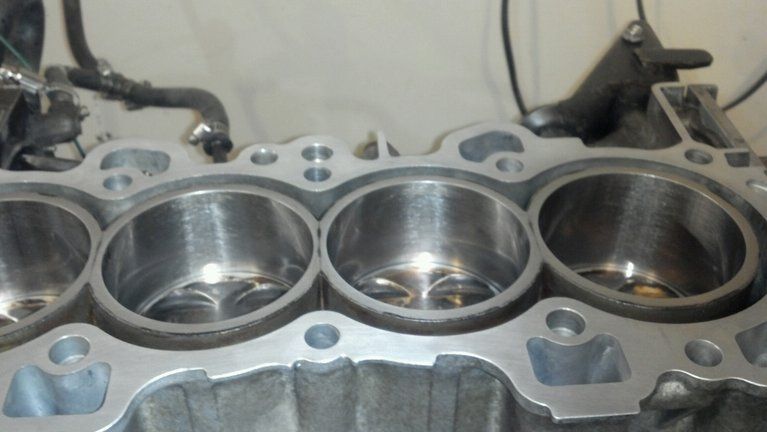
pic of the hone, looks better in person lol, angle looks to be acceptable.
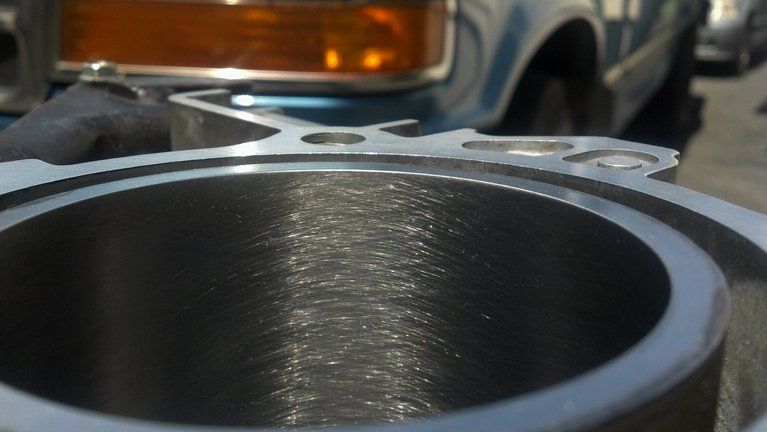
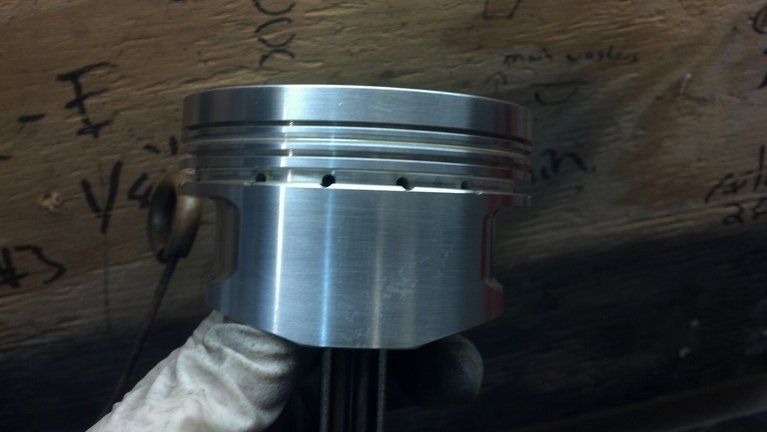
one of the pistons cleaned up with some brake cleaner and a white scotchbrite.
muckman, i hear you on the head. to fix the problem in case it was the head, ive got a spare b16 head fresh from the machine shop lying around. im going to swap out its itr valvetrain and throw in my supertech's and then use that head. if it was the problem, it will be fixed...
i just got back in from the garage enjoying some taco bell lunch (mmm meximelt lol)
block is all back together.
pic of the hone, looks better in person lol, angle looks to be acceptable.
one of the pistons cleaned up with some brake cleaner and a white scotchbrite.
muckman, i hear you on the head. to fix the problem in case it was the head, ive got a spare b16 head fresh from the machine shop lying around. im going to swap out its itr valvetrain and throw in my supertech's and then use that head. if it was the problem, it will be fixed...

Honda-Tech Member
Joined: Mar 2011
Posts: 1,004
Likes: 1
From: Kansas City, MO
Re: so who as seen rings rotate after install??
Interesting thread. Curious to see the outcome. btw rings always rotate around. I never understood why they don't put pins to stop them rotating like they do on 2 stroke motors. If you've ever had rings rotate on a 2 stroke you'll know how it catches on the transfer ports and destroys the rings. I'm guessing rings rotating on a 4 stroke motor is never of any concern or they'd put pins in there.
Looks like your motor is ingesting a lot of oil from something. Someone mentioned the head and it looks like you're swapping that out to eliminate it. What about a vent hose of sorts? or PCV setup that's sucking in a ton of oil? doesn't hardly seem possible to get that much in there but might as well double check that stuff.
Good luck, looking forward to seeing the results.
Looks like your motor is ingesting a lot of oil from something. Someone mentioned the head and it looks like you're swapping that out to eliminate it. What about a vent hose of sorts? or PCV setup that's sucking in a ton of oil? doesn't hardly seem possible to get that much in there but might as well double check that stuff.
Good luck, looking forward to seeing the results.
Honda-Tech Member
Joined: Dec 2003
Posts: 851
Likes: 0
From: SoCal

Honda-Tech Member
Joined: Aug 2009
Posts: 7,635
Likes: 3
From: Baton Rouge,Louisiana
Re: so who as seen rings rotate after install??
How are you clocking the rings before install??
They will move as everyone has said, but clocking them correctly will stop them from rotation to one another when they all line up and create some type of blow by area..I have a proper way to clock honda piston rings on my site, if you do not know how.
I can't see pics because i'm at work, but i will comment when i get home.
They will move as everyone has said, but clocking them correctly will stop them from rotation to one another when they all line up and create some type of blow by area..I have a proper way to clock honda piston rings on my site, if you do not know how.
I can't see pics because i'm at work, but i will comment when i get home.
Thread Starter
Honda-Tech Member
Joined: Feb 2003
Posts: 9,820
Likes: 12
From: schooling kids in ny, usa
Re: so who as seen rings rotate after install??
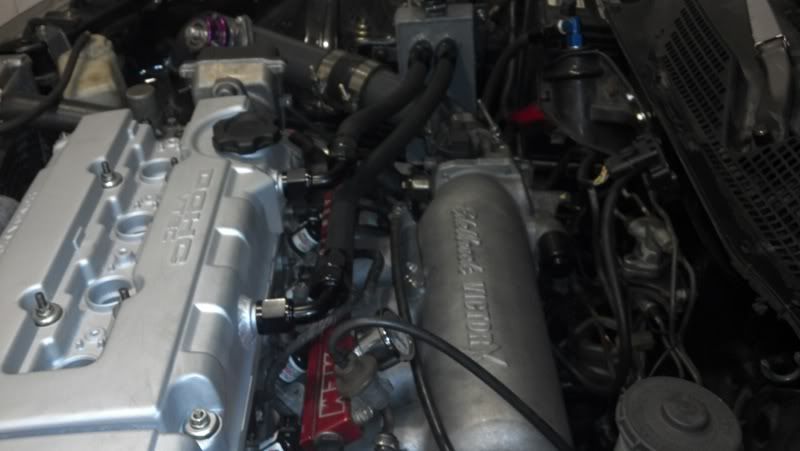
i have two -10 lines off the valvecover to a catchcan and eliminated stock pcv. my catchcan gets nothing more than vapor condensation in it btw.
ALL MOTOR - i was following the clocking out of the helms manual, but with them coming so close to lining up i wound up putting the top 2 rings 180 out from each other, with the oil ring gaps under the top ring gap which is off of the right exhaust valve if looking at the motor from the exhaust side toward the intake side
Thread Starter
Honda-Tech Member
Joined: Feb 2003
Posts: 9,820
Likes: 12
From: schooling kids in ny, usa
Re: so who as seen rings rotate after install??
I did read your post as I read all of them and process them accordingly. Just because i didnt quote it or follow it exactly doesnt mean it went in one ear and out the other. Fact is i make my own decisions and actions, some of which were already done before your knowledge was bestowed upon me and I became learned. I do appreciate your info, especially if it can help another out but you really need to work on the civility of your follow up responses, as perhaps I do as well.
Goodnight.
Honda-Tech Member
Joined: Apr 2005
Posts: 1,220
Likes: 0
From: ruckersville, va, usa
DO IT ON ALL FOURS
Joined: Sep 2007
Posts: 7,632
Likes: 15
From: IN Your Mind
Re: so who as seen rings rotate after install??
Interesting theory, but pointless posts like yours are "the wave of the future". When you actually contribute, let me know so I can join the masses.
"blackeg" - I asked the questions for a very specific reason. If you choose to disregard them, how are you supposed to get help from somebody who actually *knows* what they are talking about?
So to kind of expand on what I said before: I have seen Hastings rings have improper back spacing for the rings and improper top and bottom gaps for the rings/ring lands in the past when used with aftermarket pistons. You must understand that not all manufactures use the same dimension ring grooves. I see oil deposits on the oil control and second rings as well. Unless it is just my old eyes and bad picture quality, then I am not 100% convinced it's the head.
Let's also revert back on to the basics of how an engine works. Clearly the intake valves get air sucked past them when the piston is going down. The exhaust valves have air rushing past them when the piston is going up. I am not going into overlap, but with that being said it is not your exhaust side that would be giving you the problem. You never stated that you checked the intake valve guides/seals. If it were the exhaust it would puff on startup and on he there potentially on deacceleration.
Regardless, the head is easy to check for valve deflection, seat condition, and seal condition. The piston rings and bores are a little more involved. We must look at all angles as the combustion process doesn't happen below the top compression ring. If it "accidentally" did crack ring lands or twisted rings would result. How do I know? I have seen it happen. With this being said, oil won't be burnt at these rings.
So, oil is either getting sprayed or slung from the bottom end and making it past your loose clearances. With Most 2618 forgings eliminating the oil squirters is recommended. I myself have gotten away with running them, but on forged it just isn't needed. The temperature differences between cast and forged are enough to confirm this. Either way, the cylinder head should be checked to insure no problems exist. Otherwise I suspect the bottom end to be the culprit as you have this problem on every single cylinder. A problem on all cylinders is almost never the head unless garbage parts were used and no clearances in spec.
"blackeg" - I asked the questions for a very specific reason. If you choose to disregard them, how are you supposed to get help from somebody who actually *knows* what they are talking about?
So to kind of expand on what I said before: I have seen Hastings rings have improper back spacing for the rings and improper top and bottom gaps for the rings/ring lands in the past when used with aftermarket pistons. You must understand that not all manufactures use the same dimension ring grooves. I see oil deposits on the oil control and second rings as well. Unless it is just my old eyes and bad picture quality, then I am not 100% convinced it's the head.
Let's also revert back on to the basics of how an engine works. Clearly the intake valves get air sucked past them when the piston is going down. The exhaust valves have air rushing past them when the piston is going up. I am not going into overlap, but with that being said it is not your exhaust side that would be giving you the problem. You never stated that you checked the intake valve guides/seals. If it were the exhaust it would puff on startup and on he there potentially on deacceleration.
Regardless, the head is easy to check for valve deflection, seat condition, and seal condition. The piston rings and bores are a little more involved. We must look at all angles as the combustion process doesn't happen below the top compression ring. If it "accidentally" did crack ring lands or twisted rings would result. How do I know? I have seen it happen. With this being said, oil won't be burnt at these rings.
So, oil is either getting sprayed or slung from the bottom end and making it past your loose clearances. With Most 2618 forgings eliminating the oil squirters is recommended. I myself have gotten away with running them, but on forged it just isn't needed. The temperature differences between cast and forged are enough to confirm this. Either way, the cylinder head should be checked to insure no problems exist. Otherwise I suspect the bottom end to be the culprit as you have this problem on every single cylinder. A problem on all cylinders is almost never the head unless garbage parts were used and no clearances in spec.
Honda-Tech Member
Joined: Mar 2011
Posts: 1,004
Likes: 1
From: Kansas City, MO
Re: so who as seen rings rotate after install??
Thanks
Malcolm