


Crank no start only below 60deg


Thread Starter
Trial User
Joined: Nov 2011
Posts: 15
Likes: 0
 Crank no start only below 60deg
I have seen similar posts in various honda forums about this issue but not one of them has posted a conclusion...please help.
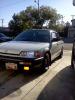
I have a 99 honda prelude that will not start in temps below 60 degrees. All the lights on the dash show up and I can hear the fuel pump prime. When I first turn the key it almost coughs like it wants to start but then will just continue to crank with no luck. I have pulled the plugs after cranking and can smell gas in the combustion chamber. Well my driveway is quite steep so I decided to coast it down and pop the clutch to see if it would start and it did. When I bump start it, it shoots out a black cloud of smoke like its flooded. It runs extremely rough until it reaches operating temp and then runs smooth as silk but then I can start the car just fine for the remainder of the day.
Originally I suspected a leaky injector but as cold weather is hitting us here in Ohio I have the crank no start issue once the car cools down from sitting in the cold for a few hours. Also I keep getting a check engine light for random misfire and misfires on cyl 1,2,3 and 4.
I have replaced plugs, wires, cap, rotor, coil(it was cracked), coolant temp sensor, o2 sensors. Help please, I keep getting stranded until I can find enough people to push start the car
I have a 99 honda prelude that will not start in temps below 60 degrees. All the lights on the dash show up and I can hear the fuel pump prime. When I first turn the key it almost coughs like it wants to start but then will just continue to crank with no luck. I have pulled the plugs after cranking and can smell gas in the combustion chamber. Well my driveway is quite steep so I decided to coast it down and pop the clutch to see if it would start and it did. When I bump start it, it shoots out a black cloud of smoke like its flooded. It runs extremely rough until it reaches operating temp and then runs smooth as silk but then I can start the car just fine for the remainder of the day.
Originally I suspected a leaky injector but as cold weather is hitting us here in Ohio I have the crank no start issue once the car cools down from sitting in the cold for a few hours. Also I keep getting a check engine light for random misfire and misfires on cyl 1,2,3 and 4.
I have replaced plugs, wires, cap, rotor, coil(it was cracked), coolant temp sensor, o2 sensors. Help please, I keep getting stranded until I can find enough people to push start the car

Old Fart
Joined: May 2004
Posts: 26,173
Likes: 18
From: kelowna, bc, canada
Re: Crank no start only below 60deg
It sure sounds like the engine is "flooding", possibly a problem with the ECT sensor.
Try this, turn ign. on, allow fuel pump to prime, unplug fuel pump power lead, will have to do that at the fuel pump or depin the fuel pump power lead or ECU lead at the PGM-FI Main Relay so rest of relay continues to work, [just want to cut fuel pressure] then try and start the engine, if engine starts, [will stall as soon as pressure drops], check FPR.
Let me know what happens. 94
Try this, turn ign. on, allow fuel pump to prime, unplug fuel pump power lead, will have to do that at the fuel pump or depin the fuel pump power lead or ECU lead at the PGM-FI Main Relay so rest of relay continues to work, [just want to cut fuel pressure] then try and start the engine, if engine starts, [will stall as soon as pressure drops], check FPR.
Let me know what happens. 94
Thread Starter
Trial User
Joined: Nov 2011
Posts: 15
Likes: 0
Re: Crank no start only below 60deg
As I mentioned I've already replaced the ECT twice now. Also, wouldn't I have to drop the tank in order to disconnect the fuel pump power lead or is there something more accessible? I'm really not comfortable depining any harnesses either.
Thread Starter
Trial User
Joined: Nov 2011
Posts: 15
Likes: 0
Re: Crank no start only below 60deg
Also once the car is started I have to keep giving it gas at stops or else it will stall out. The idle doesn't bounce around at all it just wants to idle at like 200 rpms. I cleaned out the IACV, throttle body and seafoamed it last week. Cleaning the EGR is next on the list

Honda-Tech Member
Joined: Jul 2003
Posts: 526
Likes: 0
From: Las vegas, nv
Re: Crank no start only below 60deg
It sure sounds like the engine is "flooding", possibly a problem with the ECT sensor.
Try this, turn ign. on, allow fuel pump to prime, unplug fuel pump power lead, will have to do that at the fuel pump or depin the fuel pump power lead or ECU lead at the PGM-FI Main Relay so rest of relay continues to work, [just want to cut fuel pressure] then try and start the engine, if engine starts, [will stall as soon as pressure drops], check FPR.
Let me know what happens. 94
Try this, turn ign. on, allow fuel pump to prime, unplug fuel pump power lead, will have to do that at the fuel pump or depin the fuel pump power lead or ECU lead at the PGM-FI Main Relay so rest of relay continues to work, [just want to cut fuel pressure] then try and start the engine, if engine starts, [will stall as soon as pressure drops], check FPR.
Let me know what happens. 94
Old Fart
Joined: May 2004
Posts: 26,173
Likes: 18
From: kelowna, bc, canada
Re: Crank no start only below 60deg
Again I do not know for sure on a Lude but there should be access to the fuel pump power plug under the rear seat. 94
Thread Starter
Trial User
Joined: Nov 2011
Posts: 15
Likes: 0
Re: Crank no start only below 60deg
The issue occurs at all times as long as its cold outside and the car is cold. This has been an issue for the last month and I've gone through several tanks of gas in that time period.
I replaced the ECT sensor. I'm going to try to find the sending unit.
I replaced the ECT sensor. I'm going to try to find the sending unit.
Trending Topics
Old Fart
Joined: May 2004
Posts: 26,173
Likes: 18
From: kelowna, bc, canada
Re: Crank no start only below 60deg
Yes, flooding with fuel, the injector resistor box is on the 12V+ side of the injector and has no control of the pulse, pulse length is controlled by the ECU/ECM depending on input from sensors, including the ECT sensor, if pulse length is too long, for whatever reason, the low RPMs when trying to start the engine would result in flooding, the richer the A/F ratio is the harder it is to ignite it, [fresh gas each compression cycle] this will result in, "washed" cylinder walls, lowering compression, making starting the engine even harder. 94
Thread Starter
Trial User
Joined: Nov 2011
Posts: 15
Likes: 0
Re: Crank no start only below 60deg
I was finally able to get someone to try starting the car while I tested for spark this morning. 1 cyl was producing no spark whatsoever and 2 others were very weak. So now begins the process of back tracking. My original hunch was either an ICM or CKP/TDC. I'm praying its not the CKP because of the labor involved in getting to it. I will let you know results
Old Fart
Joined: May 2004
Posts: 26,173
Likes: 18
From: kelowna, bc, canada
Re: Crank no start only below 60deg
If you have a 12V test light, [not the LED type, normal bulb type] if not get one.
pull the cap and remove the rotor and access the coil, test for 12V+ on the pos.(+) side of coil when ign. switch is on [should be a black/yellow lead,most likely two leads, second lead should be a jumper to the ICM].
If you have power there when ign. switch is on and when cranking to start, move the test light ground clip from it's ground point to the neg.(-) side of coil, [that will be the terminal with a lead running from the ICM] now touch test light probe to the pos.(+) of coil, [same terminal you tested for power] remember terminals must still be plugged in, test light should be out, have someone crank the engine, if test light flashes on and off, your problem is the coil or after it, [ICM/TDC/CYP and CKP must be good] if the test light stays on or stays off your problem is before the coil so either the ICM/TDC/CYP or the CKP or wiring or connections between them.
I see what you mean by "labour" if it's the CKP sensor. 94
94
pull the cap and remove the rotor and access the coil, test for 12V+ on the pos.(+) side of coil when ign. switch is on [should be a black/yellow lead,most likely two leads, second lead should be a jumper to the ICM].
If you have power there when ign. switch is on and when cranking to start, move the test light ground clip from it's ground point to the neg.(-) side of coil, [that will be the terminal with a lead running from the ICM] now touch test light probe to the pos.(+) of coil, [same terminal you tested for power] remember terminals must still be plugged in, test light should be out, have someone crank the engine, if test light flashes on and off, your problem is the coil or after it, [ICM/TDC/CYP and CKP must be good] if the test light stays on or stays off your problem is before the coil so either the ICM/TDC/CYP or the CKP or wiring or connections between them.
I see what you mean by "labour" if it's the CKP sensor.
94
Thread Starter
Trial User
Joined: Nov 2011
Posts: 15
Likes: 0
Re: Crank no start only below 60deg
Well once again I had no one to try starting the car while I tested so I just went and bought a new ICM and installed...still no start. Discovered my spark tester was a POS harbor freight tool so I discarded that and got a new one. Spark is fine on all 4 cylinders. As discouraging as all this is, at least I ruled out spark as the culprit.
Back to testing the fuel system. So lets say I disconnect the fuel pump connector after it primes and it starts up, what would be the next steps and would this also cause the misfire codes?
Back to testing the fuel system. So lets say I disconnect the fuel pump connector after it primes and it starts up, what would be the next steps and would this also cause the misfire codes?
Thread Starter
Trial User
Joined: Nov 2011
Posts: 15
Likes: 0
Re: Crank no start only below 60deg
Ok well every morning when I try to start the car it will sputter once and thats it. This morning I tried disconnecting the ECT sensor before starting and it kept sputtering like it wanted to fire but wouldn't. How would disconnecting this sensor affect everything?
Old Fart
Joined: May 2004
Posts: 26,173
Likes: 18
From: kelowna, bc, canada
Re: Crank no start only below 60deg
The sensor "tells" the ECU/ECM engine temp. so the ECU/ECM can adjust A/F, [rich when cold and leaning it out as engine warms up] unplugging it when engine is cold should not make a diff., if it was unplugged when engine is warm the result is a rich A/F and shitty gas mileage and hard starting when engine is warm.
I'm thinking your cylinder walls are "washed" so compression is low, I would do a compression test to confirm.
You can also put some oil into each cylinder, unplug the distributor and the PGM-FI Main Relay and crank the the engine over a few times, [just like you would when doing a proper compression test] this will re-coat the wall and bring compression up, reinstall plugs, reconnect distributor and the PGM-FI Main Relay and try and start the engine.
Before you try and start the engine confirm you have 12V+ at the injectors and at IPG1 and IPG2 at the ECU/ECM. 94
I'm thinking your cylinder walls are "washed" so compression is low, I would do a compression test to confirm.
You can also put some oil into each cylinder, unplug the distributor and the PGM-FI Main Relay and crank the the engine over a few times, [just like you would when doing a proper compression test] this will re-coat the wall and bring compression up, reinstall plugs, reconnect distributor and the PGM-FI Main Relay and try and start the engine.
Before you try and start the engine confirm you have 12V+ at the injectors and at IPG1 and IPG2 at the ECU/ECM. 94
Old Fart
Joined: May 2004
Posts: 26,173
Likes: 18
From: kelowna, bc, canada
Re: Crank no start only below 60deg
You would need to find out why the engine is flooding, [if that's the problem].
Lets see if the engine will even start or what the compression is. 94
Lets see if the engine will even start or what the compression is. 94
Thread Starter
Trial User
Joined: Nov 2011
Posts: 15
Likes: 0
Re: Crank no start only below 60deg
I dont have the tools to test compression so thats out of the question but I know its low anyways because I burn roughly a quart of oil every tank of gas. I don't get why it wont start yet I can start it by push starting it
Honda-Tech Member
Joined: Apr 2011
Posts: 1,197
Likes: 0
From: Near Pacific Coast Highway
Re: Crank no start only below 60deg
e whole "starting your car in cold weather" thing can be a big problem for people who live up north, and especially for people who live in really cold places like Alaska. There are three reasons why cars are hard to start when it is cold.
Reason 1 - Gasoline, like any other liquid, evaporates less when it is cold. You have seen this -- if you pour water onto a hot sidewalk it will evaporate a lot faster than it will from a cooler place like a shady sidewalk. When it gets really cold, gasoline evaporates slowly so it is harder to burn it (the gasoline must be vaporized to burn). Sometimes you will see people spray ether into their engines in cold weather to help them start -- ether evaporates better than gasoline in cold weather.
Reason 2 - Oil gets a lot thicker in cold weather. You probably know that cold pancake syrup or honey from the refrigerator is a lot thicker than hot syrup or honey. Oil does the same thing. So when you try to start a cold engine, the engine has to push around the cold, gooey oil and that makes it harder for the engine to spin. In really cold places people must use synthetic motor oils because these oils stay liquid in cold temperatures.
*Re*ason 3 - Batteries have problems in cold weather, too. A battery is a can full of chemicals that produce electrons (see How Batteries Work for more information). The chemical reactions inside of batteries take place more slowly when the battery is cold, so the battery produces fewer electrons. The starter motor therefore has less energy to work with when it tries to start the engine, and this causes the engine to crank slowly.
All three of these problems *can make it impossible to start an engine in really cold weather. People either keep their cars in heated garages or use "block heaters" to get around these problems. A block heater is a little electric heater that you plug into the wall to keep the engine warm.
Pull plugs and under gap them to like 38-40
Also leave it sitting for a couple days and do a fuel pressure test.
Reason 1 - Gasoline, like any other liquid, evaporates less when it is cold. You have seen this -- if you pour water onto a hot sidewalk it will evaporate a lot faster than it will from a cooler place like a shady sidewalk. When it gets really cold, gasoline evaporates slowly so it is harder to burn it (the gasoline must be vaporized to burn). Sometimes you will see people spray ether into their engines in cold weather to help them start -- ether evaporates better than gasoline in cold weather.
Reason 2 - Oil gets a lot thicker in cold weather. You probably know that cold pancake syrup or honey from the refrigerator is a lot thicker than hot syrup or honey. Oil does the same thing. So when you try to start a cold engine, the engine has to push around the cold, gooey oil and that makes it harder for the engine to spin. In really cold places people must use synthetic motor oils because these oils stay liquid in cold temperatures.
*Re*ason 3 - Batteries have problems in cold weather, too. A battery is a can full of chemicals that produce electrons (see How Batteries Work for more information). The chemical reactions inside of batteries take place more slowly when the battery is cold, so the battery produces fewer electrons. The starter motor therefore has less energy to work with when it tries to start the engine, and this causes the engine to crank slowly.
All three of these problems *can make it impossible to start an engine in really cold weather. People either keep their cars in heated garages or use "block heaters" to get around these problems. A block heater is a little electric heater that you plug into the wall to keep the engine warm.
Pull plugs and under gap them to like 38-40
Also leave it sitting for a couple days and do a fuel pressure test.
Thread Starter
Trial User
Joined: Nov 2011
Posts: 15
Likes: 0
Re: Crank no start only below 60deg
Well since the main relay is such a hassle to get to I just unplugged the fuel injectors and the distributor, poured some oil down, cranked, reinstalled and nothing. I do have 12V at the ECU for the IPG1 and IPG2. I unplugged the ECT again and I managed to get it started. This makes me think that its not getting enough fuel to start on cold mornings.
Thread Starter
Trial User
Joined: Nov 2011
Posts: 15
Likes: 0
Re: Crank no start only below 60deg
It ran rough as hell once it started but I didn't drive it, I just let it idle in the driveway. You're right I've replaced it in the past week but is there anything else that may be restricting the fuel pressure? The fuel filter is only a year old or so but could the FPR or maybe a struggling fuel pump be the culprit and if so do you have suggestions on where I would start testing?
Thread Starter
Trial User
Joined: Nov 2011
Posts: 15
Likes: 0
Re: Crank no start only below 60deg
The tests continue with no luck. My CEL is always on and its almost always random misfire and misfire on cyl 1,2,3,4. However this time there was an EVAP code. Any chance that this code could be causing my problems? I didn't think it would be the cause but I've been wrong before...ask my past girlfriends
Thread Starter
Trial User
Joined: Nov 2011
Posts: 15
Likes: 0
Re: Crank no start only below 60deg
ok i give up and am taking it to a shop. I have no scan tool and I don't have the special fuel gauge attachment to tap into the prelude fuel lines. If I forget to post results someone please pm me