

View Poll Results: what intake should get better commute mpg
keep the cold-air, extra oxygen from farm roads FTW


5
100.00%
go back to stock intake, no more overtaking lorrys in vtec


0
0%
Voters: 5. You may not vote on this poll
your experience with Cold-air intake on hwy commuting


Thread Starter
Honda-Tech Member
Joined: Jan 2007
Posts: 4,095
Likes: 1
From: south texas
 your experience with Cold-air intake on hwy commuting
intake is getting plenty of cool fresh air since the fender liner in front of the tire has been ripped off and it makes a sweet sweet growl almost like a G35
but, i'm beginning to think that my highway MPG would benefit from going back to the stock air intake
but, i'm beginning to think that my highway MPG would benefit from going back to the stock air intake


 Re: your experience with Cold-air intake on hwy commuting
Because engines run better with hotter air....
It's the reason the Civic VX (think that's the one, either HX or CX) has a plastic blocking plate over half the radiator.
You get more power from colder air, but better MPG from hotter air.
*edit* I should clarify, it's less hotter air and more just the engine running hotter overall.
It's the reason the Civic VX (think that's the one, either HX or CX) has a plastic blocking plate over half the radiator.
You get more power from colder air, but better MPG from hotter air.
*edit* I should clarify, it's less hotter air and more just the engine running hotter overall.

Honda-Tech Member
Joined: Sep 2009
Posts: 554
Likes: 1
Re: your experience with Cold-air intake on hwy commuting
The muffin man is correct. Fuel burns more efficiently at higher temperatures in an internal combustion engine. The fuel vaporizes more, and also burns faster creating higher pressures etc etc. However combustion temperatures are limited by our ICE technology. We make them out of metal, which is unsuited to the application because of it's relatively low melting point and its ability to transfer thermal energy.
Look up the concept of a ceramic engine and you will get more of the science behind it.
However in this instance, the engine is liquid cooled, in order to maintain a constant temperature. So heat of the incoming air is not a factor, and that coolant passes through the intake manifold, and heats up the incoming air to relatively close to the engines operating temperature.
A cold air intake actually increases the engines efficiency because you replace the restrictive factory intake pipe, resonator box, and intake tube. and replace it with a smooth metal tube, and an open element cone filter.
When you do this, you remove a restriction in the engines ability to move air.
You look at the list of parasitic losses and pumping losses is on them. The engine uses part of the energy that it generates in order to move fresh air and fuel into the cylinder and hot exhaust out. By removing the restrictions air flows into the engine easier, and less energy is used to accomplish this.
(sorry if I am explaining things that we all know, I'm not insulting anyone's intelligence, just thinking "aloud")
Now assuming a constant vehicle speed, and adding together the different engine loads, accessories, driveline losses etc, you would need to have the engine output X amount of energy in order to put Y amount of energy to the street to maintain that speed. What happens when we reduce the amount of energy lost in the parasitic engine losses? Well one of two things can happen.
The engine needs to output less energy in order to produce Y power to maintain vehicle speed. Less energy requires less fuel. Which, assuming constant conditions will result in less fuel burn, and better gas mileage.
The second thing that can happen is we can keep engine output constant. However we remove a parasitic loss, and the energy that that loss used now must go somewhere else according to the laws of physics. It goes to the wheels.
I would have to say, that the reason you are getting worse mileage is because you are "screaming past lorries in VTEC". Not because of a reduction in intake air temperature.
As for my car, I noticed that my mileage stayed the same, while my driving style has gotten more aggressive. Also, there is an huge difference between 4500 RPM on the factory airbox, and 4500 with a cone filter. Which is where most of the gain from an intake that you see shows up anyways.
Stop hitting Vtec and you MPG will go up. Thats my opinion.
Oh, feel free to argue with my reasoning, but not with my intelligence.
Look up the concept of a ceramic engine and you will get more of the science behind it.
However in this instance, the engine is liquid cooled, in order to maintain a constant temperature. So heat of the incoming air is not a factor, and that coolant passes through the intake manifold, and heats up the incoming air to relatively close to the engines operating temperature.
A cold air intake actually increases the engines efficiency because you replace the restrictive factory intake pipe, resonator box, and intake tube. and replace it with a smooth metal tube, and an open element cone filter.
When you do this, you remove a restriction in the engines ability to move air.
You look at the list of parasitic losses and pumping losses is on them. The engine uses part of the energy that it generates in order to move fresh air and fuel into the cylinder and hot exhaust out. By removing the restrictions air flows into the engine easier, and less energy is used to accomplish this.
(sorry if I am explaining things that we all know, I'm not insulting anyone's intelligence, just thinking "aloud")
Now assuming a constant vehicle speed, and adding together the different engine loads, accessories, driveline losses etc, you would need to have the engine output X amount of energy in order to put Y amount of energy to the street to maintain that speed. What happens when we reduce the amount of energy lost in the parasitic engine losses? Well one of two things can happen.
The engine needs to output less energy in order to produce Y power to maintain vehicle speed. Less energy requires less fuel. Which, assuming constant conditions will result in less fuel burn, and better gas mileage.
The second thing that can happen is we can keep engine output constant. However we remove a parasitic loss, and the energy that that loss used now must go somewhere else according to the laws of physics. It goes to the wheels.
I would have to say, that the reason you are getting worse mileage is because you are "screaming past lorries in VTEC". Not because of a reduction in intake air temperature.
As for my car, I noticed that my mileage stayed the same, while my driving style has gotten more aggressive. Also, there is an huge difference between 4500 RPM on the factory airbox, and 4500 with a cone filter. Which is where most of the gain from an intake that you see shows up anyways.
Stop hitting Vtec and you MPG will go up. Thats my opinion.
Oh, feel free to argue with my reasoning, but not with my intelligence.
Thread Starter
Honda-Tech Member
Joined: Jan 2007
Posts: 4,095
Likes: 1
From: south texas
Re: your experience with Cold-air intake on hwy commuting
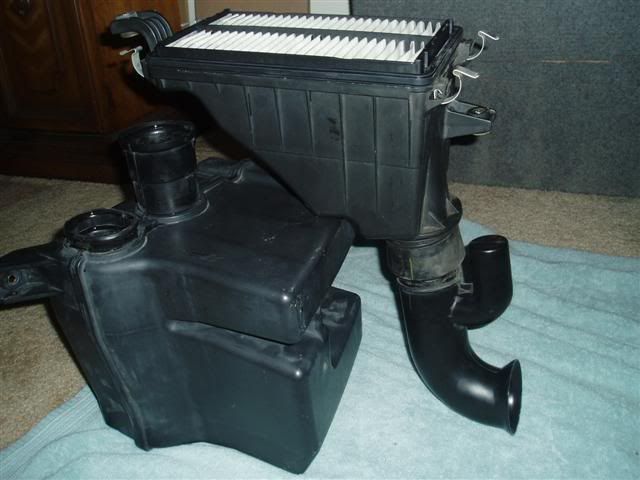
thats actually how its set up now but wit stainless hose clamps to hold the pipe on
a few guys have tested that setup vs typical cold-air or short-ram and it turns out the be the best of both worlds
i get the reasoning totally, not messing with the lorrys and setting it on cruise control you would net better MPG from the cold-air intake vs stock
however the noises it makes and the extra little kick tends to make the driver take one or two steps back and make little difference or get worse

also, you mean to tell me that honda intentionally runs coolant through the intake mani for the purpose of heating up the intake air

i reckon they thought it wiser to do that for full-time efficiency and a little power loss, than to run a composite manifold with no coolant stuff and an insulated mani gasket
-or ITB's just to gain a little more power at all rpm which is a pretty big waste since most honda drivers just cruise around , not hollering "POWERRR" and hauling ***
Re: your experience with Cold-air intake on hwy commuting
The muffin man is correct. Fuel burns more efficiently at higher temperatures in an internal combustion engine. The fuel vaporizes more, and also burns faster creating higher pressures etc etc. However combustion temperatures are limited by our ICE technology. We make them out of metal, which is unsuited to the application because of it's relatively low melting point and its ability to transfer thermal energy.
Look up the concept of a ceramic engine and you will get more of the science behind it.
However in this instance, the engine is liquid cooled, in order to maintain a constant temperature. So heat of the incoming air is not a factor, and that coolant passes through the intake manifold, and heats up the incoming air to relatively close to the engines operating temperature.
A cold air intake actually increases the engines efficiency because you replace the restrictive factory intake pipe, resonator box, and intake tube. and replace it with a smooth metal tube, and an open element cone filter.
When you do this, you remove a restriction in the engines ability to move air.
You look at the list of parasitic losses and pumping losses is on them. The engine uses part of the energy that it generates in order to move fresh air and fuel into the cylinder and hot exhaust out. By removing the restrictions air flows into the engine easier, and less energy is used to accomplish this.
(sorry if I am explaining things that we all know, I'm not insulting anyone's intelligence, just thinking "aloud")
Now assuming a constant vehicle speed, and adding together the different engine loads, accessories, driveline losses etc, you would need to have the engine output X amount of energy in order to put Y amount of energy to the street to maintain that speed. What happens when we reduce the amount of energy lost in the parasitic engine losses? Well one of two things can happen.
The engine needs to output less energy in order to produce Y power to maintain vehicle speed. Less energy requires less fuel. Which, assuming constant conditions will result in less fuel burn, and better gas mileage.
The second thing that can happen is we can keep engine output constant. However we remove a parasitic loss, and the energy that that loss used now must go somewhere else according to the laws of physics. It goes to the wheels.
I would have to say, that the reason you are getting worse mileage is because you are "screaming past lorries in VTEC". Not because of a reduction in intake air temperature.
As for my car, I noticed that my mileage stayed the same, while my driving style has gotten more aggressive. Also, there is an huge difference between 4500 RPM on the factory airbox, and 4500 with a cone filter. Which is where most of the gain from an intake that you see shows up anyways.
Stop hitting Vtec and you MPG will go up. Thats my opinion.
Oh, feel free to argue with my reasoning, but not with my intelligence.
Look up the concept of a ceramic engine and you will get more of the science behind it.
However in this instance, the engine is liquid cooled, in order to maintain a constant temperature. So heat of the incoming air is not a factor, and that coolant passes through the intake manifold, and heats up the incoming air to relatively close to the engines operating temperature.
A cold air intake actually increases the engines efficiency because you replace the restrictive factory intake pipe, resonator box, and intake tube. and replace it with a smooth metal tube, and an open element cone filter.
When you do this, you remove a restriction in the engines ability to move air.
You look at the list of parasitic losses and pumping losses is on them. The engine uses part of the energy that it generates in order to move fresh air and fuel into the cylinder and hot exhaust out. By removing the restrictions air flows into the engine easier, and less energy is used to accomplish this.
(sorry if I am explaining things that we all know, I'm not insulting anyone's intelligence, just thinking "aloud")
Now assuming a constant vehicle speed, and adding together the different engine loads, accessories, driveline losses etc, you would need to have the engine output X amount of energy in order to put Y amount of energy to the street to maintain that speed. What happens when we reduce the amount of energy lost in the parasitic engine losses? Well one of two things can happen.
The engine needs to output less energy in order to produce Y power to maintain vehicle speed. Less energy requires less fuel. Which, assuming constant conditions will result in less fuel burn, and better gas mileage.
The second thing that can happen is we can keep engine output constant. However we remove a parasitic loss, and the energy that that loss used now must go somewhere else according to the laws of physics. It goes to the wheels.
I would have to say, that the reason you are getting worse mileage is because you are "screaming past lorries in VTEC". Not because of a reduction in intake air temperature.
As for my car, I noticed that my mileage stayed the same, while my driving style has gotten more aggressive. Also, there is an huge difference between 4500 RPM on the factory airbox, and 4500 with a cone filter. Which is where most of the gain from an intake that you see shows up anyways.
Stop hitting Vtec and you MPG will go up. Thats my opinion.
Oh, feel free to argue with my reasoning, but not with my intelligence.

Trending Topics
Thread Starter
Honda-Tech Member
Joined: Jan 2007
Posts: 4,095
Likes: 1
From: south texas
Re: your experience with Cold-air intake on hwy commuting
same  which is why it all makes sense-ideally but it's usually my driving that throws it off
back on the topic of optomizing the accord for high-speed cruise efficiency,
I've already got new oem denso O2 sensors about 2 years old now and Magnaflow bolt-on cat year and a half ago (that made a difference especially over busted oem)
what about the stock muffler?
should i ditch it in favor of a same-as-oem 2.25" straight-through silencer?
my thought is yes-probably so
now, i've driven the accord with full oem exhaust, with muffler off (cant tell much difference other than a little growl), and also open-cat which has crap for low torque and sounds funny especially since its a magnaflow cat
---when i get tired of watching tv and games i go and mess with the car haha
which is why it all makes sense-ideally but it's usually my driving that throws it offback on the topic of optomizing the accord for high-speed cruise efficiency,
I've already got new oem denso O2 sensors about 2 years old now and Magnaflow bolt-on cat year and a half ago (that made a difference especially over busted oem)
what about the stock muffler?
should i ditch it in favor of a same-as-oem 2.25" straight-through silencer?
my thought is yes-probably so
now, i've driven the accord with full oem exhaust, with muffler off (cant tell much difference other than a little growl), and also open-cat which has crap for low torque and sounds funny especially since its a magnaflow cat
---when i get tired of watching tv and games i go and mess with the car haha
Honda-Tech Member
Joined: Sep 2009
Posts: 554
Likes: 1
Re: your experience with Cold-air intake on hwy commuting
If there isn't any difference between muffler on and muffler off don't waste the money is my thoughts. As for the muffler if you are still running an OE exhaust there is no point in replacing the muffler. there is way more restriction in your exhaust system than there is in simply the muffler. Look at how much pipe there is between cats and mufflers compared to how much is in the muffler. You would be better of redoing the whole exhaust.

Honda-Tech Member
Joined: Sep 2008
Posts: 1,217
Likes: 1
From: Metro East, Illinois, United States
Re: your experience with Cold-air intake on hwy commuting
Ha, I saw parasitic losses and felt my eyes glazing over just like I was back in class!
I went with staying with the intake as, like a few others here, don't think it's worth the effort to mess with it. Plus, why not keep the nice intake sound?
I vote for a change in driving style (I know, I know, it's that damned hippie crap!) because that almost ALWAYS results in better mpg. I understand your desire to mess with the car, believe me, but sometimes things just aren't worth the effort.
Regardless, it seems like you are inclined to do it anyway, so good luck with it. My guess with the exhaust is that you could find better parts of it to modify than the muffler. Seems like that would hold the least of your concerns for improving flow/velocity.
EDIT: chikin pickle put it in better detail than I did. Refer to above about exhaust.
I went with staying with the intake as, like a few others here, don't think it's worth the effort to mess with it. Plus, why not keep the nice intake sound?
I vote for a change in driving style (I know, I know, it's that damned hippie crap!) because that almost ALWAYS results in better mpg. I understand your desire to mess with the car, believe me, but sometimes things just aren't worth the effort.
Regardless, it seems like you are inclined to do it anyway, so good luck with it. My guess with the exhaust is that you could find better parts of it to modify than the muffler. Seems like that would hold the least of your concerns for improving flow/velocity.
EDIT: chikin pickle put it in better detail than I did. Refer to above about exhaust.
Thread Starter
Honda-Tech Member
Joined: Jan 2007
Posts: 4,095
Likes: 1
From: south texas
Re: your experience with Cold-air intake on hwy commuting
I won't mess with the intake, as for exhaust i really want to run a Mugen twin loop...which is hella expensive, hard to find, not even made for the Accord...
even i can see that would be rather pointless to spend waaay too much money to custom fabricate a Mugen cat-back
even i can see that would be rather pointless to spend waaay too much money to custom fabricate a Mugen cat-back
Honda-Tech Member
Joined: Jul 2010
Posts: 38
Likes: 0
From: seattle WA
Re: your experience with Cold-air intake on hwy commuting
A stock air box is so restrictive i would find it hard to believe that you would get better milage than a cold air intake. K&N gaurantees milage and power. A good intake,header,high flow cat or (perfered) a test pipe, MANDRAL BENT PIPES, and a good muffler will give you better milage as long as you keep your foot out of it. Like that will hapen.
Honda-Tech Member
Joined: Sep 2008
Posts: 1,217
Likes: 1
From: Metro East, Illinois, United States
Re: your experience with Cold-air intake on hwy commuting
That to me is worse than any mpg rating increase you might get (which will most likely be none).

Honda-Tech Member
Joined: Sep 2010
Posts: 10
Likes: 0
Re: your experience with Cold-air intake on hwy commuting
Posted by colairrmaniasp - cold air intakes
I have never heard of a true cold air intake sucking up water, I think its more internet myth than anything.
I have never heard of a true cold air intake sucking up water, I think its more internet myth than anything.
Honda-Tech Member
Joined: Sep 2009
Posts: 554
Likes: 1
Re: your experience with Cold-air intake on hwy commuting
I read an article in a magazine where they tested stock vs aftermarket high flow cats vs test pipe. The test pipe gave a 2 hp gain. I don't see the point in removing emissions equipment that our engines were designed to work with. Also, if you have an OBDII car with a post-cat oxygen sensor it will screw with your ECU.
To the guy about intakes sucking up water:
Yes, it is possible. Engines pull a LOT of vaccum, around 22 inches of mercury, which is equivalent to about 22 feet of water. If you drive through a puddle and your filter goes under your motor is in for a world of hurt. I know someone that drove her civic through a puddle (has CAI) and busted one rod and bend another.

Thread
Thread Starter
Forum
Replies
Last Post
