


Advantage of ITR RLCA vs. GSR RLCA


Thread Starter
Honda-Tech Member
Joined: Sep 2003
Posts: 1,075
Likes: 0
From: Fredericksburg, VA, USA
 Advantage of ITR RLCA vs. GSR RLCA
I know the difference is in the style of shock that it uses, but is there an advantage to use the ITR vs GSR ( beside the baller status aspect). The reason i ask is next year prob i will be going 5 lug with a Koni/GC setup and trying to figure out to keep my current arms or get some ITR ones. This will be going on to a 93 DX hatch. TIA


Honda-Tech Member

Joined: Apr 2002
Posts: 18,961
Likes: 76
From: I am Tyson
Re: Advantage of ITR RLCA vs. GSR RLCA
no real difference. geometry is the same.
all civics and integras in japan use the same type of control arms. not just ITR. just odd that the ITR used the JDM arms when it came to america.
all civics and integras in japan use the same type of control arms. not just ITR. just odd that the ITR used the JDM arms when it came to america.

Trending Topics

Honda-Tech Member
Joined: Apr 2005
Posts: 220
Likes: 0
From: Pittsburgh, PA
Thread Starter
Honda-Tech Member
Joined: Sep 2003
Posts: 1,075
Likes: 0
From: Fredericksburg, VA, USA
Re: Advantage of ITR RLCA vs. GSR RLCA
So basicly there really isnt a difference between the two arms beside weight and the "baller" status.
The weight issue would be mute if you went aftermarket, b/c the ITR arms will require more material than the GSR ones.
The weight issue would be mute if you went aftermarket, b/c the ITR arms will require more material than the GSR ones.

Honda-Tech Member

Joined: Dec 2008
Posts: 2,556
Likes: 6
Re: Advantage of ITR RLCA vs. GSR RLCA
Keep in mind that some of the nicer shock/coilover assemblies made for DC2's are made for the Type R and therefore require the DC2 arms.
If you're looking at something that isn't Type R specific then there's no real benefit on searching out ITR arms.
If you're looking at something that isn't Type R specific then there's no real benefit on searching out ITR arms.

Honda-Tech Member
Joined: Aug 2007
Posts: 9,865
Likes: 4
From: Oregon
Re: Advantage of ITR RLCA vs. GSR RLCA
you have rear control arms pictured, not trailing
maybe i mis read this. i thought we were talking about trailing arms, then i re read and it's control arms.
if this is about control arms. it's hard to imagine why someone would change their setup up for such a small drop in weight. using something like a skunk 2 arms moves you to aluminum and doesn't make you buy new rear shocks. what i'd REALLY love to know is why the aftermarket doesn't make a tubular chromoly or at least forged aluminum front control arm. those front control arms are frigin heavy
maybe i mis read this. i thought we were talking about trailing arms, then i re read and it's control arms.
if this is about control arms. it's hard to imagine why someone would change their setup up for such a small drop in weight. using something like a skunk 2 arms moves you to aluminum and doesn't make you buy new rear shocks. what i'd REALLY love to know is why the aftermarket doesn't make a tubular chromoly or at least forged aluminum front control arm. those front control arms are frigin heavy
Re: Advantage of ITR RLCA vs. GSR RLCA
yes the title states rlca. rear lower control arm. the post states he is going 5 lug and he wanted to know if there is any advantage.
really it would be cheaper to just use the suspension you have now. assuming you like it and keep that setup then use the likewise arms.
really it would be cheaper to just use the suspension you have now. assuming you like it and keep that setup then use the likewise arms.
Honda-Tech Member
Joined: Dec 2008
Posts: 2,556
Likes: 6
Re: Advantage of ITR RLCA vs. GSR RLCA
That's what this thread is about.
Omni Power makes a front half billet LCA and Function 7 is currently crash-testing prototypes of an entire front LCA from what their previous posts state.
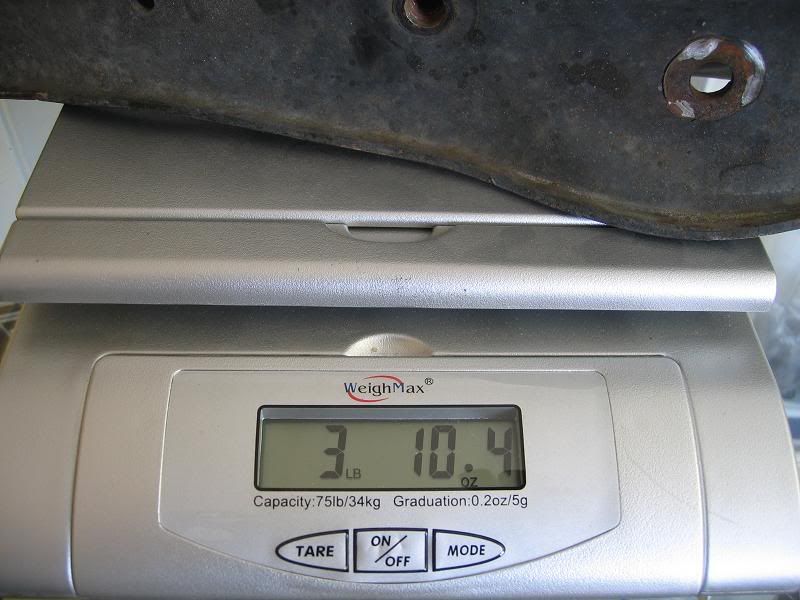
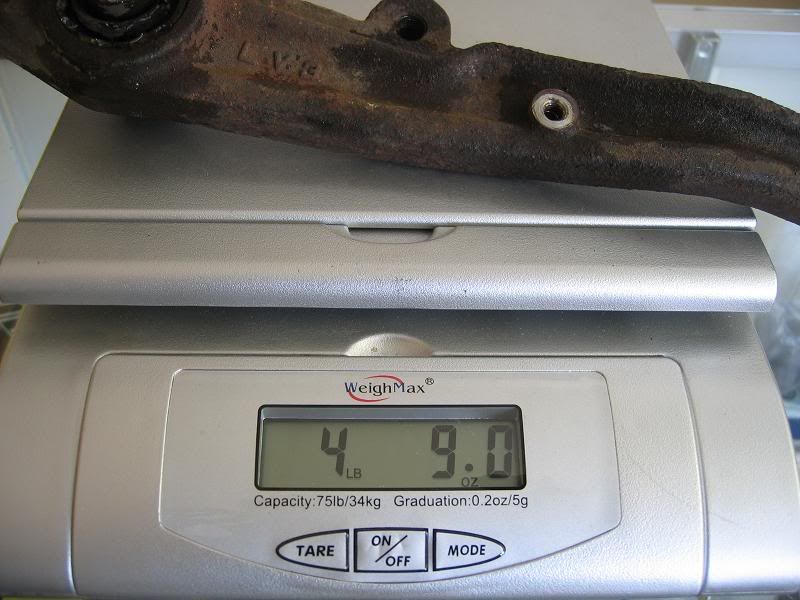
Here's the weight differences in the two-piece versus the one-piece arms since you mentioned how heavy they are.
Two piece cast:

One piece stamped:

Here's the weight differences in the two-piece versus the one-piece arms since you mentioned how heavy they are.
Two piece cast:
One piece stamped:
Honda-Tech Member
Joined: Apr 2002
Posts: 18,961
Likes: 76
From: I am Tyson
Honda-Tech Member
Joined: Aug 2007
Posts: 9,865
Likes: 4
From: Oregon
Re: Advantage of ITR RLCA vs. GSR RLCA
That's what this thread is about.
Omni Power makes a front half billet LCA and Function 7 is currently crash-testing prototypes of an entire front LCA from what their previous posts state.
Here's the weight differences in the two-piece versus the one-piece arms since you mentioned how heavy they are.
Two piece cast:
One piece stamped:
Omni Power makes a front half billet LCA and Function 7 is currently crash-testing prototypes of an entire front LCA from what their previous posts state.
Here's the weight differences in the two-piece versus the one-piece arms since you mentioned how heavy they are.
Two piece cast:
One piece stamped:
hmm still not worth the money for so little savings. well, unless it's a max effort car that's been shaved everywhere else. it wouldn't be too hard to fab some out of 4130 chromoly tubing. the only issue is selling them since you would have higher costs due to labor, jig construction and supplies. time consuming to make but i bet you could get the weight down to 5-7lbs per side. you could also design them to add a degree or two of caster and use off the shelf energy bushings.
Thread Starter
Honda-Tech Member
Joined: Sep 2003
Posts: 1,075
Likes: 0
From: Fredericksburg, VA, USA
Re: Advantage of ITR RLCA vs. GSR RLCA
ok just making sure. there is a traction bar thread in here too so...
but just to clarify the itr units are the best for burnouts! wuuuuuuwhoooooo!
but just to clarify the itr units are the best for burnouts! wuuuuuuwhoooooo!

Honda-Tech Member
Joined: May 2004
Posts: 402
Likes: 0
From: Mesa, AZ, USA
Re: Advantage of ITR RLCA vs. GSR RLCA
I know the difference is in the style of shock that it uses, but is there an advantage to use the ITR vs GSR ( beside the baller status aspect). The reason i ask is next year prob i will be going 5 lug with a Koni/GC setup and trying to figure out to keep my current arms or get some ITR ones. This will be going on to a 93 DX hatch. TIA
However when customers ask about our LCA's we usually recommend our billet "GSR version" because they are lighter (under 2 lbs a side, weighed with bushings) and stiffer than the billet "ITR version", resulting in better overall suspension dynamics.
The other advantage is cost. The standard fork-style shocks are usually cheaper than the eye-style ITR shocks.
-A

Thread
Thread Starter
Forum
Replies
Last Post
92integraVTECgsr
Acura Integra
1
Feb 16, 2006 08:47 PM
93B18
Acura Integra Type-R
2
Jun 15, 2001 11:47 PM
