


Intake manifold big bang theory. Gain or lose, you choose.


Thread Starter
Honda-Tech Member
Joined: Apr 2008
Posts: 467
Likes: 0
From: NorCal*
 Intake manifold big bang theory. Gain or lose, you choose.
Problem & Research:
An aftermarket intake manifold causes loss of power on a motor w/ stock internals... but why? They all say, "you will loose power". Its all i see in the threads. I brainstormed and i came to one conclusion... how do i (failed @ math, science, and english in 6th grade) put it?...mass vs volume, mass vs velocity, velocity vs volume or some type of scientific method.
Could it be:
the intake manifold's larger size effecting the velocity of air coming threw the intake pipe or vice versa? put is this way, its like your mouth/lips. the bigger you open it, the more volume of air is breathed in but the velocity of air decreases due to such a big opening and a smaller lung. the smaller you open your mouth, the volume of air decreases but the velocity increases due to a smaller opening and a bigger lung. i guess you guys get what im saying. if you dont just try it on yourself no homo
im assuming since the intake manifold's circumference/diameter(what ever) is too large... it needs a smaller diameter intake pipe to correct the velocity into the intake manifold therefore causing you to "not lose power". Am i correct?
Main Question:
how do i find out the parts/equation to make you not loose power? heres another brainstorm ...
My Guess:
Chime in if you guys might know a little bit more or if i left out something.
I know theres alot of people out there who want to know, im one of'em
An aftermarket intake manifold causes loss of power on a motor w/ stock internals... but why? They all say, "you will loose power". Its all i see in the threads. I brainstormed and i came to one conclusion... how do i (failed @ math, science, and english in 6th grade) put it?...mass vs volume, mass vs velocity, velocity vs volume or some type of scientific method.
Could it be:
the intake manifold's larger size effecting the velocity of air coming threw the intake pipe or vice versa? put is this way, its like your mouth/lips. the bigger you open it, the more volume of air is breathed in but the velocity of air decreases due to such a big opening and a smaller lung. the smaller you open your mouth, the volume of air decreases but the velocity increases due to a smaller opening and a bigger lung. i guess you guys get what im saying. if you dont just try it on yourself
no homoim assuming since the intake manifold's circumference/diameter(what ever) is too large... it needs a smaller diameter intake pipe to correct the velocity into the intake manifold therefore causing you to "not lose power". Am i correct?
Main Question:
how do i find out the parts/equation to make you not loose power? heres another brainstorm ...
- After market intake manifold - causes of loss power
- Length and diameter of intake pipe - the correction of losing or gaining power
- Intake filter - the correction of losing or gaining power
My Guess:
- Entry level racing intake manifold - Blox, XS, OBX, Skunk2, etc.
- 2" in diameter intake pipe w/ two 45* dual bends. >>Type of bend<<
- Intake filter that is kinda thick.. K&N or a V-stack might hurt it. I dont really know.
Chime in if you guys might know a little bit more or if i left out something.
I know theres alot of people out there who want to know, im one of'em

Joined: Aug 2006
Posts: 8
Likes: 0
From: Auckland, New Zealand
Re: Intake manifold big bang theory. Gain or lose, you choose.
I have two thoughts.
Aftermarket manifolds have big plenums and fat runners to gain power in high flow setups (ie cams and head work). If you are not moving enough air then the charge will slow down as it enters the big plenum and reduce the effectiveness of any scavenging.
Aftermarket manifolds change the volumetric efficiency of your engine and if the air fuel ratios are not adjusted accordingly (ie tuned with a piggyback or ECU) you may lose power.
Changing your inlet piping before the manifold will not fix this. The manifold needs to be the right size/design for the amount of air you are drawing into the motor. Why would you put a fancy manifold on a stock motor anyway? Go buy some headers or save up for a street cam and a tune.
Aftermarket manifolds have big plenums and fat runners to gain power in high flow setups (ie cams and head work). If you are not moving enough air then the charge will slow down as it enters the big plenum and reduce the effectiveness of any scavenging.
Aftermarket manifolds change the volumetric efficiency of your engine and if the air fuel ratios are not adjusted accordingly (ie tuned with a piggyback or ECU) you may lose power.
Changing your inlet piping before the manifold will not fix this. The manifold needs to be the right size/design for the amount of air you are drawing into the motor. Why would you put a fancy manifold on a stock motor anyway? Go buy some headers or save up for a street cam and a tune.
Thread Starter
Honda-Tech Member
Joined: Apr 2008
Posts: 467
Likes: 0
From: NorCal*
Re: Intake manifold big bang theory. Gain or lose, you choose.
So in any case it would be pointless....
I find that last comment to be quite offensive. Do you really think im stupid enough to just have an aftermarket intake manifold and nothing else? leave the smart remarks and "offensive" suggestions to yourself please. Your input was very knowledgeable but you are saying the exact same thing...just in more technical terms.
Is there any other way we can correct the loss of power with adjusting the timing/distributor?
I find that last comment to be quite offensive. Do you really think im stupid enough to just have an aftermarket intake manifold and nothing else? leave the smart remarks and "offensive" suggestions to yourself please. Your input was very knowledgeable but you are saying the exact same thing...just in more technical terms.
Is there any other way we can correct the loss of power with adjusting the timing/distributor?

Honda-Tech Member
Joined: Jun 2009
Posts: 62
Likes: 0
From: Spokane, WA
Re: Intake manifold big bang theory. Gain or lose, you choose.
You are in the ball park with your figuring bro. In the most simplest form the narrower the runner the higher the velocity which in turn allows better filling of the cylinders at lower rpms, thus producing more power lower in the power band. Also, the narrower the runner the maximum air flow is reduced (if you could imagine breathing through a straw.)
So, which just this basic knowledge of IM tuning you could see how a after market IM with fatter runners would cause you to "lose power", albeit relatively speaking. You are essentially dropping you power numbers in the low to mid range to achieve higher power in the top rpm range. So if you cannot benefit from a higher rpm range you are not benefiting from a fatter runner IM.
Now, if you want more it gets much much more complicated then this. Runner length effects the timing of the velocity of air relative to the opening of the intake valve. To better understand this we need to understand that air actually has acoustic properties like that of a spring, and the air travelling through the IM has pulses(frequency) like that of a spring. This is referred to as a spring-mass system.
To better put this, the air actually compresses and expands inside the intake system causing a oscillation exactly like that of a spring.
When a piston is forced down from combustion it causes a depression in the cylinder ( negative pressure, vacuum). So our most basic filling of a cylinder is cause from this vacuum and the movement of higher pressure to lower pressure. Now, when the intake valve closes it causes the air still travelling down the runners to slam into the back of the intake valve. Now this air has to go somewhere, so the energy of the travelling air causes it to first compress against the valve. Then since the valve is going to exert an equal force the air effectively rebounds and goes back up the intake runner, thus producing our frequency.
Note that the higher the rpm the more energy, inertia, the travelling air has which in turn causes a more rapid compression and rebound giving a higher acoustic frequency, which now you may be able to see why depending on desired power curve we must tune the runner length. If the runner length is still hard to grasp keep reading and i will show you how by using this oscillating energy we can effectively add boost to the intake air charge.
So now the cam comes into the picture. While lift does have an effect on the velocity/volume of the air being delivered to the cylinder we are only going to look at duration and a little bit of phasing. Now that we know there is actually energized air oscillating in our intake system the final consideration is the intake valve. If we can match this frequency with the opening of the intake valve we can use the rebound of the air bouncing off the plenum back down the intake runner and help aid in cylinder filling. Now not only do we have the normal movement of high pressure to low pressure caused by cylinder combustion, we are adding to that with the oscillating energy caused by the air compressing and rebounding between the plenum and the back of the intake valve. This is effectively boosting our incoming intake charge and allowing us to put more air in the cylinder then just the piston sweep vacuum, allowing us to achieve greater then 100% volumetric efficiency, just like a forced induction system.
So to recap: Runner diameter effects the velocity and volume of air being delivered to the cylinder. Runner length effects where the oscillating air is going to be when the intake valve opens. If tuned properly the oscillating charge will be right back at the intake valve when it opens adding a pushing of air in to the cylinder on top of the sucking of air caused by vacuum.
Now with this basic understanding we can see how we "lose power" with an after market IM. These manifolds are built to deliver power in the upper rpm lvls with short fatter runners. When we optimize a runner we must do so at a certain frequency, which is pretty much directly related to rpm. With a runner set for a certain rpm we lose out on everything else outside of this picture, which is why we see dual runner intake systems which allow us to benefit from 2 different runner designs, given a broader more streetable power curve. Also note the fatter runner just makes sure we can supply the amount of air needed at that rpm, while making air velocity less at lower rpm range also negatively effecting cylinder filling.
Just to add to the complication all this is regarding a one cylinder application. More variables become apparent when we add 3 more cylinders to the picture. Now, just like exhaust header design we can not only sync the oscillation of one runner we can have 2 or more sync'd to add even more positive pressure to the charge. Granted, we can have the reverse effect with improper tuning, having one runner creating a negative pressure on another via the plenum while both of them need to have positive pressure going towards the intake valve....
Also, note that this spring mass theory doesnt apply to ITB systems because the they dont have a mass like a plenum to "spring" off of.
Hope this helps. Ive noticed i've missed some tid bits of info which would help you further understand. So if you have more questions feel free and i will help as much as i can. Also, note i do not claim to know all etc... I'm am just another kid throwing in his 2cents....
So, which just this basic knowledge of IM tuning you could see how a after market IM with fatter runners would cause you to "lose power", albeit relatively speaking. You are essentially dropping you power numbers in the low to mid range to achieve higher power in the top rpm range. So if you cannot benefit from a higher rpm range you are not benefiting from a fatter runner IM.
Now, if you want more it gets much much more complicated then this. Runner length effects the timing of the velocity of air relative to the opening of the intake valve. To better understand this we need to understand that air actually has acoustic properties like that of a spring, and the air travelling through the IM has pulses(frequency) like that of a spring. This is referred to as a spring-mass system.
To better put this, the air actually compresses and expands inside the intake system causing a oscillation exactly like that of a spring.
When a piston is forced down from combustion it causes a depression in the cylinder ( negative pressure, vacuum). So our most basic filling of a cylinder is cause from this vacuum and the movement of higher pressure to lower pressure. Now, when the intake valve closes it causes the air still travelling down the runners to slam into the back of the intake valve. Now this air has to go somewhere, so the energy of the travelling air causes it to first compress against the valve. Then since the valve is going to exert an equal force the air effectively rebounds and goes back up the intake runner, thus producing our frequency.
Note that the higher the rpm the more energy, inertia, the travelling air has which in turn causes a more rapid compression and rebound giving a higher acoustic frequency, which now you may be able to see why depending on desired power curve we must tune the runner length. If the runner length is still hard to grasp keep reading and i will show you how by using this oscillating energy we can effectively add boost to the intake air charge.
So now the cam comes into the picture. While lift does have an effect on the velocity/volume of the air being delivered to the cylinder we are only going to look at duration and a little bit of phasing. Now that we know there is actually energized air oscillating in our intake system the final consideration is the intake valve. If we can match this frequency with the opening of the intake valve we can use the rebound of the air bouncing off the plenum back down the intake runner and help aid in cylinder filling. Now not only do we have the normal movement of high pressure to low pressure caused by cylinder combustion, we are adding to that with the oscillating energy caused by the air compressing and rebounding between the plenum and the back of the intake valve. This is effectively boosting our incoming intake charge and allowing us to put more air in the cylinder then just the piston sweep vacuum, allowing us to achieve greater then 100% volumetric efficiency, just like a forced induction system.
So to recap: Runner diameter effects the velocity and volume of air being delivered to the cylinder. Runner length effects where the oscillating air is going to be when the intake valve opens. If tuned properly the oscillating charge will be right back at the intake valve when it opens adding a pushing of air in to the cylinder on top of the sucking of air caused by vacuum.
Now with this basic understanding we can see how we "lose power" with an after market IM. These manifolds are built to deliver power in the upper rpm lvls with short fatter runners. When we optimize a runner we must do so at a certain frequency, which is pretty much directly related to rpm. With a runner set for a certain rpm we lose out on everything else outside of this picture, which is why we see dual runner intake systems which allow us to benefit from 2 different runner designs, given a broader more streetable power curve. Also note the fatter runner just makes sure we can supply the amount of air needed at that rpm, while making air velocity less at lower rpm range also negatively effecting cylinder filling.
Just to add to the complication all this is regarding a one cylinder application. More variables become apparent when we add 3 more cylinders to the picture. Now, just like exhaust header design we can not only sync the oscillation of one runner we can have 2 or more sync'd to add even more positive pressure to the charge. Granted, we can have the reverse effect with improper tuning, having one runner creating a negative pressure on another via the plenum while both of them need to have positive pressure going towards the intake valve....
Also, note that this spring mass theory doesnt apply to ITB systems because the they dont have a mass like a plenum to "spring" off of.
Hope this helps. Ive noticed i've missed some tid bits of info which would help you further understand. So if you have more questions feel free and i will help as much as i can. Also, note i do not claim to know all etc... I'm am just another kid throwing in his 2cents....
Honda-Tech Member
Joined: Jun 2009
Posts: 62
Likes: 0
From: Spokane, WA
Re: Intake manifold big bang theory. Gain or lose, you choose.
Hmm not really you cannot correct the loss of power. In the most simplest terms, the stock IM is better tuned then the aftermarket one for a stock engine.
It is true your airflow is going to change thus your computer must re-adjust but they are built just for this, they do not run in only closed loop mode (infact they very seldom run in closed loop)... The only way an improper a/f ratio would be the problem would be such a huge increase in air flow, that you have ran out of the range of the computer, ie: huge boost etc... A intake manifold isnt going to adjust your airflow so much that the computer peaks out on its tables...
As to the remark about headers and a street cam... These all go hand in hand with head/intake tuning. You cannot change one without effecting the other. The only serious approach to engine design is to consider all these as one picture. You build your system on paper first considering all the variable of each component and build something that works together...
It is true your airflow is going to change thus your computer must re-adjust but they are built just for this, they do not run in only closed loop mode (infact they very seldom run in closed loop)... The only way an improper a/f ratio would be the problem would be such a huge increase in air flow, that you have ran out of the range of the computer, ie: huge boost etc... A intake manifold isnt going to adjust your airflow so much that the computer peaks out on its tables...
As to the remark about headers and a street cam... These all go hand in hand with head/intake tuning. You cannot change one without effecting the other. The only serious approach to engine design is to consider all these as one picture. You build your system on paper first considering all the variable of each component and build something that works together...
Joined: Aug 2006
Posts: 8
Likes: 0
From: Auckland, New Zealand
Re: Intake manifold big bang theory. Gain or lose, you choose.
Im still not entirely sure on the point of this discussion. People have observed that there is a loss in power. Some ideas have been suggested as to why there is a loss in power. But you seem to want to try and 'fix' the problem by changing intake piping, or distributor timing? The problem is that aftermarket manifold is not appropriate for this situation, trying to cover up the symptoms by adjusting other engine parameters seems a bit pointless.
Yes if you have the funds you should probably do everything all at once, but not everyone is in a position to take this approach, and that is fine.
Last edited by Colza; Jun 29, 2009 at 10:56 PM.

Trending Topics
Thread Starter
Honda-Tech Member
Joined: Apr 2008
Posts: 467
Likes: 0
From: NorCal*
Re: Intake manifold big bang theory. Gain or lose, you choose.
Since an aftermarket IM like blox, skunk2, etc. causes loss of power as a direct bolt-on on stock motors, will a ITR manifold help you gain anything or is it just the same?

Joined: Jun 2008
Posts: 8
Likes: 0
From: Long Beach, ca, usa
Re: Intake manifold big bang theory. Gain or lose, you choose.
i think the itr manifold will be almost the same as a aftermarket one. so u might lose a little low/mid range power but u might also gain a little in the higher rpm range. just like they were talking about. if i remember the itr manifold is a single runner with a wider diameter then the gsr dual runner mani and the plenum on the itr is also larger in diameter compared to the gsr one so if ur replacing a gsr one with a itr mani it will be almost like getting an aftermarket mani.
Honda-Tech Member
Joined: Jun 2009
Posts: 62
Likes: 0
From: Spokane, WA
Re: Intake manifold big bang theory. Gain or lose, you choose.
Srry forgot about this post...
And this line of thinking is what separates "engine builders" from "tuners" , "winners" from "losers".... Sure you may possibly see some small gains by bolting on random "performance" parts, but you will never be utilizing the full potential of the engine. Most marketed performance parts are just like any other retail product - marketed hype.
Perfect example, sure you can bolt on a "Cold Air Intake" and maybe measure 1-2 hp. This is due to improving airflow by removing resonating chambers and possible airflow turbulence caused by these systems designed to keep your intake system quiet. I challenge anyone who swears by a cold air intake, to take a stock airbox temp reading and then a 'CAI" air reading... It is standard to accept a 1% power change for every 13 deg.F change... Dont forget that many of theses systems are designed, just like stock, to redirect heat into the inlet tract to improve cold start/low rpm driveability...
The simple truth is a car is a system, you cannot change one part of the system with out it affecting the system overall. When building an car, you must take all parts of the system involved in delivering torque to the ground, this includes tires sizes, final drives, gear ratios, induction system, exhaust system, cooling system, and lubrication system...
I disagree. I have no problem with putting an air intake on first for a small gain, then a header for a bit more gain, and then maybe a cam for even more gain. After all of this you could then consider an intake manifold or throttle body upgrade etc. and these will net you even more gains from your other modifications, but they would not have had much effect (or maybe even a negative effect as discussed in the first post) had you put them on before the other parts.
Yes if you have the funds you should probably do everything all at once, but not everyone is in a position to take this approach, and that is fine.
Yes if you have the funds you should probably do everything all at once, but not everyone is in a position to take this approach, and that is fine.
Perfect example, sure you can bolt on a "Cold Air Intake" and maybe measure 1-2 hp. This is due to improving airflow by removing resonating chambers and possible airflow turbulence caused by these systems designed to keep your intake system quiet. I challenge anyone who swears by a cold air intake, to take a stock airbox temp reading and then a 'CAI" air reading... It is standard to accept a 1% power change for every 13 deg.F change... Dont forget that many of theses systems are designed, just like stock, to redirect heat into the inlet tract to improve cold start/low rpm driveability...
The simple truth is a car is a system, you cannot change one part of the system with out it affecting the system overall. When building an car, you must take all parts of the system involved in delivering torque to the ground, this includes tires sizes, final drives, gear ratios, induction system, exhaust system, cooling system, and lubrication system...

Honda-Tech Member
Joined: May 2008
Posts: 983
Likes: 1
From: San Diego
Re: Intake manifold big bang theory. Gain or lose, you choose.
im not going to get technical here. the loss of hp is not hard to understand. from what i know, a stock computer designed to run using stock parts. we all know anytime you add a part like say an IM, you alter the amount of air coming in, the computer has to compensate for the reading it gets from the sensors so it tries to fix what it thinks is wrong. i.e retarding the timing and altering the fuel/ignition maps. theres basically a low and high speed fuel/ignition map the ecu uses. bringing in so much air calls for tuning. you will always sacrifice low end for any IM designed for maximizing peak hp
Last edited by BigBlock22; Aug 27, 2009 at 07:31 PM.
Honda-Tech Member
Joined: Jun 2009
Posts: 62
Likes: 0
From: Spokane, WA
Re: Intake manifold big bang theory. Gain or lose, you choose.
Im sorry bro... a/f ratio is irrelevant of the amount of air coming going into the cylinder. The ecu will just adjust the fuel to reach the a/f ratio it determines best considering the variables.
The only time the ecu would be the bottleneck is when the air consumption is soo much greater then stock the parameters are outside of its programmed window. There are other bottlenecks such as the fuel supply system not being able to meet the air flow demands, or even running outside of the various sensors operating range etc, but a simple intake manifold bolt on will not flow this much more air as to outflow the stock ecu/fuel supply.
The best way to think about intake manifolds is to think of them as part of the cylinder head, they are just an extension. If you adjust the flow characteristics of the cylinder head you change how and where the air will be delivered changing your torque curve.
Please refer to #4 to see why we "lose" power when we put a aftermarket IM on a stock engine....
The only time the ecu would be the bottleneck is when the air consumption is soo much greater then stock the parameters are outside of its programmed window. There are other bottlenecks such as the fuel supply system not being able to meet the air flow demands, or even running outside of the various sensors operating range etc, but a simple intake manifold bolt on will not flow this much more air as to outflow the stock ecu/fuel supply.
The best way to think about intake manifolds is to think of them as part of the cylinder head, they are just an extension. If you adjust the flow characteristics of the cylinder head you change how and where the air will be delivered changing your torque curve.
Please refer to #4 to see why we "lose" power when we put a aftermarket IM on a stock engine....
Honda-Tech Member
Joined: Feb 2006
Posts: 610
Likes: 0
From: miserable mitten
Re: Intake manifold big bang theory. Gain or lose, you choose.
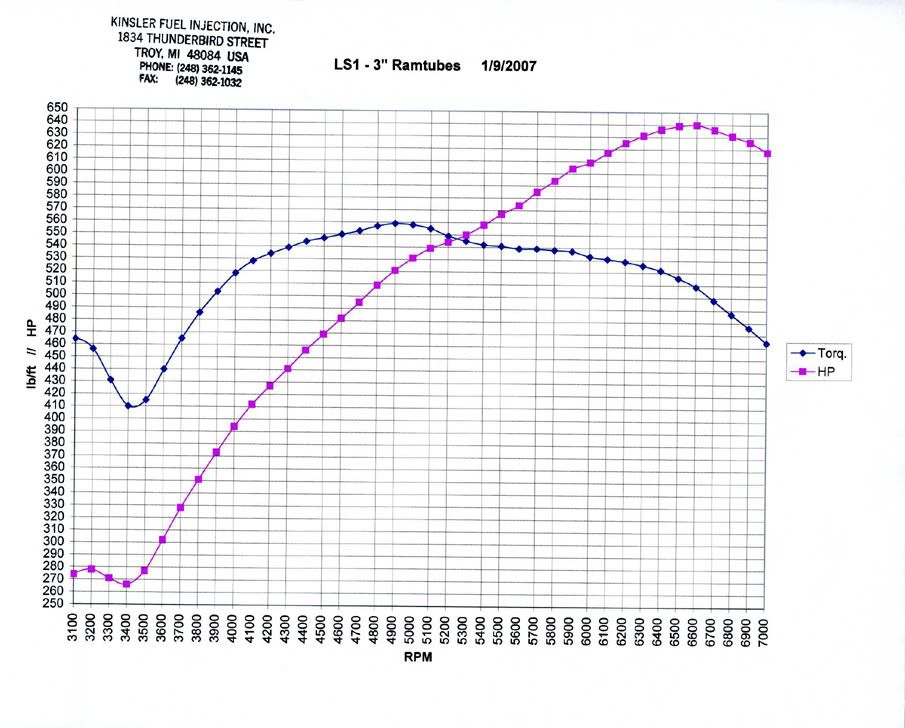
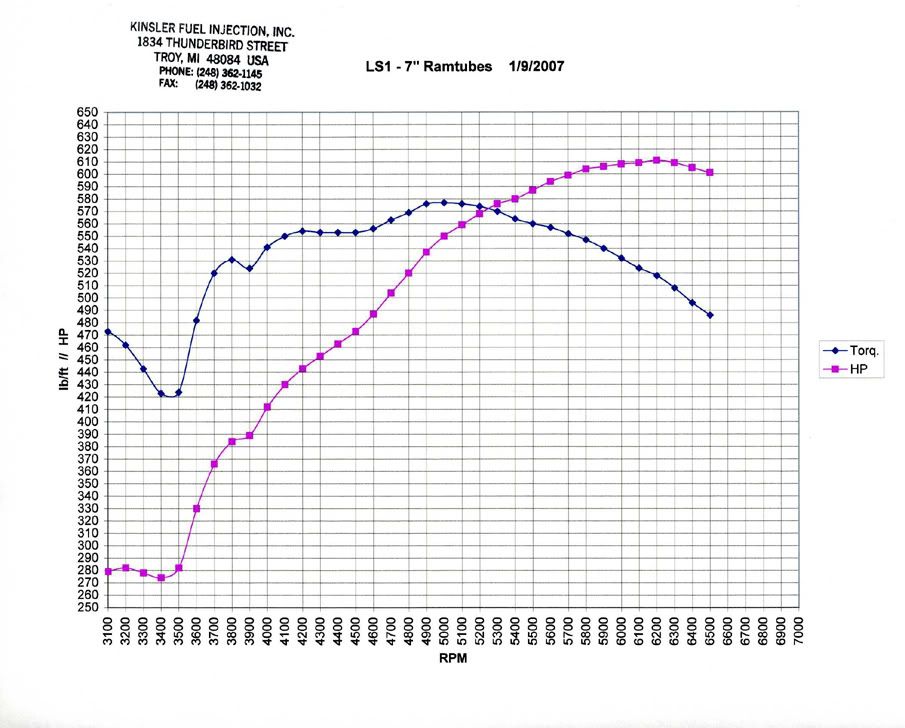
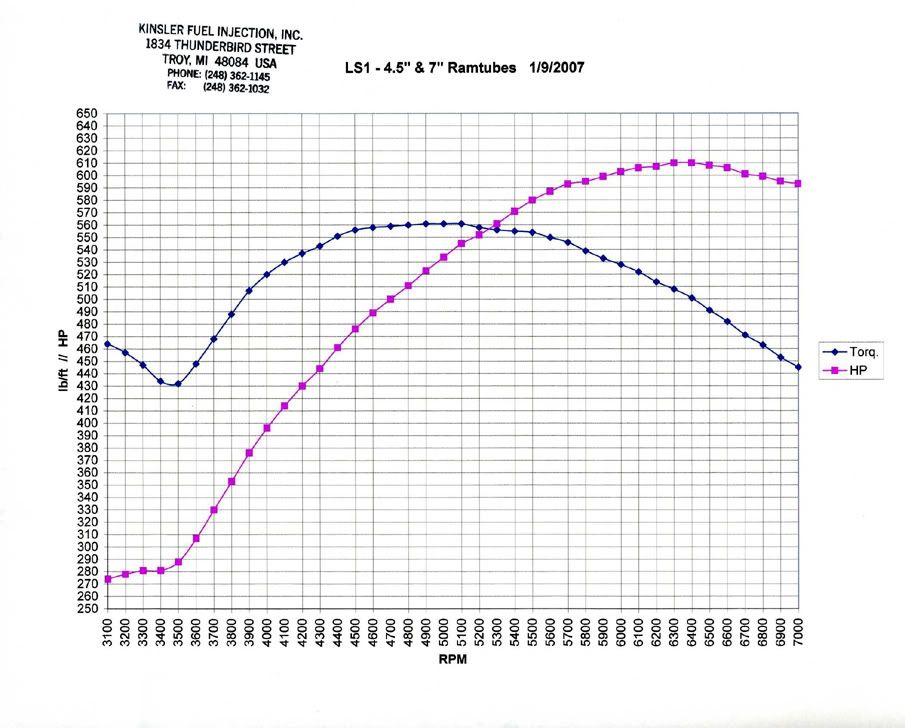
Remember (maybe) what 60's can-am cars looked like? Exposed big block in the back of the car with different length ramtubes staggered front & back.... well they didn't do that because it looked cool, it was so the engines didn't peak at one specific rpm. 50 years ago they learned that if you used two different length intake runners (ramtubes) on a given engine, half the cylinders would peak at one rpm, the other half would peak at another, creating a broad power 'plateau', instead of a single peak.
There is no air box or plenum on this car. Our customer did these tests all on the same day on the same dyno, back to back to back.
short runners:
long runners: (note the difference in HP and TQ from the short runners)
4 long, 4 short runners:
Honda-Tech Member
Joined: May 2008
Posts: 983
Likes: 1
From: San Diego
Re: Intake manifold big bang theory. Gain or lose, you choose.
obviously i did not respond with an answer pertaining to the subject at hand. i was just trying to answer the question why you lose power when you add an IM thats not designed to run with a specific engine/ecu. dont get me wrong i am aware of and agree with everything you stated. but i did not want to get into the dynamics of air flow characteristics (which is what you guys are talking about, sorry). guess i brought a bad case of apples and oranges to the table.
Honda-Tech Member
Joined: May 2008
Posts: 983
Likes: 1
From: San Diego
Re: Intake manifold big bang theory. Gain or lose, you choose.
[QUOTE=N.Balauro;39775711] The ecu will just adjust the fuel to reach the a/f ratio it determines best considering the variables.
thats the problem, the ecu will NOT always adjust the a/f ratio to where you gain from the new addition. lets say if you add ITB's to a stock engine/ecu... you and i both know it would be worse than the parts that the ecu was designed to run with. just an example of what i was trying to point out.
thats the problem, the ecu will NOT always adjust the a/f ratio to where you gain from the new addition. lets say if you add ITB's to a stock engine/ecu... you and i both know it would be worse than the parts that the ecu was designed to run with. just an example of what i was trying to point out.
Last edited by BigBlock22; Aug 29, 2009 at 11:45 AM.
Honda-Tech Member
Joined: Jun 2009
Posts: 62
Likes: 0
From: Spokane, WA
Re: Intake manifold big bang theory. Gain or lose, you choose.
scmil95eg: Wow that is quiet a sexy torque plateau compared to its old line... If you can find Type-R Racing 10 second NA integra's dyno he has like a 3k flat torque window the tuning is rediculous on that car.. We all know when torque is flat hp is linear imagine the numbers at 9k rpm 
Bigblock22: I see understand what you are tryin to say bro, i was just wanting to emphasize the main reason why there is a lose of power. In no way am i trying to say a stock ecu is designed to handle anything but stock applications On the ITB, the reason it runs terribly is because it has no way at all to determine how much air and how well the mixture was for each cylinder... Give a stock ecu the capability to read from 4 different o2 sensors and 4 different maf readings, you could drive that car down the road, unless of course the airflow/fuel demand is outside the stock ecu's oeprating range....
scmil95eg: Indeed it is true, ITB's are used by top race teams! The number one reason they use this type of system is because of the accuracy of the tuning! In a plenum based induction system there is no way for us to regulate how much of the air goes to each cylinder thus generating different power outputs from different cylinders. ITB's alow one to do just that: individually tune the amount of air each cylinder is getting so one could match the output from each cylinder (for durability reasons and also for mechanical efficiency reasons this is ver ydesirable in a race situation). ITB's are the equivalent of individual header pipes.... They have one strict operating range in which they are optimally working, the rest of the range is trash...
PS: I do not claim to be all knowledgeable etc... I am just trying to help out with what limited knowledge i have. I do not profesionally build cars ( not yet atlesast), i am though a mechanical engineering student and i will be doing the FSAE competition next year, check it out if you guys don't know wat it is.. its good **** :p
Bigblock22: I see understand what you are tryin to say bro, i was just wanting to emphasize the main reason why there is a lose of power. In no way am i trying to say a stock ecu is designed to handle anything but stock applications
On the ITB, the reason it runs terribly is because it has no way at all to determine how much air and how well the mixture was for each cylinder... Give a stock ecu the capability to read from 4 different o2 sensors and 4 different maf readings, you could drive that car down the road, unless of course the airflow/fuel demand is outside the stock ecu's oeprating range....scmil95eg: Indeed it is true, ITB's are used by top race teams! The number one reason they use this type of system is because of the accuracy of the tuning! In a plenum based induction system there is no way for us to regulate how much of the air goes to each cylinder thus generating different power outputs from different cylinders. ITB's alow one to do just that: individually tune the amount of air each cylinder is getting so one could match the output from each cylinder (for durability reasons and also for mechanical efficiency reasons this is ver ydesirable in a race situation). ITB's are the equivalent of individual header pipes.... They have one strict operating range in which they are optimally working, the rest of the range is trash...
PS: I do not claim to be all knowledgeable etc... I am just trying to help out with what limited knowledge i have. I do not profesionally build cars ( not yet atlesast
), i am though a mechanical engineering student and i will be doing the FSAE competition next year, check it out if you guys don't know wat it is.. its good **** :p
Honda-Tech Member
Joined: Feb 2006
Posts: 610
Likes: 0
From: miserable mitten
Re: Intake manifold big bang theory. Gain or lose, you choose.
One of our employees was involved with FSAE at LTU.
If your team ever needs something (fuel or induction related), get in touch.
If your team ever needs something (fuel or induction related), get in touch.

Honda-Tech Member
Joined: Feb 2005
Posts: 1,921
Likes: 1
From: netherlands
Re: Intake manifold big bang theory. Gain or lose, you choose.
scmil95eg: Indeed it is true, ITB's are used by top race teams! The number one reason they use this type of system is because of the accuracy of the tuning! In a plenum based induction system there is no way for us to regulate how much of the air goes to each cylinder thus generating different power outputs from different cylinders. ITB's alow one to do just that: individually tune the amount of air each cylinder is getting so one could match the output from each cylinder (for durability reasons and also for mechanical efficiency reasons this is ver ydesirable in a race situation). ITB's are the equivalent of individual header pipes.... They have one strict operating range in which they are optimally working, the rest of the range is trash...
also it's somewhat the other way around, a plenum style mani has a narower power band then a ITB's power band. the strong point of a plenum mani is to tune the pulsing so that it helps in the area you want it to. this is a very small piece of the powerband and thus interesting for dragracing where the entire race it's between 1.5-2 k rpm. in a circuitrace car a wider overall powerband and throttle response is desired thus often the choice for ITB's.
if you desire a broad powerband, throttle response or tunability, itb's are your friend.
if you desire drivability (vague concept) or peak power plenum mani is the way
or combine ITB's and a plenum
some guys in the F1 think it's beneficial
Honda-Tech Member
Joined: Jun 2009
Posts: 62
Likes: 0
From: Spokane, WA
Re: Intake manifold big bang theory. Gain or lose, you choose.
Was about to say the same thing! Also excellent point on throttle response, this is very true and completely slipped my mind. It is true that the boost from a mass spring (plenum) occurs in a narrow window, but because we are dealing with acoustic waves the plenum system is still forgiving in the fact only at certain frequency will you have a negative effect. For the most part when outside of the boosting effect, the plenum behaves moderately well still... hence the application on many stock vehicles.
Regardless, all of this is evidence that we need to decide an application before we start piecing together parts for an engine build.
Regardless, all of this is evidence that we need to decide an application before we start piecing together parts for an engine build.

Thread
Thread Starter
Forum
Replies
Last Post
CRtotheX
Honda CRX / EF Civic (1988 - 1991)
6
Jun 2, 2009 10:28 PM
deerman2701
Honda Civic / Del Sol (1992 - 2000)
4
Apr 30, 2008 04:33 PM
fireant
All Motor / Naturally Aspirated
1
Dec 3, 2007 07:57 AM
