


Tuning...dyno v. street?


Thread Starter
Honda-Tech Member
Joined: Jun 2004
Posts: 2,365
Likes: 0
From: Vancouver, BC, Canada
 Tuning...dyno v. street?
So i have always been somewhat partial to having the car tuned on a dyno, always figured it was more precise. I moved to a new city and am planning on having my car "fine-tuned" just to make sure the climate change is not greatly affecting anything but the local people swear by street-tuning. They say that its more realistic, which kinda makes sense. For those of you who are experienced in the tuning world, how do you feel about these two options? What are the pros and cons?

Honda-Tech Member
Joined: Feb 2007
Posts: 574
Likes: 0
From: Northern Cali, USA
Re: Tuning...dyno v. street? (EJ8 GSR-T)
<TABLE WIDTH="90%" CELLSPACING=0 CELLPADDING=0 ALIGN=CENTER><TR><TD>Quote, originally posted by EJ8 GSR-T »</TD></TR><TR><TD CLASS="quote">So i have always been somewhat partial to having the car tuned on a dyno, always figured it was more precise. I moved to a new city and am planning on having my car "fine-tuned" just to make sure the climate change is not greatly affecting anything but the local people swear by street-tuning. They say that its more realistic, which kinda makes sense. For those of you who are experienced in the tuning world, how do you feel about these two options? What are the pros and cons? </TD></TR></TABLE>
How would you know what makes power/losses power on the street?
I guess alittle of the dyno and a little street tunning would be best haha
but i understand what you mean, it seems more realistic...
How would you know what makes power/losses power on the street?
I guess alittle of the dyno and a little street tunning would be best haha
but i understand what you mean, it seems more realistic...

I would never go back to street tuning anything except for quick monitoring or checking a problem.
For one it just isn't worth it. You drive around with someone you don't know, exceeding the speed limit by a whole lot and just beg to be pulled over.
And most importantly, you can't make any changes on the street and see the imediate impact on the power or tq production of the vehicle.
But for your purpose if you are just getting it checked over, it shouldn't be a big deal.
For one it just isn't worth it. You drive around with someone you don't know, exceeding the speed limit by a whole lot and just beg to be pulled over.
And most importantly, you can't make any changes on the street and see the imediate impact on the power or tq production of the vehicle.
But for your purpose if you are just getting it checked over, it shouldn't be a big deal.

Honda-Tech Member
Joined: May 2005
Posts: 1,068
Likes: 0
From: Washington
IMO, street tuning is moreso for partial throttle tuning. Getting some good gas mileage and getting it running without any hiccups, like stock.
I like to do a few WOT pulls to get it close enough.
I've been on the dyno once and loved it. I'd definitely say dyno over street any day, especially for higher power setups.
In your case tho, I'd have a street tune. For all you know, you might be off ever so slightly that it really doesn't need adjusting.
If anything, pay for the 3 base pulls dyno shops usually do and see where your engine is at vs what it was. Then decide if you need tuning.
I like to do a few WOT pulls to get it close enough.
I've been on the dyno once and loved it. I'd definitely say dyno over street any day, especially for higher power setups.
In your case tho, I'd have a street tune. For all you know, you might be off ever so slightly that it really doesn't need adjusting.
If anything, pay for the 3 base pulls dyno shops usually do and see where your engine is at vs what it was. Then decide if you need tuning.

moderator emeritus
Joined: Oct 2002
Posts: 16,357
Likes: 6
From: Cantonment, FL
Re: (d112crzy)
no matter what anyone says, you cannot simulate street tuning on a dyno IMO. Its just not the same. I like street tuning for getting the engine running perfect for daily driving. It also saves money so you dont have to spend so much money on the dyno. If you have the space and time to street tune while gauging a lot of data (inspecting spark plugs, EGT, Map pressure, and the typical datalogging features) you can get a pretty damn good tune on the engine before going to the dyno whereas street tuning is free but time consuming and dyno tuning is rather expensive.

Joined: Sep 2008
Posts: 33
Likes: 0
From: Calgary, AB, Canada
Re: (98vtec)
Why do you say that? Why can you not simulate street driving?
A proper load type dyno like the Mustang or Dynodynamics WILL hold any and every load the engine would see on the street. You can be as precise as you want. With a Ostrich, you can hit each and every load point and adjust it as the dyno holds you in the cell.
Unless you are talking dynojet or some other crap.
On the street... what are you gonna do?
Yes, I have done it... cruise around in second, then load the car against the brakes and gas to hold a steady state, then adjust the cell... then move to the next one, smoothe the area in between...
Once your base Fuel tables are done cell for cell, you can fine tune accel enrichment...
I can do it in 1/10th the time on the dyno, and get a much better result.
I street tune cars that are fulltime AWD, or 2wd vehicles that cannot be dyno'd.... I dont like doing it, but sometimes there is no choice.
A proper load type dyno like the Mustang or Dynodynamics WILL hold any and every load the engine would see on the street. You can be as precise as you want. With a Ostrich, you can hit each and every load point and adjust it as the dyno holds you in the cell.
Unless you are talking dynojet or some other crap.
On the street... what are you gonna do?
Yes, I have done it... cruise around in second, then load the car against the brakes and gas to hold a steady state, then adjust the cell... then move to the next one, smoothe the area in between...
Once your base Fuel tables are done cell for cell, you can fine tune accel enrichment...
I can do it in 1/10th the time on the dyno, and get a much better result.
I street tune cars that are fulltime AWD, or 2wd vehicles that cannot be dyno'd.... I dont like doing it, but sometimes there is no choice.
Trending Topics
Joined: Sep 2008
Posts: 33
Likes: 0
From: Calgary, AB, Canada
Re: (98vtec)
That's not what oyu said...
you said
<TABLE WIDTH="90%" CELLSPACING=0 CELLPADDING=0 ALIGN=CENTER><TR><TD>Quote »</TD></TR><TR><TD CLASS="quote">
no matter what anyone says, you cannot simulate street tuning on a dyno IMO. Its just not the same. </TD></TR></TABLE>
you said
<TABLE WIDTH="90%" CELLSPACING=0 CELLPADDING=0 ALIGN=CENTER><TR><TD>Quote »</TD></TR><TR><TD CLASS="quote">
no matter what anyone says, you cannot simulate street tuning on a dyno IMO. Its just not the same. </TD></TR></TABLE>
Joined: Sep 2008
Posts: 33
Likes: 0
From: Calgary, AB, Canada
Re: (98vtec)
I was digging for your reasons for your opinion.
When I express an opinion, its based on my experience and knowledge. What is your based on? Did you fail at dyno tuning a car once, and then someone sorted it out on the street? Or Vice Versa?
Curious.
When I express an opinion, its based on my experience and knowledge. What is your based on? Did you fail at dyno tuning a car once, and then someone sorted it out on the street? Or Vice Versa?
Curious.

Honda-Tech Member
Joined: May 2001
Posts: 3,348
Likes: 0
From: Chicago, IL, USA
Re: (Toma)
When i tune on my Dyno Dynamics i do partial throttle as a part of the tune. It usually translates pretty well when the car is on the road. Plus i cant even count how many cars have come in for dyno tunes after having a "street" tune and how off everything is set. One thing i notice locally is when some "street tuned" cars come in are...
*timing is rarely sycned
*timing is never touched
*a/f vs. boost transition from vacuum is usually rough
*vtec crossover is wacky
*On kpro- vtc maps are never touched, maps always look funky
*Plugs are never gapped right
-And these people are actually paying someone to do this. Some things you just need to do on a dyno.
Modified by MikeySpec at 2:33 PM 10/2/2008
*timing is rarely sycned
*timing is never touched
*a/f vs. boost transition from vacuum is usually rough
*vtec crossover is wacky
*On kpro- vtc maps are never touched, maps always look funky
*Plugs are never gapped right
-And these people are actually paying someone to do this. Some things you just need to do on a dyno.
Modified by MikeySpec at 2:33 PM 10/2/2008

Honda-Tech Member
Joined: Aug 2002
Posts: 11,001
Likes: 2
From: Boca Raton, FL
Re: (98vtec)
<TABLE WIDTH="90%" CELLSPACING=0 CELLPADDING=0 ALIGN=CENTER><TR><TD>Quote, originally posted by 98vtec »</TD></TR><TR><TD CLASS="quote">no matter what anyone says, you cannot simulate street tuning on a dyno IMO. Its just not the same. I like street tuning for getting the engine running perfect for daily driving. It also saves money so you dont have to spend so much money on the dyno. If you have the space and time to street tune while gauging a lot of data (inspecting spark plugs, EGT, Map pressure, and the typical datalogging features) you can get a pretty damn good tune on the engine before going to the dyno whereas street tuning is free but time consuming and dyno tuning is rather expensive.
</TD></TR></TABLE>
I agree
<TABLE WIDTH="90%" CELLSPACING=0 CELLPADDING=0 ALIGN=CENTER><TR><TD>Quote, originally posted by Toma »</TD></TR><TR><TD CLASS="quote">Why do you say that? Why can you not simulate street driving?
A proper load type dyno like the Mustang or Dynodynamics WILL hold any and every load the engine would see on the street. You can be as precise as you want. With a Ostrich, you can hit each and every load point and adjust it as the dyno holds you in the cell.
Unless you are talking dynojet or some other crap.
On the street... what are you gonna do?
Yes, I have done it... cruise around in second, then load the car against the brakes and gas to hold a steady state, then adjust the cell... then move to the next one, smoothe the area in between...
Once your base Fuel tables are done cell for cell, you can fine tune accel enrichment...
I can do it in 1/10th the time on the dyno, and get a much better result.
I street tune cars that are fulltime AWD, or 2wd vehicles that cannot be dyno'd.... I dont like doing it, but sometimes there is no choice.</TD></TR></TABLE>
I do all my tuning on a DD or mustang. You can get it close, BUT nothing is the same as street driving. I think cars should be tuned as good WOT as partial. It completes the car.
</TD></TR></TABLE>
I agree
<TABLE WIDTH="90%" CELLSPACING=0 CELLPADDING=0 ALIGN=CENTER><TR><TD>Quote, originally posted by Toma »</TD></TR><TR><TD CLASS="quote">Why do you say that? Why can you not simulate street driving?
A proper load type dyno like the Mustang or Dynodynamics WILL hold any and every load the engine would see on the street. You can be as precise as you want. With a Ostrich, you can hit each and every load point and adjust it as the dyno holds you in the cell.
Unless you are talking dynojet or some other crap.
On the street... what are you gonna do?
Yes, I have done it... cruise around in second, then load the car against the brakes and gas to hold a steady state, then adjust the cell... then move to the next one, smoothe the area in between...
Once your base Fuel tables are done cell for cell, you can fine tune accel enrichment...
I can do it in 1/10th the time on the dyno, and get a much better result.
I street tune cars that are fulltime AWD, or 2wd vehicles that cannot be dyno'd.... I dont like doing it, but sometimes there is no choice.</TD></TR></TABLE>
I do all my tuning on a DD or mustang. You can get it close, BUT nothing is the same as street driving. I think cars should be tuned as good WOT as partial. It completes the car.
Joined: Sep 2008
Posts: 33
Likes: 0
From: Calgary, AB, Canada
Re: (Turbogixxer)
<TABLE WIDTH="90%" CELLSPACING=0 CELLPADDING=0 ALIGN=CENTER><TR><TD>Quote »</TD></TR><TR><TD CLASS="quote">I do all my tuning on a DD or mustang. You can get it close, BUT nothing is the same as street driving. I think cars should be tuned as good WOT as partial. It completes the car.
</TD></TR></TABLE>
I am missing something then.... WHAT can you tune on the street that you cannot tune on the dyno?
Tell me what aspects you guys are having trouble with tuning on the dyno, I can help you use it better as a tuning tool to perfect your tune.
Did you know that Chevy, Ford, Dodge, Toyota etc do all their ENGINE tuning work in their dyno cells? They don't street tune.
</TD></TR></TABLE>
I am missing something then.... WHAT can you tune on the street that you cannot tune on the dyno?
Tell me what aspects you guys are having trouble with tuning on the dyno, I can help you use it better as a tuning tool to perfect your tune.
Did you know that Chevy, Ford, Dodge, Toyota etc do all their ENGINE tuning work in their dyno cells? They don't street tune.
moderator emeritus
Joined: Oct 2002
Posts: 16,357
Likes: 6
From: Cantonment, FL
Re: (Toma)
they also use O2 sensors for corrections in their mistakes. I, however, do not.
beyond that, find me a stock engine that CANNOT benefit from street tuning with a good engine management and i'll take your noob avatar away.
beyond that, find me a stock engine that CANNOT benefit from street tuning with a good engine management and i'll take your noob avatar away.
Honda-Tech Member
Joined: Aug 2002
Posts: 11,001
Likes: 2
From: Boca Raton, FL
Re: (Toma)
<TABLE WIDTH="90%" CELLSPACING=0 CELLPADDING=0 ALIGN=CENTER><TR><TD>Quote, originally posted by Toma »</TD></TR><TR><TD CLASS="quote">
I am missing something then.... WHAT can you tune on the street that you cannot tune on the dyno?
Tell me what aspects you guys are having trouble with tuning on the dyno, I can help you use it better as a tuning tool to perfect your tune.
Did you know that Chevy, Ford, Dodge, Toyota etc do all their ENGINE tuning work in their dyno cells? They don't street tune.</TD></TR></TABLE>
You are in a controlled environment. You are missing it, Straight dyno tune the car then drive it around and see the difference in it. It maybe OK for you, but not ok for everyone.
BTW, My friend is a ME for Honda for engines. They do a lot of engine tuning on the dyno BUT they also drive the car on the street in different conditions too. I can not speak for other car makers though.
<TABLE WIDTH="90%" CELLSPACING=0 CELLPADDING=0 ALIGN=CENTER><TR><TD>Quote, originally posted by 98vtec »</TD></TR><TR><TD CLASS="quote">they also use O2 sensors for corrections in their mistakes. I, however, do not.
beyond that, find me a stock engine that CANNOT benefit from street tuning with a good engine management and i'll take your noob avatar away.</TD></TR></TABLE>
Yeah, they just dyno tune it and make up the correction factors. They most know more about dynos than us
I am missing something then.... WHAT can you tune on the street that you cannot tune on the dyno?
Tell me what aspects you guys are having trouble with tuning on the dyno, I can help you use it better as a tuning tool to perfect your tune.
Did you know that Chevy, Ford, Dodge, Toyota etc do all their ENGINE tuning work in their dyno cells? They don't street tune.</TD></TR></TABLE>
You are in a controlled environment. You are missing it, Straight dyno tune the car then drive it around and see the difference in it. It maybe OK for you, but not ok for everyone.
BTW, My friend is a ME for Honda for engines. They do a lot of engine tuning on the dyno BUT they also drive the car on the street in different conditions too. I can not speak for other car makers though.
<TABLE WIDTH="90%" CELLSPACING=0 CELLPADDING=0 ALIGN=CENTER><TR><TD>Quote, originally posted by 98vtec »</TD></TR><TR><TD CLASS="quote">they also use O2 sensors for corrections in their mistakes. I, however, do not.
beyond that, find me a stock engine that CANNOT benefit from street tuning with a good engine management and i'll take your noob avatar away.</TD></TR></TABLE>
Yeah, they just dyno tune it and make up the correction factors. They most know more about dynos than us
Joined: Sep 2008
Posts: 33
Likes: 0
From: Calgary, AB, Canada
Re: (Turbogixxer)
Car manufacturers goal, and OUR goal is different. They need to meet mileage and emissions standards, reliability, and "idiot proofing".
As performance enthusiasts, I am free to lean it out to improve mileage, but the NOX would be unacceptable for the EPA.
Then, as a OEM, you can't tune for max power, because of variability in fuel composition, distillation curves, and octane.
So before I can answer your question, you will have to be more specific. When you say "improve a stock tune on a stock vehicle", you will have to be more specific as to improve in which way?
General Drivability?
Cold start/Warm up?
Transitions?
WOT power?
Mileage?
Emissions?
And then, you will have to show how this improvement can be better accomplished with a street tune versus time on a Dyno.
As performance enthusiasts, I am free to lean it out to improve mileage, but the NOX would be unacceptable for the EPA.
Then, as a OEM, you can't tune for max power, because of variability in fuel composition, distillation curves, and octane.
So before I can answer your question, you will have to be more specific. When you say "improve a stock tune on a stock vehicle", you will have to be more specific as to improve in which way?
General Drivability?
Cold start/Warm up?
Transitions?
WOT power?
Mileage?
Emissions?
And then, you will have to show how this improvement can be better accomplished with a street tune versus time on a Dyno.
Joined: Sep 2008
Posts: 33
Likes: 0
From: Calgary, AB, Canada
Re: (Toma)
You guys are STILL gonna have to tell me what aspect of a good dyno tune you think you can improve upon on the street....
"Part Throttle" is not an answer. If you can physically hit a laod point on a dyno, there is no possible way that that load point is somehow different on the street.
12" vacuum and 1600 rpm to an engine and its computer is the same whether on the street, load holding on an engine dyno, chassis dyno etc...
"Part Throttle" is not an answer. If you can physically hit a laod point on a dyno, there is no possible way that that load point is somehow different on the street.
12" vacuum and 1600 rpm to an engine and its computer is the same whether on the street, load holding on an engine dyno, chassis dyno etc...
moderator emeritus
Joined: Oct 2002
Posts: 16,357
Likes: 6
From: Cantonment, FL
Re: (Toma)
im just gonna go ahead and let you know that you can't possibly convince me that dyno tuning can do everything to the degree that dyno ADDED with street can do.
Lab Experiments (dyno) and Field experiments (street) are not the same.
One is a controlled environment, one is not therefore you cannot tune an uncontrolled environment for a controlled environment. You arent going to be able to convince me that my opinion doesnt hold water because that is not my beliefs. I have my beliefs, others have theirs....thats cool.
One point of a debate is to be able to see both sides of the spectrum. I understand what you can do on a load dyno and that you can hit each cel, but that does not represent real life acceleration. I also understand that you can get it pretty damn close on the dyno. But you cannot get it to the T without driving in real world situations.
FACT:
DIY street tuning is free
dyno time is expensive
street tuning saves money
street tuning corrects imperfections before and after the dyno
street tuning saves time on the dyno which saves money
You dont drive everyday on a dyno. You drive everyday on the street or on the drag strip, therefore changes will likely need to be changed in order to adjust for things outside the control of lab experiments.

Lab Experiments (dyno) and Field experiments (street) are not the same.
One is a controlled environment, one is not therefore you cannot tune an uncontrolled environment for a controlled environment. You arent going to be able to convince me that my opinion doesnt hold water because that is not my beliefs. I have my beliefs, others have theirs....thats cool.
One point of a debate is to be able to see both sides of the spectrum. I understand what you can do on a load dyno and that you can hit each cel, but that does not represent real life acceleration. I also understand that you can get it pretty damn close on the dyno. But you cannot get it to the T without driving in real world situations.
FACT:
DIY street tuning is free
dyno time is expensive
street tuning saves money
street tuning corrects imperfections before and after the dyno
street tuning saves time on the dyno which saves money
You dont drive everyday on a dyno. You drive everyday on the street or on the drag strip, therefore changes will likely need to be changed in order to adjust for things outside the control of lab experiments.
Honda-Tech Member
Joined: Aug 2002
Posts: 11,001
Likes: 2
From: Boca Raton, FL
Re: (Toma)
<TABLE WIDTH="90%" CELLSPACING=0 CELLPADDING=0 ALIGN=CENTER><TR><TD>Quote, originally posted by Toma »</TD></TR><TR><TD CLASS="quote">Car manufacturers goal, and OUR goal is different. They need to meet mileage and emissions standards, reliability, and "idiot proofing".
As performance enthusiasts, I am free to lean it out to improve mileage, but the NOX would be unacceptable for the EPA.
Then, as a OEM, you can't tune for max power, because of variability in fuel composition, distillation curves, and octane.
So before I can answer your question, you will have to be more specific. When you say "improve a stock tune on a stock vehicle", you will have to be more specific as to improve in which way?
General Drivability?
Cold start/Warm up?
Transitions?
WOT power?
Mileage?
Emissions?
And then, you will have to show how this improvement can be better accomplished with a street tune versus time on a Dyno.</TD></TR></TABLE>
You said OEM, not me. I just corrected you.
Just because it makes the best power at that point, does not make it smooth or best.
You are take our words the wrong way. And:
<TABLE WIDTH="90%" CELLSPACING=0 CELLPADDING=0 ALIGN=CENTER><TR><TD>Quote, originally posted by 98vtec »</TD></TR><TR><TD CLASS="quote">Lab Experiments (dyno) and Field experiments (street) are not the same.
One is a controlled environment, one is not therefore you cannot tune an uncontrolled environment for a controlled environment. You arent going to be able to convince me that my opinion doesnt hold water because that is not my beliefs. I have my beliefs, others have theirs....thats cool.
One point of a debate is to be able to see both sides of the spectrum. I understand what you can do on a load dyno and that you can hit each cel, but that does not represent real life acceleration. I also understand that you can get it pretty damn close on the dyno. But you cannot get it to the T without driving in real world situations. </TD></TR></TABLE>
This.
Most dyno only tuned cars I have seen have SHITTY partial throttle because tuners are too lazy to tune it. I have a pic of it too
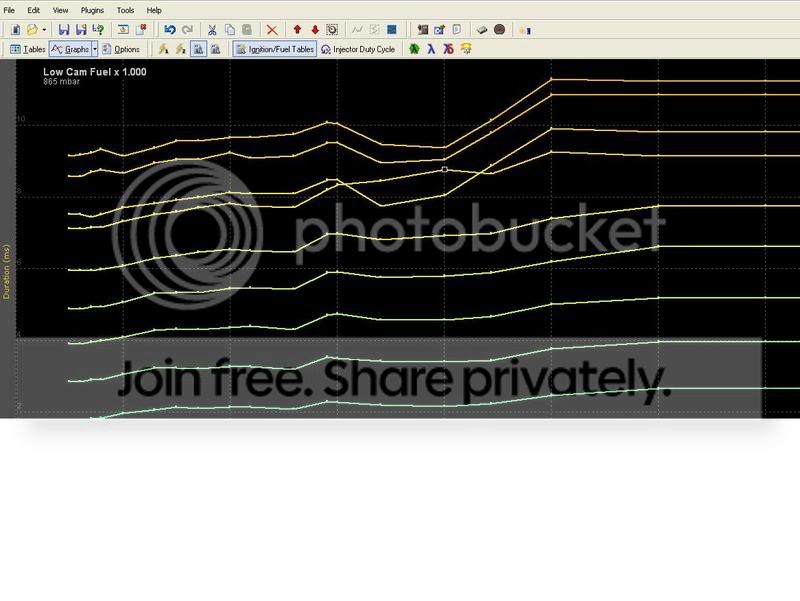
Just throwing that out there.
As performance enthusiasts, I am free to lean it out to improve mileage, but the NOX would be unacceptable for the EPA.
Then, as a OEM, you can't tune for max power, because of variability in fuel composition, distillation curves, and octane.
So before I can answer your question, you will have to be more specific. When you say "improve a stock tune on a stock vehicle", you will have to be more specific as to improve in which way?
General Drivability?
Cold start/Warm up?
Transitions?
WOT power?
Mileage?
Emissions?
And then, you will have to show how this improvement can be better accomplished with a street tune versus time on a Dyno.</TD></TR></TABLE>
You said OEM, not me. I just corrected you.
Just because it makes the best power at that point, does not make it smooth or best.
You are take our words the wrong way. And:
<TABLE WIDTH="90%" CELLSPACING=0 CELLPADDING=0 ALIGN=CENTER><TR><TD>Quote, originally posted by 98vtec »</TD></TR><TR><TD CLASS="quote">Lab Experiments (dyno) and Field experiments (street) are not the same.
One is a controlled environment, one is not therefore you cannot tune an uncontrolled environment for a controlled environment. You arent going to be able to convince me that my opinion doesnt hold water because that is not my beliefs. I have my beliefs, others have theirs....thats cool.
One point of a debate is to be able to see both sides of the spectrum. I understand what you can do on a load dyno and that you can hit each cel, but that does not represent real life acceleration. I also understand that you can get it pretty damn close on the dyno. But you cannot get it to the T without driving in real world situations. </TD></TR></TABLE>
This.
Most dyno only tuned cars I have seen have SHITTY partial throttle because tuners are too lazy to tune it. I have a pic of it too
Just throwing that out there.
Joined: Sep 2008
Posts: 33
Likes: 0
From: Calgary, AB, Canada
Re: (Turbogixxer)
So you show me a bad map and it supposed to mean something? Maybe he would be In the hi cam fuel map at that point? Who knows... perhaps it is a bad tune.... but it is not relevant.... you can have an idiot dyno tuning just like you can have an idiot street tuning....
I agree that there are some things it is not practical to haul off to the dyno for every time. The best and most obvious example is is cold start and warm up You can realistically only cool your engine right down once or twice a day.... There is one other very subtle thing I am aware of, but I suspect you guys dont know it , so now I wont tell you
As for tuning actual load points, you cannot improve upon a GOOD dyno tune....which is more the impression of intent I got as per the original posters question....
I agree that there are some things it is not practical to haul off to the dyno for every time. The best and most obvious example is is cold start and warm up You can realistically only cool your engine right down once or twice a day.... There is one other very subtle thing I am aware of, but I suspect you guys dont know it , so now I wont tell you
As for tuning actual load points, you cannot improve upon a GOOD dyno tune....which is more the impression of intent I got as per the original posters question....
Honda-Tech Member
Joined: Aug 2002
Posts: 11,001
Likes: 2
From: Boca Raton, FL
Re: (Toma)
<TABLE WIDTH="90%" CELLSPACING=0 CELLPADDING=0 ALIGN=CENTER><TR><TD>Quote, originally posted by Toma »</TD></TR><TR><TD CLASS="quote">As for tuning actual load points, you cannot improve upon a GOOD dyno tune....which is more the impression of intent I got as per the original posters question....
</TD></TR></TABLE>
Even with me tuning it, it will be different. I do not know about you, but with my personal car. I am SUPER ****. So I know what the difference in tuning in a dyno room and the street. Would it be ok if I left it alone? Sure, but it would not be RIGHT. I have never had a car that was the same on the dyno as off.
If you do not believe me or Blake, do research yourself.
</TD></TR></TABLE>
Even with me tuning it, it will be different. I do not know about you, but with my personal car. I am SUPER ****. So I know what the difference in tuning in a dyno room and the street. Would it be ok if I left it alone? Sure, but it would not be RIGHT. I have never had a car that was the same on the dyno as off.
If you do not believe me or Blake, do research yourself.
Honda-Tech Member
Joined: Aug 2002
Posts: 11,001
Likes: 2
From: Boca Raton, FL
Re: (98vtec)
<TABLE WIDTH="90%" CELLSPACING=0 CELLPADDING=0 ALIGN=CENTER><TR><TD>Quote, originally posted by 98vtec »</TD></TR><TR><TD CLASS="quote">if you can't tell us then why should i listen to you?</TD></TR></TABLE>
I think mary poppins knows too. I will hit her up next time I see her.
I just think he is taking what we say wrong.
I think mary poppins knows too. I will hit her up next time I see her.
I just think he is taking what we say wrong.
Street tuning is perfectly fine to dial in part throttle and I agree with you guys that no tune is complete without it.
But there is a limit to where I feel safe tuning a car WOT on the street. There is a little too much going on for cars making more than 300 whp to do any messing around on the street.
That doesn't mean that I never take them out to monitor what they do on the street and make any necessary changes, but I won't tune a car from scratch when I have a perfectly good dyno to do such things on at the shop.
But there is a limit to where I feel safe tuning a car WOT on the street. There is a little too much going on for cars making more than 300 whp to do any messing around on the street.
That doesn't mean that I never take them out to monitor what they do on the street and make any necessary changes, but I won't tune a car from scratch when I have a perfectly good dyno to do such things on at the shop.
Joined: Sep 2008
Posts: 33
Likes: 0
From: Calgary, AB, Canada
Re: (98vtec)
<TABLE WIDTH="90%" CELLSPACING=0 CELLPADDING=0 ALIGN=CENTER><TR><TD>Quote »</TD></TR><TR><TD CLASS="quote">Even with me tuning it, it will be different. I do not know about you, but with my personal car. I am SUPER ****. So I know what the difference in tuning in a dyno room and the street. Would it be ok if I left it alone? Sure, but it would not be RIGHT. I have never had a car that was the same on the dyno as off. </TD></TR></TABLE>
Is there a right way to take this? Dude, you are wrong, and most likely, you don't know what you are doing..... or you don't own a real dyno, so you tell yourself this stuff so your customers will still come to you.....
Marry Poppins may or may not let you in on more of what you don't know.... I hope she does.
I do agree that fine tuning on the street or your driveway will save huge money, but IT IS IN NO WAY BETTER then PROPER dyno tuning. The OEM's spend thousands of hours,millions of dollars, and enslave a hundred or more calibration engineers perfecting a tune.... so, yeah... 2-3 hours dyno time is not "perfect", but it will replace 20 hours of street tuning, and WILL be more accurate for setting up a VE table, a MAF transfer curve, transient fueling etc.
Is there a right way to take this? Dude, you are wrong, and most likely, you don't know what you are doing..... or you don't own a real dyno, so you tell yourself this stuff so your customers will still come to you.....
Marry Poppins may or may not let you in on more of what you don't know.... I hope she does.
I do agree that fine tuning on the street or your driveway will save huge money, but IT IS IN NO WAY BETTER then PROPER dyno tuning. The OEM's spend thousands of hours,millions of dollars, and enslave a hundred or more calibration engineers perfecting a tune.... so, yeah... 2-3 hours dyno time is not "perfect", but it will replace 20 hours of street tuning, and WILL be more accurate for setting up a VE table, a MAF transfer curve, transient fueling etc.