


Crique my TIG welds


Thread Starter
Honda-Tech Member
Joined: Dec 2003
Posts: 163
Likes: 0
From: Peabody, MA, USA
 Crique my TIG welds
I bought a Syncrowave SD 180 a few months ago and just got the wiring all taken care of. I have a Lincoln 110v MIG, so I understand some puddle control but man is TIG different.
The order of weld joints that I'm working on is lap joints, then T joints (90*), and then butt weld. I think I have to lap joints down pretty well. The T joints are killing me, so please give me some input on good techique or a different order to learn different joints.
When I've been welding I leave the machine on full power (180A) and just work the pedal to control the heat. All samples are mild steel with the mill finish flap disk'd off. Tungsten is 2% thoriated, 1/32" diameter. The filler is 1/16"ER70S2 with pure argon gas. I'm still using the torch that came with the machine, air cooled with a #7 cup.
This is my third sample piece of lap joints. Let me know what you think.
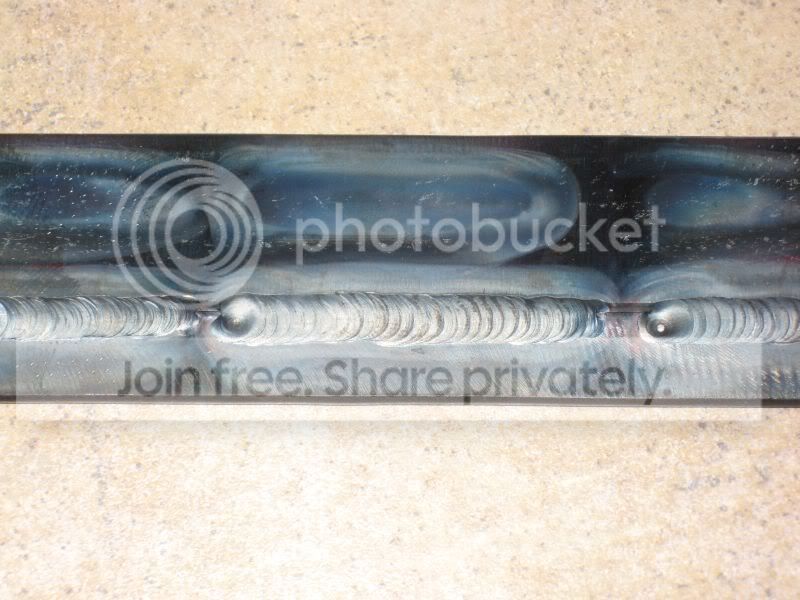
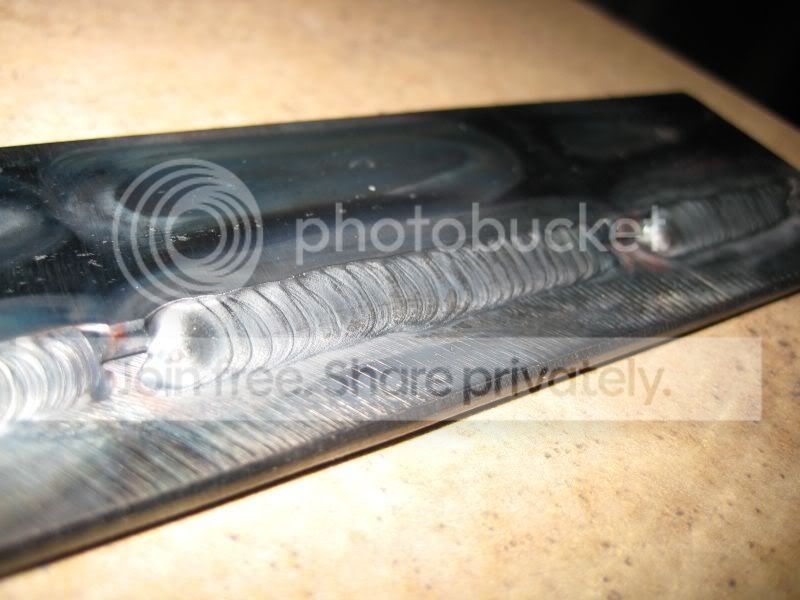
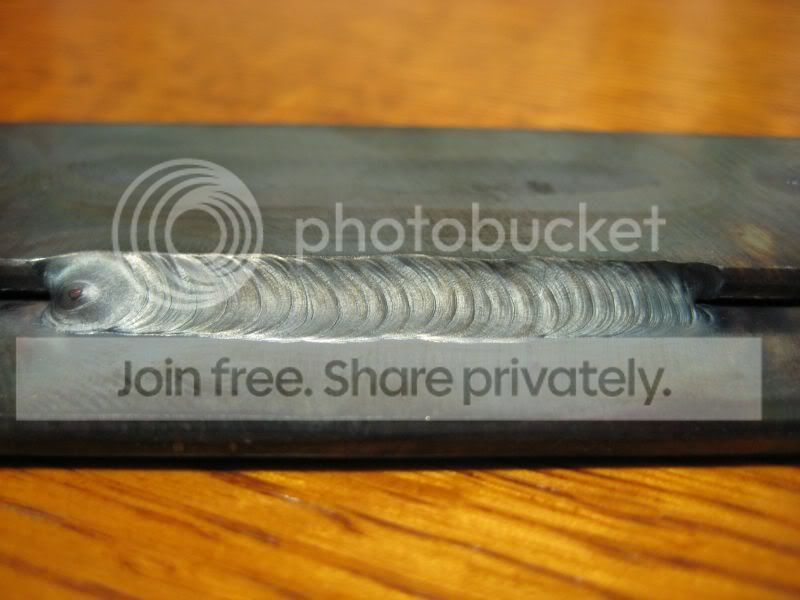
Thanks.
The order of weld joints that I'm working on is lap joints, then T joints (90*), and then butt weld. I think I have to lap joints down pretty well. The T joints are killing me, so please give me some input on good techique or a different order to learn different joints.
When I've been welding I leave the machine on full power (180A) and just work the pedal to control the heat. All samples are mild steel with the mill finish flap disk'd off. Tungsten is 2% thoriated, 1/32" diameter. The filler is 1/16"ER70S2 with pure argon gas. I'm still using the torch that came with the machine, air cooled with a #7 cup.
This is my third sample piece of lap joints. Let me know what you think.
Thanks.


Honda-Tech Member
Joined: Jul 2004
Posts: 5,463
Likes: 2
From: I'm everywhere Focker
Re: (DESTROYER)
yeah, in all honesty this is probably one of easiest types of joints to TIG. The metal basically falls from the higher piece and lays down an easy bead. It's good for a start...like others said add more filler.
Thread Starter
Honda-Tech Member
Joined: Dec 2003
Posts: 163
Likes: 0
From: Peabody, MA, USA
Re: (RC000E)
<TABLE WIDTH="90%" CELLSPACING=0 CELLPADDING=0 ALIGN=CENTER><TR><TD>Quote, originally posted by RC000E »</TD></TR><TR><TD CLASS="quote">...like others said add more filler. </TD></TR></TABLE>
Do you mean add filler more frequently or push more into the puddle?
Do you mean add filler more frequently or push more into the puddle?

Honda-Tech Member
Joined: Feb 2004
Posts: 438
Likes: 0
From: Tampa, FL
Re: (skyman88)
get some stainless pipes and butt weld them.
much harder and will be easyer to tell what your doing wrong.
get somthing a little thicker at firts though. somthing like a .120 wall thickness (304 sch 10, sch 40 pipe is a good thing to start with).
i've seen great welders make .065 look like crap. its a little too hard to make look perfrect if your a beginer.
looks good for mild though. maybe a touch too hot, but thats going to be pretty strong.
much harder and will be easyer to tell what your doing wrong.
get somthing a little thicker at firts though. somthing like a .120 wall thickness (304 sch 10, sch 40 pipe is a good thing to start with).
i've seen great welders make .065 look like crap. its a little too hard to make look perfrect if your a beginer.
looks good for mild though. maybe a touch too hot, but thats going to be pretty strong.
Trending Topics

Honda-Tech Member
Joined: Apr 2005
Posts: 1,895
Likes: 0
From: Lincoln, Ne, USA
Re: (manifoldmiketyson)
<TABLE WIDTH="90%" CELLSPACING=0 CELLPADDING=0 ALIGN=CENTER><TR><TD>Quote, originally posted by manifoldmiketyson »</TD></TR><TR><TD CLASS="quote">get some stainless pipes and butt weld them.
</TD></TR></TABLE>
WRONG ANSWER
There is a reason you don't start on PIPE welding when you start welding school.
</TD></TR></TABLE>
WRONG ANSWER
There is a reason you don't start on PIPE welding when you start welding school.


Honda-Tech Member
Joined: Aug 2005
Posts: 969
Likes: 0
From: abbotsford, bc, canada
Re: (manifoldmiketyson)
<TABLE WIDTH="90%" CELLSPACING=0 CELLPADDING=0 ALIGN=CENTER><TR><TD>Quote, originally posted by manifoldmiketyson »</TD></TR><TR><TD CLASS="quote">get some stainless pipes and butt weld them.
much harder and will be easyer to tell what your doing wrong.
get somthing a little thicker at firts though. somthing like a .120 wall thickness (304 sch 10, sch 40 pipe is a good thing to start with).
i've seen great welders make .065 look like crap. its a little too hard to make look perfrect if your a beginer.
looks good for mild though. maybe a touch too hot, but thats going to be pretty strong.</TD></TR></TABLE>

also dont work your pedal, set your amperage and put your foot down. pumpin the pedal or whatever its called isnt right.
much harder and will be easyer to tell what your doing wrong.
get somthing a little thicker at firts though. somthing like a .120 wall thickness (304 sch 10, sch 40 pipe is a good thing to start with).
i've seen great welders make .065 look like crap. its a little too hard to make look perfrect if your a beginer.
looks good for mild though. maybe a touch too hot, but thats going to be pretty strong.</TD></TR></TABLE>
also dont work your pedal, set your amperage and put your foot down. pumpin the pedal or whatever its called isnt right.
Honda-Tech Member
Joined: Apr 2005
Posts: 1,895
Likes: 0
From: Lincoln, Ne, USA
Re: (shortyz21)
<TABLE WIDTH="90%" CELLSPACING=0 CELLPADDING=0 ALIGN=CENTER><TR><TD>Quote, originally posted by shortyz21 »</TD></TR><TR><TD CLASS="quote">
also dont work your pedal, set your amperage and put your foot down. pumpin the pedal or whatever its called isnt right. </TD></TR></TABLE>
You clearly have no idea why a pedal is used with GTAW.
also dont work your pedal, set your amperage and put your foot down. pumpin the pedal or whatever its called isnt right.
</TD></TR></TABLE>You clearly have no idea why a pedal is used with GTAW.
Honda-Tech Member
Joined: Apr 2005
Posts: 1,895
Likes: 0
From: Lincoln, Ne, USA
Re: (91jdmhatchback)
<TABLE WIDTH="90%" CELLSPACING=0 CELLPADDING=0 ALIGN=CENTER><TR><TD>Quote, originally posted by 91jdmhatchback »</TD></TR><TR><TD CLASS="quote">i started tig welding pipes, it is harder then plate welds but if you have any sort of machanical ability you can figure out how to do it...</TD></TR></TABLE>
Agreed, but if you have little to no welding experience welding on a flat plate is far easier to learn on.
Agreed, but if you have little to no welding experience welding on a flat plate is far easier to learn on.
Honda-Tech Member
Joined: Aug 2005
Posts: 969
Likes: 0
From: abbotsford, bc, canada
Re: (k24em2)
<TABLE WIDTH="90%" CELLSPACING=0 CELLPADDING=0 ALIGN=CENTER><TR><TD>Quote, originally posted by k24em2 »</TD></TR><TR><TD CLASS="quote">
You clearly have no idea why a pedal is used with GTAW.</TD></TR></TABLE>
pedal is only useful for alum.
why would u pump the pedal on any other material? explain, becuase ive been told "pumping the pedal" is wrong and a newb thing to do.
You clearly have no idea why a pedal is used with GTAW.</TD></TR></TABLE>
pedal is only useful for alum.
why would u pump the pedal on any other material? explain, becuase ive been told "pumping the pedal" is wrong and a newb thing to do.

Honda-Tech Member
Joined: May 2003
Posts: 1,188
Likes: 0
Pumping or giving movment to the pedal allows for more control... regardless of metal.... the more you know how to read what a puddle is doing/changing during the weld the more you will find you use it. Pumping is not a bad thing, there still is a method for it and a place for it. More often used in higher end motorsport, where you are working with exotic thin gauge metals.
Honda-Tech Member
Joined: Feb 2004
Posts: 438
Likes: 0
From: Tampa, FL
Re: (k24em2)
<TABLE WIDTH="90%" CELLSPACING=0 CELLPADDING=0 ALIGN=CENTER><TR><TD>Quote, originally posted by k24em2 »</TD></TR><TR><TD CLASS="quote">
WRONG ANSWER
There is a reason you don't start on PIPE welding when you start welding school.</TD></TR></TABLE>
well, he should start with stick, mig, oxyacetylene and then tig if you want to be correct. the question here was to get critique on welding. if you can't see coloring, puddle, bead height and heat affected zones, its harder to critique. its harder to see whats going on when you using mild. its also really easy to weld on a flat piece of metal. welding stainless pipe helps with gas coverage, torch angle and seeing your heat soak. he is obviously not a beginer, so i wouldn't treat him like one.
if you start with the hard welding, the easy stuff is pretty much covered. if i had to teach my guys at work on a school curriculum, i wouldn't have a job.
as far as pulsing goes, i would leave it alone until you can weld a nice bead the old fashioned way.
WRONG ANSWER
There is a reason you don't start on PIPE welding when you start welding school.</TD></TR></TABLE>
well, he should start with stick, mig, oxyacetylene and then tig if you want to be correct. the question here was to get critique on welding. if you can't see coloring, puddle, bead height and heat affected zones, its harder to critique. its harder to see whats going on when you using mild. its also really easy to weld on a flat piece of metal. welding stainless pipe helps with gas coverage, torch angle and seeing your heat soak. he is obviously not a beginer, so i wouldn't treat him like one.
if you start with the hard welding, the easy stuff is pretty much covered. if i had to teach my guys at work on a school curriculum, i wouldn't have a job.
as far as pulsing goes, i would leave it alone until you can weld a nice bead the old fashioned way.


Honda-Tech Member
Joined: Jun 2003
Posts: 353
Likes: 0
From: Hilo, Hi
Re: (skyman88)
<TABLE WIDTH="90%" CELLSPACING=0 CELLPADDING=0 ALIGN=CENTER><TR><TD>Quote, originally posted by skyman88 »</TD></TR><TR><TD CLASS="quote">
Do you mean add filler more frequently or push more into the puddle?</TD></TR></TABLE>
Add more filler when you dab. Not dab more frequently.
When I weld I usually turn the amperage higher than I will need and use my foot to control the amount of heat Iam applying. I dont really pump the pedal but I am constantly making small adjustments with my foot while welding. Especially when Iam welding aluminum. When you start on a piece you will usually use more heat because the object is cold but as you move along the piece gets hotter and you can get a good weld with alot less heat.
IMO for the amount of time you have put in your not doing that bad. Keep up the good work.
Do you mean add filler more frequently or push more into the puddle?</TD></TR></TABLE>
Add more filler when you dab. Not dab more frequently.
When I weld I usually turn the amperage higher than I will need and use my foot to control the amount of heat Iam applying. I dont really pump the pedal but I am constantly making small adjustments with my foot while welding. Especially when Iam welding aluminum. When you start on a piece you will usually use more heat because the object is cold but as you move along the piece gets hotter and you can get a good weld with alot less heat.
IMO for the amount of time you have put in your not doing that bad. Keep up the good work.

Junior Member
Joined: Mar 2004
Posts: 111
Likes: 0
From: Minneapolis
I would use a thinner filler wire and practice trying to control heat with the pedal as well as arc distance - I'm guessing you're holding the arc about 1/4" away? Try getting it as close as humanly possible without having the puddle drip onto the tungsten
Re: Crique my TIG welds (skyman88)
<TABLE WIDTH="90%" CELLSPACING=0 CELLPADDING=0 ALIGN=CENTER><TR><TD>Quote, originally posted by skyman88 »</TD></TR><TR><TD CLASS="quote">Tungsten is 2% thoriated, 1/32" diameter. The filler is 1/16"ER70S2 with pure argon gas. I'm still using the torch that came with the machine, air cooled with a #7 cup.</TD></TR></TABLE>
just noticed this...
do you mean 3/32? if they even make 1/32, it would be way to small for the base metal thickness you are using to practice...
just noticed this...
do you mean 3/32? if they even make 1/32, it would be way to small for the base metal thickness you are using to practice...


Honda-Tech Member
Joined: Feb 2005
Posts: 1,423
Likes: 1
From: San Diego
Re: (silly sohc)
<TABLE WIDTH="90%" CELLSPACING=0 CELLPADDING=0 ALIGN=CENTER><TR><TD>Quote, originally posted by silly sohc »</TD></TR><TR><TD CLASS="quote">Pumping or giving movment to the pedal allows for more control... regardless of metal.... the more you know how to read what a puddle is doing/changing during the weld the more you will find you use it. Pumping is not a bad thing, there still is a method for it and a place for it. More often used in higher end motorsport, where you are working with exotic thin gauge metals.
</TD></TR></TABLE>
control of what? i get a good bead going then ask someone to tell me how much amperage i was using and set the max on the welder to that, or even a few amps lower. then just preheat the metal and pin it. if the metal thickness doesnt change then why should the amperage? i do this when im doing alot of one thickness of metal. like 16g stainless pipes for headers always gets 36 amps on my welder. just tack it, then preheat and weld away. sch 10 pipe gets like 48 amps or something, i forget.
the only time i keep the amps higher than what im using is if im going to do multiple passes and the second pass is going to be hotter than the first. or if im welding uneven surfaces.
</TD></TR></TABLE>
control of what? i get a good bead going then ask someone to tell me how much amperage i was using and set the max on the welder to that, or even a few amps lower. then just preheat the metal and pin it. if the metal thickness doesnt change then why should the amperage? i do this when im doing alot of one thickness of metal. like 16g stainless pipes for headers always gets 36 amps on my welder. just tack it, then preheat and weld away. sch 10 pipe gets like 48 amps or something, i forget.
the only time i keep the amps higher than what im using is if im going to do multiple passes and the second pass is going to be hotter than the first. or if im welding uneven surfaces.
pumping is definately a good technique for something that shouldnt have a lot of heat going into it... thats why newer machines have pulsers... because it makes for a more consistant "pump" of amperage/puddle size..
Honda-Tech Member
Joined: Feb 2005
Posts: 1,423
Likes: 1
From: San Diego
Re: (9295EJ-t)
<TABLE WIDTH="90%" CELLSPACING=0 CELLPADDING=0 ALIGN=CENTER><TR><TD>Quote, originally posted by 9295EJ-t »</TD></TR><TR><TD CLASS="quote">pumping is definately a good technique for something that shouldnt have a lot of heat going into it... thats why newer machines have pulsers... because it makes for a more consistant "pump" of amperage/puddle size..</TD></TR></TABLE>
still doesnt explain why you need to have a pulse of amperage...
if a certain amount of amperage gets a certain amount of penatration then why would you need it to pulse? and if you dont want alot of heat going in, then just turn down the amps...
i just let the area puddle then feed the filler, then move on to the next area, i dont lift the pedal or pulse. none of the best fabricators i know even touch the pulser on their welders. its just up to temp, weld, postflow, done
still doesnt explain why you need to have a pulse of amperage...
if a certain amount of amperage gets a certain amount of penatration then why would you need it to pulse? and if you dont want alot of heat going in, then just turn down the amps...
i just let the area puddle then feed the filler, then move on to the next area, i dont lift the pedal or pulse. none of the best fabricators i know even touch the pulser on their welders. its just up to temp, weld, postflow, done
Thread Starter
Honda-Tech Member
Joined: Dec 2003
Posts: 163
Likes: 0
From: Peabody, MA, USA
Re: Crique my TIG welds (9295EJ-t)
<TABLE WIDTH="90%" CELLSPACING=0 CELLPADDING=0 ALIGN=CENTER><TR><TD>Quote, originally posted by 9295EJ-t »</TD></TR><TR><TD CLASS="quote">
just noticed this... do you mean 3/32? </TD></TR></TABLE>
You are correct, I ment to write 3/32".
Just to clarify, when I said work the pedal, I didn't mean to imply pulse or pump. My welder friend had just suggested not setting the max amps on the machine, instead take control of the puddle with the pedal. He says he always relies on his foot for full control and it doesn't matter what metal or machine he is on. If he knows what he wants the puddle to look like and do, then he just uses his foot to get there.
Thanks everyone for the input. And manifoldmiketyson, I don't know about pipe yet but I think I will buy some SS sheet metal or plate soon to practice on.
just noticed this... do you mean 3/32? </TD></TR></TABLE>
You are correct, I ment to write 3/32".
Just to clarify, when I said work the pedal, I didn't mean to imply pulse or pump. My welder friend had just suggested not setting the max amps on the machine, instead take control of the puddle with the pedal. He says he always relies on his foot for full control and it doesn't matter what metal or machine he is on. If he knows what he wants the puddle to look like and do, then he just uses his foot to get there.
Thanks everyone for the input. And manifoldmiketyson, I don't know about pipe yet but I think I will buy some SS sheet metal or plate soon to practice on.
Re: (.john.)
<TABLE WIDTH="90%" CELLSPACING=0 CELLPADDING=0 ALIGN=CENTER><TR><TD>Quote, originally posted by .john. »</TD></TR><TR><TD CLASS="quote"> and if you dont want alot of heat going in, then just turn down the amps...</TD></TR></TABLE>
and then you dont have enough heat to get the right size puddle..
have you ever welded on copper nickel? too much constant heat will make it brittle, if you work the pedal or set to 1pps, you really arent constantly heating.. therefore you save what you are working on, without sacrificing time...
and then you dont have enough heat to get the right size puddle..
have you ever welded on copper nickel? too much constant heat will make it brittle, if you work the pedal or set to 1pps, you really arent constantly heating.. therefore you save what you are working on, without sacrificing time...