


Make '92-'95 civic more safe?


Thread Starter
B*a*n*n*e*d
Joined: Mar 2008
Posts: 464
Likes: 0
From: Bay Area, CA, USA
 Make '92-'95 civic more safe?
With the two videos listed below in mind, I wanted to know if it would be possible to prevent that from happening with out having to turn the car into a nascar vehicle where you can't open the doors up. I was thinking about a roll cage but I would think that would only make it safer in a roll over and not so much in improving the cars overall strength. The Civic vs 4X4 is what disturbed me the most but I was curious about what would need to be done to prevent what happened in the standardized crash test from happening. What could they really have done to make the body that much safer in a '96 or an '01 model? I'm not talking about airbags fyi.
http://youtube.com/watch?v=5Y4yIjT83kA
http://youtube.com/watch?v=m_86RuYXoJA
bleh
http://youtube.com/watch?v=5Y4yIjT83kA
http://youtube.com/watch?v=m_86RuYXoJA
bleh

Honda-Tech Member
Joined: Jan 2005
Posts: 7,015
Likes: 7
From: b00sting my D16s, SoWis, USA
Re: Make '92-'95 civic more safe? (imzjustplayin)
The only way to improve front crash ratings is to chop off the front clip and put on a '01+ civic/'02+ rsx front clip. They have front crash ratings of 4/5 vs 3/5 of the 92-95 because they use mcpherson strut vs conventional coil/spring. Its already pretty decent when it comes to crumple zones, as you can see parts of the car behind the driver even absorb some impact forces.
FYI the two crashes are basicly worst-case hits for any car. Unless you can add a foot or two of crumple zones and remove components such as the engine block to the rear, you're not going to add much to the safety. BTW A roll cage is for protecting against ONE specific danger, and the hint I'll give you is its listed in its name (rollover!).
The nascars are safe because the driver is strapped down solid to a seat fully fitted to his specific body, designed to keep him immobile. If he hit something hard enough, theoreticly you could make his eyes pop out of his head, since they're about the only things not strapped in...
FYI the two crashes are basicly worst-case hits for any car. Unless you can add a foot or two of crumple zones and remove components such as the engine block to the rear, you're not going to add much to the safety. BTW A roll cage is for protecting against ONE specific danger, and the hint I'll give you is its listed in its name (rollover!).
The nascars are safe because the driver is strapped down solid to a seat fully fitted to his specific body, designed to keep him immobile. If he hit something hard enough, theoreticly you could make his eyes pop out of his head, since they're about the only things not strapped in...


Member
Joined: Sep 2003
Posts: 1,569
Likes: 0
From: Texas Damnit
Re: Make '92-'95 civic more safe? (nonsense)
<TABLE WIDTH="90%" CELLSPACING=0 CELLPADDING=0 ALIGN=CENTER><TR><TD>Quote, originally posted by nonsense »</TD></TR><TR><TD CLASS="quote">buy a MAC truck</TD></TR></TABLE>
Fixed.
Fixed.

Honda-Tech Member
iTrader: (3)
Joined: Mar 2008
Posts: 2,266
Likes: 0
From: New York in the summer, South Carolina in the winter
Re: Make '92-'95 civic more safe? (HiProfile)
<TABLE WIDTH="90%" CELLSPACING=0 CELLPADDING=0 ALIGN=CENTER><TR><TD>Quote, originally posted by HiProfile »</TD></TR><TR><TD CLASS="quote">The only way to improve front crash ratings is to chop off the front clip and put on a '01+ civic/'02+ rsx front clip. They have front crash ratings of 4/5 vs 3/5 of the 92-95 because they use mcpherson strut vs conventional coil/spring. Its already pretty decent when it comes to crumple zones, as you can see parts of the car behind the driver even absorb some impact forces.
FYI the two crashes are basicly worst-case hits for any car. Unless you can add a foot or two of crumple zones and remove components such as the engine block to the rear, you're not going to add much to the safety. BTW A roll cage is for protecting against ONE specific danger, and the hint I'll give you is its listed in its name (rollover!).
The nascars are safe because the driver is strapped down solid to a seat fully fitted to his specific body, designed to keep him immobile. If he hit something hard enough, theoreticly you could make his eyes pop out of his head, since they're about the only things not strapped in...</TD></TR></TABLE>
I highly doubt cutting a car in half, and welding a new front end on, will help in a crash- the car is engineered beyond what we can do with our torches and welders...
also just curious, but the mchpherson struts vs our double wishbone suspension have to do with the safety of a vehicle?
FYI the two crashes are basicly worst-case hits for any car. Unless you can add a foot or two of crumple zones and remove components such as the engine block to the rear, you're not going to add much to the safety. BTW A roll cage is for protecting against ONE specific danger, and the hint I'll give you is its listed in its name (rollover!).
The nascars are safe because the driver is strapped down solid to a seat fully fitted to his specific body, designed to keep him immobile. If he hit something hard enough, theoreticly you could make his eyes pop out of his head, since they're about the only things not strapped in...</TD></TR></TABLE>
I highly doubt cutting a car in half, and welding a new front end on, will help in a crash- the car is engineered beyond what we can do with our torches and welders...
also just curious, but the mchpherson struts vs our double wishbone suspension have to do with the safety of a vehicle?

Honda-Tech Member

Joined: Apr 2004
Posts: 6,808
Likes: 4
From: OKC,OK
Re: Make '92-'95 civic more safe? (nytosc)
If you had door bars and a cage that went through the dash and connected to the x-door bar you wouldn't have as many issues with side impact, but that still leaves front and rear.....
Honda-Tech Member
Joined: Jan 2005
Posts: 7,015
Likes: 7
From: b00sting my D16s, SoWis, USA
Re: Make '92-'95 civic more safe? (nytosc)
<TABLE WIDTH="90%" CELLSPACING=0 CELLPADDING=0 ALIGN=CENTER><TR><TD>Quote, originally posted by nytosc »</TD></TR><TR><TD CLASS="quote">, but the mchpherson struts vs our double wishbone suspension have to do with the safety of a vehicle?</TD></TR></TABLE>
They allow for less mass/bulk in the most important crumple area, and basicly *any* space you can include in crumple zones allows you to design it to absorb more force. A solid a-arm transfers force instantly from one side to the other if struck on the front side, while the strut is half as wide - the area crumples twice as much before any force is transfered to the strut assembly. Its kinda hard to explain. But given that the newer small Hondas that don't have double-wishbone fronts are now 4/5 vs 3/5 and that its attributed partly to the suspension - it was kind of a half-joke that a swap would help.
FYI the McLauren F1 can survive something well over 120mph head on collision because of the carbon fiber crumple 'cage' they have attached to the front firewall. The nothing behind the front firewall gets damaged.
Modified by HiProfile at 3:43 AM 4/7/2008
They allow for less mass/bulk in the most important crumple area, and basicly *any* space you can include in crumple zones allows you to design it to absorb more force. A solid a-arm transfers force instantly from one side to the other if struck on the front side, while the strut is half as wide - the area crumples twice as much before any force is transfered to the strut assembly. Its kinda hard to explain. But given that the newer small Hondas that don't have double-wishbone fronts are now 4/5 vs 3/5 and that its attributed partly to the suspension - it was kind of a half-joke that a swap would help.
FYI the McLauren F1 can survive something well over 120mph head on collision because of the carbon fiber crumple 'cage' they have attached to the front firewall. The nothing behind the front firewall gets damaged.
Modified by HiProfile at 3:43 AM 4/7/2008
Trending Topics
Honda-Tech Member
iTrader: (3)
Joined: Mar 2008
Posts: 2,266
Likes: 0
From: New York in the summer, South Carolina in the winter
Re: Make '92-'95 civic more safe? (HiProfile)
<TABLE WIDTH="90%" CELLSPACING=0 CELLPADDING=0 ALIGN=CENTER><TR><TD>Quote, originally posted by HiProfile »</TD></TR><TR><TD CLASS="quote">
They allow for less mass/bulk in the most important crumple area, and basicly *any* space you can include in crumple zones allows you to design it to absorb more force. A solid a-arm transfers force instantly from one side to the other if struck on the front side, while the strut is half as wide - the area crumples twice as much before any force is transfered to the strut assembly. Its kinda hard to explain. But given that the newer small Hondas that don't have double-wishbone fronts are now 4/5 vs 3/5 and that its attributed partly to the suspension - it was kind of a half-joke that a swap would help.
FYI the McLauren F1 can survive something well over 120mph head on collision because of the carbon fiber crumple 'cage' they have attached to the front firewall. The nothing behind the front firewall gets damaged.
Modified by HiProfile at 3:43 AM 4/7/2008</TD></TR></TABLE>
haha ic ic- i was going to say it would ruin all crumple zones by doing a swap ect-
Also, are you in automotive engineering? just curious, you seem to be well educated in this-
They allow for less mass/bulk in the most important crumple area, and basicly *any* space you can include in crumple zones allows you to design it to absorb more force. A solid a-arm transfers force instantly from one side to the other if struck on the front side, while the strut is half as wide - the area crumples twice as much before any force is transfered to the strut assembly. Its kinda hard to explain. But given that the newer small Hondas that don't have double-wishbone fronts are now 4/5 vs 3/5 and that its attributed partly to the suspension - it was kind of a half-joke that a swap would help.
FYI the McLauren F1 can survive something well over 120mph head on collision because of the carbon fiber crumple 'cage' they have attached to the front firewall. The nothing behind the front firewall gets damaged.
Modified by HiProfile at 3:43 AM 4/7/2008</TD></TR></TABLE>
haha ic ic- i was going to say it would ruin all crumple zones by doing a swap ect-
Also, are you in automotive engineering? just curious, you seem to be well educated in this-

Honda-Tech Member
Joined: Jul 2004
Posts: 5,463
Likes: 2
From: I'm everywhere Focker
Re: Make '92-'95 civic more safe? (nytosc)
Any older vehicle subjected to these crash tests suffers. Honda has been on the forefront of safety for quite some time. Having been a paramedic for about 7 years, until I hurt my back, I had the opportunity to work several accidents involving Honda's.
For instance I was first on scene to a CRX with two HIGHLY intoxicated guys that left the roadway and rolled approx 4 times. The car was amazingly intact still. The roof held, and while the passenger was ejected, the driver was still inside bloody. Both survived, and considering the circumstances, the vehicle was in good shape.
I was also on a scene with a Civic cp (92-95) that T-boned a caddilac on a roadway with a 45mph speedlimit. There were skid marks, so his speed was likely a tad slower, but the driver stated he was doing just at the speed limit. Considering the Civic was going 35+ at the time of the impact, the driver of the Civic walked away. His airbag deployed, he had his seatbelt on, and the impact was spread across the front end of the Civic.
The issue with these crash tests that confuse me are, if you tbone someone, you hit with the entire front end, and the object you hit is moving laterally or stationary. If you have an offset frontal collision (like the test simulates), then you have a car moving at you at considerable speed, making the impact much worse, and spread over a smaller area of the vehicle. The test makes it offset hit a stationary object, like a pole. It's a high speed impact, with only a portion of the vehicles bodywork available to absorb impact....the worst case.
On the lighter side, the "EK" chassis faired better.
http://www.iihs.org/ratings/rating.aspx?id=77
Oh yeah, and if your worried about driving a 92-95 Civic...figure your at least not driving a 97-03 Ford F150!
http://www.iihs.org/ratings/rating.aspx?id=7
For instance I was first on scene to a CRX with two HIGHLY intoxicated guys that left the roadway and rolled approx 4 times. The car was amazingly intact still. The roof held, and while the passenger was ejected, the driver was still inside bloody. Both survived, and considering the circumstances, the vehicle was in good shape.
I was also on a scene with a Civic cp (92-95) that T-boned a caddilac on a roadway with a 45mph speedlimit. There were skid marks, so his speed was likely a tad slower, but the driver stated he was doing just at the speed limit. Considering the Civic was going 35+ at the time of the impact, the driver of the Civic walked away. His airbag deployed, he had his seatbelt on, and the impact was spread across the front end of the Civic.
The issue with these crash tests that confuse me are, if you tbone someone, you hit with the entire front end, and the object you hit is moving laterally or stationary. If you have an offset frontal collision (like the test simulates), then you have a car moving at you at considerable speed, making the impact much worse, and spread over a smaller area of the vehicle. The test makes it offset hit a stationary object, like a pole. It's a high speed impact, with only a portion of the vehicles bodywork available to absorb impact....the worst case.
On the lighter side, the "EK" chassis faired better.
http://www.iihs.org/ratings/rating.aspx?id=77
Oh yeah, and if your worried about driving a 92-95 Civic...figure your at least not driving a 97-03 Ford F150!
http://www.iihs.org/ratings/rating.aspx?id=7

Member
Joined: Oct 2001
Posts: 1,599
Likes: 0
From: Santa Barbara, California, usa
Re: Make '92-'95 civic more safe? (RC000E)
i do auto crash research for a living.
cutting a car and "adding" a front end for a "better" car is not going to work.
in reality, the more and more the years pass, the better the cars get safety wise ( imports )
because they have to meet certain standards. but honda is one of the best in terms of meeting and surpassing the standards ( i wont even get into american car companies, thats a different arguement all together )
so your pretty safe, if you want to be safer... get a newer car like someone already said on here.
and RC000E... that ford f150 crash test is absolutly amazing, we use that in some of our research here, its one of the WORST cases of bad designed crumple zones you can see today..
one of the best ways to stay safe, is to drive safe. but you cant always control what other people do. that is the risk everyone takes.
my tip to anyone in the market to buy a new car.
get something with side airbags and ESC (stability control ). if its just your daily driver and not your fun/ track car, it shouldnt bother you.
seeing the accidents, and aftermath here at work everyday... and then going out and testing the cars to see what is causing/ what will fix the scenario..... ESC.... saves lives, no doubt about it.
cutting a car and "adding" a front end for a "better" car is not going to work.
in reality, the more and more the years pass, the better the cars get safety wise ( imports )
because they have to meet certain standards. but honda is one of the best in terms of meeting and surpassing the standards ( i wont even get into american car companies, thats a different arguement all together )
so your pretty safe, if you want to be safer... get a newer car like someone already said on here.
and RC000E... that ford f150 crash test is absolutly amazing, we use that in some of our research here, its one of the WORST cases of bad designed crumple zones you can see today..
one of the best ways to stay safe, is to drive safe. but you cant always control what other people do. that is the risk everyone takes.
my tip to anyone in the market to buy a new car.
get something with side airbags and ESC (stability control ). if its just your daily driver and not your fun/ track car, it shouldnt bother you.
seeing the accidents, and aftermath here at work everyday... and then going out and testing the cars to see what is causing/ what will fix the scenario..... ESC.... saves lives, no doubt about it.


Joined: Jan 2008
Posts: 515
Likes: 0
Re: Make '92-'95 civic more safe? (rota92)
<TABLE WIDTH="90%" CELLSPACING=0 CELLPADDING=0 ALIGN=CENTER><TR><TD>Quote, originally posted by rota92 »</TD></TR><TR><TD CLASS="quote"> 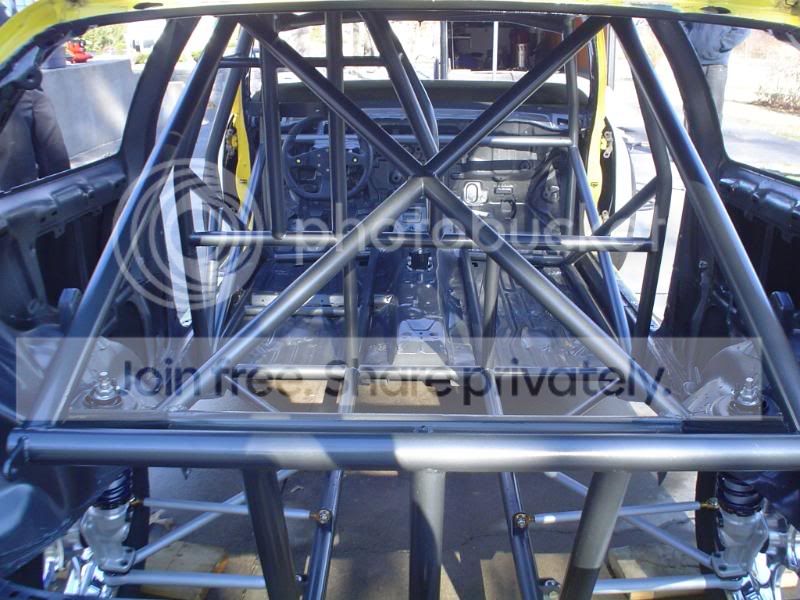
Add a HANS and I think I can take a decent hit lol </TD></TR></TABLE>
hey man i think your missing the rear floor area of your car
Add a HANS and I think I can take a decent hit lol </TD></TR></TABLE>
hey man i think your missing the rear floor area of your car

Honda-Tech Member
Joined: May 2007
Posts: 58
Likes: 0
From: Kenilworth, NJ, USA
No helmet + Roll Cage = Pretty disastrous results
http://youtube.com/watch?v=SAcEkMAG7u4
I'm pretty sure they couldnt get out of the car in time because the cage knocked em out or killed them.
http://youtube.com/watch?v=SAcEkMAG7u4
I'm pretty sure they couldnt get out of the car in time because the cage knocked em out or killed them.

Honda-Tech Member
Joined: Sep 2003
Posts: 3,234
Likes: 0
From: Austin, Republic of Texas
Re: (opticnerv)
On an older street car, about the best thing you can do is put in a decent harness to stabilize the occupants. At the very least, make sure the current restraints are in good shape and use them. All this talk about cages if fine, but on the road, all they are going to do is split your melon. . . .
Thread Starter
B*a*n*n*e*d
Joined: Mar 2008
Posts: 464
Likes: 0
From: Bay Area, CA, USA
Re: (Top Ramen)
Well I was wondering, since the '92 civic was made before offset crash tests, maybe reinforcing the outerframe would preserve the passenger area and prevent the dash from moving rearward.
First one is of a non offset crash:
http://www.youtube.com/watch?v=ZaTIWPUUYzM&e
Here is the offset crash that we're now used to:
http://www.youtube.com/watch?v=5Y4yIjT83kA&e
A common trait I have noticed in the crash tests was that those that faired poorly have lots crumpling in the passenger compartment. I've noticed that there is a direct correlation between the severity of the crumpling of the safety cage and getting a lower safety score. This is of the dodge neon, which got an overall Poor rating:


And as was mentioned by RC000E, the crash tests of the '96-'00 civics. As you can see, they have far less crumpling of the safety cage which results in an overall better score, though there is still intrusion into the foot well.


And finally, again mentioned by RC000E are the F150 crash tests which are some of the worst I've seen. If you notice, this faired the worst, worse than the Dodge neon and it resulted in lots of crumpling of the safety cage, which in turn forces the dashboard into the passenger.


So, what do you guys think of my observation? It is my conclusion that improving the outer safety cage is what would be needed in order to prevent the potential leg injuries that could occur. Also why is it that roll cages do not conform to the shape of the internal chasis of the car? The Volvo 240GLT from the 80s in a roll over fairs extremely well, yet you can't see any sign from the inside that it has a rollcage of any sort. So why don't people make better use of the interior when making a roll cage?
Modified by imzjustplayin at 5:26 PM 4/10/2008
First one is of a non offset crash:
http://www.youtube.com/watch?v=ZaTIWPUUYzM&e
Here is the offset crash that we're now used to:
http://www.youtube.com/watch?v=5Y4yIjT83kA&e
A common trait I have noticed in the crash tests was that those that faired poorly have lots crumpling in the passenger compartment. I've noticed that there is a direct correlation between the severity of the crumpling of the safety cage and getting a lower safety score. This is of the dodge neon, which got an overall Poor rating:
And as was mentioned by RC000E, the crash tests of the '96-'00 civics. As you can see, they have far less crumpling of the safety cage which results in an overall better score, though there is still intrusion into the foot well.
And finally, again mentioned by RC000E are the F150 crash tests which are some of the worst I've seen. If you notice, this faired the worst, worse than the Dodge neon and it resulted in lots of crumpling of the safety cage, which in turn forces the dashboard into the passenger.
So, what do you guys think of my observation? It is my conclusion that improving the outer safety cage is what would be needed in order to prevent the potential leg injuries that could occur. Also why is it that roll cages do not conform to the shape of the internal chasis of the car? The Volvo 240GLT from the 80s in a roll over fairs extremely well, yet you can't see any sign from the inside that it has a rollcage of any sort. So why don't people make better use of the interior when making a roll cage?
Modified by imzjustplayin at 5:26 PM 4/10/2008
Member
Joined: Oct 2001
Posts: 1,599
Likes: 0
From: Santa Barbara, California, usa
Re: (imzjustplayin)
one of the main problems is that EVERYTHING is integrated into the ENTIRE car.
unibody...
when we take cars apart to check how they are made they sometimes have 3 maybe 4 panels of varying thickness sandwiched INSIDE a/b/c pillar.
so to say they "dont have a cage" is kind of making a broad assumption.
although i agree that some if not most cars built up until 2000 didnt have much for roof support. they still have "cages" built into them, just not the way we normaly see them.
and the cage isnt going to stop or eliminate passenger compartment entrusion, the crumpled zone and protruding frame components are going to absorb alot of that.
one thing to be aware if is. if you make a car TOO stiff. the g forces exerted on the body during a crash are too great. hence why we have crumple zones in the first place.... if you take large g forces from an accident and survive with a somewhat "soft" car. because it absorbs the impact forces. if it has a madmax exterior cage, with I-beams welded in.... the moment you get hit all the g forces are going to be transfered to the softest part, your body's insides.
engineering a car to be safer ( in terms of what your talking about ) cannot be done with a welder you get at OSH and a few hours on the weekend.
you have to study it, figure out where more metal needs to be, where more structure needs to be.... we do this all the time out here.... it takes months using a super computer to calculate where the best place to put new structures without changing the whole thing for the worse.
im not squashing your "safer car" dream here, its just reality within the realm of what you can do... i dont know you, so i cant really say you "Cant" do this... but its not something you can do as a weekend project......
unibody...
when we take cars apart to check how they are made they sometimes have 3 maybe 4 panels of varying thickness sandwiched INSIDE a/b/c pillar.
so to say they "dont have a cage" is kind of making a broad assumption.
although i agree that some if not most cars built up until 2000 didnt have much for roof support. they still have "cages" built into them, just not the way we normaly see them.
and the cage isnt going to stop or eliminate passenger compartment entrusion, the crumpled zone and protruding frame components are going to absorb alot of that.
one thing to be aware if is. if you make a car TOO stiff. the g forces exerted on the body during a crash are too great. hence why we have crumple zones in the first place.... if you take large g forces from an accident and survive with a somewhat "soft" car. because it absorbs the impact forces. if it has a madmax exterior cage, with I-beams welded in.... the moment you get hit all the g forces are going to be transfered to the softest part, your body's insides.
engineering a car to be safer ( in terms of what your talking about ) cannot be done with a welder you get at OSH and a few hours on the weekend.
you have to study it, figure out where more metal needs to be, where more structure needs to be.... we do this all the time out here.... it takes months using a super computer to calculate where the best place to put new structures without changing the whole thing for the worse.
im not squashing your "safer car" dream here, its just reality within the realm of what you can do... i dont know you, so i cant really say you "Cant" do this... but its not something you can do as a weekend project......
Thread Starter
B*a*n*n*e*d
Joined: Mar 2008
Posts: 464
Likes: 0
From: Bay Area, CA, USA
Re: (pornstarSR)
<TABLE WIDTH="90%" CELLSPACING=0 CELLPADDING=0 ALIGN=CENTER><TR><TD>Quote, originally posted by pornstarSR »</TD></TR><TR><TD CLASS="quote">
one thing to be aware if is. if you make a car TOO stiff. the g forces exerted on the body during a crash are too great. hence why we have crumple zones in the first place.... if you take large g forces from an accident and survive with a somewhat "soft" car. because it absorbs the impact forces. if it has a madmax exterior cage, with I-beams welded in.... the moment you get hit all the g forces are going to be transfered to the softest part, your body's insides.</TD></TR></TABLE>
But the passenger area isn't suppose to buckle, just the engine bay and trunk, right? So putting a "madmax exterior cage" on just the passenger area should be fine, right? I understand that if I was to make the whole body rigid, then I'd absorb all of the impact but if just the passenger area was reinforced then I can't see a problem with that..
<TABLE WIDTH="90%" CELLSPACING=0 CELLPADDING=0 ALIGN=CENTER><TR><TD>Quote, originally posted by pornstarSR »</TD></TR><TR><TD CLASS="quote">
engineering a car to be safer ( in terms of what your talking about ) cannot be done with a welder you get at OSH and a few hours on the weekend.</TD></TR></TABLE>
I know you're trying to make a point, but I'm not really following, what kind of welders does OSH have but wouldn't be suitable for a job like this? (I have no idea what they do and don't have) Though I do understand that this probably would not be a weekend job, but would you say 1 month worth of work? (Not working on it for one month, but one month of work)
<TABLE WIDTH="90%" CELLSPACING=0 CELLPADDING=0 ALIGN=CENTER><TR><TD>Quote, originally posted by pornstarSR »</TD></TR><TR><TD CLASS="quote">
you have to study it, figure out where more metal needs to be, where more structure needs to be.... we do this all the time out here.... it takes months using a super computer to calculate where the best place to put new structures without changing the whole thing for the worse.</TD></TR></TABLE>
I can agree with that as this wouldn't be some trivial thing because poor welds or welding to what you think is a support but really isn't could result in far worse results than not reinforced at all.
one thing to be aware if is. if you make a car TOO stiff. the g forces exerted on the body during a crash are too great. hence why we have crumple zones in the first place.... if you take large g forces from an accident and survive with a somewhat "soft" car. because it absorbs the impact forces. if it has a madmax exterior cage, with I-beams welded in.... the moment you get hit all the g forces are going to be transfered to the softest part, your body's insides.</TD></TR></TABLE>
But the passenger area isn't suppose to buckle, just the engine bay and trunk, right? So putting a "madmax exterior cage" on just the passenger area should be fine, right? I understand that if I was to make the whole body rigid, then I'd absorb all of the impact but if just the passenger area was reinforced then I can't see a problem with that..
<TABLE WIDTH="90%" CELLSPACING=0 CELLPADDING=0 ALIGN=CENTER><TR><TD>Quote, originally posted by pornstarSR »</TD></TR><TR><TD CLASS="quote">
engineering a car to be safer ( in terms of what your talking about ) cannot be done with a welder you get at OSH and a few hours on the weekend.</TD></TR></TABLE>
I know you're trying to make a point, but I'm not really following, what kind of welders does OSH have but wouldn't be suitable for a job like this? (I have no idea what they do and don't have) Though I do understand that this probably would not be a weekend job, but would you say 1 month worth of work? (Not working on it for one month, but one month of work)
<TABLE WIDTH="90%" CELLSPACING=0 CELLPADDING=0 ALIGN=CENTER><TR><TD>Quote, originally posted by pornstarSR »</TD></TR><TR><TD CLASS="quote">
you have to study it, figure out where more metal needs to be, where more structure needs to be.... we do this all the time out here.... it takes months using a super computer to calculate where the best place to put new structures without changing the whole thing for the worse.</TD></TR></TABLE>
I can agree with that as this wouldn't be some trivial thing because poor welds or welding to what you think is a support but really isn't could result in far worse results than not reinforced at all.

Thread
Thread Starter
Forum
Replies
Last Post
bulletrcing27
Honda Civic / Del Sol (1992 - 2000)
2
Oct 2, 2005 11:56 PM
