


Whats the schedule thickness everyone uses to build turbo manifolds here?


Thread Starter
Honda-Tech Member
Joined: Aug 2004
Posts: 4,638
Likes: 0
From: Altamonte Springs/Orlando, Florida, USA
 Whats the schedule thickness everyone uses to build turbo manifolds here?
Stainless Steel of course.
Does everyone use schedule 10 here ?
How about schedule 5 ?
Does everyone use schedule 10 here ?
How about schedule 5 ?


Honda-Tech Member
Joined: Sep 2002
Posts: 6,022
Likes: 0
From: tha East Coast
Re: (Flashmn)
a lot of people are using sch.10 to keep costs lower but their are several of us that use sch.40.
Dunno about sch.5 users. Although its fine as long as you weld it correctly, brace the weight of the turbo and WG and use flex on the exhaust pipes.
Dunno about sch.5 users. Although its fine as long as you weld it correctly, brace the weight of the turbo and WG and use flex on the exhaust pipes.
Thread Starter
Honda-Tech Member
Joined: Aug 2004
Posts: 4,638
Likes: 0
From: Altamonte Springs/Orlando, Florida, USA
Re: (dave@passenger)
<TABLE WIDTH="90%" CELLSPACING=0 CELLPADDING=0 ALIGN=CENTER><TR><TD>Quote, originally posted by dave@passenger »</TD></TR><TR><TD CLASS="quote">We only use 40.</TD></TR></TABLE>
What happened to your thinner products ? Also, how heavy is the end product with schedule 40?
What happened to your thinner products ? Also, how heavy is the end product with schedule 40?
Trending Topics


Honda-Tech Member
Joined: Jun 2006
Posts: 978
Likes: 0
From: Abbotsford, BC
Re: (MidShipCivic)
<TABLE WIDTH="90%" CELLSPACING=0 CELLPADDING=0 ALIGN=CENTER><TR><TD>Quote, originally posted by MidShipCivic »</TD></TR><TR><TD CLASS="quote">
What happened to your thinner products ? Also, how heavy is the end product with schedule 40?</TD></TR></TABLE>
We have only ever used sch40 for turbo exhaust manifolds.
A 4 cylinder manifold is usually around 17-21lbs, the bigger 6 cyl ones can go over 30lbs.
Weight savings don't mean much if you don't finish the race
What happened to your thinner products ? Also, how heavy is the end product with schedule 40?</TD></TR></TABLE>
We have only ever used sch40 for turbo exhaust manifolds.
A 4 cylinder manifold is usually around 17-21lbs, the bigger 6 cyl ones can go over 30lbs.
Weight savings don't mean much if you don't finish the race


Honda-Tech Member
Joined: Sep 2002
Posts: 5,517
Likes: 1
From: ME
Re: (Vince64)
sch 10 is what I have used. Many racecars that are turbo charged seem to have .065 tube with proper bracing. Sch 40 must be all about surviving a million and one heat cycles...or getting more weight in front of the front wheels 
Honda-Tech Member
Joined: Jun 2006
Posts: 978
Likes: 0
From: Abbotsford, BC
Re: (Bailhatch)
We do mostly off road racing, they need to survive intense heat cycles, and also abuse like water/mud spraying on the manifold while its hot or getting big air off a dune or crashing into a ditch and the like.
We have never had a crack or any sort failure for that matter, be it for racing or for street use, sch40 helps keep it that way.
We have never had a crack or any sort failure for that matter, be it for racing or for street use, sch40 helps keep it that way.

Thread Starter
Honda-Tech Member
Joined: Aug 2004
Posts: 4,638
Likes: 0
From: Altamonte Springs/Orlando, Florida, USA
Re: (dave@passenger)
<TABLE WIDTH="90%" CELLSPACING=0 CELLPADDING=0 ALIGN=CENTER><TR><TD>Quote, originally posted by dave@passenger »</TD></TR><TR><TD CLASS="quote">We do mostly off road racing, they need to survive intense heat cycles, and also abuse like water/mud spraying on the manifold while its hot or getting big air off a dune or crashing into a ditch and the like.
We have never had a crack or any sort failure for that matter, be it for racing or for street use, sch40 helps keep it that way.</TD></TR></TABLE>
What alloy are you using ? 321, 316 or 302 ?
We have never had a crack or any sort failure for that matter, be it for racing or for street use, sch40 helps keep it that way.</TD></TR></TABLE>
What alloy are you using ? 321, 316 or 302 ?
Honda-Tech Member
Joined: Jun 2006
Posts: 978
Likes: 0
From: Abbotsford, BC
Re: (MidShipCivic)
<TABLE WIDTH="90%" CELLSPACING=0 CELLPADDING=0 ALIGN=CENTER><TR><TD>Quote, originally posted by MidShipCivic »</TD></TR><TR><TD CLASS="quote">
What alloy are you using ? 321, 316 or 302 ?</TD></TR></TABLE>
1020
What alloy are you using ? 321, 316 or 302 ?</TD></TR></TABLE>
1020
Thread Starter
Honda-Tech Member
Joined: Aug 2004
Posts: 4,638
Likes: 0
From: Altamonte Springs/Orlando, Florida, USA
Re: (dave@passenger)
<TABLE WIDTH="90%" CELLSPACING=0 CELLPADDING=0 ALIGN=CENTER><TR><TD>Quote, originally posted by dave@passenger »</TD></TR><TR><TD CLASS="quote">
1020</TD></TR></TABLE>
Thats a stainless?
1020</TD></TR></TABLE>
Thats a stainless?
Honda-Tech Member
Joined: Jun 2006
Posts: 978
Likes: 0
From: Abbotsford, BC
Re: (MidShipCivic)
Nope, stainless isn't reliable enough for our needs, that is a steel grade, we get it in 1018 or 1020, after the manifold is done we ceramic coat them inside and out.
Thread Starter
Honda-Tech Member
Joined: Aug 2004
Posts: 4,638
Likes: 0
From: Altamonte Springs/Orlando, Florida, USA
Re: (dave@passenger)
<TABLE WIDTH="90%" CELLSPACING=0 CELLPADDING=0 ALIGN=CENTER><TR><TD>Quote, originally posted by dave@passenger »</TD></TR><TR><TD CLASS="quote">Nope, stainless isn't reliable enough for our needs, that is a steel grade, we get it in 1018 or 1020, after the manifold is done we ceramic coat them inside and out.</TD></TR></TABLE>
Uh wow ...let me see one of your manifolds please.
Uh wow ...let me see one of your manifolds please.

Honda-Tech Member
Joined: Sep 2002
Posts: 5,517
Likes: 1
From: ME
Re: (narfdanarf)
<TABLE WIDTH="90%" CELLSPACING=0 CELLPADDING=0 ALIGN=CENTER><TR><TD>Quote, originally posted by narfdanarf »</TD></TR><TR><TD CLASS="quote">lol at carbon steel manifolds. </TD></TR></TABLE>
I used to MIG weld tons of them! They work great
sch 40 with techline coating

</TD></TR></TABLE>I used to MIG weld tons of them! They work great
sch 40 with techline coating

Joined: Jan 2004
Posts: 779
Likes: 0
From: Santa Ana, California 92704
Re: (MidShipCivic)
<TABLE WIDTH="90%" CELLSPACING=0 CELLPADDING=0 ALIGN=CENTER><TR><TD>Quote, originally posted by MidShipCivic »</TD></TR><TR><TD CLASS="quote">Why do most go with 10 instead of 5 ?</TD></TR></TABLE>
The main reason is there are a limited number of mills (international and domestic) producing sch5 fittings these days. Not only does that affect the overall availability but price as well.
Seeing as how 1-1/2" s/5 is only .100" smaller on the OD with the same wall thickness as 2" OD x .065" wall tube the tubing is always the cheaper and quicker way to go.
The main reason is there are a limited number of mills (international and domestic) producing sch5 fittings these days. Not only does that affect the overall availability but price as well.
Seeing as how 1-1/2" s/5 is only .100" smaller on the OD with the same wall thickness as 2" OD x .065" wall tube the tubing is always the cheaper and quicker way to go.
Honda-Tech Member
Joined: Jun 2006
Posts: 978
Likes: 0
From: Abbotsford, BC
Re: (MidShipCivic)
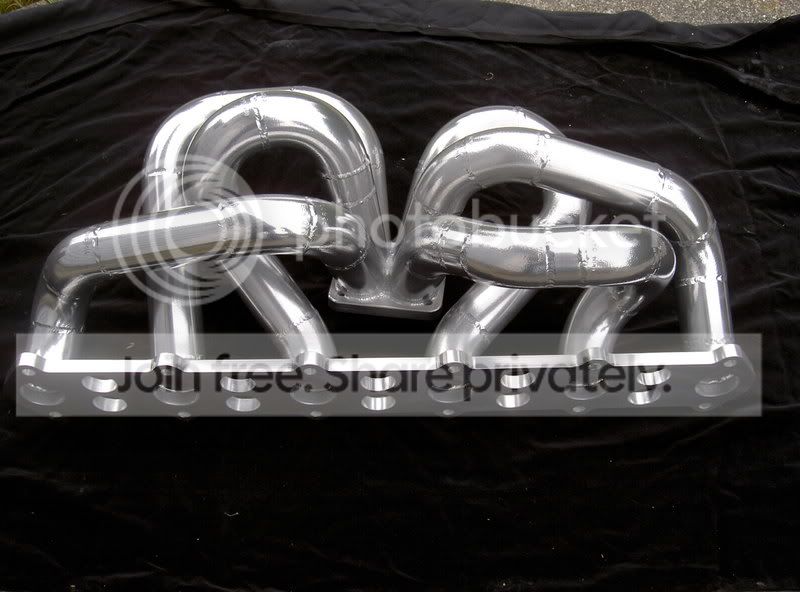
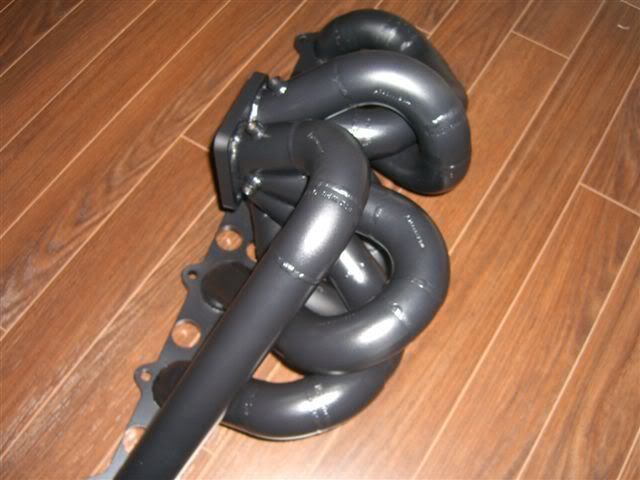
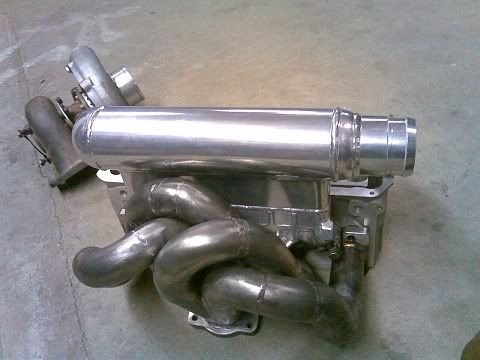
SS expands and contracts more than carbon steel, this causes a lot of stress in the manifold and reduces reliability, I am not interested in being responsible for my customers losing races. Especially for the bigger events like Pikes Peak and the Baja 1000, which is what the above manifolds were used for.
I like building things with ss don't get me wrong, we do sanitary process work as well as automotive engineering. Its just for turbo exhaust manifolds, reliability is crucial, I don't take any chances or shortcuts.

Honda-Tech Member
Joined: Dec 2003
Posts: 920
Likes: 0
From: bumfuck egypt, SD, US
Re: (dave@passenger)
<TABLE WIDTH="90%" CELLSPACING=0 CELLPADDING=0 ALIGN=CENTER><TR><TD>Quote, originally posted by dave@passenger »</TD></TR><TR><TD CLASS="quote">Nope, stainless isn't reliable enough for our needs</TD></TR></TABLE>
Well, that's certainly a new take on this..
I guess if your ceramic coating is good enough..
Well, that's certainly a new take on this..
I guess if your ceramic coating is good enough..
Honda-Tech Member
Joined: Jun 2006
Posts: 978
Likes: 0
From: Abbotsford, BC
Re: (rorik)
<TABLE WIDTH="90%" CELLSPACING=0 CELLPADDING=0 ALIGN=CENTER><TR><TD>Quote, originally posted by rorik »</TD></TR><TR><TD CLASS="quote">
Well, that's certainly a new take on this..
I guess if your ceramic coating is good enough..</TD></TR></TABLE>
No, its not, why do you think everyone is using crs for flanges? I think as time goes on more people will start using steel for the primaries as well. Ceramic coating should be used on any exhaust manifold inside and out regardless of the material selected.
Well, that's certainly a new take on this..
I guess if your ceramic coating is good enough..</TD></TR></TABLE>
No, its not, why do you think everyone is using crs for flanges? I think as time goes on more people will start using steel for the primaries as well. Ceramic coating should be used on any exhaust manifold inside and out regardless of the material selected.