


to backpurge or not???


Thread Starter
Honda-Tech Member
Joined: Mar 2006
Posts: 972
Likes: 1
From: Surprise, AZ
 questions about welding stainless..........
ok i have a few questions here about welding stainless..........
1. on thicker metals such as sch 10 and 40 should u packpurge and what would u recomend as for passes............ ive been doning 3 passes on shc 40 (mild) without backpurging (just practicing of course) and before i start making headers and turbo manis i was wondering which route i should take. what do u guys think?
2. on the thinner metals like 16 or 18 gage............ should u gap the metal or just bevel it? and im thinking backpurging should be a given with this stuff being that its so thin.
thanks guys,
mike
1. on thicker metals such as sch 10 and 40 should u packpurge and what would u recomend as for passes............ ive been doning 3 passes on shc 40 (mild) without backpurging (just practicing of course) and before i start making headers and turbo manis i was wondering which route i should take. what do u guys think?
2. on the thinner metals like 16 or 18 gage............ should u gap the metal or just bevel it? and im thinking backpurging should be a given with this stuff being that its so thin.
thanks guys,
mike

Honda-Tech Member
Joined: Oct 2004
Posts: 1,972
Likes: 0
From: sheridan, wyoming, usa
backpurging has nothing to do with the thickness of the material. Yes you should backpurge stainless and yes you should weld sch pipe in multiple passes.
It's better to bevel than to just gap when you are tig welding. On pipe you do both on tubing just bevel it if you must. You can weld 16g with no bevel at all and a tight fit but it's easier if you just break the edges a bit so you need less heat to penetrate properly.
You don't need to backpurge mild steel 99% of the time btw.
It's better to bevel than to just gap when you are tig welding. On pipe you do both on tubing just bevel it if you must. You can weld 16g with no bevel at all and a tight fit but it's easier if you just break the edges a bit so you need less heat to penetrate properly.
You don't need to backpurge mild steel 99% of the time btw.

B*a*n*n*e*d
Joined: Jun 2007
Posts: 18
Likes: 0
From: NY
Re: (ManBearPig4silly)
now the next part of this question. Do you guys back purge only on the first root pass? Or do you keep the purge on on all the passes. If the whole runner is welded already do you still have to worry about the inside after that first pass?
When I have been doing it I use a .030 gap and im using .030 rod while back purging to get that deep root pass. On the next pass I just use 1/16 308L and thats all i need, I dont pull the filler out, i just walk it around in the puddle and fill the bevel so its slightly above the materials base.
When I have been doing it I use a .030 gap and im using .030 rod while back purging to get that deep root pass. On the next pass I just use 1/16 308L and thats all i need, I dont pull the filler out, i just walk it around in the puddle and fill the bevel so its slightly above the materials base.

Thread Starter
Honda-Tech Member
Joined: Mar 2006
Posts: 972
Likes: 1
From: Surprise, AZ
Re: (socalismylife)
when not back purging on mild i get all kinds of sugar in there (with 16g)............ oh and im just practicing with the mild because its cheaper than stainless (with shc 40). on my root pass i just fuse the 2 pieces together and then i use 1/16" rod for the filler and cap passes (its all i have right now). thanks for answering my Manbear. 
mike
mike

Honda-Tech Member
Joined: Nov 2002
Posts: 17,227
Likes: 2
From: Illinois
Re: (booost)
<TABLE WIDTH="90%" CELLSPACING=0 CELLPADDING=0 ALIGN=CENTER><TR><TD>Quote, originally posted by booost »</TD></TR><TR><TD CLASS="quote">now the next part of this question. Do you guys back purge only on the first root pass? Or do you keep the purge on on all the passes. If the whole runner is welded already do you still have to worry about the inside after that first pass?</TD></TR></TABLE>
Nope, no need to worry since air can't get on the back side.
<TABLE WIDTH="90%" CELLSPACING=0 CELLPADDING=0 ALIGN=CENTER><TR><TD>Quote, originally posted by ManBearPig4silly »</TD></TR><TR><TD CLASS="quote">. Yes you should backpurge stainless and yes you should weld sch pipe in multiple passes.
It's better to bevel than to just gap when you are tig welding. On pipe you do both on tubing just bevel it if you must. You can weld 16g with no bevel at all and a tight fit but it's easier if you just break the edges a bit so you need less heat to penetrate properly.
</TD></TR></TABLE>
Well put, I like to bevel 16 gauge cause its easier to keep the bead uniform. And yes, sch10 should be done in multi passes, I still don't see how people get good penetration with 1 pass and not have a concave weld.
Nope, no need to worry since air can't get on the back side.
<TABLE WIDTH="90%" CELLSPACING=0 CELLPADDING=0 ALIGN=CENTER><TR><TD>Quote, originally posted by ManBearPig4silly »</TD></TR><TR><TD CLASS="quote">. Yes you should backpurge stainless and yes you should weld sch pipe in multiple passes.
It's better to bevel than to just gap when you are tig welding. On pipe you do both on tubing just bevel it if you must. You can weld 16g with no bevel at all and a tight fit but it's easier if you just break the edges a bit so you need less heat to penetrate properly.
</TD></TR></TABLE>
Well put, I like to bevel 16 gauge cause its easier to keep the bead uniform. And yes, sch10 should be done in multi passes, I still don't see how people get good penetration with 1 pass and not have a concave weld.

Trending Topics

Honda-Tech Member
Joined: Nov 2000
Posts: 5,135
Likes: 0
From: Fredericksburg, VA, USA
Re: (ManBearPig4silly)
<TABLE WIDTH="90%" CELLSPACING=0 CELLPADDING=0 ALIGN=CENTER><TR><TD>Quote, originally posted by ManBearPig4silly »</TD></TR><TR><TD CLASS="quote">
You don't need to backpurge mild steel 99% of the time btw. </TD></TR></TABLE>
I think the many customers of people on here who have purchased custom mild steel headers from a couple of companies that believe that statement would strongly disagree with you, due to cracks. We at SMSP back purge all our mild and stainless steel.
Here's a picture I copied from this site a couple years ago of a guy's mild steel header that wasn't back purged. It later cracked. Go figure.

It's beyond me, why a fabricator will not put the little extra time and $ into back purging to get a superior weld when it adds just a small % of cost and time. Versus having people post about their cracked headers and spending time repairing multiple pieces.
You don't need to backpurge mild steel 99% of the time btw. </TD></TR></TABLE>
I think the many customers of people on here who have purchased custom mild steel headers from a couple of companies that believe that statement would strongly disagree with you, due to cracks. We at SMSP back purge all our mild and stainless steel.
Here's a picture I copied from this site a couple years ago of a guy's mild steel header that wasn't back purged. It later cracked. Go figure.
It's beyond me, why a fabricator will not put the little extra time and $ into back purging to get a superior weld when it adds just a small % of cost and time. Versus having people post about their cracked headers and spending time repairing multiple pieces.


Honda-Tech Member
Joined: May 2002
Posts: 15,814
Likes: 8
From: Dallas, TX, USA
Re: (RCautoworks)
<TABLE WIDTH="90%" CELLSPACING=0 CELLPADDING=0 ALIGN=CENTER><TR><TD>Quote, originally posted by RCautoworks »</TD></TR><TR><TD CLASS="quote">
Nope, no need to worry since air can't get on the back side.
</TD></TR></TABLE>
If you're not backpurging, why would air not be able to get to the back side?
Nope, no need to worry since air can't get on the back side.
</TD></TR></TABLE>
If you're not backpurging, why would air not be able to get to the back side?

Honda-Tech Member
Joined: May 2004
Posts: 354
Likes: 0
From: LI, NY
Re: (tony1)
I think hes saying since its already welded together via the root pass.
Tony do you do a root pass, on all joints with the purge, then once they are purged allow to cool, then turn the purge back on and weld a cap pass. I usually do and turn the flow down cause it just peels the tape back of and eventually knocks the cap off the end.
Tony do you do a root pass, on all joints with the purge, then once they are purged allow to cool, then turn the purge back on and weld a cap pass. I usually do and turn the flow down cause it just peels the tape back of and eventually knocks the cap off the end.

Honda-Tech Member
Joined: May 2002
Posts: 15,814
Likes: 8
From: Dallas, TX, USA
Re: (Enzo-Racing)
95% of my pipe welding experience has been with fixing cracked manifolds and welding wg elbows for cast manifolds or adding to current tubular manifolds. I honestly don't think i've ever done a butt weld on pipe.
Honda-Tech Member
Joined: May 2002
Posts: 15,814
Likes: 8
From: Dallas, TX, USA
Re: (all_motor_mike)
An easy test is to weld a root pass with backpurging and then weld the 2nd pass. Backpurge on half of it and not on the other half and then look at the inside of it. If it gets hot enough, it will need to be backpurged on both passes.

Honda-Tech Member
Joined: Dec 2003
Posts: 920
Likes: 0
From: bumfuck egypt, SD, US
Re: (ManBearPig4silly)
<TABLE WIDTH="90%" CELLSPACING=0 CELLPADDING=0 ALIGN=CENTER><TR><TD>Quote, originally posted by ManBearPig4silly »</TD></TR><TR><TD CLASS="quote">
You don't need to backpurge mild steel 99% of the time btw. </TD></TR></TABLE>
Okay, why? Isn't mild steel less corrosion/oxidation resistant than stainless? Then why would it not require the same, if not more, protection from the air?
You don't need to backpurge mild steel 99% of the time btw. </TD></TR></TABLE>
Okay, why? Isn't mild steel less corrosion/oxidation resistant than stainless? Then why would it not require the same, if not more, protection from the air?

Member
Joined: Nov 2003
Posts: 1,247
Likes: 0
From: Lemont, IL, USA
Re: (tony1)
<TABLE WIDTH="90%" CELLSPACING=0 CELLPADDING=0 ALIGN=CENTER><TR><TD>Quote, originally posted by tony1 »</TD></TR><TR><TD CLASS="quote">
If you're not backpurging, why would air not be able to get to the back side?</TD></TR></TABLE>
He's referring to pipe. With a root pass you typically won't get full penetration on the second pass, so there shouldn't be any carbide precipitation aka 'sugar'.
<TABLE WIDTH="90%" CELLSPACING=0 CELLPADDING=0 ALIGN=CENTER><TR><TD>Quote, originally posted by rorik »</TD></TR><TR><TD CLASS="quote">Okay, why? Isn't mild steel less corrosion/oxidation resistant than stainless? Then why would it not require the same, if not more, protection from the air?</TD></TR></TABLE>
Only stainless steels will form carbide precipation, so it's not really necessary on mild steel. You will get a better looking weld on the backside if you backpurge mild steel but I haven't seen any data as to whether or not it's beneficial as far as the structure of the weld goes.
I typically will use Solar Flux on the backside of welds for stainless if it's for exhaust after the turbo or for N/A headers. For a turbo manifold I'd backpurge just because the Solar Flux is pretty much silica that at high tempertures forms glass on the backside of the weld to seal it off from the atmosphere. The glass could possibly break off and damage the turbo (I doubt it but better safe than sorry).
Found this...
Stainless steel actually cries when you weld it... I guess?
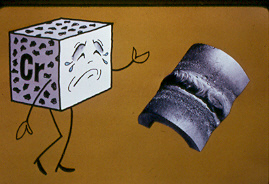
STAINLESS AND CARBIDE PRECIPITATION (chrome depletion):
Use weld data to avoid Carbide Precipitation. (CP)
For stainless corrosive environments control of CP is critical.
CP occurs with 300 series in the temperature range of 800F - 1600F, 430-870C.
CP typically occurs within 3 mm of either side of a weld HAZ
In the temperature range of 800-1600F the chrome will move to join carbon, this results in "chrome depletion" leaving an area with less chrome.
A chrome depleted area may not resist the corrosive environment.
To combat CP use (L) low carbon base and filler metals.
Ensure the C02 gas composition has less than 5 % CO2.
If you're not backpurging, why would air not be able to get to the back side?</TD></TR></TABLE>
He's referring to pipe. With a root pass you typically won't get full penetration on the second pass, so there shouldn't be any carbide precipitation aka 'sugar'.
<TABLE WIDTH="90%" CELLSPACING=0 CELLPADDING=0 ALIGN=CENTER><TR><TD>Quote, originally posted by rorik »</TD></TR><TR><TD CLASS="quote">Okay, why? Isn't mild steel less corrosion/oxidation resistant than stainless? Then why would it not require the same, if not more, protection from the air?</TD></TR></TABLE>
Only stainless steels will form carbide precipation, so it's not really necessary on mild steel. You will get a better looking weld on the backside if you backpurge mild steel but I haven't seen any data as to whether or not it's beneficial as far as the structure of the weld goes.
I typically will use Solar Flux on the backside of welds for stainless if it's for exhaust after the turbo or for N/A headers. For a turbo manifold I'd backpurge just because the Solar Flux is pretty much silica that at high tempertures forms glass on the backside of the weld to seal it off from the atmosphere. The glass could possibly break off and damage the turbo (I doubt it but better safe than sorry).
Found this...
Stainless steel actually cries when you weld it... I guess?
STAINLESS AND CARBIDE PRECIPITATION (chrome depletion):
Use weld data to avoid Carbide Precipitation. (CP)
For stainless corrosive environments control of CP is critical.
CP occurs with 300 series in the temperature range of 800F - 1600F, 430-870C.
CP typically occurs within 3 mm of either side of a weld HAZ
In the temperature range of 800-1600F the chrome will move to join carbon, this results in "chrome depletion" leaving an area with less chrome.
A chrome depleted area may not resist the corrosive environment.
To combat CP use (L) low carbon base and filler metals.
Ensure the C02 gas composition has less than 5 % CO2.
Honda-Tech Member
Joined: Nov 2002
Posts: 17,227
Likes: 2
From: Illinois
Re: (tony1)
<TABLE WIDTH="90%" CELLSPACING=0 CELLPADDING=0 ALIGN=CENTER><TR><TD>Quote, originally posted by tony1 »</TD></TR><TR><TD CLASS="quote">
If you're not backpurging, why would air not be able to get to the back side?</TD></TR></TABLE>
Was talking about after the root pass.
<TABLE WIDTH="90%" CELLSPACING=0 CELLPADDING=0 ALIGN=CENTER><TR><TD>Quote, originally posted by david@didrace.com »</TD></TR><TR><TD CLASS="quote">
Stainless steel actually cries when you weld it... I guess?
</TD></TR></TABLE>
And babies ?
If you're not backpurging, why would air not be able to get to the back side?</TD></TR></TABLE>
Was talking about after the root pass.
<TABLE WIDTH="90%" CELLSPACING=0 CELLPADDING=0 ALIGN=CENTER><TR><TD>Quote, originally posted by david@didrace.com »</TD></TR><TR><TD CLASS="quote">
Stainless steel actually cries when you weld it... I guess?
</TD></TR></TABLE>
And babies ?
Member
Joined: Nov 2003
Posts: 1,247
Likes: 0
From: Lemont, IL, USA
Re: (RCautoworks)
<TABLE WIDTH="90%" CELLSPACING=0 CELLPADDING=0 ALIGN=CENTER><TR><TD>Quote, originally posted by RCautoworks »</TD></TR><TR><TD CLASS="quote">
And babies ?</TD></TR></TABLE>
They probably cry when you weld them too.
And babies ?</TD></TR></TABLE>
They probably cry when you weld them too.
Honda-Tech Member
Joined: May 2002
Posts: 15,814
Likes: 8
From: Dallas, TX, USA
Re: (david@didrace.com)
<TABLE WIDTH="90%" CELLSPACING=0 CELLPADDING=0 ALIGN=CENTER><TR><TD>Quote, originally posted by david@didrace.com »</TD></TR><TR><TD CLASS="quote">
He's referring to pipe. With a root pass you typically won't get full penetration on the second pass, so there shouldn't be any carbide precipitation aka 'sugar'.
</TD></TR></TABLE>
I know he was referring to pipe.
You don't have to get full penetration to get "sugaring". If the back side of the weld gets hot enough, you'll get "sugaring". Ever weld a tube to a flange w/o backpurging? You get sugaring on the inside. Do the same with backpurging and you will get nothing on the inside. Doesn't take much to get the back side hot enough, not nearly as much as it takes to get a full penetration weld with backpurging.
He's referring to pipe. With a root pass you typically won't get full penetration on the second pass, so there shouldn't be any carbide precipitation aka 'sugar'.
</TD></TR></TABLE>
I know he was referring to pipe.
You don't have to get full penetration to get "sugaring". If the back side of the weld gets hot enough, you'll get "sugaring". Ever weld a tube to a flange w/o backpurging? You get sugaring on the inside. Do the same with backpurging and you will get nothing on the inside. Doesn't take much to get the back side hot enough, not nearly as much as it takes to get a full penetration weld with backpurging.
Honda-Tech Member
Joined: Nov 2002
Posts: 17,227
Likes: 2
From: Illinois
Re: (tony1)
<TABLE WIDTH="90%" CELLSPACING=0 CELLPADDING=0 ALIGN=CENTER><TR><TD>Quote, originally posted by tony1 »</TD></TR><TR><TD CLASS="quote">lol, but that's not what you said, you said air can't get to the back side, which it can. Inside the pipe is still the back side. </TD></TR></TABLE>
Stop it newb
</TD></TR></TABLE>Stop it newb
Honda-Tech Member
Joined: May 2004
Posts: 354
Likes: 0
From: LI, NY
Re: (RCautoworks)
Im sorry to throw this in if you get upset but rather do it than having two threads so ill add on...
now the next part of the question, when you guys backpurge tubing 2"+ what do you use to put the gas in and keep the gas in.
On pipe i have 2 1.5" sched 40 pipe caps (butt weld) On one end i have an air compressor fitting for an air tool and i tape the caps on each end of the runner.
On the bigger stuff do you pack the tubing with anything? or do you just let it fill up for an extended period of time? Or are you guys using solar flux on downpipes and charge piping of stainless (i always use aluminum on charge pipes/inlets)
now the next part of the question, when you guys backpurge tubing 2"+ what do you use to put the gas in and keep the gas in.
On pipe i have 2 1.5" sched 40 pipe caps (butt weld) On one end i have an air compressor fitting for an air tool and i tape the caps on each end of the runner.
On the bigger stuff do you pack the tubing with anything? or do you just let it fill up for an extended period of time? Or are you guys using solar flux on downpipes and charge piping of stainless (i always use aluminum on charge pipes/inlets)