


Lightweight Fly Wheel Good or Bad


Thread Starter
Junior Member
Joined: Nov 2006
Posts: 380
Likes: 0
From: Bakersfield, Ca, US
 Lightweight Fly Wheel Good or Bad
Welll imma take my car to get a stage 2 clutch put in and the owner of the shop is gonna get me a lightweight flywheel for cheap...but a couple of ppl said it would affect my torque and ****....but i was wondering if any 1 has done it to their 4th gen h22....thnx 


Honda-Tech Member
Joined: Mar 2004
Posts: 15,050
Likes: 3
Guys, stop posting BS
NONE of you have dyno tested this, and that is the ONLY way you can prove any of this...
Personally, I think a lighter flywheel on an h22 will free up torque high in the powerband, but we certainly need some evidence before we claim that is true....
NONE of you have dyno tested this, and that is the ONLY way you can prove any of this...
Personally, I think a lighter flywheel on an h22 will free up torque high in the powerband, but we certainly need some evidence before we claim that is true....
Honda-Tech Member
Joined: Mar 2004
Posts: 15,050
Likes: 3
Re: (InvaderTrax)
<TABLE WIDTH="90%" CELLSPACING=0 CELLPADDING=0 ALIGN=CENTER><TR><TD>Quote, originally posted by Yus_fr »</TD></TR><TR><TD CLASS="quote">fidanza 8 lbs, the best bolt on ever. it's a lot more worthy than I/E.</TD></TR></TABLE>
<TABLE WIDTH="90%" CELLSPACING=0 CELLPADDING=0 ALIGN=CENTER><TR><TD>Quote, originally posted by InvaderTrax »</TD></TR><TR><TD CLASS="quote">My 12lb one certainly made a huge difference. And, no, it hasn't caused me any problems with torque</TD></TR></TABLE>
that is what I was referencing
<TABLE WIDTH="90%" CELLSPACING=0 CELLPADDING=0 ALIGN=CENTER><TR><TD>Quote, originally posted by InvaderTrax »</TD></TR><TR><TD CLASS="quote">My 12lb one certainly made a huge difference. And, no, it hasn't caused me any problems with torque</TD></TR></TABLE>
that is what I was referencing
Trending Topics

Joined: Jan 2006
Posts: 506
Likes: 0
From: H22A all day in the, wva
Re: (bb4ever)
ah. 
 and for some dyno reference on the flywheel and torque.. when i dynoed my old h23 before and after, there was no difference in torque, the only difference was it was making torque a little earlier in the rpm range and holding it. but as far as plus or minus torque figures, thats a big no. let me see if i can find my dyno sheet and scan it and show you what i mean
and for some dyno reference on the flywheel and torque.. when i dynoed my old h23 before and after, there was no difference in torque, the only difference was it was making torque a little earlier in the rpm range and holding it. but as far as plus or minus torque figures, thats a big no. let me see if i can find my dyno sheet and scan it and show you what i mean

Honda-Tech Member
Joined: Dec 2004
Posts: 2,801
Likes: 1
From: Drexel Hill, Pa, 19026
Re: (bb4ever)
<TABLE WIDTH="90%" CELLSPACING=0 CELLPADDING=0 ALIGN=CENTER><TR><TD>Quote, originally posted by bb4ever »</TD></TR><TR><TD CLASS="quote">Guys, stop posting BS
NONE of you have dyno tested this, and that is the ONLY way you can prove any of this...
Personally, I think a lighter flywheel on an h22 will free up torque high in the powerband, but we certainly need some evidence before we claim that is true....</TD></TR></TABLE>
Well quicker response and faster revs wont really show up on a dyno sheet will it ? Because isnt that really what the advantage is rather than freeing up hp or torque ? Im not saying it doesnt free up hp but i dont think thats the big advantage in running it.
NONE of you have dyno tested this, and that is the ONLY way you can prove any of this...
Personally, I think a lighter flywheel on an h22 will free up torque high in the powerband, but we certainly need some evidence before we claim that is true....</TD></TR></TABLE>
Well quicker response and faster revs wont really show up on a dyno sheet will it ? Because isnt that really what the advantage is rather than freeing up hp or torque ? Im not saying it doesnt free up hp but i dont think thats the big advantage in running it.

moderator emeritus
Joined: Oct 2002
Posts: 16,357
Likes: 6
From: Cantonment, FL
Re: (lude98SH)
from what i have readin the NA forum, Flywheels do not allow for more power. They just allow the motor to make the same power, easier.
IMO, i believe that a lightweight flywheel increases intake velocities which results in a greater throttle response.
IMO, i believe that a lightweight flywheel increases intake velocities which results in a greater throttle response.
Honda-Tech Member
Joined: Mar 2004
Posts: 15,050
Likes: 3
Guys I think you're missing the point
When you hit the gas, you're changing the amount of air/fuel flowing into the cylinder, so no matter what rpm you're at, the flywheel is already spinning at the rpm your engine is at. The increased amount of mixture will cause the torque to increase and therefore the rpm to increase. The weight of the flywheel plays a part in the amount of torque output to the transmission, but has nothing to do with "throttle response" in this way of thinking, no matter the weight of the flywheel, when you hit the gas, the rpms are going to start to increase.
If you're speaking of free revving, then yes, a lighter flywheel will allow the engine to rev more freely, but that is hardly a reason to spend $200 on a flywheel, our engines already rev fast enough to keep up with rev matching when you downshift (which BTW is the only time you should be revving your engine up like that RICERS )
)
read what I posted in this thread
https://honda-tech.com/zerothre...16379
When you hit the gas, you're changing the amount of air/fuel flowing into the cylinder, so no matter what rpm you're at, the flywheel is already spinning at the rpm your engine is at. The increased amount of mixture will cause the torque to increase and therefore the rpm to increase. The weight of the flywheel plays a part in the amount of torque output to the transmission, but has nothing to do with "throttle response" in this way of thinking, no matter the weight of the flywheel, when you hit the gas, the rpms are going to start to increase.
If you're speaking of free revving, then yes, a lighter flywheel will allow the engine to rev more freely, but that is hardly a reason to spend $200 on a flywheel, our engines already rev fast enough to keep up with rev matching when you downshift (which BTW is the only time you should be revving your engine up like that RICERS
)read what I posted in this thread
https://honda-tech.com/zerothre...16379

Honda-Tech Member
Joined: Mar 2004
Posts: 15,050
Likes: 3
Revi, horse power is a function of torque and rpm, torque can be influenced by a flywheel. I suggest you read my post in the link I put in that post....
https://honda-tech.com/zerothread/1837017
Read the SAE article posted there....especially the part about throttle response, "Snapping" as they call it is when you punch the gas to get the revs up off the throttle, which is directly related to the weight of the flywheel, per SAE. enough said
https://honda-tech.com/zerothread/1837017
Read the SAE article posted there....especially the part about throttle response, "Snapping" as they call it is when you punch the gas to get the revs up off the throttle, which is directly related to the weight of the flywheel, per SAE. enough said

Junior Member
Joined: May 2006
Posts: 375
Likes: 0
Re: (bb4ever)
<TABLE WIDTH="90%" CELLSPACING=0 CELLPADDING=0 ALIGN=CENTER><TR><TD>Quote, originally posted by bb4ever »</TD></TR><TR><TD CLASS="quote">Revi, horse power is a function of torque and rpm, torque can be influenced by a flywheel. I suggest you read my post in the link I put in that post....
https://honda-tech.com/zerothread/1837017
Read the SAE article posted there....especially the part about throttle response, "Snapping" as they call it is when you punch the gas to get the revs up off the throttle, which is directly related to the weight of the flywheel, per SAE. enough said</TD></TR></TABLE>
so we should all have a 20 lb stock flywheel instead of an 8lb one. I guess I'll be adding some weight to my lightened and balanced crank and my aluminum accessory pulleys, too. I've got a fidanza flywheel and it feels way better then the stock one due to the fact that it has better throttle response and revs quicker in and out of gear (heel toe down shifting) and those results will not show up in a dyno test. Sometimes real world experience trumps the number and graph geeks.
https://honda-tech.com/zerothread/1837017
Read the SAE article posted there....especially the part about throttle response, "Snapping" as they call it is when you punch the gas to get the revs up off the throttle, which is directly related to the weight of the flywheel, per SAE. enough said</TD></TR></TABLE>
so we should all have a 20 lb stock flywheel instead of an 8lb one. I guess I'll be adding some weight to my lightened and balanced crank and my aluminum accessory pulleys, too.
I've got a fidanza flywheel and it feels way better then the stock one due to the fact that it has better throttle response and revs quicker in and out of gear (heel toe down shifting) and those results will not show up in a dyno test. Sometimes real world experience trumps the number and graph geeks.

Honda-Tech Member
Joined: Mar 2003
Posts: 402
Likes: 0
From: Wauwatosa, WI
Re: (hella_usdm)
It's called balance....a 20 pound flywheel would in theory make more torque at a given RPM than an 8 pound flywheel would. Like BB4 said, horsepower is derived from torque with respect to rotations. But the tradeoff comes in the form of friction through various sources and the terminal speed that a given weight flywheel can achieve. The amount of air being processed through the cylinders will determine how fast the flywheel is turning. As RPM's increase you are "losing" power to the weight of the flywheel. So here a lighter flywheel is allowed to make more "power" but only once you get the RPM's way up. Why do you think most aftermarket flywheel manufacturers tell you not to use those 6 pound flywheels on a street car? Because you'd have to launch at 3500RPM just to get your car to move from a stop light.

Honda-Tech Member
iTrader: (1)
Joined: Oct 2004
Posts: 888
Likes: 1
From: Tucson...Cactus Town, Az, usa
Re: (godslayer)
<TABLE WIDTH="90%" CELLSPACING=0 CELLPADDING=0 ALIGN=CENTER><TR><TD>Quote, originally posted by godslayer »</TD></TR><TR><TD CLASS="quote">Why do you think most aftermarket flywheel manufacturers tell you not to use those 6 pound flywheels on a street car? Because you'd have to launch at 3500RPM just to get your car to move from a stop light.</TD></TR></TABLE>
not true...i have the 8lbs fly and i can start moving from 1,500rpm...just depends if you know how to drive your car and know where your engagement point is.
not true...i have the 8lbs fly and i can start moving from 1,500rpm...just depends if you know how to drive your car and know where your engagement point is.
Joined: Jan 2006
Posts: 506
Likes: 0
From: H22A all day in the, wva
Re: (K-Spec)
yeah, however isnt bb4ever the one also running an 8 lb flywheel on his lude?? so there ya go. i have one and i can ease out on the clutch and the car goes.. theories are just that, theories.. i understand inertia and that, but torque is what is gonna pull you out at the end of the day. i cant believe we are having this kind of debate over a flywheel.. i mean god, we dont have b16's

Honda-Tech Member
Joined: Apr 2004
Posts: 280
Likes: 0
From: CT, USA
I lightweight flywheel will make your engine rev much easier and free-er. You will rev up faster .. but they lack inertia to continue to spin when your off the gas. It is taking weight off the crank to allow it to spin easier. It is the same effect as changing the crank pulley (light flywheel + light crank pulley = a rev happy motor).
If you can reach higher RPM faster (where your power is) .. its quite obvious that your car will be faster. No ness. 'making' HP .. but it is freeing up LOST power.
If you can reach higher RPM faster (where your power is) .. its quite obvious that your car will be faster. No ness. 'making' HP .. but it is freeing up LOST power.

Honda-Tech Member
Joined: Jan 2006
Posts: 2,632
Likes: 0
From: Lude Town, TN, USA
Re: (TOP END MS)
<TABLE WIDTH="90%" CELLSPACING=0 CELLPADDING=0 ALIGN=CENTER><TR><TD>Quote, originally posted by TOP END MS »</TD></TR><TR><TD CLASS="quote">
If you can reach higher RPM faster (where your power is) .. its quite obvious that your car will be faster. No ness. 'making' HP .. but it is freeing up LOST power.</TD></TR></TABLE>
wouldnt that not be freeing up lost power but just getting to your power faster?
if you freed up lost power you would inturn make power which isnt happening. your just reaching your main power on the curve quicker which would seem like you made power.
If you can reach higher RPM faster (where your power is) .. its quite obvious that your car will be faster. No ness. 'making' HP .. but it is freeing up LOST power.</TD></TR></TABLE>
wouldnt that not be freeing up lost power but just getting to your power faster?
if you freed up lost power you would inturn make power which isnt happening. your just reaching your main power on the curve quicker which would seem like you made power.
moderator emeritus
Joined: Oct 2002
Posts: 16,357
Likes: 6
From: Cantonment, FL
Re: (M2B4)
<TABLE WIDTH="90%" CELLSPACING=0 CELLPADDING=0 ALIGN=CENTER><TR><TD>Quote, originally posted by M2B4 »</TD></TR><TR><TD CLASS="quote">wouldnt that not be freeing up lost power but just getting to your power faster?
if you freed up lost power you would inturn make power which isnt happening. your just reaching your main power on the curve quicker which would seem like you made power.</TD></TR></TABLE>
my theory is that these flywheels allow the motor to make the same power "easier"
if you freed up lost power you would inturn make power which isnt happening. your just reaching your main power on the curve quicker which would seem like you made power.</TD></TR></TABLE>
my theory is that these flywheels allow the motor to make the same power "easier"
Joined: Jan 2006
Posts: 506
Likes: 0
From: H22A all day in the, wva
Re: (M2B4)
<TABLE WIDTH="90%" CELLSPACING=0 CELLPADDING=0 ALIGN=CENTER><TR><TD>Quote, originally posted by B.Rabbit »</TD></TR><TR><TD CLASS="quote">
my theory is that these flywheels allow the motor to make the same power "easier"</TD></TR></TABLE>
thats a theory i can live with
my theory is that these flywheels allow the motor to make the same power "easier"</TD></TR></TABLE>
thats a theory i can live with

Honda-Tech Member
Joined: Dec 2005
Posts: 311
Likes: 0
From: Chicago, IL
Re:
Not the best dyno's to compare but at least something. Both runs during tuning with Vafc.
150 000m H22A1 with skimmed head, stock cams, stock headers.
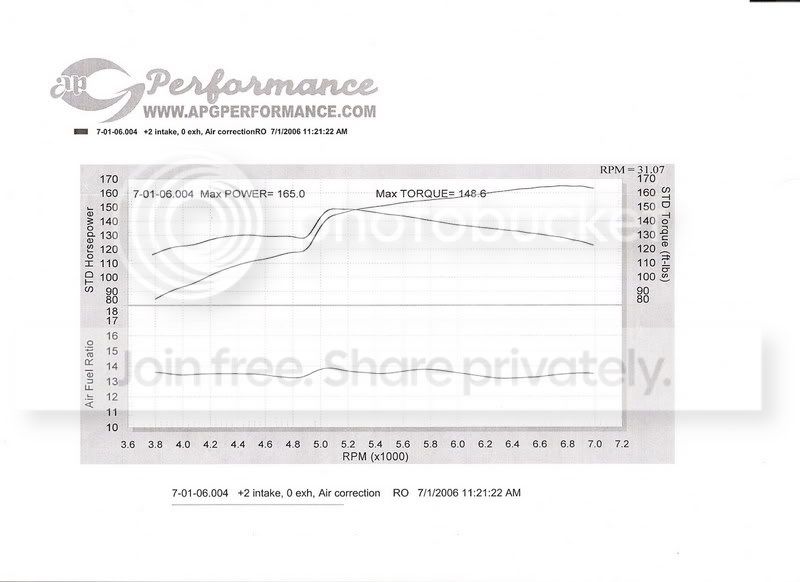
Same car same set up with JDM H22A block and 10lbs flywheel.
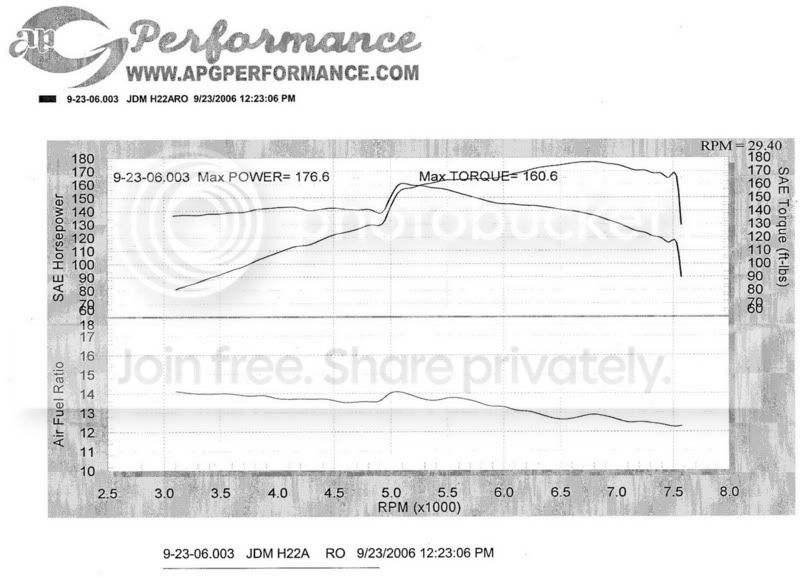
I love the torque 140lbs at like 3000 rpm already!
150 000m H22A1 with skimmed head, stock cams, stock headers.
Same car same set up with JDM H22A block and 10lbs flywheel.
I love the torque 140lbs at like 3000 rpm already!

Honda-Tech Member
Joined: Jul 2004
Posts: 621
Likes: 0
From: Jacksonville, Florida, USA
Re: (B.Rabbit)
<TABLE WIDTH="90%" CELLSPACING=0 CELLPADDING=0 ALIGN=CENTER><TR><TD>Quote, originally posted by B.Rabbit »</TD></TR><TR><TD CLASS="quote">my theory is that these flywheels allow the motor to make the same power "easier"</TD></TR></TABLE>
i think b.rabbit is the most correct one here. he's trying to say that when the motor spins the flywheel, it takes up a certain amount of energy, and that a lightweight flywheel takes up less energy to spin, therefore, instead of the engine spending energy in the flywheel, it's going to spend the energy on the wheels. again, that's just my opinion.
edit: wow i lost like 350 posts. oh well.
i think b.rabbit is the most correct one here. he's trying to say that when the motor spins the flywheel, it takes up a certain amount of energy, and that a lightweight flywheel takes up less energy to spin, therefore, instead of the engine spending energy in the flywheel, it's going to spend the energy on the wheels. again, that's just my opinion.
edit: wow i lost like 350 posts. oh well.