


brake bleeding, lots of air.


Thread Starter
Honda-Tech Member
Joined: Dec 2005
Posts: 229
Likes: 1
From: Richmond, VA
 brake bleeding, lots of air.
from what i've read while searching i got some air in my master cylinder... i went through 32oz of brake fluid and was still getting air. can a shop get the air out with a machine? do shops have machines for this crap?


Honda-Tech Member
Joined: Feb 2005
Posts: 4,038
Likes: 3
From: Kitchener, On, Canada
Re: brake bleeding, lots of air. (white90crxhf)
<TABLE WIDTH="90%" CELLSPACING=0 CELLPADDING=0 ALIGN=CENTER><TR><TD>Quote, originally posted by white90crxhf »</TD></TR><TR><TD CLASS="quote">from what i've read while searching i got some air in my master cylinder... i went through 32oz of brake fluid and was still getting air. can a shop get the air out with a machine? do shops have machines for this crap?</TD></TR></TABLE>
Are you bleeding them right? Cause if you are the air if forced out.
Are you bleeding them right? Cause if you are the air if forced out.
Thread Starter
Honda-Tech Member
Joined: Dec 2005
Posts: 229
Likes: 1
From: Richmond, VA
Re: brake bleeding, lots of air. (ludesrv)
almost no pressure, when i pour brake fluid in the resivor i can hear a sound, sort of like when you're pouring liquid out of a bottle and the air gets sucked back in.
yes i am bleeding them right, same way i've been doing it for years, first time ive had this problem. i just installed new wheel cylinders for my drums, left the stupid brake line off one side and tried to bleed the other side. yes i know stupid.
yes i am bleeding them right, same way i've been doing it for years, first time ive had this problem. i just installed new wheel cylinders for my drums, left the stupid brake line off one side and tried to bleed the other side. yes i know stupid.

Honda-Tech Member
Joined: Dec 2003
Posts: 60
Likes: 0
From: Nevada City, Ca
Re: brake bleeding, lots of air. (white90crxhf)
make sure youre not letting the level get too low before adding fluid in the master cylinder.
shops do have a variety of bleeders they could use that would save you a lot of time if you are having a lot of trouble getting it all out. question is how are you going to get your car there?
slowly pump up the brakes (with the bleeder valve closed and not bottoming out the brake pedal) 4 or 5 times. apply steady pressure to the brake pedal and open the bleeder valve on the caliper very briefly and close (before the pedal stops its travel) and repeat.
in this sequence : RR FL LR FR
have you checked that you dont have a leak anywhere? like maybe a wheel cylinder seal is not seated properly or was ripped?
shops do have a variety of bleeders they could use that would save you a lot of time if you are having a lot of trouble getting it all out. question is how are you going to get your car there?
slowly pump up the brakes (with the bleeder valve closed and not bottoming out the brake pedal) 4 or 5 times. apply steady pressure to the brake pedal and open the bleeder valve on the caliper very briefly and close (before the pedal stops its travel) and repeat.
in this sequence : RR FL LR FR
have you checked that you dont have a leak anywhere? like maybe a wheel cylinder seal is not seated properly or was ripped?
Honda-Tech Member
Joined: Feb 2005
Posts: 4,038
Likes: 3
From: Kitchener, On, Canada
Re: brake bleeding, lots of air. (sxy_rexi)
<TABLE WIDTH="90%" CELLSPACING=0 CELLPADDING=0 ALIGN=CENTER><TR><TD>Quote, originally posted by sxy_rexi »</TD></TR><TR><TD CLASS="quote">in this sequence : RR FL LR FR
have you checked that you dont have a leak anywhere? like maybe a wheel cylinder seal is not seated properly or was ripped?</TD></TR></TABLE>
Yes, make sure you aren't leaking it from anywhere. Maybe even a cracked hose. I lost brake pressure when a brake line under my back seat gave at the seal going to the outside rear wheel.
And you should bleed from furtest to nearest from the master cylinder.
have you checked that you dont have a leak anywhere? like maybe a wheel cylinder seal is not seated properly or was ripped?</TD></TR></TABLE>
Yes, make sure you aren't leaking it from anywhere. Maybe even a cracked hose. I lost brake pressure when a brake line under my back seat gave at the seal going to the outside rear wheel.
And you should bleed from furtest to nearest from the master cylinder.

Honda-Tech Member
Joined: Oct 2005
Posts: 174
Likes: 0
From: Madison, WI, USA
Re: brake bleeding, lots of air. (ludesrv)
<TABLE WIDTH="90%" CELLSPACING=0 CELLPADDING=0 ALIGN=CENTER><TR><TD>Quote, originally posted by sxy_rexi »</TD></TR><TR><TD CLASS="quote">
in this sequence : RR FL LR FR </TD></TR></TABLE>
how do you figure?
I work at a Honda Dealership and we only ever go
RR LR FR FL
Also to the OP, does there appear to be leaking fluid from around the master cylinder by any chance? Maybe while you were bleeding the brakes the pedal went all the way to the floor, and now the MC is bad, it happens on old cars like our, but Im not 100% sure why, but it happened to my buddy when he did that.
also sxy_rexi, i think the OP would ahve noticced if a seal was not on correctly or was ripped, because of the brake fluid that *should* gush out while bleeding,
So I am still for maybe a bad MC or you just need to bleed the MC, I would try bleeding the MC first, its cheaper
hehe this might just be the time to upgrade those rear drums to disc...and get a larger MC and brake booster heehee
Hope this help.
in this sequence : RR FL LR FR </TD></TR></TABLE>
how do you figure?
I work at a Honda Dealership and we only ever go
RR LR FR FL
Also to the OP, does there appear to be leaking fluid from around the master cylinder by any chance? Maybe while you were bleeding the brakes the pedal went all the way to the floor, and now the MC is bad, it happens on old cars like our, but Im not 100% sure why, but it happened to my buddy when he did that.
also sxy_rexi, i think the OP would ahve noticced if a seal was not on correctly or was ripped, because of the brake fluid that *should* gush out while bleeding,
So I am still for maybe a bad MC or you just need to bleed the MC, I would try bleeding the MC first, its cheaper
hehe this might just be the time to upgrade those rear drums to disc...and get a larger MC and brake booster heehee
Hope this help.
Trending Topics

Honda-Tech Member
Joined: Dec 2005
Posts: 1,748
Likes: 1
From: San Ramon/Pleasanton, CA, USA
Re: brake bleeding, lots of air. (aXhatch)
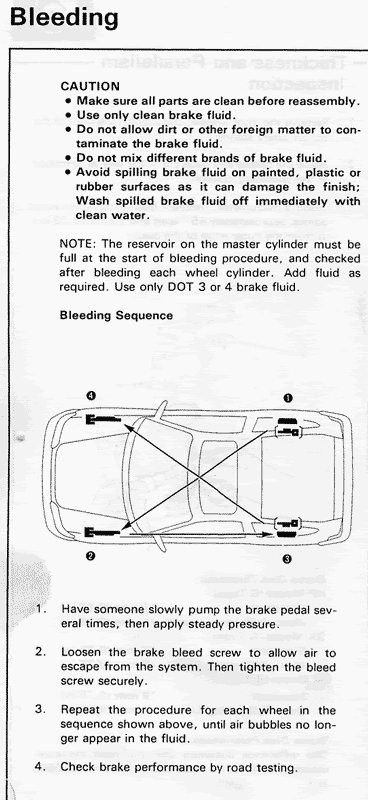
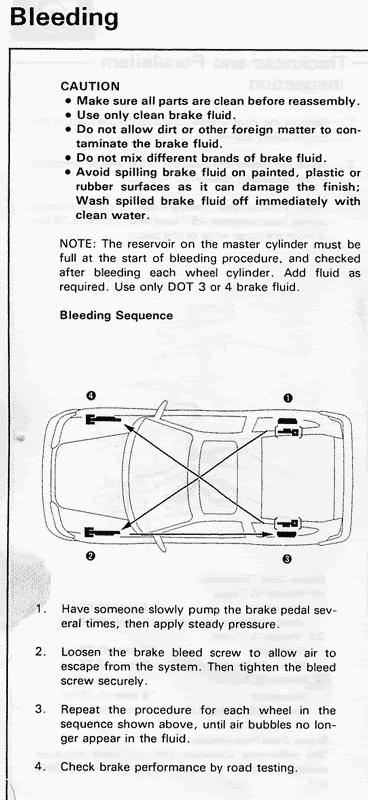
The reason the brakes are bled that way is because the system is seperated into two seperate halves RR LF are one half and LR RF is the other. This is for safety reasons but more on that later.
What will happen is when you do let's say RR then LR you will pull air from LF while you are doing the LR and will pump air into RR.
So do the seperate halves. It would not be specified in the manual if it didn't matter.
Going from experience... It matters.
What will happen is when you do let's say RR then LR you will pull air from LF while you are doing the LR and will pump air into RR.
So do the seperate halves. It would not be specified in the manual if it didn't matter.
Going from experience... It matters.
Honda-Tech Member
Joined: Dec 2003
Posts: 60
Likes: 0
From: Nevada City, Ca
Re: brake bleeding, lots of air. (aXhatch)
<TABLE WIDTH="90%" CELLSPACING=0 CELLPADDING=0 ALIGN=CENTER><TR><TD>Quote, originally posted by aXhatch »</TD></TR><TR><TD CLASS="quote">
how do you figure?
I work at a Honda Dealership and we only ever go
RR LR FR FL </TD></TR></TABLE>
...I just scanned this directly from the honda helm
<TABLE WIDTH="90%" CELLSPACING=0 CELLPADDING=0 ALIGN=CENTER><TR><TD>Quote, originally posted by aXhatch »</TD></TR><TR><TD CLASS="quote"> Maybe while you were bleeding the brakes the pedal went all the way to the floor, and now the MC is bad, it happens on old cars like our, but Im not 100% sure why, but it happened to my buddy when he did that.
also sxy_rexi, i think the OP would ahve noticced if a seal was not on correctly or was ripped, because of the brake fluid that *should* gush out while bleeding,
So I am still for maybe a bad MC or you just need to bleed the MC, I would try bleeding the MC first, its cheaper
</TD></TR></TABLE>
the reason for the MC going bad if youve bottomed out the pedal is that the longer than normal piston travel can damage the rubber cups as they pass over debris or corrosion in the cylinder bore.
I believe Corvette and other older more expensive domestics had a problem with this as people would store them for long periods of time without use.. the mc would corrode (as it was made out of cast iron) and the seals would rip very easily when they started using the brakes again
Modified by sxy_rexi at 7:23 PM 8/8/2006
Modified by sxy_rexi at 7:23 PM 8/8/2006
how do you figure?
I work at a Honda Dealership and we only ever go
RR LR FR FL </TD></TR></TABLE>
...I just scanned this directly from the honda helm
<TABLE WIDTH="90%" CELLSPACING=0 CELLPADDING=0 ALIGN=CENTER><TR><TD>Quote, originally posted by aXhatch »</TD></TR><TR><TD CLASS="quote"> Maybe while you were bleeding the brakes the pedal went all the way to the floor, and now the MC is bad, it happens on old cars like our, but Im not 100% sure why, but it happened to my buddy when he did that.
also sxy_rexi, i think the OP would ahve noticced if a seal was not on correctly or was ripped, because of the brake fluid that *should* gush out while bleeding,
So I am still for maybe a bad MC or you just need to bleed the MC, I would try bleeding the MC first, its cheaper
</TD></TR></TABLE>
the reason for the MC going bad if youve bottomed out the pedal is that the longer than normal piston travel can damage the rubber cups as they pass over debris or corrosion in the cylinder bore.
I believe Corvette and other older more expensive domestics had a problem with this as people would store them for long periods of time without use.. the mc would corrode (as it was made out of cast iron) and the seals would rip very easily when they started using the brakes again
Modified by sxy_rexi at 7:23 PM 8/8/2006
Modified by sxy_rexi at 7:23 PM 8/8/2006

Honda-Tech Member
Joined: Jul 2001
Posts: 6,779
Likes: 2
From: Land of the free, whoever told you that is your enemy
Re: brake bleeding, lots of air. (sxy_rexi)
Very good info. I always did RR,LR,RF,LF. No wonder my brakes are so spongy. I need to go back through, and rebleed that ****.

Member
Joined: Jul 2005
Posts: 1,017
Likes: 0
From: Chesapeake, VA
Re: brake bleeding, lots of air. (CRXBart)
are the wheel cylinders put on properly? as stupid as it sounds, if the bleeder valve is pointed in the wrong direction, it wont take all the air out of the system. if you have some pressure were you can take it to a reputable shop that does it, then take it over there. trust me that $70 bucks is totally going to be worth it because if you keep bleeding it and bleeding it and your still not build pressure, you may ruin the seals in the brake booster. have you tried putting a new master cylinder in? thats one of the biggest problems with older hondas.
Thread Starter
Honda-Tech Member
Joined: Dec 2005
Posts: 229
Likes: 1
From: Richmond, VA
Re: brake bleeding, lots of air. (4g4d)
everything was fine before i put on the wheel cylinders, the bleeder valves are pointing in the same direction, nothing is leaking i checked everything that could leak. the car did sit and not move for about 2 months while i rebuit the tranny.
how does one bleed the master cylinder? does it make that bubbling noise when adding fluid if it hasnt been bleeded?
Never going to get disks in the back, they weigh more and i like to change the drum brakes
how does one bleed the master cylinder? does it make that bubbling noise when adding fluid if it hasnt been bleeded?
Never going to get disks in the back, they weigh more and i like to change the drum brakes
Honda-Tech Member
Joined: Dec 2003
Posts: 60
Likes: 0
From: Nevada City, Ca
Re: brake bleeding, lots of air. (white90crxhf)
why do you think you got air in your mc?
you should be able to find a decent amount of info on google. this was one of the first things I found and looks to be pretty good info (the diagram is of a dual mc- but same concept) being bench bled
http://www.popularmechanics.co...2&c=y
air in the mc is normally an issue with new mcs or ones that have sat empty.
anyway youll need 2 clear hoses and some nipples that screw into where you remove the brake lines from the unit (i imagine auto parts stores have these.. mine were included with a rebuilt one)
attach nipples and put both tubes into the mc which is filled with new fluid.
the key is to go slow (and especially if your mc is used don't go too deep or youll definately rip the seals. ) hold for 15 seconds.. so that the bubbles can travel further up the hose.
I've personally only bench bled.. but i imagine that it would be no problem to do it while its in the car
just loop the hoses into the mc as described above and pump and hold your brakes while someone holds the hoses in the reservoir
if you bench bleed use something long and strong.. i just used an extension
you should be able to find a decent amount of info on google. this was one of the first things I found and looks to be pretty good info (the diagram is of a dual mc- but same concept) being bench bled
http://www.popularmechanics.co...2&c=y
air in the mc is normally an issue with new mcs or ones that have sat empty.
anyway youll need 2 clear hoses and some nipples that screw into where you remove the brake lines from the unit (i imagine auto parts stores have these.. mine were included with a rebuilt one)
attach nipples and put both tubes into the mc which is filled with new fluid.
the key is to go slow (and especially if your mc is used don't go too deep or youll definately rip the seals. ) hold for 15 seconds.. so that the bubbles can travel further up the hose.
I've personally only bench bled.. but i imagine that it would be no problem to do it while its in the car
just loop the hoses into the mc as described above and pump and hold your brakes while someone holds the hoses in the reservoir
if you bench bleed use something long and strong.. i just used an extension

Junior Member
Joined: Feb 2006
Posts: 273
Likes: 0
From: cornfield county, Mi, usa
Re: brake bleeding, lots of air. (4g4d)
yeah, i would guess either the mc or the brake booster...i'd get both checked out...i know from experience that driving a rex w/o brakes is NO kind of fun...or safe....

Junior Member
Joined: Jul 2006
Posts: 135
Likes: 0
From: Ventura, CA, 93003
Re: brake bleeding, lots of air. (hondasaurusrex)
If your still having trouble with this, send me an email and I'll tell you about a tool I built to bleed the brake's. You don't need to go spend $70, to bleed the brake's. 

Thread Starter
Honda-Tech Member
Joined: Dec 2005
Posts: 229
Likes: 1
From: Richmond, VA
Re: (92integra_gs)
alright, i was able to bleed the highest nut on the master cylinder, some air came out. i did all 4 tires then, brakes work great. now it wont stay running...Haha...
now it wont stay running...Haha...

Member
Joined: Jul 2005
Posts: 1,017
Likes: 0
From: Chesapeake, VA
Re: (white90crxhf)
<TABLE WIDTH="90%" CELLSPACING=0 CELLPADDING=0 ALIGN=CENTER><TR><TD>Quote, originally posted by white90crxhf »</TD></TR><TR><TD CLASS="quote">alright, i was able to bleed the highest nut on the master cylinder, some air came out. i did all 4 tires then, brakes work great. now it wont stay running...Haha... </TD></TR></TABLE>
did you happen to knock off any vaccum lines or accedently knock anything loose while changing the master cylinder?
now it wont stay running...Haha... </TD></TR></TABLE>did you happen to knock off any vaccum lines or accedently knock anything loose while changing the master cylinder?
Honda-Tech Member
Joined: Dec 2003
Posts: 60
Likes: 0
From: Nevada City, Ca
Re: (4g4d)
<TABLE WIDTH="90%" CELLSPACING=0 CELLPADDING=0 ALIGN=CENTER><TR><TD>Quote, originally posted by white90crxhf »</TD></TR><TR><TD CLASS="quote">
anyone ever have trouble with air getting to the front when replacing rear calipers?
</TD></TR></TABLE>
to be safe you really should bleed all four corners after doing anything where you open the brake lines.
anyone ever have trouble with air getting to the front when replacing rear calipers?
</TD></TR></TABLE>
to be safe you really should bleed all four corners after doing anything where you open the brake lines.

Thread
Thread Starter
Forum
Replies
Last Post
Mdxwithspeed1
Honda Accord (1990 - 2002)
2
Apr 6, 2018 11:14 AM
regal1975
Honda CRX / EF Civic (1988 - 1991)
4
Mar 28, 2014 06:02 PM
white90crxhf
Honda CRX / EF Civic (1988 - 1991)
3
Oct 22, 2012 06:31 AM
