


AC not working


Thread Starter
Member
Joined: Sep 2004
Posts: 1,476
Likes: 0
From: Leesburg, Fl, USA
 AC not working
Okay this is pretty simple, I had AC and now for some reason the Compressor isn't kicking on, I want to know are there any fuses or relays specifically for the compressor or would it automatically be the compressor. I check the freon and it was at 100 pounds I relieved the pressure and got it back down to 20 and still no luck,

Member
Joined: Jan 2002
Posts: 1,285
Likes: 0
From: Fayetteville, GA, USA
Re: AC not working (M15)
I know you said you checked the freon and its ok, but that is probably the problem. Do you have R12 or 134a?
There is a relay on the passenger side by the intake for the compressor but 9 times out of 10 the compressor clutch not kicking on is low refrigerant.
There is a relay on the passenger side by the intake for the compressor but 9 times out of 10 the compressor clutch not kicking on is low refrigerant.

Joined: Jun 2006
Posts: 90
Likes: 0
From: tampa, fl, usa
Re: AC not working (311)
There are two electrical points in the a/c system that will not allow the compressor to kick on. One is the high pressure side switch, its in the passenger side of the engine bay, down low... a real bitch to get to and disconnect. The other is the over temp switch that is part of the compressor, those two wires sticking out of the top of the compressor housing. If its a low refrigerant situation, the pressure switch will not close. To test, disconnect the high pressure switch and manually jump the contacts. Then start the engine and turn on the a/c, high cold setting. If the compressor is OK, you'll hear it kick in.
Thread Starter
Member
Joined: Sep 2004
Posts: 1,476
Likes: 0
From: Leesburg, Fl, USA
Re: AC not working (311)
<TABLE WIDTH="90%" CELLSPACING=0 CELLPADDING=0 ALIGN=CENTER><TR><TD>Quote, originally posted by 311 »</TD></TR><TR><TD CLASS="quote">I know you said you checked the freon and its ok, but that is probably the problem. Do you have R12 or 134a?
There is a relay on the passenger side by the intake for the compressor but 9 times out of 10 the compressor clutch not kicking on is low refrigerant. </TD></TR></TABLE>
I have R134A, I wanted to know how do I know what the relay looks like. I checked the panel and none of them are labeled as a relay for the AC.
There is a relay on the passenger side by the intake for the compressor but 9 times out of 10 the compressor clutch not kicking on is low refrigerant. </TD></TR></TABLE>
I have R134A, I wanted to know how do I know what the relay looks like. I checked the panel and none of them are labeled as a relay for the AC.

Honda-Tech Member
Joined: Apr 2004
Posts: 2,785
Likes: 1
From: phoenix, az
Re: AC not working (M15)
iirc that relay is located behind the R headlight.
<TABLE WIDTH="90%" CELLSPACING=0 CELLPADDING=0 ALIGN=CENTER><TR><TD>Quote, originally posted by M15 »</TD></TR><TR><TD CLASS="quote">I check the freon and it was at 100 pounds I relieved the pressure and got it back down to 20 and still no luck,</TD></TR></TABLE>
you reduced the charge?
if you have 20 psi static pressure then your compressor is locked out by the low pressure switch which opens around 30 psi.
too bad i didn't see this thread yesterday. i was in leesburg this morning and would have stopped by to take a look at it.
<TABLE WIDTH="90%" CELLSPACING=0 CELLPADDING=0 ALIGN=CENTER><TR><TD>Quote, originally posted by M15 »</TD></TR><TR><TD CLASS="quote">I check the freon and it was at 100 pounds I relieved the pressure and got it back down to 20 and still no luck,</TD></TR></TABLE>
you reduced the charge?
if you have 20 psi static pressure then your compressor is locked out by the low pressure switch which opens around 30 psi.
too bad i didn't see this thread yesterday. i was in leesburg this morning and would have stopped by to take a look at it.
Thread Starter
Member
Joined: Sep 2004
Posts: 1,476
Likes: 0
From: Leesburg, Fl, USA
Re: AC not working (eda6)
If the compressor is locked out by the low pressure switch, then where is that loc ated so that I can replace it?
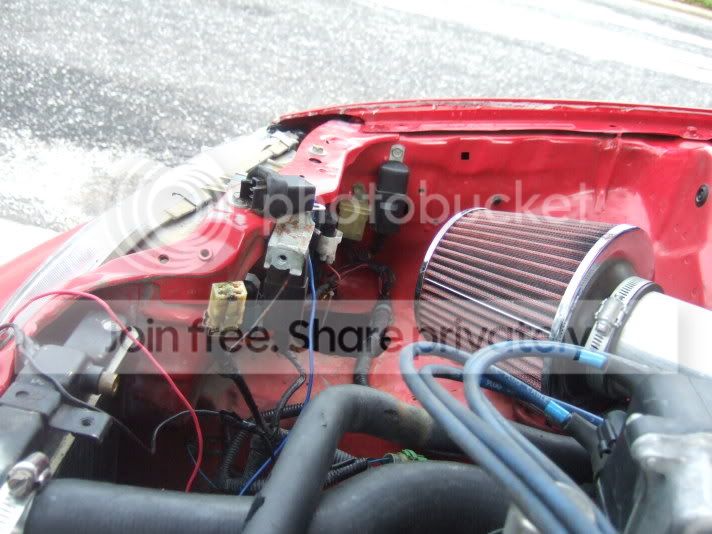
Also is this one of the relays for the AC?(the one that is disconnected)
Modified by M15 at 4:48 PM 7/13/2006
Also is this one of the relays for the AC?(the one that is disconnected)
Modified by M15 at 4:48 PM 7/13/2006


Trending Topics


Honda-Tech Member
Joined: Apr 2004
Posts: 2,785
Likes: 1
From: phoenix, az
Re: (88DXCRX)
the switch opens on low pressure at 33 psi.
the switch opens on high pressure at 340 psi.
if you bypass the pressure switch and it doesn't kick on have fun with your meter
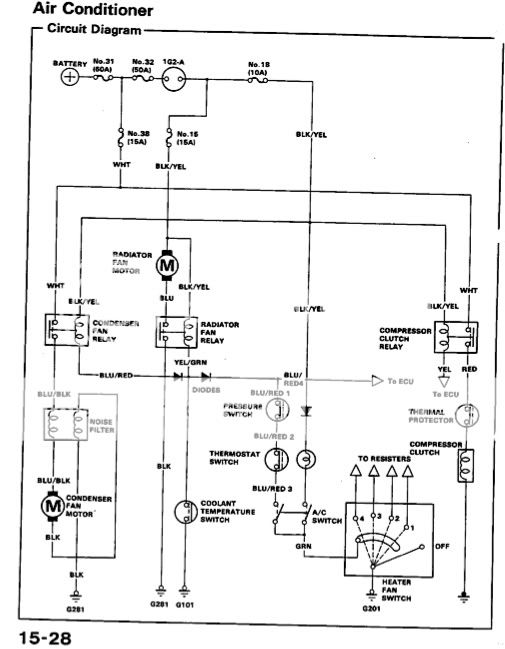
the switch opens on high pressure at 340 psi.
if you bypass the pressure switch and it doesn't kick on have fun with your meter

Honda-Tech Member
Joined: Jul 2004
Posts: 9,846
Likes: 0
From: VA, USA
Re: (88DXCRX)
<TABLE WIDTH="90%" CELLSPACING=0 CELLPADDING=0 ALIGN=CENTER><TR><TD>Quote, originally posted by 88DXCRX »</TD></TR><TR><TD CLASS="quote">If it kicks in,You will hear a metallic "click" and the
center portain of the compressor will begin to spin..
</TD></TR></TABLE>

center portain of the compressor will begin to spin..
</TD></TR></TABLE>
Honda-Tech Member
Joined: Jul 2004
Posts: 9,846
Likes: 0
From: VA, USA
Re: AC not working (M15)
<TABLE WIDTH="90%" CELLSPACING=0 CELLPADDING=0 ALIGN=CENTER><TR><TD>Quote, originally posted by M15 »</TD></TR><TR><TD CLASS="quote"> I check the freon and it was at 100 pounds I relieved the pressure and got it back down to 20 and still no luck,</TD></TR></TABLE>
How do you check the pressure?
How do you check the pressure?
Honda-Tech Member
Joined: Apr 2004
Posts: 2,785
Likes: 1
From: phoenix, az
Re: AC not working (Tippyman)
<TABLE WIDTH="90%" CELLSPACING=0 CELLPADDING=0 ALIGN=CENTER><TR><TD>Quote, originally posted by Tippyman »</TD></TR><TR><TD CLASS="quote">
How do you check the pressure?</TD></TR></TABLE>
install gages on the access ports. if you're using a manifold make sure you slightly loosen the hoses on the manifold before you connect to the access port. Non-condensables will contaminate your system if you don't purge the hoses.
How do you check the pressure?</TD></TR></TABLE>
install gages on the access ports. if you're using a manifold make sure you slightly loosen the hoses on the manifold before you connect to the access port. Non-condensables will contaminate your system if you don't purge the hoses.
Thread Starter
Member
Joined: Sep 2004
Posts: 1,476
Likes: 0
From: Leesburg, Fl, USA
Re: AC not working (eda6)
I bought one of the gauges from autozone, that tells you what the pressure is, as you refill the sytem with more R134A, I checked it and it said it was at 100 pounds, a danger level then I just took a pen and pushed in the low pressure side and allowed the freon out into the atmosphere.
Thread Starter
Member
Joined: Sep 2004
Posts: 1,476
Likes: 0
From: Leesburg, Fl, USA
Re: (88DXCRX)
[QUOTE=88DXCRX]pressure switch:

QUOTE]
Hey I was looking at the pic of the pressure switch and I wanted to know is that little hose with the tapered end supposed to be it? I've never seen one before, so I'm not 100% sure.

QUOTE]
Hey I was looking at the pic of the pressure switch and I wanted to know is that little hose with the tapered end supposed to be it? I've never seen one before, so I'm not 100% sure.
Thread Starter
Member
Joined: Sep 2004
Posts: 1,476
Likes: 0
From: Leesburg, Fl, USA
Re: (M15)
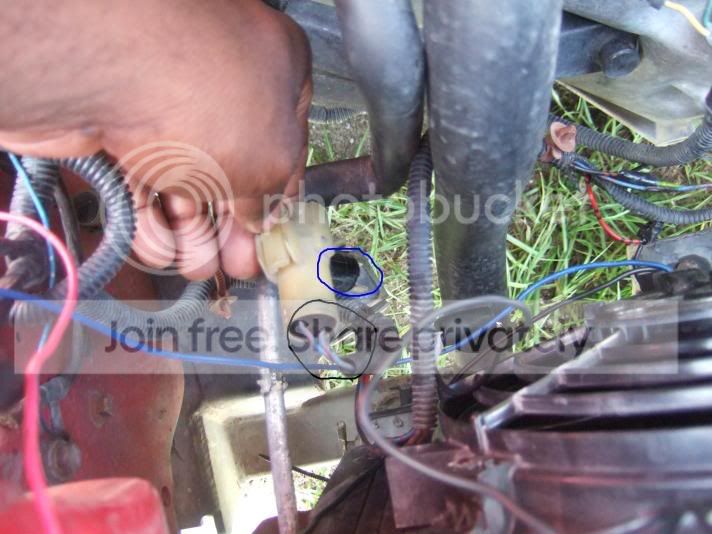
Okay well I circled in blue one of the places that I checked. When I turned the car on and turned the AC I checked those two lines in black. but when I turned the AC on I had power to where the black circles are, and I am assuming that the piece that is circled in blue is the low side pressure switch please correct me if I am wrong.
Honda-Tech Member
Joined: Jul 2004
Posts: 9,846
Likes: 0
From: VA, USA
<TABLE WIDTH="90%" CELLSPACING=0 CELLPADDING=0 ALIGN=CENTER><TR><TD>Quote, originally posted by 88DXCRX »</TD></TR><TR><TD CLASS="quote">That is it..
What you want to do to see if the compressor works is to
connect a jumper wire like this:
 </TD></TR></TABLE>
And what will that do?
What you want to do to see if the compressor works is to
connect a jumper wire like this:
 </TD></TR></TABLE>
And what will that do?
Honda-Tech Member
Joined: Jul 2004
Posts: 9,846
Likes: 0
From: VA, USA
Re: AC not working (eda6)
<TABLE WIDTH="90%" CELLSPACING=0 CELLPADDING=0 ALIGN=CENTER><TR><TD>Quote, originally posted by eda6 »</TD></TR><TR><TD CLASS="quote">
install gages on the access ports. if you're using a manifold make sure you slightly loosen the hoses on the manifold before you connect to the access port. Non-condensables will contaminate your system if you don't purge the hoses.</TD></TR></TABLE>
Sorry for acting like a noob, but that was all greek to me!
install gages on the access ports. if you're using a manifold make sure you slightly loosen the hoses on the manifold before you connect to the access port. Non-condensables will contaminate your system if you don't purge the hoses.</TD></TR></TABLE>
Sorry for acting like a noob, but that was all greek to me!
Honda-Tech Member
Joined: Apr 2004
Posts: 2,785
Likes: 1
From: phoenix, az
Re: AC not working (Tippyman)
<TABLE WIDTH="90%" CELLSPACING=0 CELLPADDING=0 ALIGN=CENTER><TR><TD>Quote, originally posted by Tippyman »</TD></TR><TR><TD CLASS="quote">
And what will that do?</TD></TR></TABLE>
if the switch is open, the circuit is incomplete and electricity can't flow. the jumper completes the circuit by bypassing the open switch.
<TABLE WIDTH="90%" CELLSPACING=0 CELLPADDING=0 ALIGN=CENTER><TR><TD>Quote, originally posted by Tippyman »</TD></TR><TR><TD CLASS="quote">
Sorry for acting like a noob, but that was all greek to me!</TD></TR></TABLE>
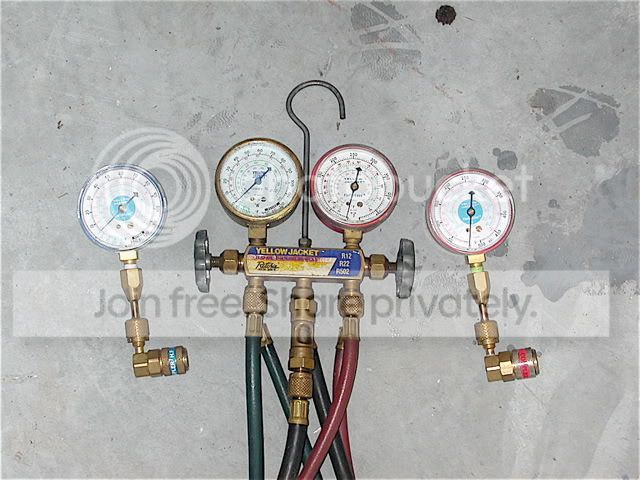
to check pressures you need to install gages. good refrigeration skills are imperative when working on a small system. Most people have the set pictured in the middle and the r/l gages are homemade. there will be air in the hose between the port and the manifold. before you connect to the port you need to loosen the red and blue hoses on the front side of the manifold. A half turn is good enough. Hook up the hi side first. First you'll hear the air coming out and then you'll see a cloud. Once you see that cloud tighten those hoses because your liquid refrigerant is escaping. This is the proper way to purge the lines.
Failure to purge the lines will result in an inefficient ac system because air is taking up space that could be used for refrigerant. system capacity is decreased, suction pressure is lower, discharge pressure is higher and the moisture in the air can mix with the oil and create acid.
And what will that do?</TD></TR></TABLE>
if the switch is open, the circuit is incomplete and electricity can't flow. the jumper completes the circuit by bypassing the open switch.
<TABLE WIDTH="90%" CELLSPACING=0 CELLPADDING=0 ALIGN=CENTER><TR><TD>Quote, originally posted by Tippyman »</TD></TR><TR><TD CLASS="quote">
Sorry for acting like a noob, but that was all greek to me!</TD></TR></TABLE>
to check pressures you need to install gages. good refrigeration skills are imperative when working on a small system. Most people have the set pictured in the middle and the r/l gages are homemade. there will be air in the hose between the port and the manifold. before you connect to the port you need to loosen the red and blue hoses on the front side of the manifold. A half turn is good enough. Hook up the hi side first. First you'll hear the air coming out and then you'll see a cloud. Once you see that cloud tighten those hoses because your liquid refrigerant is escaping. This is the proper way to purge the lines.
Failure to purge the lines will result in an inefficient ac system because air is taking up space that could be used for refrigerant. system capacity is decreased, suction pressure is lower, discharge pressure is higher and the moisture in the air can mix with the oil and create acid.
Honda-Tech Member
Joined: Jul 2004
Posts: 9,846
Likes: 0
From: VA, USA
Re: (88DXCRX)
<TABLE WIDTH="90%" CELLSPACING=0 CELLPADDING=0 ALIGN=CENTER><TR><TD>Quote, originally posted by eda6 »</TD></TR><TR><TD CLASS="quote">if the switch is open, the circuit is incomplete and electricity can't flow. the jumper completes the circuit by bypassing the open switch.</TD></TR></TABLE>
So it will let me know if the compressor actually works by by-passing the pressure switch?
-If I jump it and the compressor kicks on, what does that mean?
-If I jump it and the compressor does NOT kick on, what does that mean?
<TABLE WIDTH="90%" CELLSPACING=0 CELLPADDING=0 ALIGN=CENTER><TR><TD>Quote, originally posted by 88DXCRX »</TD></TR><TR><TD CLASS="quote">That is it..
What you want to do to see if the compressor works is to
connect a jumper wire like this:
</TD></TR></TABLE>
Where is that plug located? I can't tell from the pic.
So it will let me know if the compressor actually works by by-passing the pressure switch?
-If I jump it and the compressor kicks on, what does that mean?
-If I jump it and the compressor does NOT kick on, what does that mean?
<TABLE WIDTH="90%" CELLSPACING=0 CELLPADDING=0 ALIGN=CENTER><TR><TD>Quote, originally posted by 88DXCRX »</TD></TR><TR><TD CLASS="quote">That is it..
What you want to do to see if the compressor works is to
connect a jumper wire like this:
</TD></TR></TABLE>Where is that plug located? I can't tell from the pic.