


Question about Old Tires


Thread Starter
Member
Joined: Feb 2004
Posts: 2,962
Likes: 0
From: Torrance, CA
 Question about Old Tires
I have some 5 yr old tires.
They show small cracks.
How dangerous is this?
Is there anything that can fix/help its lifespan?
Thanks im probably going to have to put these on since its been raining and i have about 10% on my azenis
They show small cracks.
How dangerous is this?
Is there anything that can fix/help its lifespan?
Thanks im probably going to have to put these on since its been raining and i have about 10% on my azenis

H-T Order of Merit
Joined: Jan 2000
Posts: 23,478
Likes: 2
From: Chicago
Re: Question about Old Tires (khaa)
From the Tire Rack website:
Rubber Cracking
Tires are subjected to one of the harshest environments experienced by any consumer product. In addition to being stretched millions of times as they roll through their life, tires are exposed to acid rain, brake dust, harsh chemicals and direct sunlight, as well as summer's heat and winter's cold. And while a tire's rubber compounds have anti-aging chemicals in their recipes, exposure to the elements will eventually cause rubber to lose some of its elasticity and allow surface cracks to appear.
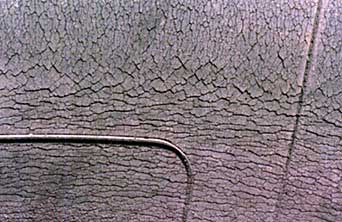
The surface cracks that occasionally appear have been called many things; Weather Checking, Weather Cracking or Ozone Cracking. These small cracks typically develop in the sidewalls or at the base of the tread grooves. Depending on their severity, they may be cosmetic in nature if they don't extend past the rubber's outer surface, or may be a reason to replace the tire if they reach deep into the rubber.
Because all tires are made of rubber, all tires will eventually exhibit some type of cracking condition, usually late in their life. However, this cracking can be accelerated by too much exposure to heat, vehicle exhaust, ozone and sunlight, as well as electric generators and motors (that have armature brushes). For example, a vehicle parked outside instead of in a garage will constantly expose its tires to the rays of the sun, increasing the likelihood of cracking. Additionally, some sidewall cracking has been linked to abrasion from parking against a curb, or the excessive use of tire cleaners/dressings that inadvertently remove some of the tire's anti-oxidants and anti-ozone protection during every cleaning procedure. Interestingly enough, when sun exposure or excessive cleaning is the cause of the small cracks, the sidewall of the tire facing outward will show damage, while the sidewall facing inward is rarely affected.
The anti-aging chemicals used in the rubber compounds are more effective when the tire is "exercised" on a frequent basis. The repeated stretching of the rubber compound actually helps resist cracks forming. The tires used on vehicles that are driven infrequently, or accumulate low annual mileage are more likely to experience cracking because long periods of parking or storage interrupt "working" the rubber. In addition to being an annoyance to show car owners, this condition often frustrates motor home and recreational vehicle owners who only take occasional trips and cannot even park their vehicle in a garage or shaded area. Using tire covers at least minimizes direct exposure to sunlight.
Tire manufacturers' warranties typically cover cracking for a period of 4 years from the date the tire was purchased (receipt for the new tires or in-service date of the vehicle required) or four years from the date the tire was manufactured.
There are a few conditions that would possibly void the manufacture's coverage. The same types of cracks can also be caused by poor tire maintenance practices. Driving on a tire that was flat, or one that was underinflated or overloaded causes excessive stretching of the rubber compound, and may result in cracks that appear similar to the surface cracks mentioned above. The manufacturers' warranty might not apply if an interior inspection of the tire clearly indicates that the cracks were due to these conditions.
Tire Aging
Nothing Lasts Forever...and Tires Are No Exception
In the 1970s, bias ply tires wore out in about 15,000 miles during two years of service. In the 1980s, early radial ply tires wore out in about 40,000 miles during four years of service. And by the turn of the century, radial tires lasting 60,000 to 80,000 miles were providing four or more years of service on vehicles averaging about 15,000 miles per year. In all of these examples, the tire treads "wore out" before the rest of the tire "aged out."
However, not all of today's vehicles average15,000 miles per year. Multiple-vehicle families, occasionally used recreational vehicles and vehicles driven only for pleasure are driven fewer miles per year. Additionally, enthusiast vehicles trailered to events, shows, stored or put on display for extended periods of time put on far fewer miles. It's possible to encounter ten-year-old tires with significant remaining tread depth because they've been driven less than 1,000 miles a year!
Unfortunately, the growing realization that tires are perishable means that the tires on some of these vehicles will actually "age out" before they "wear out."
How long will tires last before aging out? The U.S. National Highway Traffic Safety Administration and tire manufacturers are currently studying the many variables. Heavily loaded tires only driven occasionally in scorching climates face some of the most severe conditions, while lightly loaded tires driven every day in moderate climates experience the least severe. Add to that the amount of exposure to the elements (sun and atmospheric) and the quality of tire and vehicle maintenance practices (proper inflation pressure, wheel alignment, etc) and you have an idea of the complexity of the situation. While tire life will ultimately depend on the tires' service conditions and the environment in which they operate, the difficult task remains how to confirm and quantify it.
The current industry association recommendations regarding inspecting and replacing tires due to age originate outside the United States.
The British Rubber Manufacturers Association (BRMA) recommended practice issued June, 2001, states "BRMA members strongly recommend that unused tyres should not be put into service if they are over six years old and that all tyres should be replaced ten years from the date of their manufacture."
Environmental conditions like exposure to sunlight and coastal climates, as well as poor storage and infrequent use, accelerate the aging process. In ideal conditions, a tyre may have a life expectancy that exceeds ten years from its date of manufacture. However, such conditions are rare. Aging may not exhibit any external indications and, since there is no non-destructive test to assess the serviceability of a tyre, even an inspection carried out by a tyre expert may not reveal the extent of any deterioration."
More recently, The Japan Automobile Tire Manufacturers Association (JATMA) recommended practice issued May, 2005, states "customers are encouraged to have their vehicle tires promptly inspected after five years of use to determine if the tires can continue to be used (recommends spare tires be inspected as well). Furthermore, even when the tires look usable, it is recommended that all tires (including spare tires) that were made more than ten years ago be replaced with new tires. Additionally, because in some cases automobile makers—based on the characteristics of the relevant vehicle—stipulate in the owner's manual the timing of tire inspection and replacement. Please read and confirm the content of the owner's manual."
Several European vehicle manufacturers of high performance sports cars, coupes and sedans identify that "under no circumstances should tires older than 6 years be used" in their vehicle owner's manual. However, it should be noted that European recommendations must include driving conditions that include roads like the German Autobahn, which allows vehicles to be legally driven at their top speeds for extended periods of time.
While American driving conditions don't include the high-speed challenges of the German Autobahn, the U.S. divisions of DaimlerChrysler and Ford Motor Company joined their European colleagues in 2005 by recommending the tires installed as Original Equipment be replaced after six years of service. (General Motors declined to offer a recommendation until a more scientific analysis of driving conditions and tire aging could be completed).
It's common for The Tire Rack to receive new tires direct from the manufacturer that are three to six months old. Since we rotate our inventory, most of the tires we ship are less than a year old. There are some occasions where we work with a tire manufacturer to help them clear out their warehouses when they discontinue a tire line. While this clearance frequently uncovers some new tires that are several years old, these tires are offered at a significant discount and will most likely be worn out within their useful lifespan.
It is also important to note that the more aggressive the tires' tread compound, the shorter its life. DOT-legal competition tires would have the shortest shelf live before the aging process would begin to diminish their performance. Sometimes the tires that were just right at the end of this season will be too aged to be fully effective the next year. Max Performance and Ultra High Performance tires would be next, and so on down the line.
Our experience has been that when properly cared for, most street tires have a useful life of between six to ten years. And while part of that time is spent as the tire travels from the manufacturing plant to the manufacturer's warehouse, to the retailer and to you, the remainder is the time it spends on your vehicle.
Rubber Cracking
Tires are subjected to one of the harshest environments experienced by any consumer product. In addition to being stretched millions of times as they roll through their life, tires are exposed to acid rain, brake dust, harsh chemicals and direct sunlight, as well as summer's heat and winter's cold. And while a tire's rubber compounds have anti-aging chemicals in their recipes, exposure to the elements will eventually cause rubber to lose some of its elasticity and allow surface cracks to appear.
The surface cracks that occasionally appear have been called many things; Weather Checking, Weather Cracking or Ozone Cracking. These small cracks typically develop in the sidewalls or at the base of the tread grooves. Depending on their severity, they may be cosmetic in nature if they don't extend past the rubber's outer surface, or may be a reason to replace the tire if they reach deep into the rubber.
Because all tires are made of rubber, all tires will eventually exhibit some type of cracking condition, usually late in their life. However, this cracking can be accelerated by too much exposure to heat, vehicle exhaust, ozone and sunlight, as well as electric generators and motors (that have armature brushes). For example, a vehicle parked outside instead of in a garage will constantly expose its tires to the rays of the sun, increasing the likelihood of cracking. Additionally, some sidewall cracking has been linked to abrasion from parking against a curb, or the excessive use of tire cleaners/dressings that inadvertently remove some of the tire's anti-oxidants and anti-ozone protection during every cleaning procedure. Interestingly enough, when sun exposure or excessive cleaning is the cause of the small cracks, the sidewall of the tire facing outward will show damage, while the sidewall facing inward is rarely affected.
The anti-aging chemicals used in the rubber compounds are more effective when the tire is "exercised" on a frequent basis. The repeated stretching of the rubber compound actually helps resist cracks forming. The tires used on vehicles that are driven infrequently, or accumulate low annual mileage are more likely to experience cracking because long periods of parking or storage interrupt "working" the rubber. In addition to being an annoyance to show car owners, this condition often frustrates motor home and recreational vehicle owners who only take occasional trips and cannot even park their vehicle in a garage or shaded area. Using tire covers at least minimizes direct exposure to sunlight.
Tire manufacturers' warranties typically cover cracking for a period of 4 years from the date the tire was purchased (receipt for the new tires or in-service date of the vehicle required) or four years from the date the tire was manufactured.
There are a few conditions that would possibly void the manufacture's coverage. The same types of cracks can also be caused by poor tire maintenance practices. Driving on a tire that was flat, or one that was underinflated or overloaded causes excessive stretching of the rubber compound, and may result in cracks that appear similar to the surface cracks mentioned above. The manufacturers' warranty might not apply if an interior inspection of the tire clearly indicates that the cracks were due to these conditions.
Tire Aging
Nothing Lasts Forever...and Tires Are No Exception
In the 1970s, bias ply tires wore out in about 15,000 miles during two years of service. In the 1980s, early radial ply tires wore out in about 40,000 miles during four years of service. And by the turn of the century, radial tires lasting 60,000 to 80,000 miles were providing four or more years of service on vehicles averaging about 15,000 miles per year. In all of these examples, the tire treads "wore out" before the rest of the tire "aged out."
However, not all of today's vehicles average15,000 miles per year. Multiple-vehicle families, occasionally used recreational vehicles and vehicles driven only for pleasure are driven fewer miles per year. Additionally, enthusiast vehicles trailered to events, shows, stored or put on display for extended periods of time put on far fewer miles. It's possible to encounter ten-year-old tires with significant remaining tread depth because they've been driven less than 1,000 miles a year!
Unfortunately, the growing realization that tires are perishable means that the tires on some of these vehicles will actually "age out" before they "wear out."
How long will tires last before aging out? The U.S. National Highway Traffic Safety Administration and tire manufacturers are currently studying the many variables. Heavily loaded tires only driven occasionally in scorching climates face some of the most severe conditions, while lightly loaded tires driven every day in moderate climates experience the least severe. Add to that the amount of exposure to the elements (sun and atmospheric) and the quality of tire and vehicle maintenance practices (proper inflation pressure, wheel alignment, etc) and you have an idea of the complexity of the situation. While tire life will ultimately depend on the tires' service conditions and the environment in which they operate, the difficult task remains how to confirm and quantify it.
The current industry association recommendations regarding inspecting and replacing tires due to age originate outside the United States.
The British Rubber Manufacturers Association (BRMA) recommended practice issued June, 2001, states "BRMA members strongly recommend that unused tyres should not be put into service if they are over six years old and that all tyres should be replaced ten years from the date of their manufacture."
Environmental conditions like exposure to sunlight and coastal climates, as well as poor storage and infrequent use, accelerate the aging process. In ideal conditions, a tyre may have a life expectancy that exceeds ten years from its date of manufacture. However, such conditions are rare. Aging may not exhibit any external indications and, since there is no non-destructive test to assess the serviceability of a tyre, even an inspection carried out by a tyre expert may not reveal the extent of any deterioration."
More recently, The Japan Automobile Tire Manufacturers Association (JATMA) recommended practice issued May, 2005, states "customers are encouraged to have their vehicle tires promptly inspected after five years of use to determine if the tires can continue to be used (recommends spare tires be inspected as well). Furthermore, even when the tires look usable, it is recommended that all tires (including spare tires) that were made more than ten years ago be replaced with new tires. Additionally, because in some cases automobile makers—based on the characteristics of the relevant vehicle—stipulate in the owner's manual the timing of tire inspection and replacement. Please read and confirm the content of the owner's manual."
Several European vehicle manufacturers of high performance sports cars, coupes and sedans identify that "under no circumstances should tires older than 6 years be used" in their vehicle owner's manual. However, it should be noted that European recommendations must include driving conditions that include roads like the German Autobahn, which allows vehicles to be legally driven at their top speeds for extended periods of time.
While American driving conditions don't include the high-speed challenges of the German Autobahn, the U.S. divisions of DaimlerChrysler and Ford Motor Company joined their European colleagues in 2005 by recommending the tires installed as Original Equipment be replaced after six years of service. (General Motors declined to offer a recommendation until a more scientific analysis of driving conditions and tire aging could be completed).
It's common for The Tire Rack to receive new tires direct from the manufacturer that are three to six months old. Since we rotate our inventory, most of the tires we ship are less than a year old. There are some occasions where we work with a tire manufacturer to help them clear out their warehouses when they discontinue a tire line. While this clearance frequently uncovers some new tires that are several years old, these tires are offered at a significant discount and will most likely be worn out within their useful lifespan.
It is also important to note that the more aggressive the tires' tread compound, the shorter its life. DOT-legal competition tires would have the shortest shelf live before the aging process would begin to diminish their performance. Sometimes the tires that were just right at the end of this season will be too aged to be fully effective the next year. Max Performance and Ultra High Performance tires would be next, and so on down the line.
Our experience has been that when properly cared for, most street tires have a useful life of between six to ten years. And while part of that time is spent as the tire travels from the manufacturing plant to the manufacturer's warehouse, to the retailer and to you, the remainder is the time it spends on your vehicle.
Thread Starter
Member
Joined: Feb 2004
Posts: 2,962
Likes: 0
From: Torrance, CA
Re: Question about Old Tires (nsxtasy)
Hey nsx, thanks for the good info 
but i believe my question remains unanswered (unless i missed it which is probable)
<TABLE WIDTH="90%" CELLSPACING=0 CELLPADDING=0 ALIGN=CENTER><TR><TD>Quote, originally posted by khaa »</TD></TR><TR><TD CLASS="quote">
How dangerous is this?
Is there anything that can fix/help its lifespan?
</TD></TR></TABLE>
They have been already mounted
but i believe my question remains unanswered (unless i missed it which is probable)
<TABLE WIDTH="90%" CELLSPACING=0 CELLPADDING=0 ALIGN=CENTER><TR><TD>Quote, originally posted by khaa »</TD></TR><TR><TD CLASS="quote">
How dangerous is this?
Is there anything that can fix/help its lifespan?
</TD></TR></TABLE>
They have been already mounted
H-T Order of Merit
Joined: Jan 2000
Posts: 23,478
Likes: 2
From: Chicago
Re: Question about Old Tires (khaa)
Okay...
<TABLE WIDTH="90%" CELLSPACING=0 CELLPADDING=0 ALIGN=CENTER><TR><TD>Quote, originally posted by khaa »</TD></TR><TR><TD CLASS="quote">They show small cracks.
How dangerous is this?</TD></TR></TABLE>
That depends on how small the cracks are. I would follow their advice:
<TABLE WIDTH="90%" CELLSPACING=0 CELLPADDING=0 ALIGN=CENTER><TR><TD>Quote, originally posted by Tire Rack »</TD></TR><TR><TD CLASS="quote">Depending on their severity, they may be cosmetic in nature if they don't extend past the rubber's outer surface, or may be a reason to replace the tire if they reach deep into the rubber.</TD></TR></TABLE>
<TABLE WIDTH="90%" CELLSPACING=0 CELLPADDING=0 ALIGN=CENTER><TR><TD>Quote, originally posted by khaa »</TD></TR><TR><TD CLASS="quote">Is there anything that can fix/help its lifespan?</TD></TR></TABLE>
You can follow the advice above (regarding exercising the tires, or covering them if they're not being used) to prevent the cracks from getting worse.
<TABLE WIDTH="90%" CELLSPACING=0 CELLPADDING=0 ALIGN=CENTER><TR><TD>Quote, originally posted by khaa »</TD></TR><TR><TD CLASS="quote">They show small cracks.
How dangerous is this?</TD></TR></TABLE>
That depends on how small the cracks are. I would follow their advice:
<TABLE WIDTH="90%" CELLSPACING=0 CELLPADDING=0 ALIGN=CENTER><TR><TD>Quote, originally posted by Tire Rack »</TD></TR><TR><TD CLASS="quote">Depending on their severity, they may be cosmetic in nature if they don't extend past the rubber's outer surface, or may be a reason to replace the tire if they reach deep into the rubber.</TD></TR></TABLE>
<TABLE WIDTH="90%" CELLSPACING=0 CELLPADDING=0 ALIGN=CENTER><TR><TD>Quote, originally posted by khaa »</TD></TR><TR><TD CLASS="quote">Is there anything that can fix/help its lifespan?</TD></TR></TABLE>
You can follow the advice above (regarding exercising the tires, or covering them if they're not being used) to prevent the cracks from getting worse.

Joined: Jan 2006
Posts: 10
Likes: 0
Re: Question about Old Tires (nsxtasy)
<TABLE WIDTH="90%" CELLSPACING=0 CELLPADDING=0 ALIGN=CENTER><TR><TD>Quote, originally posted by khanakin skywalker »</TD></TR><TR><TD CLASS="quote">
but i believe my question remains unanswered </TD></TR></TABLE>
Just buy new tires you cheap ***
but i believe my question remains unanswered </TD></TR></TABLE>
Just buy new tires you cheap ***


Thread
Thread Starter
Forum
Replies
Last Post
Cosworth
Acura Integra Type-R
4
Apr 29, 2003 02:02 PM
