


Azenis suck...


Thread Starter
Honda-Tech Member
Joined: Sep 2002
Posts: 2,869
Likes: 0
From: East of Sac, CA, USA
 Re: Azenis suck... (slammed_93_hatch)
<TABLE WIDTH="90%" CELLSPACING=0 CELLPADDING=0 ALIGN=CENTER><TR><TD>Quote, originally posted by slammed_93_hatch »</TD></TR><TR><TD CLASS="quote">what happened?</TD></TR></TABLE>
They get a bit squirrely on the freeway going 80mph and a lot of water on the road.
They get a bit squirrely on the freeway going 80mph and a lot of water on the road.

Honda-Tech Member
Joined: Jul 2005
Posts: 2,641
Likes: 2
From: ottawa,, top of the map
Re: Azenis suck... (beedoublejay)
<TABLE WIDTH="90%" CELLSPACING=0 CELLPADDING=0 ALIGN=CENTER><TR><TD>Quote, originally posted by beedoublejay »</TD></TR><TR><TD CLASS="quote">
They get a bit squirrely on the freeway going 80mph and a lot of water on the road. </TD></TR></TABLE>
what size do you have? I bet you it's something wide. How much tread do you have left, those things wear down quickly. Maybe one should just not do 80 on a highway with "a lot of water on the road"
They get a bit squirrely on the freeway going 80mph and a lot of water on the road.
</TD></TR></TABLE>what size do you have? I bet you it's something wide. How much tread do you have left, those things wear down quickly. Maybe one should just not do 80 on a highway with "a lot of water on the road"
Honda-Tech Member
Joined: Jul 2005
Posts: 2,641
Likes: 2
From: ottawa,, top of the map
Re: Azenis suck... (beedoublejay)
<TABLE WIDTH="90%" CELLSPACING=0 CELLPADDING=0 ALIGN=CENTER><TR><TD>Quote, originally posted by beedoublejay »</TD></TR><TR><TD CLASS="quote">205/50-15's the tread is pretty low and they are the old Azenis, not the rt-615's</TD></TR></TABLE>
You probably just hydroplanned. Nothing can help you if there is a lot of rain on the road.
You probably just hydroplanned. Nothing can help you if there is a lot of rain on the road.
Thread Starter
Honda-Tech Member
Joined: Sep 2002
Posts: 2,869
Likes: 0
From: East of Sac, CA, USA
Re: Azenis suck... (old man neri)
<TABLE WIDTH="90%" CELLSPACING=0 CELLPADDING=0 ALIGN=CENTER><TR><TD>Quote, originally posted by old man neri »</TD></TR><TR><TD CLASS="quote">You probably just hydroplanned. Nothing can help you if there is a lot of rain on the road. </TD></TR></TABLE>
Ya when I got on the freeway it felt like I was hydroplaning just about the whole way hahaha. scary
scary 
Ya when I got on the freeway it felt like I was hydroplaning just about the whole way hahaha.
scary
Trending Topics

Thread Starter
Honda-Tech Member
Joined: Sep 2002
Posts: 2,869
Likes: 0
From: East of Sac, CA, USA
Re: Azenis suck... (PrinceAli132)
<TABLE WIDTH="90%" CELLSPACING=0 CELLPADDING=0 ALIGN=CENTER><TR><TD>Quote, originally posted by PrinceAli132 »</TD></TR><TR><TD CLASS="quote">Well the azenies aren't known for its wet traction, especially the 215's and with low thread. Thats just asking for trouble.
Ali</TD></TR></TABLE>
true, just wanted to share my experience.
Ali</TD></TR></TABLE>
true, just wanted to share my experience.

H-T Order of Merit
Joined: Jan 2000
Posts: 23,478
Likes: 2
From: Chicago
Re: Azenis suck... (beedoublejay)
The old Azenis RT-215 was a lot worse in the rain than the new Azenis RT-615.
Tires with low tread are a lot worse in the rain than tires with a lot of tread depth.
None of which is anything new that we didn't already know.

Honda-Tech Member
Joined: Jun 2004
Posts: 7,539
Likes: 5
From: Sherman Oaks, CA, United States
Re: Azenis suck... (beedoublejay)
<TABLE WIDTH="90%" CELLSPACING=0 CELLPADDING=0 ALIGN=CENTER><TR><TD>Quote, originally posted by beedoublejay »</TD></TR><TR><TD CLASS="quote">....in the rain.  </TD></TR></TABLE>
Running 75% tread RT-615s, 205/50/15, they had more grip then my half worn oem Michelin XGT V4s in the wet. Though, I think my new Toyo Proxes 4 might have better braking tractin in standing water, but I don't really try to find the wet limits of my tires on public roads... If you drive like a maniac, no tire will save you under hydroplaning conditions.
</TD></TR></TABLE>Running 75% tread RT-615s, 205/50/15, they had more grip then my half worn oem Michelin XGT V4s in the wet. Though, I think my new Toyo Proxes 4 might have better braking tractin in standing water, but I don't really try to find the wet limits of my tires on public roads... If you drive like a maniac, no tire will save you under hydroplaning conditions.


Joined: Mar 2005
Posts: 534
Likes: 0
From: Toronto
Re: (kaoss_11)
<TABLE WIDTH="90%" CELLSPACING=0 CELLPADDING=0 ALIGN=CENTER><TR><TD>Quote, originally posted by kaoss_11 »</TD></TR><TR><TD CLASS="quote">My question is why go 80 in the rain? Just a thought .</TD></TR></TABLE>
Exactly, my old Hankook Z212 hydroplaned in standing water...know what I did, slowed down knowing I bought the tires for maximum dry traction not steller wet traction. I have RT-615's on the way, I plan on doing the same, i'm not Michael Schumacher...and if I crash its coming out of my pocket.
so yes, slow down and problem solved, and its safer too.
Exactly, my old Hankook Z212 hydroplaned in standing water...know what I did, slowed down knowing I bought the tires for maximum dry traction not steller wet traction. I have RT-615's on the way, I plan on doing the same, i'm not Michael Schumacher...and if I crash its coming out of my pocket.
so yes, slow down and problem solved, and its safer too.
Thread Starter
Honda-Tech Member
Joined: Sep 2002
Posts: 2,869
Likes: 0
From: East of Sac, CA, USA
Re: Azenis suck... (beedoublejay)
I never said the tires were bald, I never said it was standing water. I slowed down and the traction was still iffy. My point was that the wet traction of the old Azenis suck. End of story.
Modified by beedoublejay at 8:40 PM 3/6/2006
Modified by beedoublejay at 8:40 PM 3/6/2006

Honda-Tech Member
Joined: Mar 2004
Posts: 2,342
Likes: 0
From: Mill Creek, WA, USA
Re: Azenis suck... (beedoublejay)
<TABLE WIDTH="90%" CELLSPACING=0 CELLPADDING=0 ALIGN=CENTER><TR><TD>Quote, originally posted by beedoublejay »</TD></TR><TR><TD CLASS="quote">My point was that the wet tracktion of the old Azenis suck. End of story.</TD></TR></TABLE>
I had a set of bald *** RT 215s and I couldn't get them to break traction in the rain for anything.
I had a set of bald *** RT 215s and I couldn't get them to break traction in the rain for anything.

Honda-Tech Member
Joined: Mar 2002
Posts: 1,355
Likes: 0
From: Oakland, Ca, USA
Re: (alwaysoverkill)
<TABLE WIDTH="90%" CELLSPACING=0 CELLPADDING=0 ALIGN=CENTER><TR><TD>Quote, originally posted by alwaysoverkill »</TD></TR><TR><TD CLASS="quote">Exactly, my old Hankook Z212 hydroplaned in standing water...know what I did, slowed down knowing I bought the tires for maximum dry traction not steller wet traction. </TD></TR></TABLE>
I have those tires now. From the look of the tread, I'd expect them to have decent rain traction.
I have those tires now. From the look of the tread, I'd expect them to have decent rain traction.
H-T Order of Merit
Joined: Jan 2000
Posts: 23,478
Likes: 2
From: Chicago
Re: (LudemanDan)
<TABLE WIDTH="90%" CELLSPACING=0 CELLPADDING=0 ALIGN=CENTER><TR><TD>Quote, originally posted by LudemanDan »</TD></TR><TR><TD CLASS="quote">I have those tires now. From the look of the tread, I'd expect them to have decent rain traction. </TD></TR></TABLE>
I wouldn't (although you can't always tell by looking at the tread).
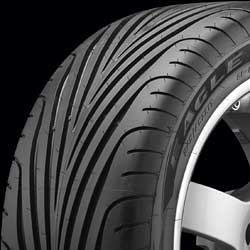
The tires that seem to do best in the rain are ones that have a diagonal tread pattern that channels water from the center of the tread to the edges, to reduce the risk of hydroplaning. For example, here are two tires that are excellent in the rain:
Goodyear F1 GS-D3
Yokohama AVS ES100

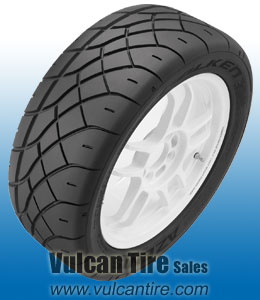
Tires that don't do well in the rain are ones with big tread blocks and/or tread patterns that don't channel water laterally. Here are examples of tires that don't do well in the rain:
Falken Azenis RT-215
BFG g-Force T/A KD

Yokohama ADVAN Neova AD07

Now, take a look at the tread pattern of the Hankook Ventus R-S2 Z212:

I wouldn't expect it to be all that good on wet pavement (and, in Car and Driver testing, it finished eighth in wet performance out of eleven tires tested).
I wouldn't (although you can't always tell by looking at the tread).
The tires that seem to do best in the rain are ones that have a diagonal tread pattern that channels water from the center of the tread to the edges, to reduce the risk of hydroplaning. For example, here are two tires that are excellent in the rain:
Goodyear F1 GS-D3
Yokohama AVS ES100
Tires that don't do well in the rain are ones with big tread blocks and/or tread patterns that don't channel water laterally. Here are examples of tires that don't do well in the rain:
Falken Azenis RT-215
BFG g-Force T/A KD
Yokohama ADVAN Neova AD07
Now, take a look at the tread pattern of the Hankook Ventus R-S2 Z212:
I wouldn't expect it to be all that good on wet pavement (and, in Car and Driver testing, it finished eighth in wet performance out of eleven tires tested).


Honda-Tech Member
iTrader: (1)
Joined: Jan 2003
Posts: 22,150
Likes: 0
From: The Village Hidden in the Leaves: Seattle, WA
azenis don't do in the rain. i live in seattle. i know nothing bad happened to me, but they're just not suitable if u know what i mean. i would hydroplane on the freeway a lot in heavy rain conditions. light rain wasn't too bad though. i had the RT615's 205/40/16. got them for a fair deal, but i wouldn't get them again.
this time around i got some bfg kdw 205/45/16's well see how they hold up this season
nothing bad happened to me, but they're just not suitable if u know what i mean. i would hydroplane on the freeway a lot in heavy rain conditions. light rain wasn't too bad though. i had the RT615's 205/40/16. got them for a fair deal, but i wouldn't get them again. this time around i got some bfg kdw 205/45/16's well see how they hold up this season

B*a*n*n*e*d
Joined: Sep 2002
Posts: 9,600
Likes: 0
From: Located at CTU you cac
Re: (nsxtasy)
<TABLE WIDTH="90%" CELLSPACING=0 CELLPADDING=0 ALIGN=CENTER><TR><TD>Quote, originally posted by nsxtasy »</TD></TR><TR><TD CLASS="quote">
Goodyear F1 GS-D3
</TD></TR></TABLE>
I love these Tires.
Goodyear F1 GS-D3
</TD></TR></TABLE>
I love these Tires.
Honda-Tech Member
Joined: Mar 2002
Posts: 1,355
Likes: 0
From: Oakland, Ca, USA
Re: (nsxtasy)
<TABLE WIDTH="90%" CELLSPACING=0 CELLPADDING=0 ALIGN=CENTER><TR><TD>Quote, originally posted by nsxtasy »</TD></TR><TR><TD CLASS="quote">
Yokohama ADVAN Neova AD07
Now, take a look at the tread pattern of the Hankook Ventus R-S2 Z212:
I wouldn't expect it to be all that good on wet pavement (and, in Car and Driver testing, it finished eighth in wet performance out of eleven tires tested).</TD></TR></TABLE>
They look almost identical. I actually saw a Yoko ADVAN at a race recently and I thought it was a Hankook. Anyway, the reason I say that is because the Hankook has huge gaps of space between the tread blocks. When it's new, it even has big chamfers on a lot of the blocks that give it less surface area than it looks like. Overall, its footprint is not as big as the Azenis.
Anyway, I have yet to test these in the rain. I thought I would have the chance last Sunday, but it was dry in the morning. Maybe I'll have the chance on the 19th.
Dan
Yokohama ADVAN Neova AD07
Now, take a look at the tread pattern of the Hankook Ventus R-S2 Z212:
I wouldn't expect it to be all that good on wet pavement (and, in Car and Driver testing, it finished eighth in wet performance out of eleven tires tested).</TD></TR></TABLE>
They look almost identical. I actually saw a Yoko ADVAN at a race recently and I thought it was a Hankook. Anyway, the reason I say that is because the Hankook has huge gaps of space between the tread blocks. When it's new, it even has big chamfers on a lot of the blocks that give it less surface area than it looks like. Overall, its footprint is not as big as the Azenis.
Anyway, I have yet to test these in the rain. I thought I would have the chance last Sunday, but it was dry in the morning. Maybe I'll have the chance on the 19th.
Dan
Honda-Tech Member
Joined: Jul 2005
Posts: 2,641
Likes: 2
From: ottawa,, top of the map
Re: (Jerms)
<TABLE WIDTH="90%" CELLSPACING=0 CELLPADDING=0 ALIGN=CENTER><TR><TD>Quote, originally posted by Jerms »</TD></TR><TR><TD CLASS="quote">yah gotta love that 200 tread wear level hahahah</TD></TR></TABLE>
Please note:
"Tread wear grades are valid only for comparisons within a manufacturer's product line . They are not valid for comparisons between manufacturers" - From Good year's site
And of course how could I forget Tire Rack?!?!??!?!?!?!?!
<TABLE WIDTH="90%" CELLSPACING=0 CELLPADDING=0 ALIGN=CENTER><TR><TD>Quote, originally posted by The Tire Rack »</TD></TR><TR><TD CLASS="quote">
Treadwear Grades
UTQG Treadwear Grades are based on actual road use in which the test tire is run in a vehicle convoy along with standardized Course Monitoring Tires. The vehicle repeatedly runs a prescribed 400-mile test loop in West Texas for a total of 7,200 miles. The vehicle can have its alignment set, air pressure checked and tires rotated every 800 miles. The test tire's and the Monitoring Tire's wear are measured during and at the conclusion of the test. The tire manufacturers then assign a Treadwear Grade based on the observed wear rates. The Course Monitoring Tire is assigned a grade and the test tire receives a grade indicating its relative treadwear. A grade of 100 would indicate that the tire tread would last as long as the test tire, 200 would indicate the tread would last twice as long, 300 would indicate three times as long, etc.
The problem with UTQG Treadwear Grades is that they are open to some interpretation on the part of the tire manufacturer because they are assigned after the tire has only experienced a little treadwear as it runs the 7,200 miles. This means that the tire manufacturers need to extrapolate their raw wear data when they are assigning Treadwear Grades, and that their grades can to some extent reflect how conservative or optimistic their marketing department is. Typically, comparing the Treadwear Grades of tire lines within a single brand is somewhat helpful, while attempting to compare the grades between different brands is not as helpful.
....
Unfortunately for all of the money spent to test, brand and label the tires sold in the United States, the Uniform Tire Quality Grade Standards have not fully met their original goal of clearly informing consumers about the capabilities of their tires. Maybe it's because tires are so complex and their uses can be so varied, that the grades don't always reflect their actual performance in real world use</TD></TR></TABLE>
Hope this helps.
Please note:
"Tread wear grades are valid only for comparisons within a manufacturer's product line . They are not valid for comparisons between manufacturers" - From Good year's site
And of course how could I forget Tire Rack?!?!??!?!?!?!?!
<TABLE WIDTH="90%" CELLSPACING=0 CELLPADDING=0 ALIGN=CENTER><TR><TD>Quote, originally posted by The Tire Rack »</TD></TR><TR><TD CLASS="quote">
Treadwear Grades
UTQG Treadwear Grades are based on actual road use in which the test tire is run in a vehicle convoy along with standardized Course Monitoring Tires. The vehicle repeatedly runs a prescribed 400-mile test loop in West Texas for a total of 7,200 miles. The vehicle can have its alignment set, air pressure checked and tires rotated every 800 miles. The test tire's and the Monitoring Tire's wear are measured during and at the conclusion of the test. The tire manufacturers then assign a Treadwear Grade based on the observed wear rates. The Course Monitoring Tire is assigned a grade and the test tire receives a grade indicating its relative treadwear. A grade of 100 would indicate that the tire tread would last as long as the test tire, 200 would indicate the tread would last twice as long, 300 would indicate three times as long, etc.
The problem with UTQG Treadwear Grades is that they are open to some interpretation on the part of the tire manufacturer because they are assigned after the tire has only experienced a little treadwear as it runs the 7,200 miles. This means that the tire manufacturers need to extrapolate their raw wear data when they are assigning Treadwear Grades, and that their grades can to some extent reflect how conservative or optimistic their marketing department is. Typically, comparing the Treadwear Grades of tire lines within a single brand is somewhat helpful, while attempting to compare the grades between different brands is not as helpful.
....
Unfortunately for all of the money spent to test, brand and label the tires sold in the United States, the Uniform Tire Quality Grade Standards have not fully met their original goal of clearly informing consumers about the capabilities of their tires. Maybe it's because tires are so complex and their uses can be so varied, that the grades don't always reflect their actual performance in real world use</TD></TR></TABLE>
Hope this helps.