


Difference between oversprung and under-dampened?


Thread Starter
Honda-Tech Member
Joined: Jun 2012
Posts: 218
Likes: 0
 Difference between oversprung and under-dampened?
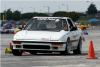
So I had my car out for the first time at the track this weekend and had a bit of trouble with my new suspension setup, or at least I think I did. I am running PIC R4 coilovers with 700lb springs up front and 1000lbs in the rear. The back end of the car would hop or skip across the track in medium to high speed corners. On lookers were saying the car was really "bouncey" coming through certain sections of the track aswell. I know its not a lot of info but I know lots of guys here run those high rates out back and don't have a borderline un-driveable car, but I also know they could be on a more optimal set of dampers... How do I know the difference between the two? There is a video in my build thread showing me almost lose the back end of the car a few times if it helps.
Last edited by gramkrackers; Mar 2, 2015 at 07:12 AM.



Honda-Tech Member
Joined: Jun 2011
Posts: 51
Likes: 0
From: Hayward, CA

Honda-Tech Member

Joined: Nov 2001
Posts: 2,761
Likes: 2
From: Playing in the sandbox
Re: Difference between oversprung and under-dampened?
Watched the video... my $0.02:
1- Those rates are too high for street tires. Even "good" street tires like the Rival. FWIW, I ended up at 750/500 with a *big* rear bar in an effort to keep the loads reasonable for the Rival. The shock loads a street tire sees with 1000# rates just doesn't work nearly as well as it does on something like a Hoosier.
2- The track looks super bumpy. If this is where you run consistently, it may be a case that the typical stiff rear setup won't work even with R-comps.
3- Shocks. Zero experience with the PIC's and what their valving looks like but, off the cuff, it looks like way too much high speed compression. I'd try it with lower high speed compression if you have triples or lower compression in general if you've only got doubles.
Question: what are your rear corner weights and bar sizing?
1- Those rates are too high for street tires. Even "good" street tires like the Rival. FWIW, I ended up at 750/500 with a *big* rear bar in an effort to keep the loads reasonable for the Rival. The shock loads a street tire sees with 1000# rates just doesn't work nearly as well as it does on something like a Hoosier.
2- The track looks super bumpy. If this is where you run consistently, it may be a case that the typical stiff rear setup won't work even with R-comps.
3- Shocks. Zero experience with the PIC's and what their valving looks like but, off the cuff, it looks like way too much high speed compression. I'd try it with lower high speed compression if you have triples or lower compression in general if you've only got doubles.
Question: what are your rear corner weights and bar sizing?

 Re: Difference between oversprung and under-dampened?
In my experience too much rebound causes a pogo stick kind of effect when you get the suspension fully loaded and start to get some slip angle on the tires. For me the less grip I have the more pronounced this seems.
Too much compression will make the car feel like its skipping as you turn in, and too little damper over all will make the car "bouncy"
All 3 of those are different feels of bouncy and its kind of hard to describe in words. You just need some more experience. Best thing you can do is go to an event where you get lots of sessions and do a shock sweep. One run full soft, one run with compression all the way up, but no rebound. Then full rebound, no compression, etc. Set all 4 wheels the same, then start doing one axle at a time.
Trending Topics

Thread Starter
Honda-Tech Member
Joined: Jun 2012
Posts: 218
Likes: 0
Re: Difference between oversprung and under-dampened?
Watched the video... my $0.02:
1- Those rates are too high for street tires. Even "good" street tires like the Rival. FWIW, I ended up at 750/500 with a *big* rear bar in an effort to keep the loads reasonable for the Rival. The shock loads a street tire sees with 1000# rates just doesn't work nearly as well as it does on something like a Hoosier.
2- The track looks super bumpy. If this is where you run consistently, it may be a case that the typical stiff rear setup won't work even with R-comps.
3- Shocks. Zero experience with the PIC's and what their valving looks like but, off the cuff, it looks like way too much high speed compression. I'd try it with lower high speed compression if you have triples or lower compression in general if you've only got doubles.
Question: what are your rear corner weights and bar sizing?
1- Those rates are too high for street tires. Even "good" street tires like the Rival. FWIW, I ended up at 750/500 with a *big* rear bar in an effort to keep the loads reasonable for the Rival. The shock loads a street tire sees with 1000# rates just doesn't work nearly as well as it does on something like a Hoosier.
2- The track looks super bumpy. If this is where you run consistently, it may be a case that the typical stiff rear setup won't work even with R-comps.
3- Shocks. Zero experience with the PIC's and what their valving looks like but, off the cuff, it looks like way too much high speed compression. I'd try it with lower high speed compression if you have triples or lower compression in general if you've only got doubles.
Question: what are your rear corner weights and bar sizing?
Yes the Driver Development Track at Mosport is bumpy and I am running BFG Rivals in 205/50/15.
It was kind of hard to tell from the video because the camera was bouncing, but if I had to guess it would be too much rebound.
In my experience too much rebound causes a pogo stick kind of effect when you get the suspension fully loaded and start to get some slip angle on the tires. For me the less grip I have the more pronounced this seems.
Too much compression will make the car feel like its skipping as you turn in, and too little damper over all will make the car "bouncy"
All 3 of those are different feels of bouncy and its kind of hard to describe in words. You just need some more experience. Best thing you can do is go to an event where you get lots of sessions and do a shock sweep. One run full soft, one run with compression all the way up, but no rebound. Then full rebound, no compression, etc. Set all 4 wheels the same, then start doing one axle at a time.
In my experience too much rebound causes a pogo stick kind of effect when you get the suspension fully loaded and start to get some slip angle on the tires. For me the less grip I have the more pronounced this seems.
Too much compression will make the car feel like its skipping as you turn in, and too little damper over all will make the car "bouncy"
All 3 of those are different feels of bouncy and its kind of hard to describe in words. You just need some more experience. Best thing you can do is go to an event where you get lots of sessions and do a shock sweep. One run full soft, one run with compression all the way up, but no rebound. Then full rebound, no compression, etc. Set all 4 wheels the same, then start doing one axle at a time.
Looking forward I think I will just sell this setup. I imagine the Koni/GC option would be best and go a touch softer on spring rates until I make the switch to r-comps...
Honda-Tech Member
Joined: Nov 2001
Posts: 2,761
Likes: 2
From: Playing in the sandbox
Re: Difference between oversprung and under-dampened?
Thanks. Always happy to toss some ideas into the ring. 
If you've got an event in a week, I'd try to snag a set of springs in the 600-700 range (given your current rear bar). All you'll need to do is adjust the ride height to account for the softer springs... easy fix as there's no need to re-weigh the car.
On the shock thing, it's always so tough to diagnose this stuff from in-car and writing. Could easily be that the shocks are just so far out of their element that your getting oddball oscillation and gyration over the bumps. It seemed like the sketchy stuff was all over bumps or when you'd catch a little curb. Could be that the outside tire didn't have enough rebound to control the compression and subsequent "bounce" generated. Or, a similar idea but with a different spin, is that the rear suspension isn't moving much (any) and you're effectively using the rear tire sidewall as your spring/suspension. Again, street tires just don't work as well as Hoosiers with high rates.
Is this going to be a TT car or a wheel to wheel racer? I ask as, IMO, they favor different different setups.
If you've got an event in a week, I'd try to snag a set of springs in the 600-700 range (given your current rear bar). All you'll need to do is adjust the ride height to account for the softer springs... easy fix as there's no need to re-weigh the car.
On the shock thing, it's always so tough to diagnose this stuff from in-car and writing. Could easily be that the shocks are just so far out of their element that your getting oddball oscillation and gyration over the bumps. It seemed like the sketchy stuff was all over bumps or when you'd catch a little curb. Could be that the outside tire didn't have enough rebound to control the compression and subsequent "bounce" generated. Or, a similar idea but with a different spin, is that the rear suspension isn't moving much (any) and you're effectively using the rear tire sidewall as your spring/suspension. Again, street tires just don't work as well as Hoosiers with high rates.
Is this going to be a TT car or a wheel to wheel racer? I ask as, IMO, they favor different different setups.
Thread Starter
Honda-Tech Member
Joined: Jun 2012
Posts: 218
Likes: 0
Re: Difference between oversprung and under-dampened?
Thanks. Always happy to toss some ideas into the ring.
If you've got an event in a week, I'd try to snag a set of springs in the 600-700 range (given your current rear bar). All you'll need to do is adjust the ride height to account for the softer springs... easy fix as there's no need to re-weigh the car.
On the shock thing, it's always so tough to diagnose this stuff from in-car and writing. Could easily be that the shocks are just so far out of their element that your getting oddball oscillation and gyration over the bumps. It seemed like the sketchy stuff was all over bumps or when you'd catch a little curb. Could be that the outside tire didn't have enough rebound to control the compression and subsequent "bounce" generated. Or, a similar idea but with a different spin, is that the rear suspension isn't moving much (any) and you're effectively using the rear tire sidewall as your spring/suspension. Again, street tires just don't work as well as Hoosiers with high rates.
Is this going to be a TT car or a wheel to wheel racer? I ask as, IMO, they favor different different setups.
If you've got an event in a week, I'd try to snag a set of springs in the 600-700 range (given your current rear bar). All you'll need to do is adjust the ride height to account for the softer springs... easy fix as there's no need to re-weigh the car.
On the shock thing, it's always so tough to diagnose this stuff from in-car and writing. Could easily be that the shocks are just so far out of their element that your getting oddball oscillation and gyration over the bumps. It seemed like the sketchy stuff was all over bumps or when you'd catch a little curb. Could be that the outside tire didn't have enough rebound to control the compression and subsequent "bounce" generated. Or, a similar idea but with a different spin, is that the rear suspension isn't moving much (any) and you're effectively using the rear tire sidewall as your spring/suspension. Again, street tires just don't work as well as Hoosiers with high rates.
Is this going to be a TT car or a wheel to wheel racer? I ask as, IMO, they favor different different setups.
I am leaning towards the shocks being out of thier element. I could drive the car at 7 or 8/10th's perfectly fine, the second I went to lay down a quick lap it was a handful. Like you say add in the fact I am on street tires and the issue gets escaladed.
The car is used in TT competition right now but I am planning to go proper wheel to wheel road racing next year which means switching to slicks.
Honda-Tech Member
Joined: Nov 2001
Posts: 2,761
Likes: 2
From: Playing in the sandbox
Re: Difference between oversprung and under-dampened?
My thoughts/opinions on TT vs. racing setup is this...
TT- A slightly tight setup (more front bias) seems like the hot ticket here. You're going out on cold-ish tires and have to get it done in just a handful of laps. You're pretty well guaranteed that you won't have to worry about overdriving/burning down the front end of the car. A typical RR setup will slow you down since you'll be chasing the *** of the car until the rear tires come up to temp. FWIW, I think of my current DE/autoX setup as being pretty inline with this.
RR- You want to tune the balance around mid-end race. You can afford to be a little overly loose at the beginning of the race because you spend a bunch of the first lap or 2 running side by side/offline and not at 10/10th's grip anyway. This setup should yield a fairly balanced car even toward the end of the race. Your current spring rate bias is strongly in this camp. FWIW, 700/1000 is where I landed with my EX sedan (but no front bar and a bigger speedway rear bar). It was *easy* to drive and didn't exhibit any of the funkiness that your video showed. I was on SA Koni RACE shocks with the rears adjusted up toward the top of their range. I never drove that car on street tires so I can't compare how it would have done on streets vs. R's.
TT- A slightly tight setup (more front bias) seems like the hot ticket here. You're going out on cold-ish tires and have to get it done in just a handful of laps. You're pretty well guaranteed that you won't have to worry about overdriving/burning down the front end of the car. A typical RR setup will slow you down since you'll be chasing the *** of the car until the rear tires come up to temp. FWIW, I think of my current DE/autoX setup as being pretty inline with this.
RR- You want to tune the balance around mid-end race. You can afford to be a little overly loose at the beginning of the race because you spend a bunch of the first lap or 2 running side by side/offline and not at 10/10th's grip anyway. This setup should yield a fairly balanced car even toward the end of the race. Your current spring rate bias is strongly in this camp. FWIW, 700/1000 is where I landed with my EX sedan (but no front bar and a bigger speedway rear bar). It was *easy* to drive and didn't exhibit any of the funkiness that your video showed. I was on SA Koni RACE shocks with the rears adjusted up toward the top of their range. I never drove that car on street tires so I can't compare how it would have done on streets vs. R's.
Honda-Tech Member
Joined: Sep 2012
Posts: 55
Likes: 0
Re: Difference between oversprung and under-dampened?
Just a thought on under-damped vs. over-sprung: I think of the springs as being the driver of the damper design. That is to say, in setting up a car, I set up the chassis first, then select springs to match how my chassis is setup, then match the shocks to the springs.
That is of course a bit of an over-simplification, but that describes the general flow of things.
So, how do you know if you're over-sprung or under-damped? If hitting bumps 'n stuff is launching your car, or if it's too twitchy or snappy, then I would lean towards over-sprung. If it's otherwise handling pretty well but just po-going everwhere, then you're probably under-damped.
Currently I'm under-damped.
That is of course a bit of an over-simplification, but that describes the general flow of things.
So, how do you know if you're over-sprung or under-damped? If hitting bumps 'n stuff is launching your car, or if it's too twitchy or snappy, then I would lean towards over-sprung. If it's otherwise handling pretty well but just po-going everwhere, then you're probably under-damped.
Currently I'm under-damped.

Honda-Tech Member
Joined: Mar 2004
Posts: 882
Likes: 0
From: Portland, OR
Re: Difference between oversprung and under-dampened?
If you can't get new springs, you might want to raise the ride height in the rear a little bit. You might just be hitting the bumpstops.
Thread Starter
Honda-Tech Member
Joined: Jun 2012
Posts: 218
Likes: 0
Re: Difference between oversprung and under-dampened?
Thanks for all the input, temporary solution to the problem for this weekend was to swap in some softer springs. How soft? I am actually not sure, they came off of the Cusco coilovers that were on the car when I bought it and the guy didn't know the spring rates. I don't think they are a huge change but I am hoping it will be enough for now. I will be going with a set of race valved Koni's in the future.
Honda-Tech Member
Joined: Mar 2004
Posts: 882
Likes: 0
From: Portland, OR
Re: Difference between oversprung and under-dampened?
I don't think spring rate has anything to do with hitting the bumpstops, especially when you have the ability to adjust the lower shock mount in addition to the spring perch, like you do on the PIC coliovers... Just something to check, because it could easily cause the car to bounce around like that...
Honda-Tech Member
Joined: Nov 2001
Posts: 2,761
Likes: 2
From: Playing in the sandbox
Re: Difference between oversprung and under-dampened?
You're making my point for me... if you can adjust ride height without impacting shock stroke, that decreases the odds of hitting the rear bumpstops. Think about it this way, with cut-down bump stops, you'll get something like 1.25-1.5" shock travel, right? Figure that's somewhere in the neighborhood of 2"+ wheel travel. When all the inside weight moves onto the outside, we're still talking about less than 1" of wheel travel. That's without taking into consideration the rear bar and its effects on loading the inside shock/spring over bumps.
Granted, and to your point, it's never a bad idea to check this out but I'd be pretty damn surprised if this was the root problem (given the spring rate, tires, and shocks).
Granted, and to your point, it's never a bad idea to check this out but I'd be pretty damn surprised if this was the root problem (given the spring rate, tires, and shocks).
Honda-Tech Member
Joined: Mar 2004
Posts: 882
Likes: 0
From: Portland, OR
Re: Difference between oversprung and under-dampened?
My point was that if you have the ability to adjust the ride height without impacting shock stroke, you, or whoever assembled your shocks, could have this set up incorrectly, and you could be riding on the bumpstops.
Honda-Tech Member
Joined: Nov 2001
Posts: 2,761
Likes: 2
From: Playing in the sandbox
Re: Difference between oversprung and under-dampened?
Thanks for all the input, temporary solution to the problem for this weekend was to swap in some softer springs. How soft? I am actually not sure, they came off of the Cusco coilovers that were on the car when I bought it and the guy didn't know the spring rates. I don't think they are a huge change but I am hoping it will be enough for now. I will be going with a set of race valved Koni's in the future.

Honda-Tech Member
Joined: Oct 2001
Posts: 3,627
Likes: 1
From: So Cal
Re: Difference between oversprung and under-dampened?
So, how do you know if you're over-sprung or under-damped? If hitting bumps 'n stuff is launching your car, or if it's too twitchy or snappy, then I would lean towards over-sprung. If it's otherwise handling pretty well but just po-going everwhere, then you're probably under-damped.
Thread Starter
Honda-Tech Member
Joined: Jun 2012
Posts: 218
Likes: 0
Re: Difference between oversprung and under-dampened?
When I could focus on that aspect of the cars performance it was much better, I would really like to know the rate of the springs for further tweaking, however my time with these coilovers is limited. The clutch started slipping on me and a right front lower contorl arm bolt broke off in the subframe so my attention was focused on that most of the weekend unfortunately. I will post some details in my thread in a few days.

Thread
Thread Starter
Forum
Replies
Last Post
93LSivic
Drag Racing
22
Dec 23, 2003 11:01 AM
96 SOHC VTEC
Road Racing / Autocross & Time Attack
13
Jan 1, 2003 09:51 AM