


v8 vtec


Honda-Tech Member
Joined: Feb 2007
Posts: 471
Likes: 0
 Re: v8 vtec (prelude_93vtec)
the only honda v8s I know of are used in indy cars. I don't think they use vtec though because they are racing motors and stay in the upper rpm most of the time anyway so they don't need two different sets of lift and duration.

Trending Topics


Junior Member
Joined: Feb 2007
Posts: 149
Likes: 0
From: Ohio
Re: v8 vtec (bluedlude)
F1 uses a V8s right now two but they specifically ban any form of variable valve timing or lift. And yes many companies have vvt but that is not the same as VTEC. Many other systems just advance or retard the cam shafts which gives them "VVT." Althought some patents were filed as early as the late 60's Honda was the first to use it in a production bike, the 83 CBR400F. Nissan was the first to use it in a production car, the 87 300zx (valve lift and duration are not altered. When Honda released their DOHC VTEC engines for cars it was considered the first "cam switching" system in an automobile. While many companies focused strictly on just cam timing Hond didn't incorporate this feature until the K series I-VTEC. Now we have continuosly variable lift and duration to look forward to with A-VTEC in a couple of years. http://www.vtec.net/news/news-...59664


Junior Member
Joined: Aug 2006
Posts: 52
Likes: 0
Re: v8 vtec (lude_si_95)
<TABLE WIDTH="90%" CELLSPACING=0 CELLPADDING=0 ALIGN=CENTER><TR><TD>Quote, originally posted by lude_si_95 »</TD></TR><TR><TD CLASS="quote">nearly every make has variable valve timing, ford has zetec, gm has o-tec?..not sure about that one and i know there are many more..</TD></TR></TABLE>
I think gms is eco-tec
I think gms is eco-tec
Junior Member
Joined: Aug 2006
Posts: 52
Likes: 0
Re: v8 vtec (Chukkie)
IRL IndyCar (IRL)
IRL Honda engine 2004General information
* Type: 3000 cc V8, 32-valve dual-overhead cam (DOHC), Normally aspirated (no turbo charger).
Max. bore diameter 93 millimeters.
Four camshafts, four valves per cylinder.
* Weight: Minimum weight is 280 pounds. Dry weight - no headers, clutch, EDU, spark box or filters.
* RPM: 10300 maximum (irl-supplied rev limiter).
* Power: Estimated 700 bhp
* Fuel: Methanol
* Injectors: Electronic.
* Cost: $125,000
Example: Honda Racing H13R Indy V-8 (2004)
* Engine Type: Normally aspirated, fuel-injected, aluminum alloy cylinder block V8
* Displacement: 3000 cc
* Valve Train: Dual overhead camshaft, four valves per cylinder
* Crankshaft: Alloy steel, five main bearing cap Pistons Forged aluminum alloy
* Connecting Rods: Machined alloy steel
* Ignition System: CDI
* Lubrication: Dry sump
* Cooling: Single water pump
LOL!!! It only cost a bit more than my Prelude!
IRL Honda engine 2004General information
* Type: 3000 cc V8, 32-valve dual-overhead cam (DOHC), Normally aspirated (no turbo charger).
Max. bore diameter 93 millimeters.
Four camshafts, four valves per cylinder.
* Weight: Minimum weight is 280 pounds. Dry weight - no headers, clutch, EDU, spark box or filters.
* RPM: 10300 maximum (irl-supplied rev limiter).
* Power: Estimated 700 bhp
* Fuel: Methanol
* Injectors: Electronic.
* Cost: $125,000
Example: Honda Racing H13R Indy V-8 (2004)
* Engine Type: Normally aspirated, fuel-injected, aluminum alloy cylinder block V8
* Displacement: 3000 cc
* Valve Train: Dual overhead camshaft, four valves per cylinder
* Crankshaft: Alloy steel, five main bearing cap Pistons Forged aluminum alloy
* Connecting Rods: Machined alloy steel
* Ignition System: CDI
* Lubrication: Dry sump
* Cooling: Single water pump
LOL!!! It only cost a bit more than my Prelude!


Honda-Tech Member
Joined: Apr 2005
Posts: 91
Likes: 0
From: Somewheres, UT
Re: v8 vtec (:=:NirVTEC:=:)
<TABLE WIDTH="90%" CELLSPACING=0 CELLPADDING=0 ALIGN=CENTER><TR><TD>Quote, originally posted by :=:NirVTEC:=: »</TD></TR><TR><TD CLASS="quote">Some people think VVT is just a Honda thing......
who actually invented it?
</TD></TR></TABLE>
fiat did it first in the early 70s but had some problems so it never went into production...
those F1 v8s are incredible...I want one in something :lol:
who actually invented it?
</TD></TR></TABLE>
fiat did it first in the early 70s but had some problems so it never went into production...
those F1 v8s are incredible...I want one in something :lol:

Honda-Tech Member
Joined: Mar 2004
Posts: 474
Likes: 0
From: wichita, ks, U.S.
Re: v8 vtec (tsiah)
Porsche created vtec ( I dont recall what they called it) back in the mid to late 60's. Porsche originated as a non turbo, much different than the Porsche we know today. This was Porsches answer to the SUPER SALOON by Nissan. They were the two major "sportscars" of their time for the working mans budget. If you research, Nissan and Porsche release a new "Supercar" coincidentally, around the same timelines. Lets look back:
1966 Skyline and 1963 901 (dubbed 911)
1968 "Z' series released and Porsche 914
1970's Silvia turbo and Porsche turbos 911
Between now and the, Nissan created the likes of the SSS, SUNNY, and FWD designs. Porsche, as was then a badass, perfected the 911 series as well as dipped their toes in the such as 940, 996 and 929 styles
Porsche jumped into real supercars with the Carrera GT
Even now, the new 911 Carrera, 2006/7 has damn near the same specs as the new Skyline (07/08)
$1,000,000 says in two years, Porsche will come out with new line that kills the new Skyline, as will Nissan do the same two years after.
Anyhow, Porsche came up with VTEC
1966 Skyline and 1963 901 (dubbed 911)
1968 "Z' series released and Porsche 914
1970's Silvia turbo and Porsche turbos 911
Between now and the, Nissan created the likes of the SSS, SUNNY, and FWD designs. Porsche, as was then a badass, perfected the 911 series as well as dipped their toes in the such as 940, 996 and 929 styles
Porsche jumped into real supercars with the Carrera GT
Even now, the new 911 Carrera, 2006/7 has damn near the same specs as the new Skyline (07/08)
$1,000,000 says in two years, Porsche will come out with new line that kills the new Skyline, as will Nissan do the same two years after.
Anyhow, Porsche came up with VTEC

Honda-Tech Member
Joined: Feb 2002
Posts: 2,072
Likes: 0
From: land of the sheep, home of the hypocrite
Re: v8 vtec (sr20cars)
Honda-Tech Member
Joined: Apr 2005
Posts: 91
Likes: 0
From: Somewheres, UT
Re: v8 vtec (sr20cars)
<TABLE WIDTH="90%" CELLSPACING=0 CELLPADDING=0 ALIGN=CENTER><TR><TD>Quote, originally posted by sr20cars »</TD></TR><TR><TD CLASS="quote">Porsche created vtec </TD></TR></TABLE>
<TABLE WIDTH="90%" CELLSPACING=0 CELLPADDING=0 ALIGN=CENTER><TR><TD>Quote, originally posted by wikipedia »</TD></TR><TR><TD CLASS="quote">Fiat was the first auto manufacturer to patent a functional variable valve timing system which included variable lift. Developed by Giovanni Torazza in the late 1960s, the system used hydraulic pressure to vary the fulcrum of the cam followers (US Patent 3,641,988). The hydraulic pressure changed according to engine speed and intake pressure. The typical opening variation was 37%. </TD></TR></TABLE>
<TABLE WIDTH="90%" CELLSPACING=0 CELLPADDING=0 ALIGN=CENTER><TR><TD>Quote, originally posted by wikipedia »</TD></TR><TR><TD CLASS="quote">
VarioCam is an automobile variable valve timing technology developed by Porsche. VarioCam varies the timing of the intake valves by adjusting the tension on the timing chain connecting the intake and exhaust camshafts. VarioCam was first used on the 1992 3.0 L engine in the Porsche 968.
Porsche's more recent VarioCam Plus uses two sets of cam lobes (similar to Honda's VTEC) to vary timing and lift. This system is found on the latest Porsche 997
</TD></TR></TABLE>
 looks to me like porche was 10 years behind honda on this one...
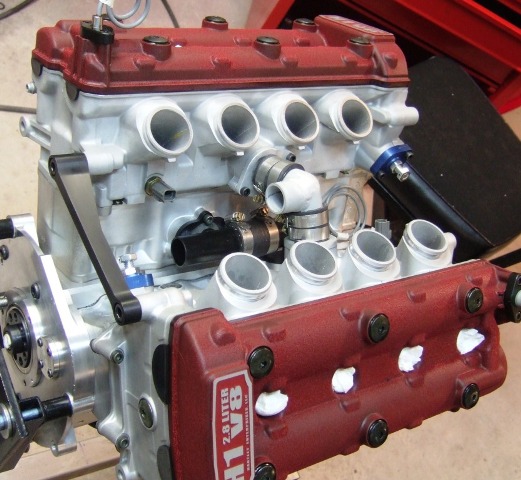
that H1V8 sounds incredible
I want to design a small V8 that uses ITR heads
<TABLE WIDTH="90%" CELLSPACING=0 CELLPADDING=0 ALIGN=CENTER><TR><TD>Quote, originally posted by wikipedia »</TD></TR><TR><TD CLASS="quote">Fiat was the first auto manufacturer to patent a functional variable valve timing system which included variable lift. Developed by Giovanni Torazza in the late 1960s, the system used hydraulic pressure to vary the fulcrum of the cam followers (US Patent 3,641,988). The hydraulic pressure changed according to engine speed and intake pressure. The typical opening variation was 37%. </TD></TR></TABLE>
<TABLE WIDTH="90%" CELLSPACING=0 CELLPADDING=0 ALIGN=CENTER><TR><TD>Quote, originally posted by wikipedia »</TD></TR><TR><TD CLASS="quote">
VarioCam is an automobile variable valve timing technology developed by Porsche. VarioCam varies the timing of the intake valves by adjusting the tension on the timing chain connecting the intake and exhaust camshafts. VarioCam was first used on the 1992 3.0 L engine in the Porsche 968.
Porsche's more recent VarioCam Plus uses two sets of cam lobes (similar to Honda's VTEC) to vary timing and lift. This system is found on the latest Porsche 997
</TD></TR></TABLE>
looks to me like porche was 10 years behind honda on this one...that H1V8 sounds incredible
I want to design a small V8 that uses ITR heads

Joined: Jun 2002
Posts: 2,157
Likes: 2
From: ROCKFORD, IL
Re: v8 vtec (sr20cars)
<TABLE WIDTH="90%" CELLSPACING=0 CELLPADDING=0 ALIGN=CENTER><TR><TD>Quote, originally posted by sr20cars »</TD></TR><TR><TD CLASS="quote">Porsche created vtec ( I dont recall what they called it) back in the mid to late 60's. Porsche originated as a non turbo, much different than the Porsche we know today. This was Porsches answer to the SUPER SALOON by Nissan. They were the two major "sportscars" of their time for the working mans budget. If you research, Nissan and Porsche release a new "Supercar" coincidentally, around the same timelines. Lets look back:
1966 Skyline and 1963 901 (dubbed 911)
1968 "Z' series released and Porsche 914
1970's Silvia turbo and Porsche turbos 911
Between now and the, Nissan created the likes of the SSS, SUNNY, and FWD designs. Porsche, as was then a badass, perfected the 911 series as well as dipped their toes in the such as 940, 996 and 929 styles
Porsche jumped into real supercars with the Carrera GT
Even now, the new 911 Carrera, 2006/7 has damn near the same specs as the new Skyline (07/08)
$1,000,000 says in two years, Porsche will come out with new line that kills the new Skyline, as will Nissan do the same two years after.
Anyhow, Porsche came up with VTEC </TD></TR></TABLE>
Thats Crazy Talk
1966 Skyline and 1963 901 (dubbed 911)
1968 "Z' series released and Porsche 914
1970's Silvia turbo and Porsche turbos 911
Between now and the, Nissan created the likes of the SSS, SUNNY, and FWD designs. Porsche, as was then a badass, perfected the 911 series as well as dipped their toes in the such as 940, 996 and 929 styles
Porsche jumped into real supercars with the Carrera GT
Even now, the new 911 Carrera, 2006/7 has damn near the same specs as the new Skyline (07/08)
$1,000,000 says in two years, Porsche will come out with new line that kills the new Skyline, as will Nissan do the same two years after.
Anyhow, Porsche came up with VTEC
</TD></TR></TABLE>Thats Crazy Talk


