


oil feed arguement


Thread Starter
Junior Member
Joined: Feb 2006
Posts: 305
Likes: 0
From: Grabbing 4th at 9000, Somewhere, here
 oil feed arguement
Argued with my friend tonight about oil feed diameter, he is a honda mechanic, has been for many years. His arguement was that the diameter of an oil feed line doesn't make a difference that the space around the bearing was going to limit how much oil would pass through the turbo. I would like some educated responses regarding why one has to use a certain size line to avoid overloading the turbo with oil.

Joined: May 2005
Posts: 1,789
Likes: 1
From: Simi Valley, CA, USA
Re: oil feed arguement (EnzoSpeed)
Also, if you run a huge feed line and let the bearings limit how much oil goes into the turbo, you're still going to get much more pressure than you need. With a properly sized feed line (-3 AN), hardly any oil passes through the turbo. Just remove the feed line from your turbo and start your car and you'll see - hardly any oil flows out of the line.
Furthermore, if you have an oversized feed line, your base oil pressure is going to drop even more than it will with a -3 line. Lower oil pressure = not good.
Furthermore, if you have an oversized feed line, your base oil pressure is going to drop even more than it will with a -3 line. Lower oil pressure = not good.

Thread Starter
Junior Member
Joined: Feb 2006
Posts: 305
Likes: 0
From: Grabbing 4th at 9000, Somewhere, here
Re: (MotorMouth)
allright this is the deutche bag buddy here. okay. if you start your car and run it with the oil line disconnected you should have the same oil pressure at that line as should you in the rest of the oiling system. therefore if you had a bigger oil line going to the turbo it should not matter. it should be the same amount of pressure all through the system up to oil control orifices or bearings etc. and the excess pressure will be relieved by the oil pump check valve and recycled back to the oil pan. now granted the size of your feedline and bearing area around the turbo are massive and unproportunate your oil pump will not be able to flow that amount of volume and will decrease system total pressure.
i dont see how a bigger line would really effect blowing turbo seals. technically if it had more flow of oil than the oil pump could produce it will reduce pressure on the whole system.
its not like im going to run a bigger line to my turbo. its not needed. this was a drunk arguement in a bar on a sat over some guy with a retarted v6 mustang.
i dont see how a bigger line would really effect blowing turbo seals. technically if it had more flow of oil than the oil pump could produce it will reduce pressure on the whole system.
its not like im going to run a bigger line to my turbo. its not needed. this was a drunk arguement in a bar on a sat over some guy with a retarted v6 mustang.

Honda-Tech Member
Joined: Jun 2003
Posts: 591
Likes: 0
From: Mesa, Az, USA
Re: (MotorMouth)
<TABLE WIDTH="90%" CELLSPACING=0 CELLPADDING=0 ALIGN=CENTER><TR><TD>Quote, originally posted by MotorMouth »</TD></TR><TR><TD CLASS="quote">allright this is the deutche bag buddy here. okay. if you start your car and run it with the oil line disconnected you should have the same oil pressure at that line as should you in the rest of the oiling system. therefore if you had a bigger oil line going to the turbo it should not matter. it should be the same amount of pressure all through the system up to oil control orifices or bearings etc. and the excess pressure will be relieved by the oil pump check valve and recycled back to the oil pan. now granted the size of your feedline and bearing area around the turbo are massive and unproportunate your oil pump will not be able to flow that amount of volume and will decrease system total pressure.
i dont see how a bigger line would really effect blowing turbo seals. technically if it had more flow of oil than the oil pump could produce it will reduce pressure on the whole system.
its not like im going to run a bigger line to my turbo. its not needed. this was a drunk arguement in a bar on a sat over some guy with a retarted v6 mustang.</TD></TR></TABLE>
Hmm I beg to differ, honestly I have had the problem running a -4an (bigger than the -3an) in the begining of my turbo set up and it is not really the pressure that kills the seals its the volume that kills the seals as you'll see bellow the huge difference of a -3an to a -4an... and also because you have so much volume at the same pressure your turbo gets backed up because it can not drain as fast...I was smoking pretty bad before i changed to a -3an and it completely stopped...
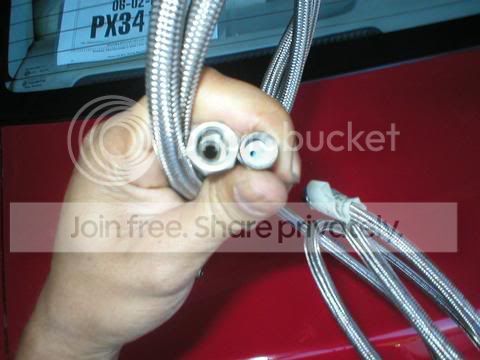
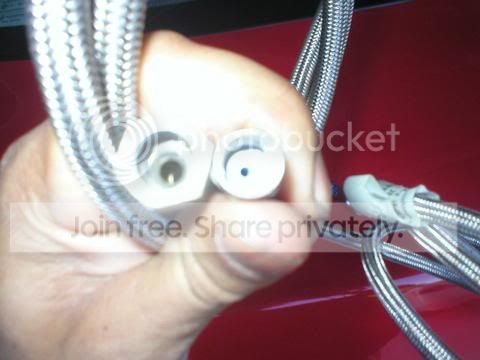

i dont see how a bigger line would really effect blowing turbo seals. technically if it had more flow of oil than the oil pump could produce it will reduce pressure on the whole system.
its not like im going to run a bigger line to my turbo. its not needed. this was a drunk arguement in a bar on a sat over some guy with a retarted v6 mustang.</TD></TR></TABLE>
Hmm I beg to differ, honestly I have had the problem running a -4an (bigger than the -3an) in the begining of my turbo set up and it is not really the pressure that kills the seals its the volume that kills the seals as you'll see bellow the huge difference of a -3an to a -4an... and also because you have so much volume at the same pressure your turbo gets backed up because it can not drain as fast...I was smoking pretty bad before i changed to a -3an and it completely stopped...
Trending Topics

Honda-Tech Member
Joined: Aug 2003
Posts: 4,103
Likes: 1
From: TDCperformance.net
wow, this is from a mechanic?
oil pressure is measured by rod bearings and in V8s, cam bearing. in our cars, obviously rod bearings. the pump has nothing to do with you oil pressure readings, youre not measuring oil pump pressure, thats what the port off the side of it is for.
also more volume=less pressure
more pressure equals less volume
the issue with running a -4an line is the fact that we spin our cars above 8k rpms, and we make almost 70psi of oil pressure at such, this kind of pressure is not good for turbos.
on a down side, adding a -4an line will "show" a decrease in oil pressure at an idle.
you can measure "oil pressure"in various locations on a honda motor, ie: oil pump, vtec port, back of the head, oil galley, etc
oil pressure is measured by rod bearings and in V8s, cam bearing. in our cars, obviously rod bearings. the pump has nothing to do with you oil pressure readings, youre not measuring oil pump pressure, thats what the port off the side of it is for.
also more volume=less pressure
more pressure equals less volume
the issue with running a -4an line is the fact that we spin our cars above 8k rpms, and we make almost 70psi of oil pressure at such, this kind of pressure is not good for turbos.
on a down side, adding a -4an line will "show" a decrease in oil pressure at an idle.
you can measure "oil pressure"in various locations on a honda motor, ie: oil pump, vtec port, back of the head, oil galley, etc

Thread
Thread Starter
Forum
Replies
Last Post
CivicDude2k4
Honda Civic / Del Sol (1992 - 2000)
8
Sep 5, 2006 08:24 PM