


Tuning for MPG


Honda-Tech Member
Joined: Mar 2003
Posts: 3,333
Likes: 0
From: Hudson, NH, 03051
 Re: (quicksilver1689)
I hit the sweet spot with my setup.'93 vx with a b18a turbo,t3/t04e,8.7:1,cable ls tranny w/b16 final and hydro ls fifth.It's got the stock vx wheels and tire size.On my commute to work I get 44-46mph.It's about 45 miles round trip,a little stop and go with a top speed about 50 mph.With drag radials it runs low 13's at 112 mph with 87 octane with the same tune I drive to work with.It's a Hondata s200 that I have street tuned only.I keep changing things and keep putting off paying to dyno it.I don't have any mpg numbers on the highway but I'm betting it may be a little lower as I haven't played with those cells much yet.My afr at 45 mph w/light load are in the mid 13's.It has a light flywheel and I am able to completely lift on some of the down grades (19.9 afr, injectors off) and maintain a good speed.I was running a straight gsr tranny with the stock flywheel before with the same tune and got about 8 mpg less on the same commute.I was very surprised the gearing would make such a difference at that speed.

Honda-Tech Member
Joined: May 2008
Posts: 239
Likes: 0
From: Florida
Re: (NJIN BUILDR)
Damn! in the forties? that's really impressive. is there an impact on power?
So I could be making 33 with an ECU but thats prob with a loss of power? I need to worry about my internals then I will worry about my ECU
So I could be making 33 with an ECU but thats prob with a loss of power? I need to worry about my internals then I will worry about my ECU


Honda-Tech Member
Joined: Mar 2003
Posts: 3,333
Likes: 0
From: Hudson, NH, 03051
Re: (inaety)
<TABLE WIDTH="90%" CELLSPACING=0 CELLPADDING=0 ALIGN=CENTER><TR><TD>Quote, originally posted by inaety »</TD></TR><TR><TD CLASS="quote">Damn! in the forties? that's really impressive. is there an impact on power?
So I could be making 33 with an ECU but thats prob with a loss of power? I need to worry about my internals then I will worry about my ECU</TD></TR></TABLE>
That's the thing I love.As soon as you push the pedal your into different cells.The car easily passes cars in fifth on a typical passing zone.Drop it down into third at 40 mph and bring it into boost and it fries the p185-70-13's even with the quaffe.Mines a stock rod (arp bolts,polished beams),srp forged pistons,crower springs/ti retainers.All the rest of motor is stock.It has about 40k since the build.
So I could be making 33 with an ECU but thats prob with a loss of power? I need to worry about my internals then I will worry about my ECU</TD></TR></TABLE>
That's the thing I love.As soon as you push the pedal your into different cells.The car easily passes cars in fifth on a typical passing zone.Drop it down into third at 40 mph and bring it into boost and it fries the p185-70-13's even with the quaffe.Mines a stock rod (arp bolts,polished beams),srp forged pistons,crower springs/ti retainers.All the rest of motor is stock.It has about 40k since the build.

Honda-Tech Member
Joined: Aug 2004
Posts: 421
Likes: 0
From: Denton, TX, USA
Re: (NJIN BUILDR)
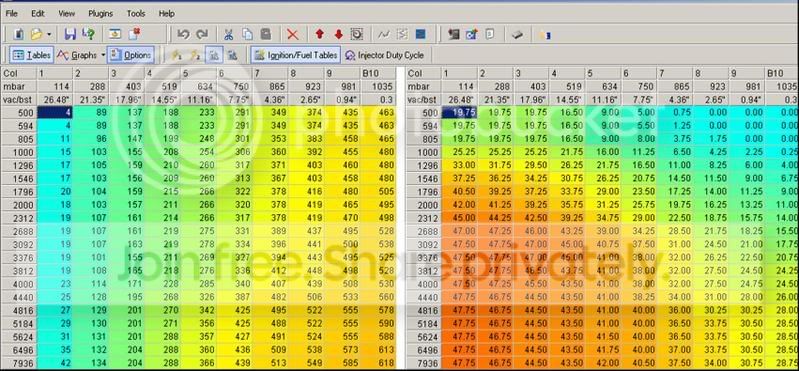
Heres a pic of my low cam for those interested. Last tank I did all highway I got 49mpg (N/A) with a headwind and ~500 extra lbs in the car doing 80mph.
On a day to day basis (mostly city) I average around 38-40 on 87 octane. (Faster Burn)
I have since pulled probably 7-10% more from columns 2-6 and added 1-2deg more advance. (except at idle)
Modified by kicked25th at 11:52 PM 10/16/2008
On a day to day basis (mostly city) I average around 38-40 on 87 octane. (Faster Burn)
I have since pulled probably 7-10% more from columns 2-6 and added 1-2deg more advance. (except at idle)
Modified by kicked25th at 11:52 PM 10/16/2008
Honda-Tech Member
Joined: Aug 2004
Posts: 421
Likes: 0
From: Denton, TX, USA
Re: (NJIN BUILDR)
D15 block/head/tranny
Mods: CAI/IM/TB/Stg 1 Cam/Header/Test Pipe/Exhaust (I estimate ~110-120whp)
EJ2 Chassis (92-95 DX Coupe)
175/50/13 Tires (for better gearing)
I know I could get better MPG with a taller tire since it effectively raises my FD to 4.66. I will be switching soon to a 195/50/15.
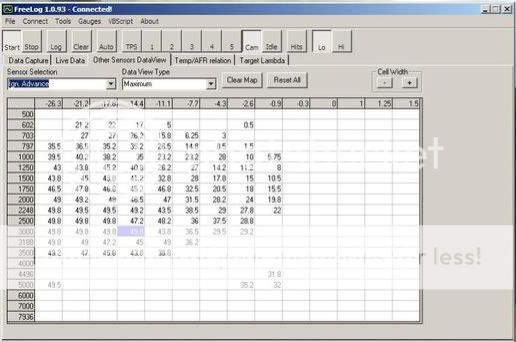
Heres a datalog from my last highway cruise. (Denton-Houston) The RPM values on the left were wrong, so just compare cells from Crome pay less attention to the RPM values in FreeLog.
As you can see I run close to 50deg advance now in parts.
Modified by kicked25th at 12:23 PM 10/17/2008
Modified by kicked25th at 12:28 PM 10/17/2008
Mods: CAI/IM/TB/Stg 1 Cam/Header/Test Pipe/Exhaust (I estimate ~110-120whp)
EJ2 Chassis (92-95 DX Coupe)
175/50/13 Tires (for better gearing)
I know I could get better MPG with a taller tire since it effectively raises my FD to 4.66. I will be switching soon to a 195/50/15.
Heres a datalog from my last highway cruise. (Denton-Houston) The RPM values on the left were wrong, so just compare cells from Crome pay less attention to the RPM values in FreeLog.
As you can see I run close to 50deg advance now in parts.
Modified by kicked25th at 12:23 PM 10/17/2008
Modified by kicked25th at 12:28 PM 10/17/2008

Honda-Tech Member
Joined: Mar 2003
Posts: 3,333
Likes: 0
From: Hudson, NH, 03051
Re: Tuning for MPG (Tomdata)
I know common sense says a lighter will get better millage,but I haven't seen any difference (with in reason).It might make a difference depending on your route.Tires will make a couple mpg difference.

B*a*n*n*e*d
Joined: Mar 2008
Posts: 464
Likes: 0
From: Bay Area, CA, USA
Re: Tuning for MPG (Tomdata)
<TABLE WIDTH="90%" CELLSPACING=0 CELLPADDING=0 ALIGN=CENTER><TR><TD>Quote, originally posted by Tomdata »</TD></TR><TR><TD CLASS="quote">one guaranteed way to get better gas mileage is to reduce weight and reduce the tire width.</TD></TR></TABLE>
Not necessarily true as a reduce tirewidth can mean more rolling resistance assuming PSI is the same for both tires.
<TABLE WIDTH="90%" CELLSPACING=0 CELLPADDING=0 ALIGN=CENTER><TR><TD>Quote, originally posted by NJIN BUILDR »</TD></TR><TR><TD CLASS="quote">I know common sense says a lighter will get better millage,but I haven't seen any difference (with in reason).It might make a difference depending on your route.Tires will make a couple mpg difference.</TD></TR></TABLE>
No, it is ALWAYS the case. With nothing else changed, a lighter vehicle will ALWAYS result in better mileage, the question is, is it perceptible or not? You're more likely to reap the benefits of 100lbs in weight loss for a vehicle than changing to LRR tires.
Not necessarily true as a reduce tirewidth can mean more rolling resistance assuming PSI is the same for both tires.
<TABLE WIDTH="90%" CELLSPACING=0 CELLPADDING=0 ALIGN=CENTER><TR><TD>Quote, originally posted by NJIN BUILDR »</TD></TR><TR><TD CLASS="quote">I know common sense says a lighter will get better millage,but I haven't seen any difference (with in reason).It might make a difference depending on your route.Tires will make a couple mpg difference.</TD></TR></TABLE>
No, it is ALWAYS the case. With nothing else changed, a lighter vehicle will ALWAYS result in better mileage, the question is, is it perceptible or not? You're more likely to reap the benefits of 100lbs in weight loss for a vehicle than changing to LRR tires.
Honda-Tech Member
Joined: Aug 2004
Posts: 421
Likes: 0
From: Denton, TX, USA
Re: Tuning for MPG (imzjustplayin)
I guess we are assuming the height stays constant cause I can for sure tell you i went from a 195 to a 175 and LOST mpg because I lost 2" in diameter resulting in a .6FD increase.
B*a*n*n*e*d
Joined: Mar 2008
Posts: 464
Likes: 0
From: Bay Area, CA, USA
Re: Tuning for MPG (kicked25th)
<TABLE WIDTH="90%" CELLSPACING=0 CELLPADDING=0 ALIGN=CENTER><TR><TD>Quote, originally posted by kicked25th »</TD></TR><TR><TD CLASS="quote">I guess we are assuming the height stays constant cause I can for sure tell you i went from a 195 to a 175 and LOST mpg because I lost 2" in diameter resulting in a .6FD increase.</TD></TR></TABLE>Right, height stays the same. With every variable being the same except the width, a wider tire will have lower rolling resistance, though it can also have higher wind resistance so it's a trade off.

Honda-Tech Member
Joined: Nov 2002
Posts: 676
Likes: 0
From: Houston, TX, USA
Re: Tuning for MPG
I know this is an old thread, but I figured I'd post anyways, 80% of the tunes I do, I spend some time on MPG, the other 20% are race carz and it doesn't matter 
Anyways this customer was moving to canada and was driving his civic all the way there loaded with his stuff. He asked for the best MPG i could get him and this is where it ended up.
SETUP: ( as I remember it, was a little while back)
LS/VTEC 12.5:1 Compression, Skunk2 Pro1s. Standard TypeR Replica style header, and stock exhaust from the header back. This car was silent. Idled solid between 750-800RPM. You couldn't tell it had a built motor without opening the hood.
He called me from canada, he AVGd 36MPG in a full interior civic with he said an extra 500lbs of stuff packed into it..
I do all the cruise tuning in vehicle simulation mode which loads the car pretty damn close to what it sees on the street with avg wind resistance at speed.. The avg AFRs in cruising were around 14.0, it seemed to make best TQ vs injector pulsewidth at this ratio from about 65-75MPH cruising speeds. On this particular setup, running leaner than that caused a loss in power and require more throttle input to sustain cruise.. I hit several points on the map finding best TQ at steady speeds then basically filled in the blanks in between. Ignition isn't always very linear if you find its perfect peak at every cell, but making it smooth and blending everything makes a much smoother running engine.
Tuning for MPG differs from setup to setup. Theres no 1 stratgey that ALWAYS works.
Anyways this customer was moving to canada and was driving his civic all the way there loaded with his stuff. He asked for the best MPG i could get him and this is where it ended up.
SETUP: ( as I remember it, was a little while back)
LS/VTEC 12.5:1 Compression, Skunk2 Pro1s. Standard TypeR Replica style header, and stock exhaust from the header back. This car was silent. Idled solid between 750-800RPM. You couldn't tell it had a built motor without opening the hood.
He called me from canada, he AVGd 36MPG in a full interior civic with he said an extra 500lbs of stuff packed into it..
I do all the cruise tuning in vehicle simulation mode which loads the car pretty damn close to what it sees on the street with avg wind resistance at speed.. The avg AFRs in cruising were around 14.0, it seemed to make best TQ vs injector pulsewidth at this ratio from about 65-75MPH cruising speeds. On this particular setup, running leaner than that caused a loss in power and require more throttle input to sustain cruise.. I hit several points on the map finding best TQ at steady speeds then basically filled in the blanks in between. Ignition isn't always very linear if you find its perfect peak at every cell, but making it smooth and blending everything makes a much smoother running engine.
Tuning for MPG differs from setup to setup. Theres no 1 stratgey that ALWAYS works.

Honda-Tech Member
Joined: Dec 2006
Posts: 996
Likes: 1
From: Portland, OR, USA
Re: Tuning for MPG
BugerMass -- Nice Ignition map, I did the exact same thing with my H22A and I have noticed it sounds very clean and crisp accelerating, I did this for both of the fuel and ignition maps.

Honda-Tech Member
Joined: Mar 2011
Posts: 5
Likes: 0
Re: Tuning for MPG
Your get the best emissions at 14.7 which is why most cars are tuned from the factory like that but I've found that I get the smoothest running and best gas mileage running about 15.5 at idle and cruise.
 Re: Tuning for MPG
So I've been very concerned about MPGs just cuz I wanna prove that older cars can get as good MPGs as the newer ones and be more powerful. With my 97 Accord Ex 2.2L I currently, with a performance exhaust, 421 Header and CAI my car gets 34/5 MPG on the highway IF I drive conservatively- cruise control around 68MPH. For a car with around 150HP thats pretty good.
So for me I just keep everything clean. Run synthetic oil, keep my tires in good condition. Clean the EGR and TB.
Although I'm about to put a P28 Chipped ECU in. I'm interested to see how that will effect it.
I'm also putting a short shifter in, I'm hoping that will make a small difference in city MPG since every shift makes a difference in power lost and gas used.
So for me I just keep everything clean. Run synthetic oil, keep my tires in good condition. Clean the EGR and TB.
Although I'm about to put a P28 Chipped ECU in. I'm interested to see how that will effect it.
I'm also putting a short shifter in, I'm hoping that will make a small difference in city MPG since every shift makes a difference in power lost and gas used.

Honda-Tech Member
Joined: Jan 2000
Posts: 6,212
Likes: 2
From: Toronto, Canada
Re: Tuning for MPG
I know this is an old thread, but I figured I'd post anyways, 80% of the tunes I do, I spend some time on MPG, the other 20% are race carz and it doesn't matter
Anyways this customer was moving to canada and was driving his civic all the way there loaded with his stuff. He asked for the best MPG i could get him and this is where it ended up.
SETUP: ( as I remember it, was a little while back)
LS/VTEC 12.5:1 Compression, Skunk2 Pro1s. Standard TypeR Replica style header, and stock exhaust from the header back. This car was silent. Idled solid between 750-800RPM. You couldn't tell it had a built motor without opening the hood.
He called me from canada, he AVGd 36MPG in a full interior civic with he said an extra 500lbs of stuff packed into it..
I do all the cruise tuning in vehicle simulation mode which loads the car pretty damn close to what it sees on the street with avg wind resistance at speed.. The avg AFRs in cruising were around 14.0, it seemed to make best TQ vs injector pulsewidth at this ratio from about 65-75MPH cruising speeds. On this particular setup, running leaner than that caused a loss in power and require more throttle input to sustain cruise.. I hit several points on the map finding best TQ at steady speeds then basically filled in the blanks in between. Ignition isn't always very linear if you find its perfect peak at every cell, but making it smooth and blending everything makes a much smoother running engine.
Tuning for MPG differs from setup to setup. Theres no 1 stratgey that ALWAYS works.
Anyways this customer was moving to canada and was driving his civic all the way there loaded with his stuff. He asked for the best MPG i could get him and this is where it ended up.
SETUP: ( as I remember it, was a little while back)
LS/VTEC 12.5:1 Compression, Skunk2 Pro1s. Standard TypeR Replica style header, and stock exhaust from the header back. This car was silent. Idled solid between 750-800RPM. You couldn't tell it had a built motor without opening the hood.
He called me from canada, he AVGd 36MPG in a full interior civic with he said an extra 500lbs of stuff packed into it..
I do all the cruise tuning in vehicle simulation mode which loads the car pretty damn close to what it sees on the street with avg wind resistance at speed.. The avg AFRs in cruising were around 14.0, it seemed to make best TQ vs injector pulsewidth at this ratio from about 65-75MPH cruising speeds. On this particular setup, running leaner than that caused a loss in power and require more throttle input to sustain cruise.. I hit several points on the map finding best TQ at steady speeds then basically filled in the blanks in between. Ignition isn't always very linear if you find its perfect peak at every cell, but making it smooth and blending everything makes a much smoother running engine.
Tuning for MPG differs from setup to setup. Theres no 1 stratgey that ALWAYS works.
what would most/typical setups like to run? 40-45ish?


Honda-Tech Member

Joined: Nov 2004
Posts: 1,117
Likes: 0
From: NY
Re: Tuning for MPG
i would like to know as well and also, referring to the map you posted (burgermass), i noticed you have a drop in timing, wouldn't it be best to smooth that area as well?

Joined: Aug 2002
Posts: 5,724
Likes: 1
From: Hillburn, NY, USA
Re: Tuning for MPG
That timing "hole" is a way to steady the idle.
That much timing at part can be safe because of cylinder pressure...there really isn't much cylinder pressure while cruising. You might be making and using 10-20 HP while cruising and as long as EGTs are kept in check, your motor should stay happy.
That much timing at part can be safe because of cylinder pressure...there really isn't much cylinder pressure while cruising. You might be making and using 10-20 HP while cruising and as long as EGTs are kept in check, your motor should stay happy.
 Re: Tuning for MPG
what would be a good way to get highway cruisig mpg from a built gsr motor( in my sig)
i drive on the freeway usually between 60-70mph which falls into 3000-3550 rpm range
what would be the maximum safe afr and ignition timing and how would i avoid that lean spot when city driving?
i drive on the freeway usually between 60-70mph which falls into 3000-3550 rpm range
what would be the maximum safe afr and ignition timing and how would i avoid that lean spot when city driving?

Honda-Tech Member
Joined: Jan 2013
Posts: 71
Likes: 0
From: Sussex, NJ
Re: Tuning for MPG
WOW!! I couldn't believe I missed this thread until I noticed the dates on most of the posts.
If you're damn serious about getting MPGs, it has already been mentioned that engine work, more specifically head work can open up lots of gains. For starters, there is a book called Head Porting for Performance & Economy that covers many unconventional tricks that aid combustion efficiency.
If you do a search on "Powre Lynz", texturing the intake ports can have a dramatic affect on economy. Next, I've done quite a bit of work with port biasing. David Vizard came up with what he calls "Poly Quad", which essentially uses one stock intake and exhaust valve and one OS I&E valve to create exaggerated swirl.
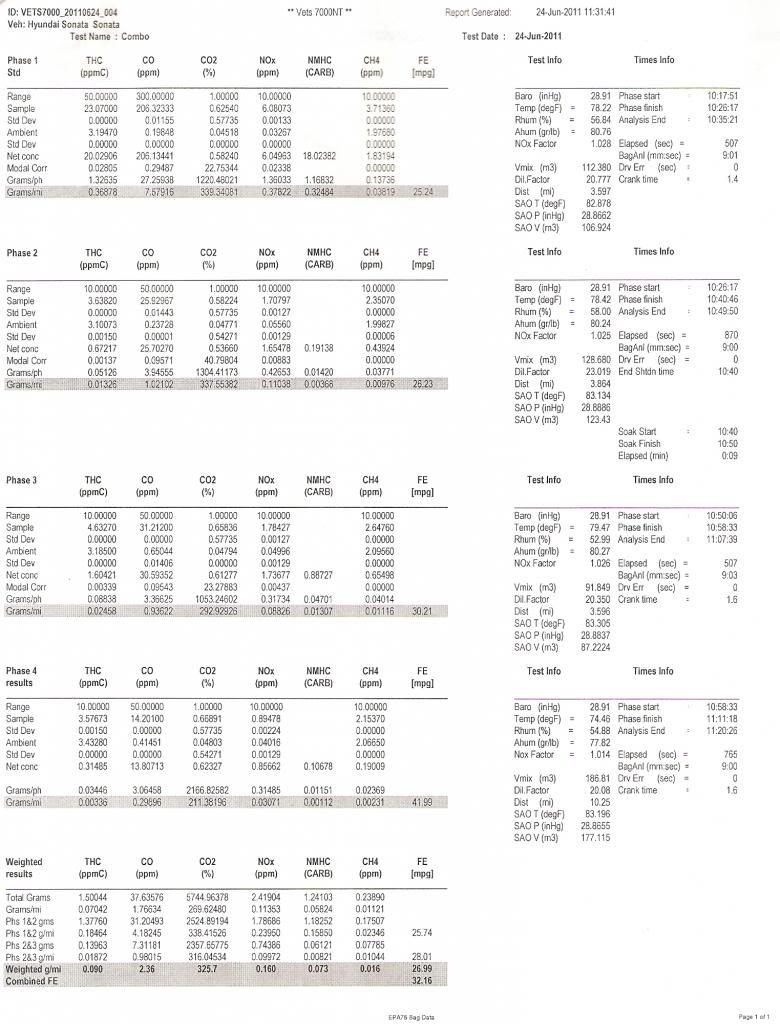
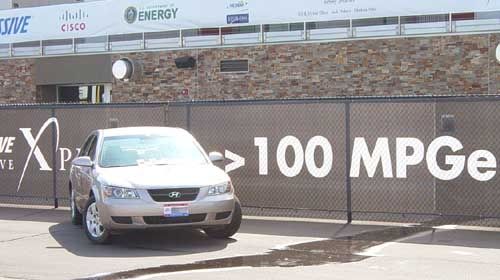
I have an '03 Accord (K24A4) I'm working over right now. When I get it a bit further along I'll probably start a thread on it. My goal is 60+ MPG with respectable street power. I am modeling the modifications around what I did with the X-Prize 100 MPGe entry #20 2008 Hyundai Sonata. We got an absolute best of 83 MPG at 45 mph, averaged around 60 MPG highway, and have a Roush Labs certified 42 MPG rating. FWIW, window sticker says 21 city and 30 hwy.
Mike
If you're damn serious about getting MPGs, it has already been mentioned that engine work, more specifically head work can open up lots of gains. For starters, there is a book called Head Porting for Performance & Economy that covers many unconventional tricks that aid combustion efficiency.
If you do a search on "Powre Lynz", texturing the intake ports can have a dramatic affect on economy. Next, I've done quite a bit of work with port biasing. David Vizard came up with what he calls "Poly Quad", which essentially uses one stock intake and exhaust valve and one OS I&E valve to create exaggerated swirl.
I have an '03 Accord (K24A4) I'm working over right now. When I get it a bit further along I'll probably start a thread on it. My goal is 60+ MPG with respectable street power. I am modeling the modifications around what I did with the X-Prize 100 MPGe entry #20 2008 Hyundai Sonata. We got an absolute best of 83 MPG at 45 mph, averaged around 60 MPG highway, and have a Roush Labs certified 42 MPG rating. FWIW, window sticker says 21 city and 30 hwy.
Mike